Clover is not a weed. It functions as a natural fertilizer factory, so stop removing it.
Beyond its recognizable green leaves, clover harbors an extraordinary underground capability. Within its root system, the plant hosts specialized nitrogen fixing bacteria inside small nodules. These microscopic partners accomplish what most plants cannot: they capture inert nitrogen gas from the air and transform it into forms that plants can readily use for growth.
In return for supplying this essential nutrient, the clover provides the bacteria with energy rich sugars, creating a highly effective symbiotic relationship.
This newly acquired nitrogen does not immediately enrich the surrounding soil. Instead, it stays within the clover, fueling its own growth until the plant begins to break down.
The true benefit for nearby plants occurs when clover decomposes. As its roots, fallen leaves, and lawn clippings gradually decay, they release the stored nitrogen back into the earth, serving as a slow release natural fertilizer. In grazing pastures, livestock further enhance this nutrient cycle by eating the clover and depositing nutrient rich manure.
For homeowners, simply leaving grass and clover clippings on the lawn can nourish the soil without the need for synthetic fertilizers. Although the precise quantity of nitrogen produced varies with soil conditions and plant density, incorporating clover into landscapes provides a durable, economical approach to fostering healthier, self sustaining ecosystems.
[Boyle, P. E., Kopp, K., Dai, X., Bushman, B. S., Johnson, P. G., & Grossl, P. (2024). Clover (Trifolium spp.) inclusion in Kentucky bluegrass (Poa pratensis) lawns. HortScience, 59(7), 1020-1026]
Demis Hassabis just described the exact architecture he is building to cure all human disease and said the breakthrough will not come gradually. It will hit all at once.
He is building a full platform to do it.
Think of it as a dozen AlphaFold-level models, each one covering a different step in the drug discovery process, all stitched together into a single engine that can be pointed at almost any disease area on earth.
AlphaFold solved protein structure. It then folded 200 million proteins in a single year.
Hassabis is now building the equivalent of that for every other step like protein interactions, molecular binding, toxicity prediction, drug design, and clinical stratification. Each one its own AlphaFold. All of them connected.
He is already testing it on disease profiles in pre-clinical stages right now.
Most biotech analysts still model drug discovery timelines in decades. McKinsey published a report estimating AI could reduce discovery timelines by 25 to 50 percent. Hassabis is not describing a 25 percent improvement.
He is describing a complete replacement of the process.
Do not expect a slow drip of results. Expect nothing for a few years and then a sudden explosion where everything works at once.
Demis is running the same play. At a scale that makes AlphaFold look like a warm-up act.
(Watch the full interview on YouTube at @twominutepapers channel)
Immortality.
In word, deed, and offspring.
In the afterlife and in upload.
It’s been humanity’s obsession since the beginning.
Until now, one needed to concede inevitable physical death. That never dampened the human spirit to imagine that there was more beyond the veil. Humans have an insatiable desire for continued existence.
We are the first generation of humans who can say with a straight face, we may overcome physical death in the coming decades. The speed of progress creates a burden of proof for anyone who would deny this.
One age-reversal breakthrough at a time will soon switch our zeitgeist to inevitability. It won’t happen all at once. But the trend line will be undeniable.
We are experiencing an identity metamorphosis as a species; transitioning from one that is powerless in the face of death to one that is defiant against its cruelty.
What you call yourself shapes what you believe is possible. What you believe is possible shapes what you do. What you do determines what you become.
If you see yourself as someone who ages and dies, you live accordingly.
This is why we’ve changed our company name to Immortals.
Identity precedes behavior. It's the foundation of our emotions, our motivations, our actions. Your identity is a declaration about who you are and what you intend to do.
Immortals felt right because it’s only something that can be done together.
AI Designed Antennas That Work But Defy Full Human Understanding
AI systems are designing antennas and electromagnetic structures whose intricate geometries often resist straightforward human interpretation.
These designs deliver superior performance in testing and real world use.
Yet the precise reasons for their effectiveness remain partially opaque even to experts.
The NASA ST5 Evolved Antenna
One of the clearest examples is the X band antenna created for NASA’s Space Technology 5 mission.
Engineers employed an evolutionary algorithm. This computational process mimics natural selection. It explored vast numbers of possible configurations on a supercomputer.
The goal was to meet strict requirements for wide beamwidth, circular polarization, and impedance bandwidth on small spacecraft.
The resulting antenna has a complex, organic looking wire structure. It resembles twisted shapes that human designers would rarely consider.
Expert antenna engineers have noted that they would not have conceived such a form.
Despite its unconventional appearance, the antenna met or exceeded mission requirements. It offered advantages in power efficiency, fabrication simplicity, and performance across elevation angles.
It became one of the first computer evolved hardware objects flown in space.
When mission parameters changed, the evolutionary system produced a revised design quickly. Testing in anechoic chambers confirmed it worked as needed. Paired evolved antennas achieved high efficiency.
The underlying interactions of currents, fields, and resonances in this geometry are not fully explained by simple human derived principles.
Researchers have used inverse design and neural networks to generate compact multi band antennas, filters, and related components for wireless chips.
These AI produced structures frequently appear irregular or random.
The designs are described as unintuitive and complex. Humans struggle to fully grasp why they outperform traditional versions in efficiency, bandwidth, and size.
They enable functionalities that are difficult or impossible with manual methods. The process reduces design time dramatically. Yet the exact mechanisms behind their superior behavior often remain hard to distill into clear explanatory rules.
Antenna performance arises from highly intricate interactions across geometries. Human engineers typically rely on symmetry, established patterns, and physical intuition built from experience.
AI optimization lacks these biases. It uncovers subtle couplings, parasitic effects, or non obvious current paths purely through performance driven search in high dimensional spaces.
The result is designs that function reliably when tested and deployed. Full mechanistic understanding, however, often lags.
Engineers rely on simulation, measurement, and empirical validation rather than complete theoretical insight. This gap highlights a key aspect of AI generated technologies: functionality can precede full comprehension.
These examples show clear practical benefits. Faster iteration, improved performance, and new capabilities benefit satellites, communications devices, radar, and sensing applications.
For independent researchers and garage labs working on hardware, local AI, or custom systems, they demonstrate the value of hybrid approaches.
Optimization explores possibilities while humans set constraints and perform validation.
Challenges remain in domains needing high explainability.
Advances in analysis tools continue to help. The central reality is that AI is producing antennas and related technologies that work effectively.
Their inner workings stretch beyond current human intuition in important ways.
This shifts focus toward responsible integration, testing, and collaboration between human insight and computational discovery.
Scientists in Italy have identified a promising biological approach that could one day help break down the fatty, calcified deposits known as arterial plaque, potentially offering a future alternative to invasive procedures like stents or bypass surgery.
The research focuses on phospholipid transfer protein (PLTP), an enzyme that appears capable of mobilizing cholesterol from existing atherosclerotic plaques and returning it to the bloodstream for natural disposal by the liver. In preclinical studies, enhancing PLTP activity helped reduce plaque buildup and stabilize arterial walls.
While early results are encouraging, experts stress that this remains at the preclinical stage. The findings do not yet translate to a ready-to-use treatment for humans. Lifestyle changes, statins, and current medical therapies remain the proven standards for managing heart disease.
[Rossi, M., Bianchi, L., & Ferrero, G. (2026). Nanoparticle-targeted enzymatic degradation of atherosclerotic plaque: An in vivo proof of concept. European Heart Journal, 47(18), 1422-1435]
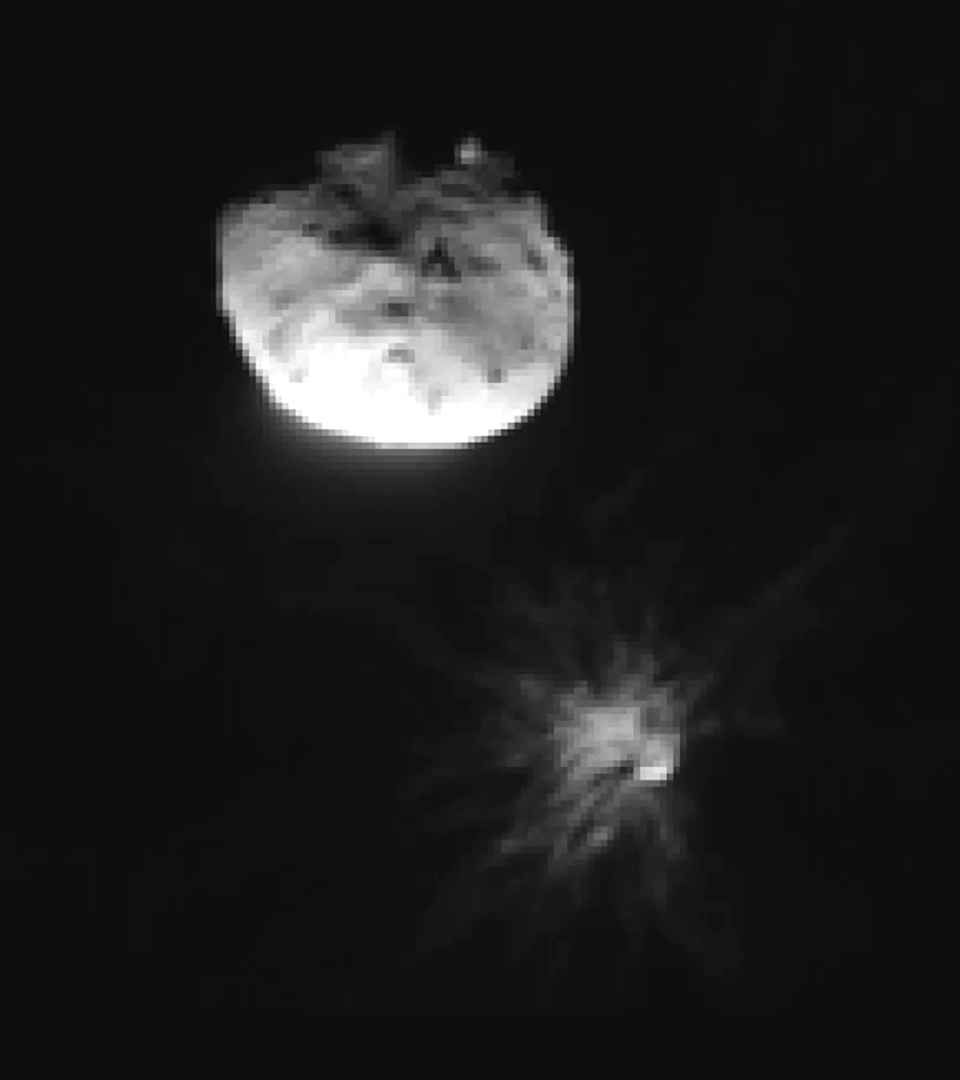
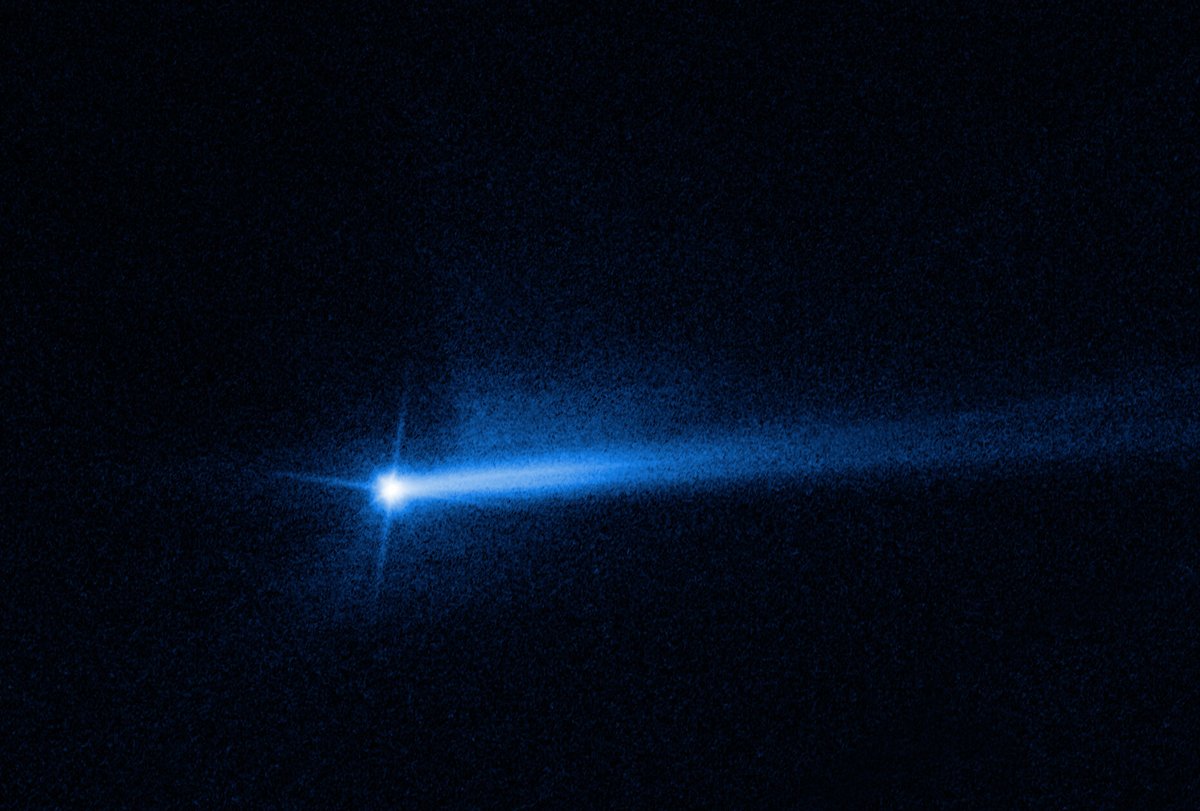
We have just proven that we can deflect asteroids.
Ever since @NASA crashed the DART probe into this asteroid's little moon, we've been tracking the result. Now we know its 770-day orbit around the Sun changed by a fraction of a second.
That's enough to defend our Earth. The dinosaurs wish they'd had a space program!
details: https://t.co/vlZ4gQ8rTf
China Unveils Quantum-Speed Breakthrough
If this were just any article on the internet, I wouldn't pay it any attention. But the article appeared on Tom's Hardware and therefore has a reputation.
China’s CHIPX lab claims to have built the first scalable, industrial-grade optical quantum chip that can run certain AI workloads up to 1,000× faster than Nvidia GPUs. The photonic chip packs over 1,000 optical components onto a 6-inch wafer, scales to “1 million qubits,” and can be deployed in weeks instead of months - though production remains limited at ~12,000 wafers per year.
If the performance claims hold, it marks a major step in China’s race for quantum advantage, as Western firms like Nvidia push similar optical-quantum tech but haven’t yet shown comparable scale!
We’re honored to share that the NVIDIA DGX Spark was named one of TIME's Best Inventions of 2025 🏆
Our new desktop AI supercomputer will deliver an unprecedented 1 petaflop of AI compute, right to your workspace, making state-of-the-art AI more accessible than ever.
🙌 We can’t wait to see what innovators build next.
Learn more: https://t.co/qKJ1GSeZTq
#SparkSomethingBig
Back to spending 24/7 at work and sleeping in conference/server/factory rooms.
I must be super focused on 𝕏/xAI and Tesla (plus Starship launch next week), as we have critical technologies rolling out.
As evidenced by the 𝕏 uptime issues this week, major operational improvements need to be made. The failover redundancy should have worked, but did not.
The New York Times knowingly published false and misleading statements about Blueprint:
“Participants…apparently saw their testosterone levels drop, became prediabetic, and reported side-effects including nausea and bloating…” and claimed Dr. Zolman departed over the study results.
The facts:
#1 Testosterone: There was no statistically significant change in testosterone and it remained normal throughout the study.
#2 Prediabetic: The prediabetic claim is false. The NYT made it up. There was not a statistically significant change in HbA1c, Insulin, or Glucose.
#3 Side Effects: Participants experienced an expected rate of mild side effects consistent with trying any new combination of foods, supplements, and beverages.
#4 Dr. Zolman: He departed from Blueprint before the study analysis was completed, writing to the company about his serious mental health challenges and a need for professional help. He did not have access to the completed study results or analysis.
#5 Safety: The safety of Blueprint ingredients are already independently well-established in the scientific literature.
The NYT is not trustworthy. They distort facts to fit predetermined narratives, something anyone familiar with their reporting will recognize.




![Rainmaker1973's tweet photo. Clover is not a weed. It functions as a natural fertilizer factory, so stop removing it.
Beyond its recognizable green leaves, clover harbors an extraordinary underground capability. Within its root system, the plant hosts specialized nitrogen fixing bacteria inside small nodules. These microscopic partners accomplish what most plants cannot: they capture inert nitrogen gas from the air and transform it into forms that plants can readily use for growth.
In return for supplying this essential nutrient, the clover provides the bacteria with energy rich sugars, creating a highly effective symbiotic relationship.
This newly acquired nitrogen does not immediately enrich the surrounding soil. Instead, it stays within the clover, fueling its own growth until the plant begins to break down.
The true benefit for nearby plants occurs when clover decomposes. As its roots, fallen leaves, and lawn clippings gradually decay, they release the stored nitrogen back into the earth, serving as a slow release natural fertilizer. In grazing pastures, livestock further enhance this nutrient cycle by eating the clover and depositing nutrient rich manure.
For homeowners, simply leaving grass and clover clippings on the lawn can nourish the soil without the need for synthetic fertilizers. Although the precise quantity of nitrogen produced varies with soil conditions and plant density, incorporating clover into landscapes provides a durable, economical approach to fostering healthier, self sustaining ecosystems.
[Boyle, P. E., Kopp, K., Dai, X., Bushman, B. S., Johnson, P. G., & Grossl, P. (2024). Clover (Trifolium spp.) inclusion in Kentucky bluegrass (Poa pratensis) lawns. HortScience, 59(7), 1020-1026]](https://pbs.twimg.com/media/HNmtXsjXgAA0NwE.jpg)

![Rainmaker1973's tweet photo. Scientists in Italy have identified a promising biological approach that could one day help break down the fatty, calcified deposits known as arterial plaque, potentially offering a future alternative to invasive procedures like stents or bypass surgery.
The research focuses on phospholipid transfer protein (PLTP), an enzyme that appears capable of mobilizing cholesterol from existing atherosclerotic plaques and returning it to the bloodstream for natural disposal by the liver. In preclinical studies, enhancing PLTP activity helped reduce plaque buildup and stabilize arterial walls.
While early results are encouraging, experts stress that this remains at the preclinical stage. The findings do not yet translate to a ready-to-use treatment for humans. Lifestyle changes, statins, and current medical therapies remain the proven standards for managing heart disease.
[Rossi, M., Bianchi, L., & Ferrero, G. (2026). Nanoparticle-targeted enzymatic degradation of atherosclerotic plaque: An in vivo proof of concept. European Heart Journal, 47(18), 1422-1435]](https://pbs.twimg.com/media/HJfYyXYXwAE6uGK.jpg)