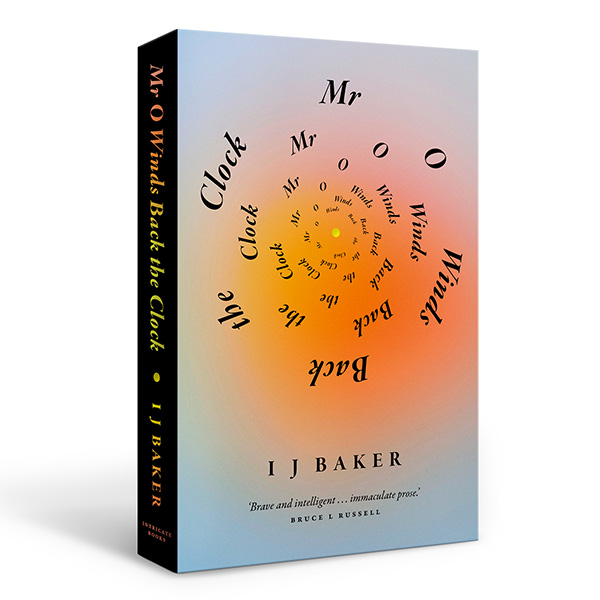
🧵Appreciation for your literary novel is especially nice when you're self-pubbed, and today I'm in a peculiar place. A purchaser has contacted me to say that he has read Mr O Winds Back the Clock twice in six months, and enjoyed it even more the second time. #litfic /more
Open Letter
To the President of the Russian Federation
From the President of Ukraine
When you came to power in Russia more than 26 years ago, many people in Ukraine viewed you positively. That is how it was. But that is now in the past.
Now, the overwhelming majority of Ukrainians view it positively that our long-range drones paid a visit to the opening of your forum in St. Petersburg, covering a distance of more than 1,000 kilometers. As you know very well, that distance is not the limit of our capabilities.
@matoxley Assuming good-faith recording, these are 100pc true for what happened though. Moreira really did reach 367kmh on the circuit. 😳 But yes, not necessarily reflective of relative performamce.
@davegraney I think there's some research to the effect that people are much more emotionally invested in avoiding a loss than in securing a similar gain. So there's that, and the likely reality that more of their readers are mortgage holders. But yes, falling prices could be celebrated.
@JoyceCarolOates That's assuming the US still has a military band. If Hegseth hasn't yet sacked all the musicians it's not because he thinks they are warlike.
@ItsKieranDrew I'm guessing you borrowed that, or if not that it's been said before. Nevertheless, you've expressed beautifully the reality of unhappiness in priveliged communities. I may even use it. 😄😄
@ColtonOgburn Yes. And that gives him the opportunity for a win-win: bring a lot of pleasure to a lot of people, AND give himself the chance to have his face on the currency.
@RonFilipkowski@realannapaulina The great thing is that not far in the future, Putin will indeed be the one who wants peace and Ukraine really will be the party who wants the war to continue – until they've tossed every murderous Russian invader out of their country.
@ParanormalJunk2 You've got this! Feed the desire and the literacy will follow. I did just the same thing when teaching literacy in a prison for nearly four years. And the results were spectacular, if the point was to improve people's literacy. And as they improved, they could pass units too.
@AGHamilton29 It's really hard to see why the Iranian demands are unreasonable. They control Trump's fate and reputation: if he could see reason he'd give them what they want.
@MikeCarlton01@RadioFreeTom does great stuff. It's just unfortunate that Trump's being lost is just a figure of speech: we'd all be much better off if he were lost in Iran.
@vizurantvis And God, if he or she is a being worthy of respect, will reply: "I'm sorry. I know your life would have been easier if I had made my existence more plausible. You did well to seek evidence of my being real, and I gave you none. It's straight to Heaven for you, my beloved!"
@realPeterCrerar Here's an alternative analogy. It's like a painter deciding on a size for his canvas. And a writer counting words, as his first draft progresses, is like a painter looking at how much image area he still has available.
The Trump phenomenon:
why did half of America believe a liar?
Many people keep asking the same question: how did Donald Trump come to power?
Why did such massive support go to a man widely seen as uneducated, irresponsible, and narcissistically self-obsessed?
Why did intelligence, competence, and experience suddenly carry so little political weight — and what does that say about democracy itself?
• Populism always sells simple answers.
Where experts talk about complexity, risks, and nuance, populists shout slogans. “Build the wall.” “Bring back greatness.” A slogan is always shorter than analysis — and therefore more effective for masses tired of thinking, or who never wanted to think deeply in the first place.
• Emotion defeats argument.
Trump, like every demagogue, spoke not to reason but to emotion. His rhetoric was built on anger, resentment, and fear. He created enemies, promised revenge, and avoided complicated explanations. Like many populists before him, he relied less on programs and more on outrage and emotionally charged narratives.
• Simplicity becomes the language of the “common people.”
Intellectuals almost always lose in mass politics. Complex language irritates people. Many feel uncomfortable when they do not understand something, but instead of admitting it, they blame the speaker. The person who speaks more simply is seen as “one of us.”
• Confidence is mistaken for competence.
Human nature has not changed. People still confuse decisiveness with wisdom and confidence with knowledge. Trump became a perfect example of the Dunning–Kruger effect: a man with limited understanding who presents himself as a genius. Yet this blind self-confidence is exactly what many voters perceive as strength.
• Populists surround themselves with weaker people.
Demagogues and authoritarian-minded leaders fear intelligent independent thinkers. That is why they often surround themselves with loyal but less competent figures. Trump’s first administration was partially restrained by institutional inertia and traditional Republicans. Later, many critics argued he increasingly preferred loyalists, conspiracy theorists, and ideological fanatics over experienced professionals.
• History keeps repeating itself.
A society searching for easy answers repeatedly opens the door to demagogues. Instead of embracing the difficult reality of democracy — compromise, institutions, responsibility — people choose the illusion of simplicity. They want a “strong leader” who supposedly “knows how” and will finally “tell the truth,” even if that truth is largely fiction.
• Knowledge itself becomes a disadvantage.
One of the paradoxes of modern politics is that intellect often appears weak. Thoughtfulness creates doubt, and doubt annoys people. The one who analyzes seems uncertain. The one who promises certainty sounds convincing. For many voters, appearance matters more than reality.
The lesson is simple and brutal: democracy without thoughtful voters is only a shell.
As long as large parts of society continue believing in easy answers to complex problems, the Trump phenomenon — or something very similar to it — will keep returning in different countries and under different faces.
And every time, it comes with the same promise:
“I alone can fix it.”
That is why democracy requires more than voting.
It requires thinking.
Without that, anyone with a slogan can become your master.