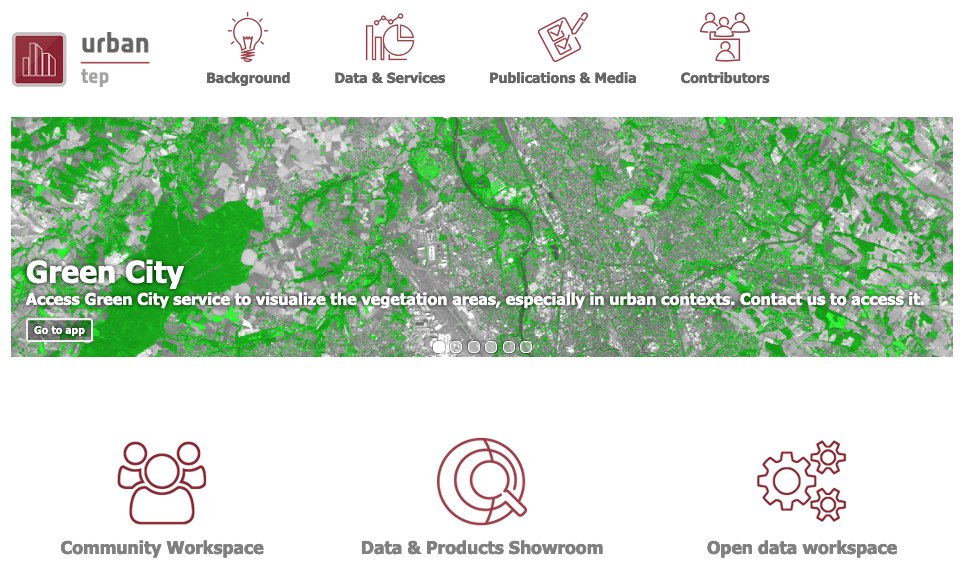
Already at Episode 6 of @terradue's #AI/#ML showcases, demonstrating enhancements for both the Geohazards Exploitation Platform (@geohazards_tep) and the Urban Thematic Exploitation Platform (U-TEP)
@STACspec Episode 6 of the AI/ML series is out !
Developing EO Application Packages, using the Common Workflow Language (CWL) as described in the @opengeospatial best practice document.
It involves CWL runner for Kubernetes & MLflow to track experiments.
https://t.co/0nbb6i8SS2
We are currently accepting submissions for peer-reviewed sessions: https://t.co/GOFVOrJcS6
@esa's Living Planet Symposium happens only every 3 years and we are working to make it THE EO conference of 2025 😎
Tell your colleagues!
#LPS25
Terradue is providing Technical Assistance to the CopernicusLAC Panama Centre.
This centre will enhance regional decision-making with advanced Earth Observation services, focusing on environmental management, agriculture, and urban planning.
https://t.co/AB2o1HoSGC
AI/ML Enhancement Project - Labeling EO Data (User Scenario 2)
Labeling different features within data is a crucial step in the process for developing supervised Machine Learning (ML) models.
https://t.co/S1fE1KYLHp
Insights into the application of #MachineLearning and #DeepLearning techniques for interpreting Earth Observation (EO) data.
Summer school @LIST_Luxembourg
June 10-12, 2024
https://t.co/ztCsdxPqGg
Happy to see #AI/#ML showcases defined for monitoring urban heat patterns, preventing flooding in urban areas, and dealing with challenges posed by informal settlements.
On the blog: AI/ML Enhancement Project - Progress Update
New set of Cloud-based environment and tools now available for AI/ML users to work with EO data & data labels
https://t.co/pTqHLxIwvZ
💡 Online course on Data Exploitation with @UrbanTEP for SDG Indicator Assessment & Monitoring! 🌍
📅 December 5, 10 am - 1 pm
Tutors: Václav Svatoň from IT4I, Tomáš Soukup from @Gisat_cz, and Pedro Pereira Gonçalves from @terradue
More ℹ️ & REG🔗https://t.co/3OPC9v4bOe @esa
On the Blog: free online EO Training event, for SDG Indicator Assessment & Monitoring
Dec. 5th 2023, 10:00 am - 1:00 pm CET
Agenda & registration:
https://t.co/oDCQVqEuuf
Large urban areas are often marred by nitrogen dioxide pollution, caused mainly by traffic and industrial burning of fossil fuels.
Data delivered by @CopernicusEU#Sentinel5P have recently enabled scientists to estimate surface-level nitrogen dioxide concentrations in Finland: https://t.co/XEqA0bxZ1l
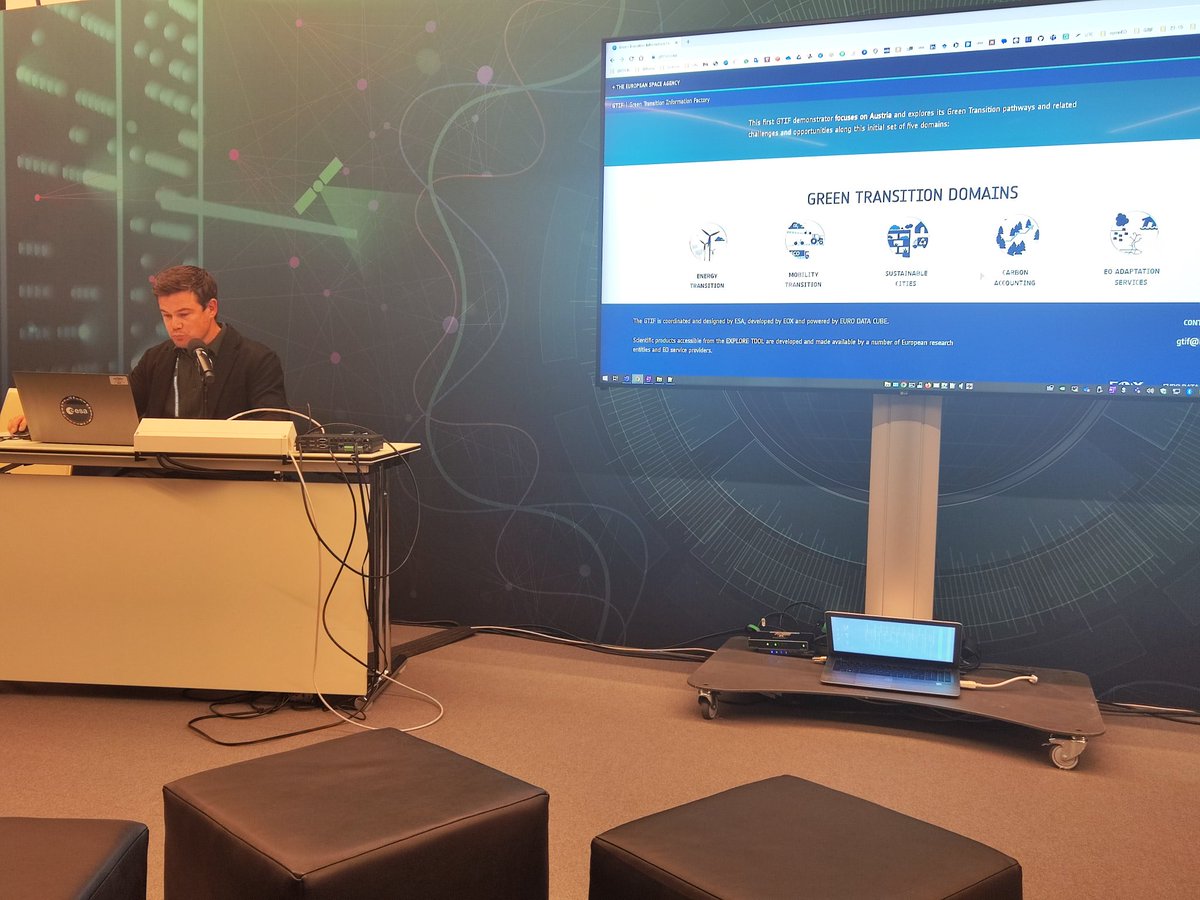
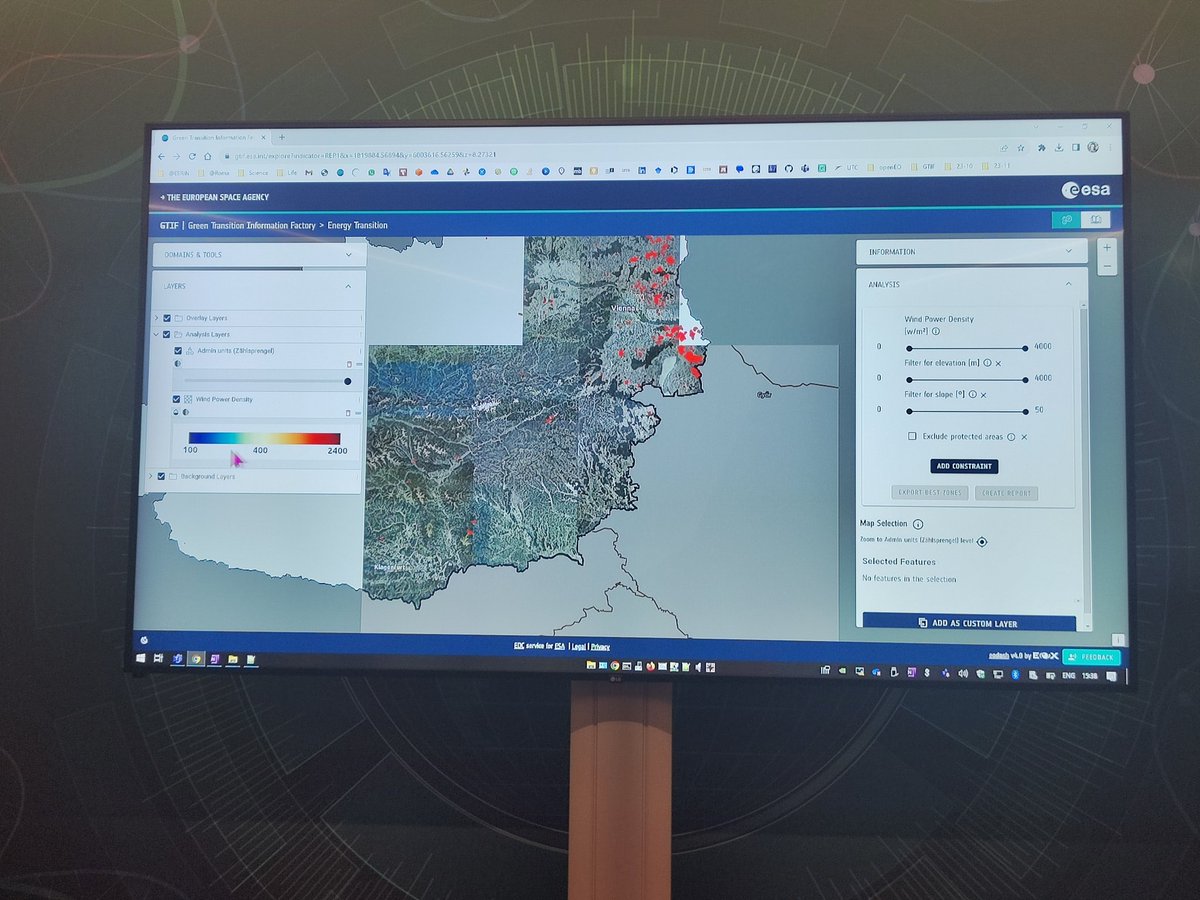
The new interface of #GTIF, the Green Transition Information Factory has been released!
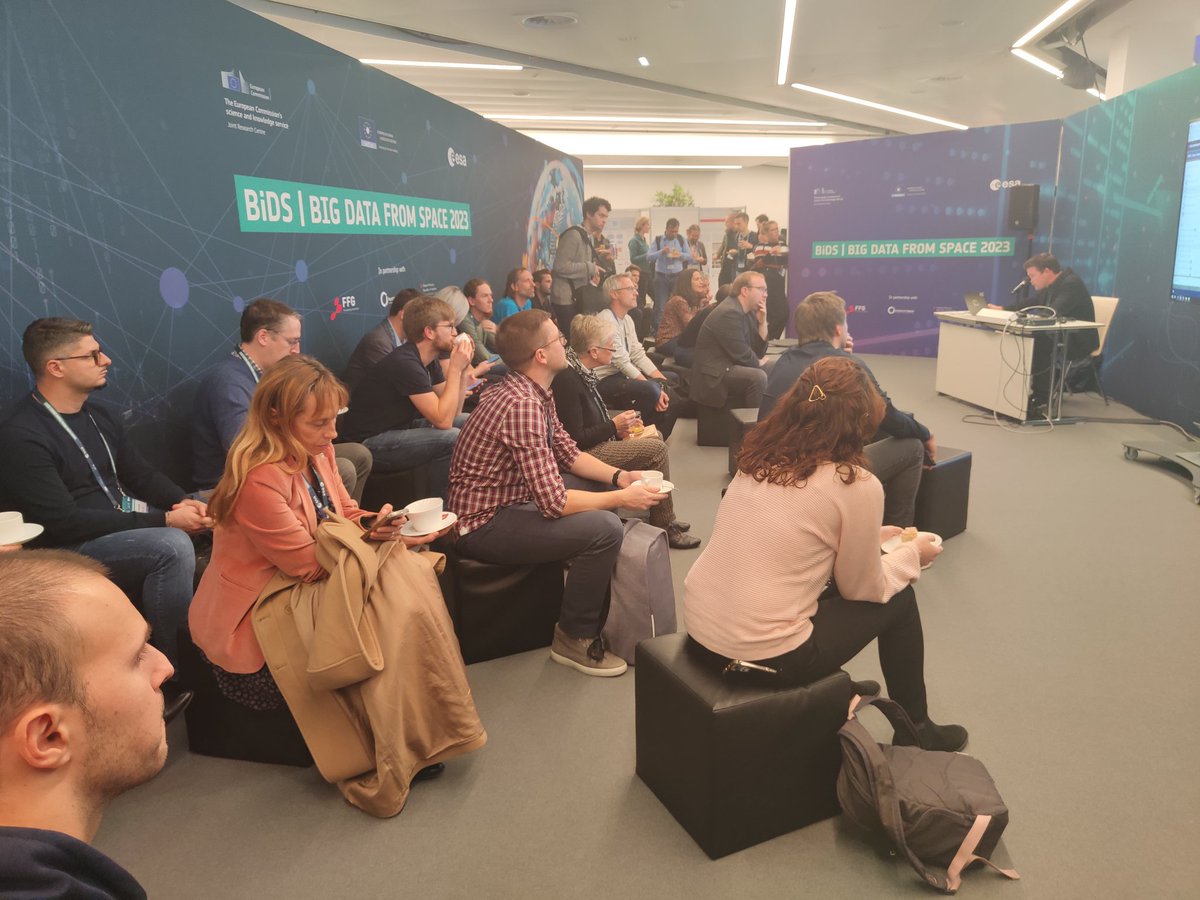
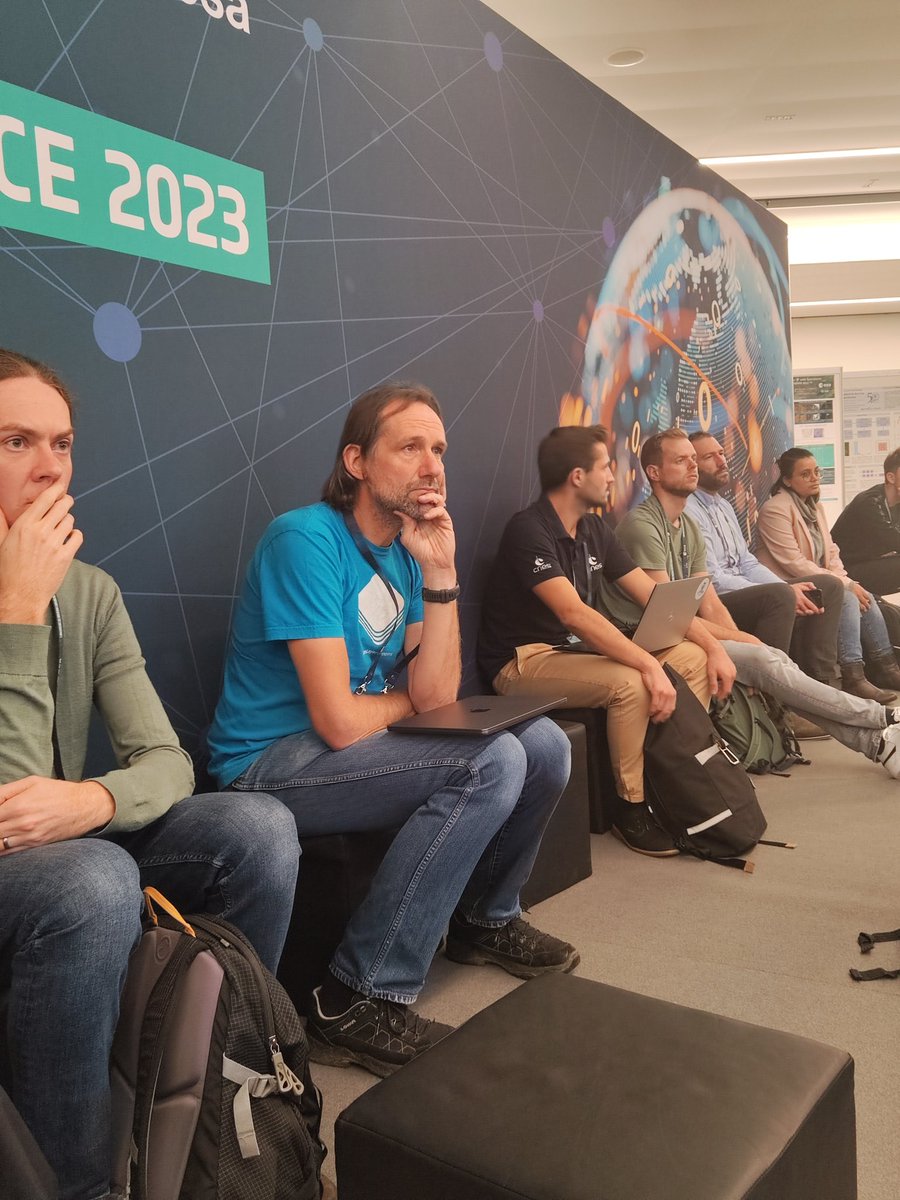
@pdgriffiths81 is showcasing how this tool can be used to accelerate the Green Transition of society and economy at #BiDS23 Demo area
Explore it yourself!
🔗https://t.co/JFJ7Hho4hl
Join us at Booth #10 this week in Vienna, #BiDS23
We'll demo our Cloud services for EO data processing
Platform-as-a-Service (PaaS) solution for builders of EO applications https://t.co/lqyG6w1ooq
Ellip-powered workspaces https://t.co/UFMXKMHbM4 and https://t.co/8Qhbx8LAU6
Meet us this week at #BIDS23 in Vienna
We'll demo @ellip_global, @geohazards_tep, @UrbanTEP at our booth.
Also today starting 16:00 we'll host two special events:
☑️ Mastering Earth observation application packaging with @commonwl
☑️ Open & Reproducible workflows in EO
Congratulations to our @DLR_en colleagues for releasing the new version of the World Settlement Footprint (WSF2019) and the WSF Evolution, providing information on global human settlements with unprecedented detail
https://t.co/OBsALJqC7U
#urban#RemoteSensing
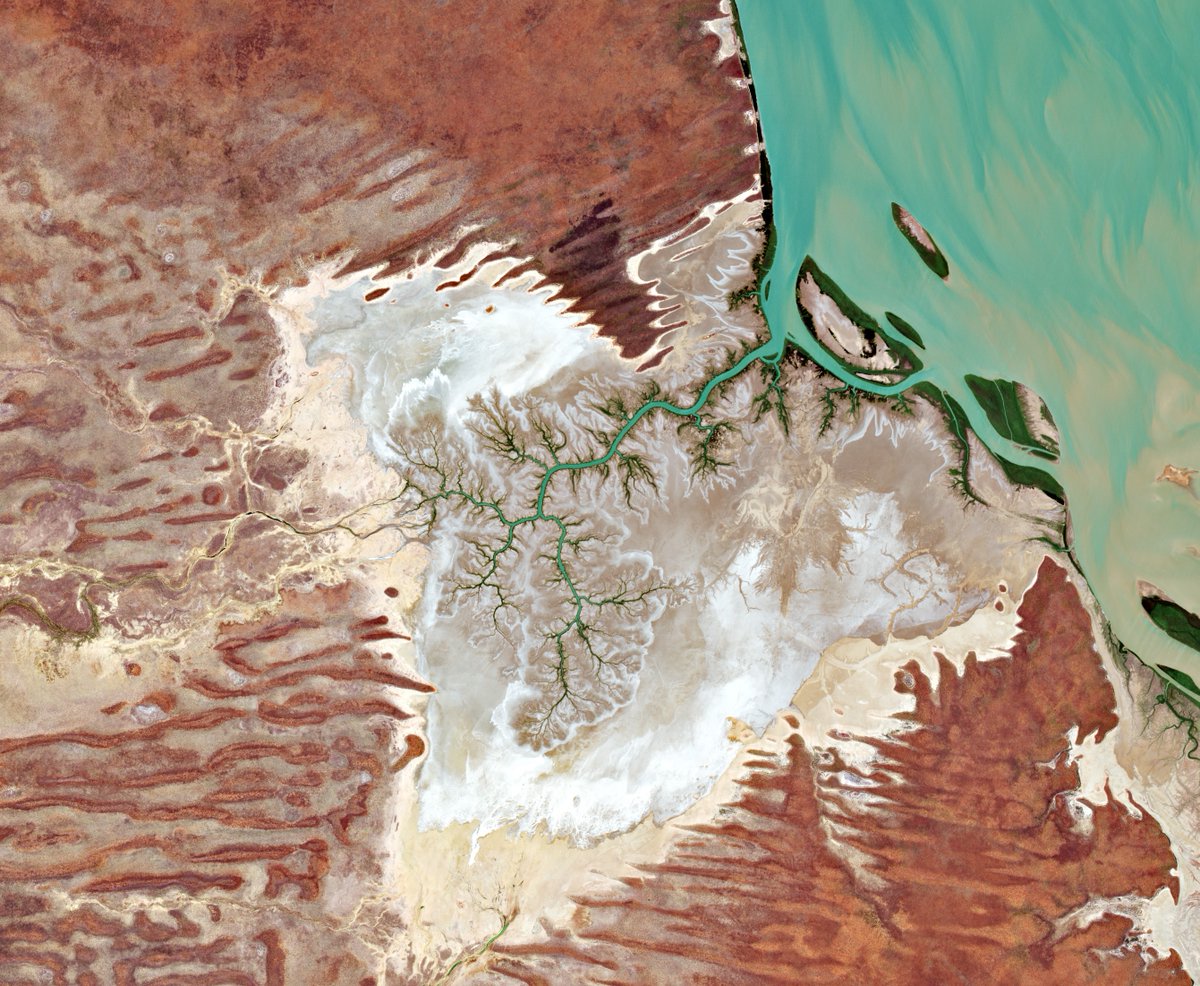
#DYK that #Australia is surrounded by around 11 000 km of mangrove-lined coast?
As more people move closer to coastal zones, the risk to mangroves increases: dumping of waste, fish farming, sea level rise and climate change all contribute to destroying mangrove's ecosystems.
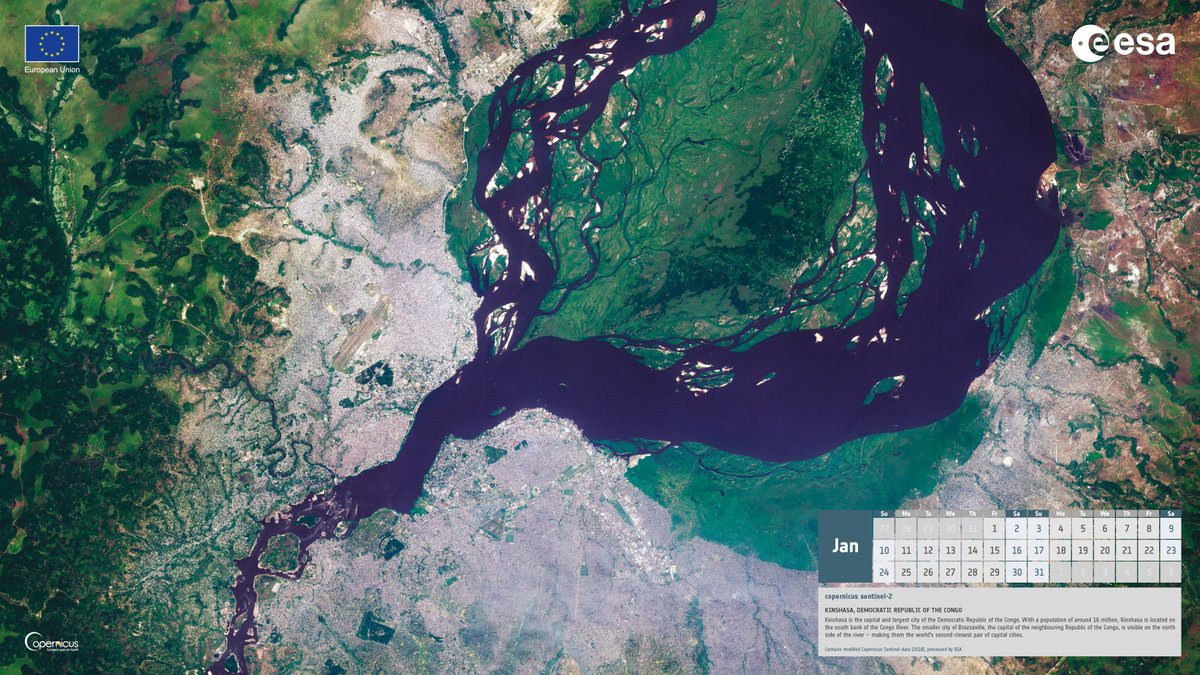
Download the 2021 Copernicus Sentinels calendar🛰️
Each month offers a spectacular view of our home planet captured by one of the Sentinel satellites.
This year the calendar focuses on megacities!
➡️https://t.co/C3lNOrW7ok
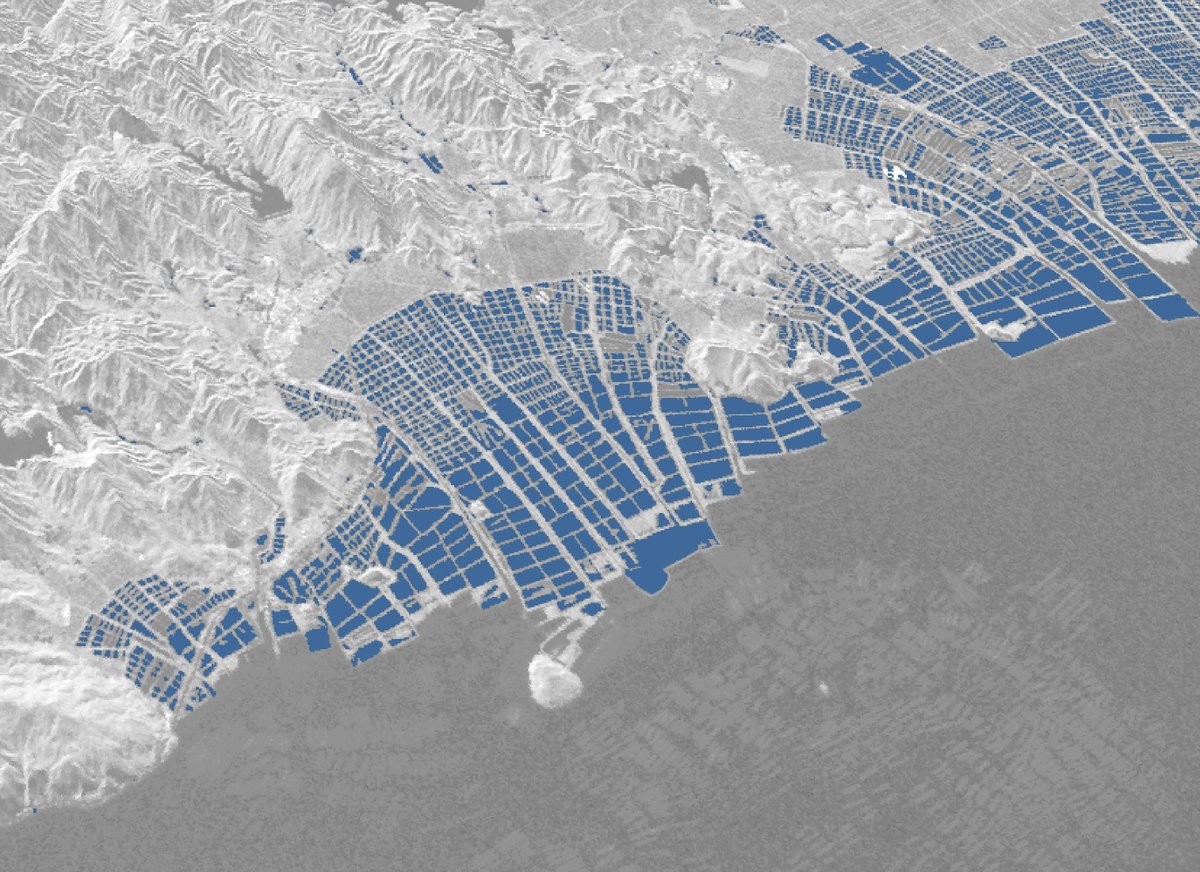
Aquakulturen liefern fast die Hälfte aller Speisefische weltweit. Das Wachstum des Sektors belastet die Ökosysteme, wie hier im Pearl River Delta in China. Eine Methode unseres Earth Observation Center macht das sichtbar. Mithilfe von #Sentinel1 Satellitendaten 🛰️
#GlobalerWandel