The Medistri Quarterly — Q1 2026
Q1 2026 brings together a series of developments that continue to shape Medistri’s growth, across infrastructure, laboratory capabilities, and digital innovation.
Highlights:
• Medistri’s 20th Anniversary
• Expansion of Sterilization Capacity: New Chamber in Hungary
• Medistri Joins Swiss Medtech
• MyMedistri Update: Order Timeline Visibility
• Introduction of EO in Ambient Air Testing
• Swiss Venture Club Visit
• Pharmapack 2026
• Career Forum 2026
• Medistri at CPHI Milan 2026
• ISO 10993-1:2025: Implications for Chemical Characterization and E&L Programs
For more information, please visit our website at https://t.co/dBEP9jstoV or contact us at [email protected].
— The Medistri Team
#Medistri
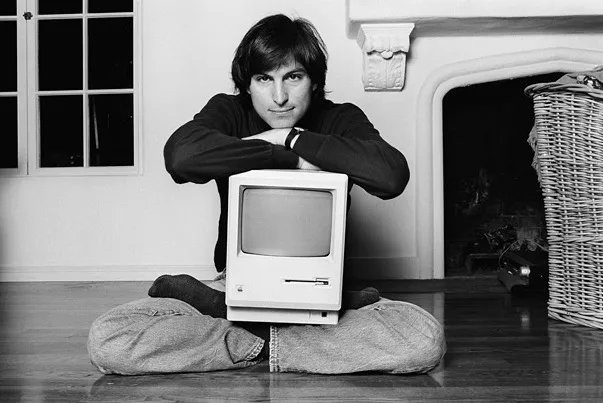
50 years of @Apple
From the early days of the #iPod to bringing the #iPhone into the world, some of the most formative years of my career were spent there. The products and teams stay with you. But more importantly so does how Apple thinks.
A few lessons that have held true for decades:
1) Start with the user, not the tech. The question isn’t “what can we build?” but “what problem actually matters?”
2) Focus is everything. Apple is defined as much by what it says no to as what it builds.
3) End-to-end matters. Hardware, software, services. It all has to work together.
4) Details are the product. What feels small is what users remember.
5) Debate hard. Commit fully.
6) Build for the long term.
We’re in another moment of massive technological change. The fundamentals haven’t changed.
The companies that win build things people actually use and can’t imagine living without.
Congrats to everyone who has been part of Apple’s first 50 years! 🙌
🎂 Happy 50th Birthday Apple!
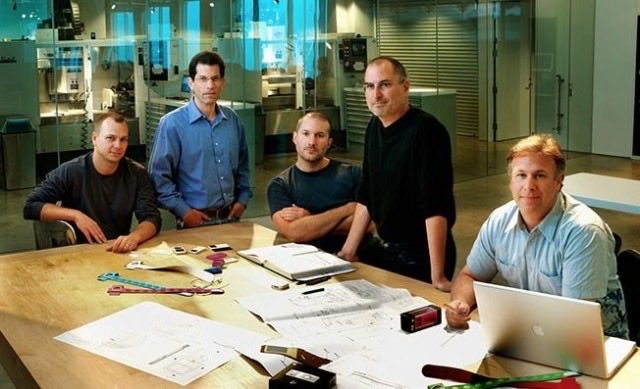
I found this festive scene from Apple's IPO Party on my Mac, and it prompted me to look up their IPO prospectus. I noticed these executives on p.21., Markkula, the first investor, Jobs as Vice President, and Peter Crisp. A rush of fond memories ensued…
On my first week on the job as a newbie VC, we were on the road to New York to fund raise. We had $26M under management (tiny for our business), and we were meeting with our cadre of current investors, one of whom was Peter Crisp of the Rockefeller family and Venrock funds. I did not know of his Apple connection at the time, but I vividly remember his words to me: he said that he envied us and wished he could be reentering the venture business as a young man (this was just before the Internet boom)… and he had one piece of advice for me. Looking back from the vantage point of great success, he wished that he had never sold his venture investments. He realized that for all the temporal gain of market timing, he missed the sea change of history and regretted watching Apple’s ongoing climb.
Which brings me to another peculiar detail in that Apple IPO paperwork. I heard from another VC that Sequoia disposed of all of their shares in Apple before the IPO. That is so unusual that I had to check, and I could not find any mention of them in the prospectus. In any case, they did help finance the company in a critical period… but like Peter Crisp, who sold long after the IPO, they probably wish they had kept the faith. Even today, on Apple’s 50th, Warren Buffett laments that he sold Apple too soon.
One more thing... Steve Jobs was my childhood hero, and I went to work at Apple and NeXT to see his work and his creation. It infuses the Steve Jobs eulogy I wrote for BusinessWeek: https://t.co/D7idoxn0iw With his life’s song forever woven into the fabric of Apple, Jobs rests with the sublime satisfaction of symbolic immortality.
• @Apple IPO prospectus: https://t.co/xLayNe3bhu
Medistri Announces its Second Sterilization Line in Hungary
Medistri is expanding its sterilization capacity with a second EO chamber at its facility in Székesfehérvár, Hungary.
Watch below.
Learn more: https://t.co/yp8M7xOTuu
— The Medistri Team
#Medistri#Announcement #EOSterilizationServices
I wanted to share something I built over the last few weeks: https://t.co/QRqMK9CpTR is a massive isometric pixel art map of NYC, built with nano banana and coding agents.
I didn't write a single line of code.
Steve Jobs Interview w/ Newsweek 1985, few weeks after being ousted at Apple.
Q: They said at some point you had thought of going to Japan and sitting in a monastery.
SJ: Yeah, yeah. I'm glad I didn't do that. I know this is going to sound really, really corny. But I feel like I'm an American, and I was born here. And the fate of the world is in America's hands right now. I really feel that. And you know, I'm going to live my life here and do what I can to help."
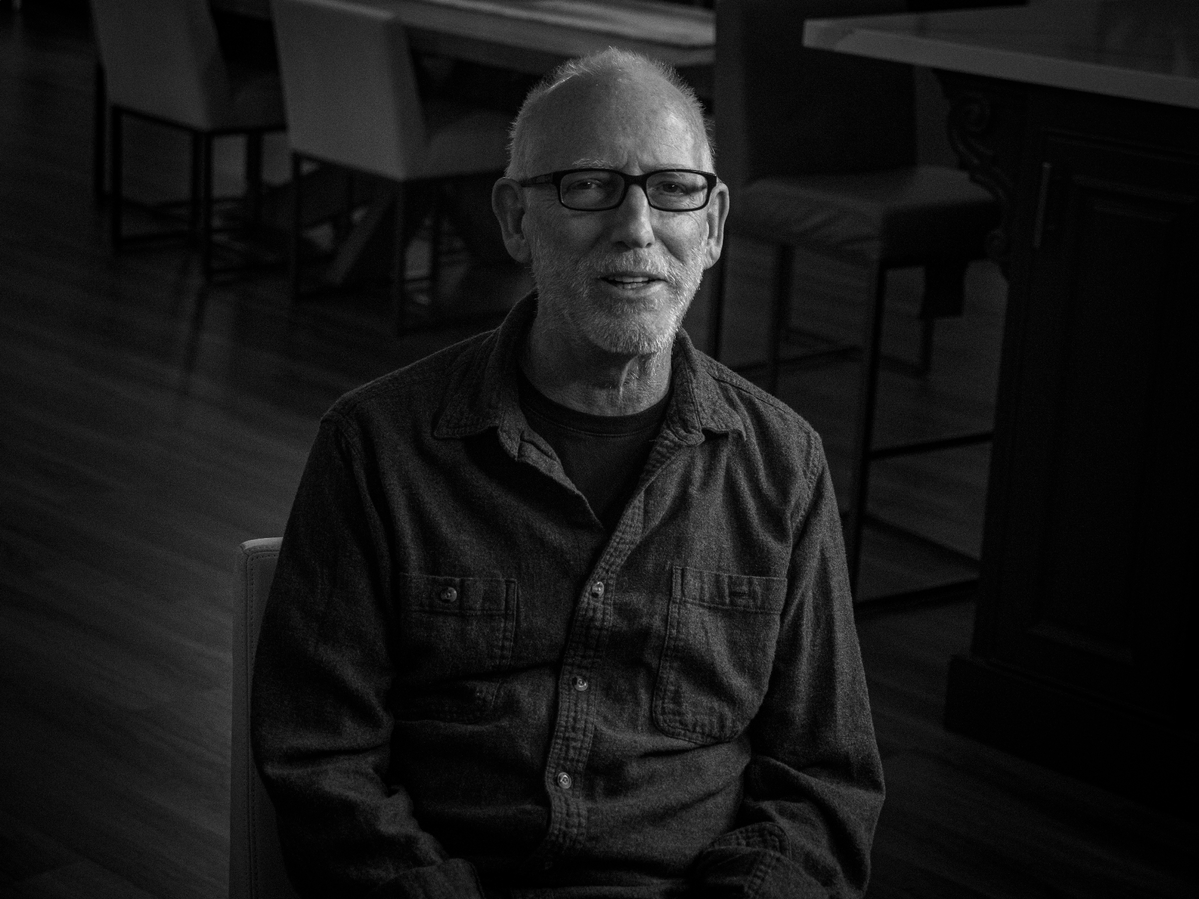
Scott Adams, facing death, shows us how to live.
Someone recommended “How to Fail at Almost Everything and Still Win Big” by Scott Adams. I had burned out on mainstream books, but picked it up, and was hooked. He had put into words a way of living, similar to one I had found, except his approach was systemic and analytical. Better than my own slapdash notes. Outside of religious texts, Adams was and is as close to a “guide to life,” as you’ll ever find. And even if you’re religious, you still live in this world, and would be wise to learn how to navigate it.
Scott is closing in on the end of his life, and even now he is creating new beginnings.
I’d better write this now, I won’t be able to when it’s too late.
After losing Charlie Kirk, a lot of us are wondering how we can possibly write another obituary. While there’s much to complain about the internet and social media, those mediums expanded the sizes of our communities, our influences, and indeed our families. Too often we find new ways to hate people, instead of finding new people to love.
Scott Adams comes up in conversation at every social event I host. “How is Scott Adams doing? Will he make it?” We all talk about streams we watched and lessons learned. It’s a memorial except he’s still alive. Scott would love to hear that, which is why I have said so repeatedly. I’ve lost too many people, via death or fallings-out, to leave feeling unexpressed.
He’s been a surrogate father figure and mentor to millions of people.
Scott Adams is not liked, he is loved.
People don’t “like” Scott Adams, they aren’t “a fan of his.” They love this man. And I do as well. I’m still living in denial of his fate. We all are.
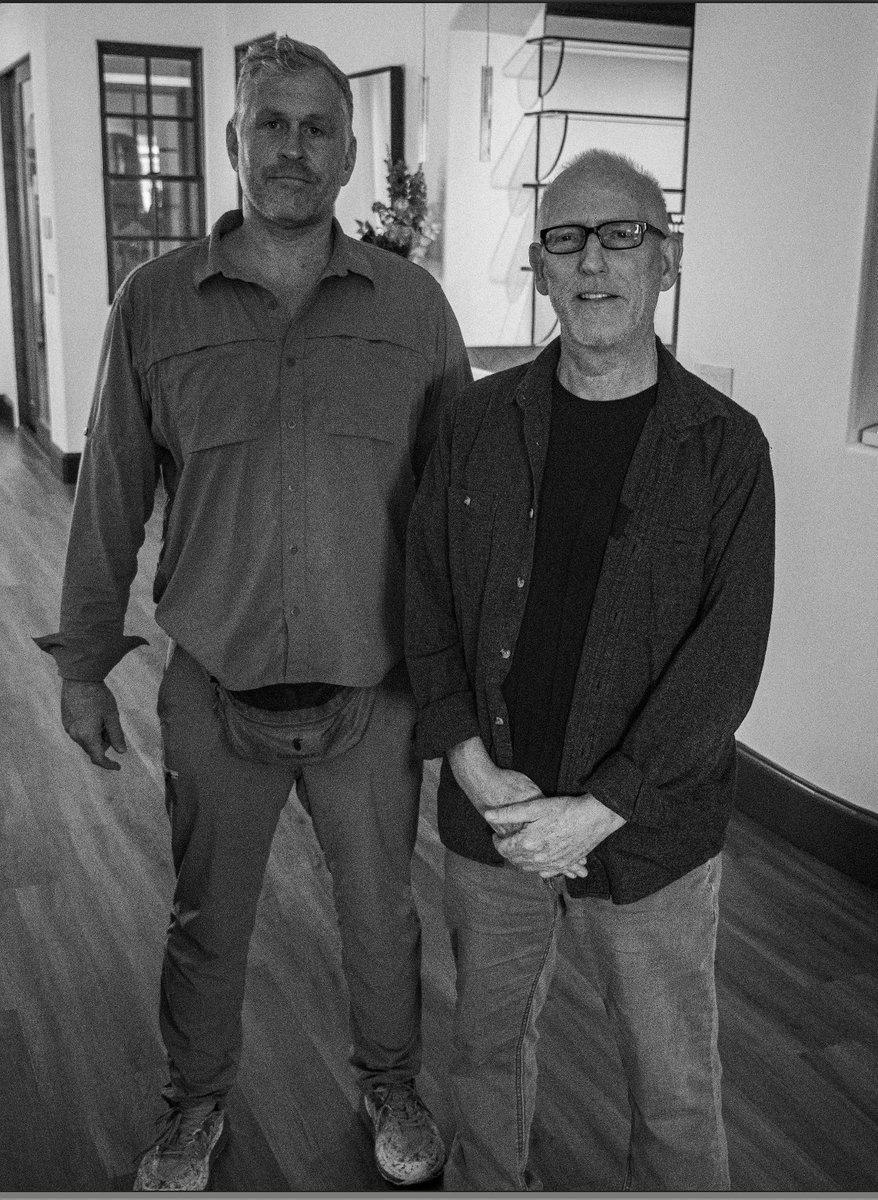
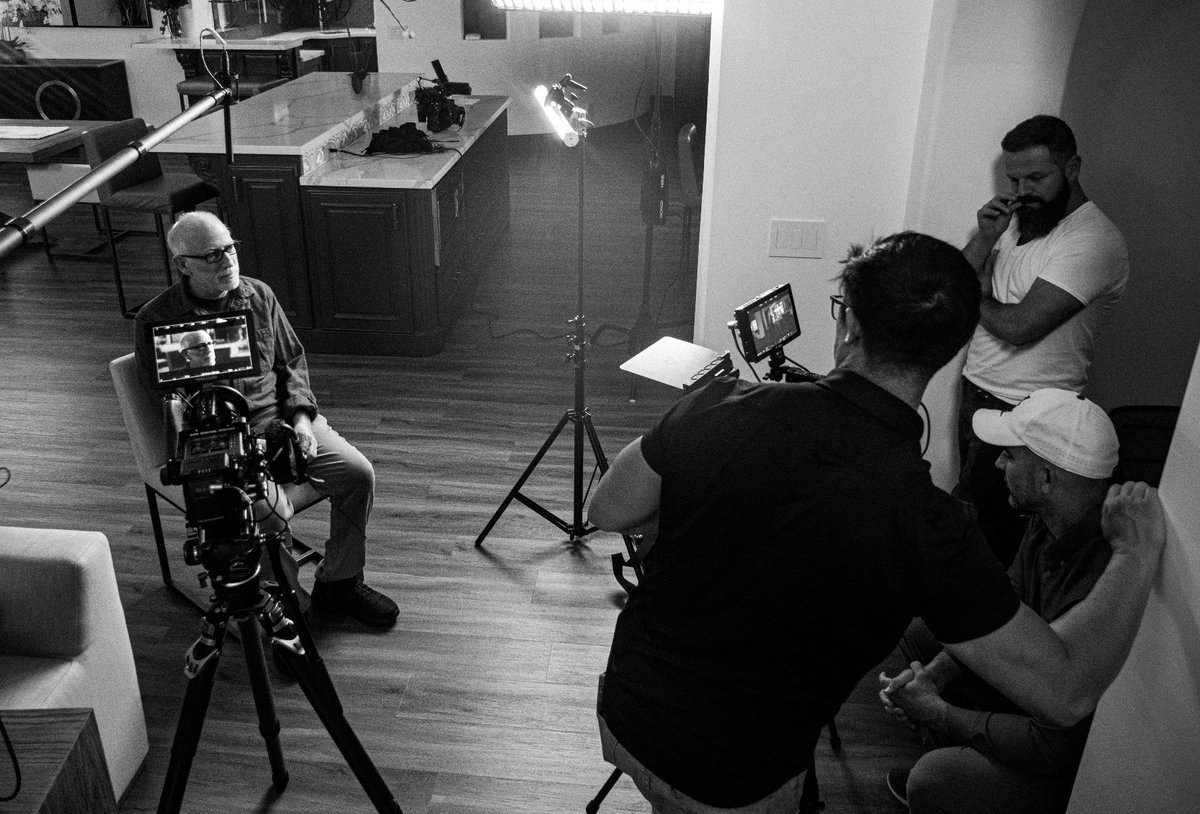
We’d been making a film about the meaning of life, and while Scott Adams had been in both of our other films, we hadn’t booked him for Meaning yet. Then we found out he was going to take the ride of assisted suicide. Foolishly, we had assumed he’d always be around. Nobody ever dies, right? Your dad will be there to take your call the next time you phone home. Your friends aren’t going anywhere. That’s how we too often live. We could book Scott later.
We reached out and he graciously agreed to be interviewed. We all knew it was going to be our last interview together. Scott and I are both efficient with our time. When a moment is over, it’s time to go do something else. Obligations call. The crew pushed this one as long as we could.
After the interview wrapped up and the gear was packed and it was time to go, there was an awkward pause. I broke it.
“Scott, we love you.” He said thank you. “No, Scott, we love you, I mean it, we all do. We love you.”
None of us broke down crying, not that there would have been any shame in that, but we no doubt all soon will.
Well then, what is the lesson of Scott Adams?
On a practical level, the lesson of Scott Adams is the power of showing up. Nobody works harder and on a more regular schedule. You can set your clock to Scott’s show. Too many of us wait for the muse of inspiration or the jolt of information to force us into action. Work, everyday, maybe in obscuring and without tangible benefits for years. Eventually you’ll hit your mark and go beyond.
Scott plugged away with his streams from a small account (after a huge career via Dilbert) and soon became must-watch, and then transcended his role to becoming something much more.
On a spiritual level, we might ask, why do we love Scott? It’s not because he’s so smart (he is). There are not shortage of intelligent, clever, Machiavellian, and rich people with podcasts. When one of them dies, what is lost? All of that Ego and desire for adoration, and does anybody even care? When those people fall while living, who will be there?
Scott is loved because he’s devoted his life to service to humanity. “What is the meaning of life,” is the question we ask every interviewee, and Scott’s answer, “Be useful to humanity.”
Despite pain, sickness, and inevitable death, Scott is doing his daily streams, serving his country and all of humankind until his end.
He’s a light to the world and a mirror for all of us.
What exactly are we doing with the gift of life given to us by God. (Scott believes in the Simulation, but I believe God evens this all out in the Judgment.) Are we doing enough for others? Are we doing anything for others?
Like everyone else, I’m capable of throwing myself a pity party. Sometimes when life is going too well, and I don’t have real problems, I invent some. That’s where the Ego brings you, recursively worshipping itself, and when that fails, tormenting itself, as each path leads to its own attention.
May all of us live more like Scott Adams, and may God bless his immortal soul when he passes.
P.S. I ran this article through Grok for typos. The original version had “immoral” soul where I meant it to read “immortal.” I think Scott would have had a great laugh had that typo been left in.
Our model can now learn from its own experience with RL! Our new π*0.6 model can more than double throughput over a base model trained without RL, and can perform real-world tasks: making espresso drinks, folding diverse laundry, and assembling boxes.
More in the thread below.