"For decades, governments have stood by as Beijing hunted Uyghurs and exported repression around the world," said @SophieDRich, Co-Executive Director, Network of Chinese Human Rights Defenders.
🇹🇭 Thailand is preparing to return two Uyghur men to China despite warnings from governments, the UN, and its own rights commission.
With @CHRDnet, we call on Thailand to halt deportation, give lawyers access, and resettle them in a safe third country.
https://t.co/pSqw9Gd1cr
"It is a virtual guarantee that any Uyghur returned to China against their will faces harsh and immediate persecution—Thailand knows this and so does the rest of the international community," said our Co-Executive Director @ShamsedenZ.
Thailand has pardoned two Uyghurs held since 2014 and moved them to Bangkok’s Immigration Detention Centre to await deportation.
NUR is calling on Thailand to protect the remaining Uyghurs in detention and facilitate transit to a safe third country.
Elsewhere, communities in sacrifice zones could push back. In the Uyghur region, that possibility has been foreclosed, and the costs already paid by Uyghurs will increasingly fall on the rest of the world.
Governments that once spoke plainly about the Uyghur region now say little.
In a new op-ed for @ChinaFile, our co-executive directors @ShamsedenZ and @PeterIrwin_ explain why looking away carries a cost for everyone.
https://t.co/aWKIYRtFWO
🪨 The region holds 40% of China’s coal reserves and most of its planned coal-to-chemicals projects, while also producing about a quarter of the world’s solar-grade polysilicon.
☢️ And Lop Nur, site of 45 nuclear tests, is seeing a major expansion of nuclear infrastructure.
At @UyghurNetworkHQ, we envision a democratic East Turkistan where individuals enjoy human rights, freedom, and self-determination.
In this note, our board members Ajinur Setiwaldi and Kawsar Yasin set out the commitments behind our work.
https://t.co/JBmyxNgpYf
🤝🏼 Sharing expertise + resources
📚 Community ownership of knowledge
🌏 Relationships with communities facing similar threats
⚖️ Transparency, accountability, shared power
Our vision is a movement where knowledge is shared, expertise is cultivated, and leadership is developed.
At Network for Uyghur Rights, we envision a democratic East Turkistan where individuals enjoy human rights, freedom, and self-determination.
In this note, our board members Ajinur Setiwaldi and Kawsar Yasin set out the commitments behind our work.
https://t.co/Gc4XOjTG7w
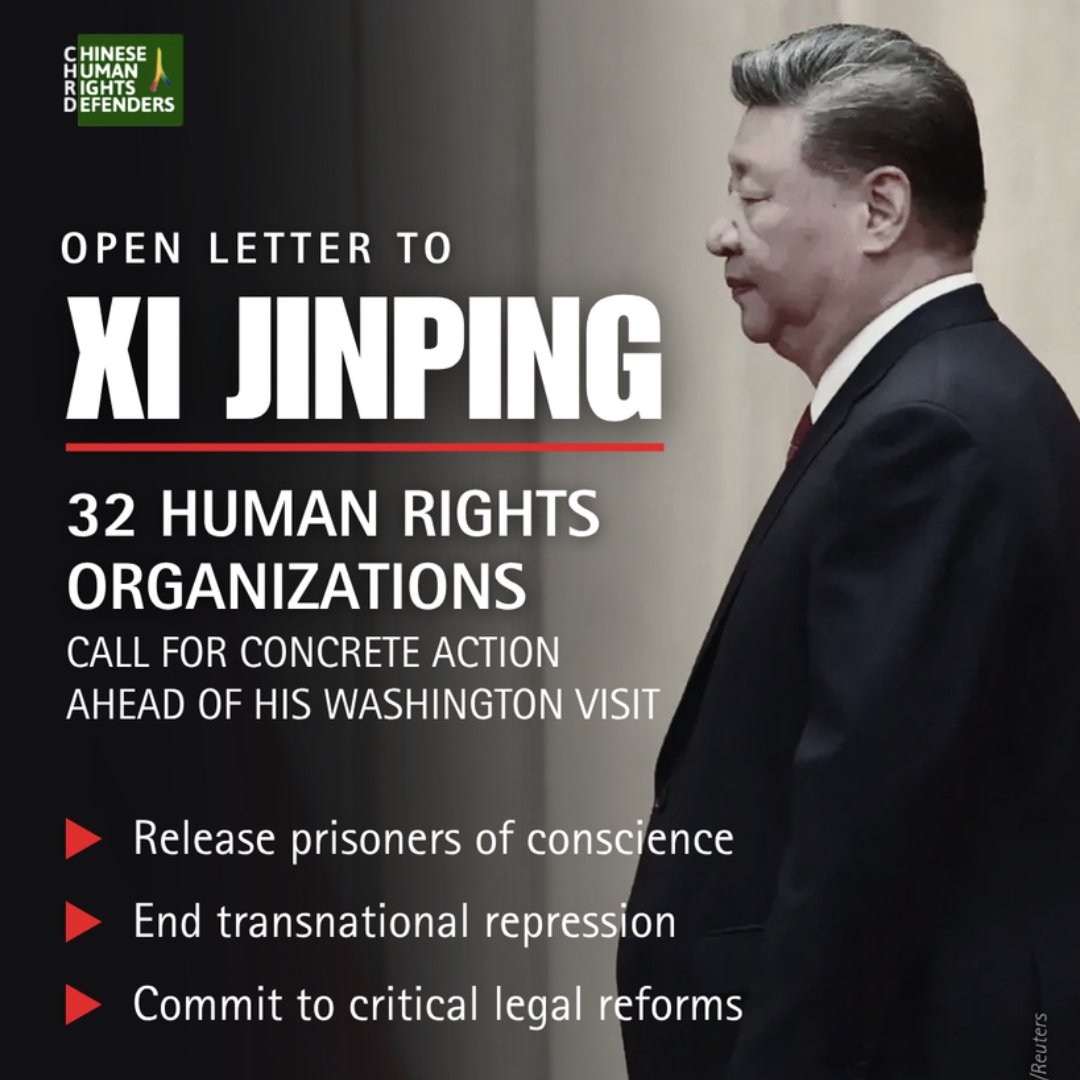
We are also calling for the repeal of the 2026 Ethnic Unity Law, and for a public commitment that Uyghurs abroad will no longer be harassed, surveilled, or punished through their families back home.
As Xi Jinping visits Washington, DC this week, we at Network for Uyghur Rights joined more than 30 human rights organizations in an open letter demanding real change, not empty diplomacy.
https://t.co/eo0zzpMnnS
We are also calling for the repeal of the 2026 Ethnic Unity and Progress Law, and for a public commitment that Uyghurs abroad will no longer be harassed, surveilled, or punished through their families back home.
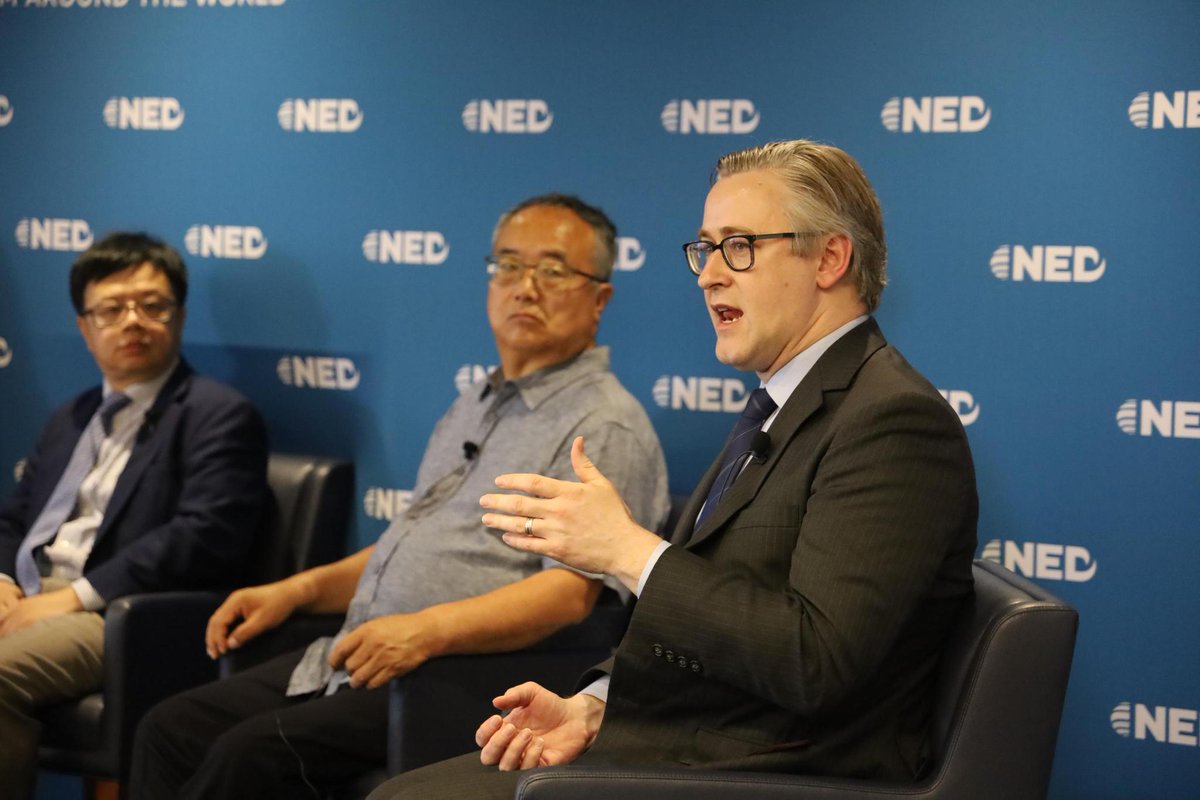
On June 3rd, Jamestown President @PLMattis joined Zubayra Shamseden (Co-Executive Director, Network for Uyghur Rights), Li Qiang (Executive Director, @chinalaborwatch), and Dr. Gyal Lo (Tibet Specialist, @tibetaction) at the @NEDemocracy to commemorate the Tiananmen Square Massacre. Moderated by NED Senior Manager for East Asia @williamnee, the panel highlighted how the PRC systematically developed its security apparatus to prevent the Chinese people from ever again so openly expressing and organizing their democratic aspirations.
#TiananmenSquare #PRC #Democracy #NED #JamestownFoundation
We are grateful to NED for convening this important conversation, which also included Dr. Gyal Lo, a Tibetan activist and educational sociologist; Li Qiang, Executive Director of China Labor Watch; and Peter Mattis, President of The Jamestown Foundation Foundation.
Last week, our Co-ED @ZubayraZubeyre spoke at @NEDemocracy's "Echoes of Tiananmen" event, marking 37 years since the massacre.
As a student in Shanghai in 1989, she took to the streets in solidarity with the democracy movement.
From dams, roads and factories to hotels and ski fields, Beijing has unleashed a hydra of policies to transform western China as it defies international censure and spends billions turning Tibet and Xinjiang into economic hubs. Our @FT visual story here: https://t.co/cRb4WLAz9K
The article also notes the increase in ski resorts, which @PeterIrwin_ reported on in February 2026.
The February report found dozens of western companies with business in the region, some working with local tourism departments.
Full report: https://t.co/Labjk87FDW
Network for Uyghur Rights Co-ED @ZubayraZubeyre cited in Part II of a major new @FT investigation.
"Companies, governments, entities, even tourists, should wake up and realise they are complicit."
https://t.co/Y1CBAOZ6c4
The article also cites previous research by NUR Co-ED @PeterIrwin_ on the continued surge in international hotel openings in the region.
Read the report: https://t.co/eYjC9DX2fu