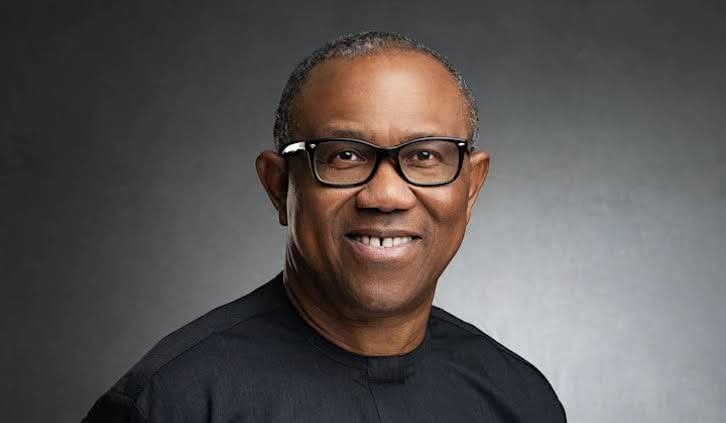
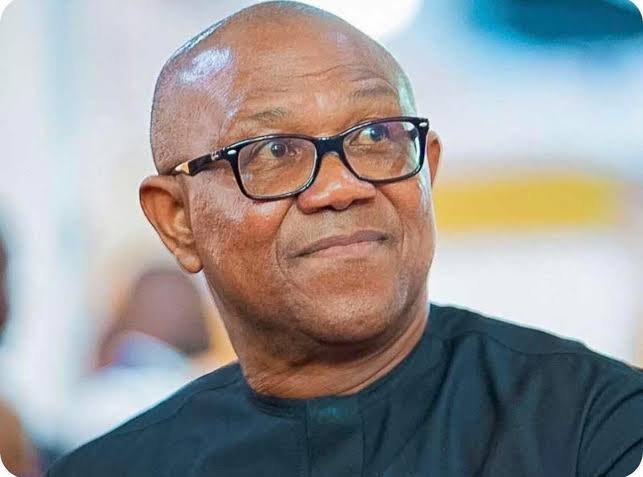
The best time to be called a Nigerian was in 1960. Another best time is now!
Peter Obi has filled up my pot of hope for a better Nigeria. #PeterObionCNN
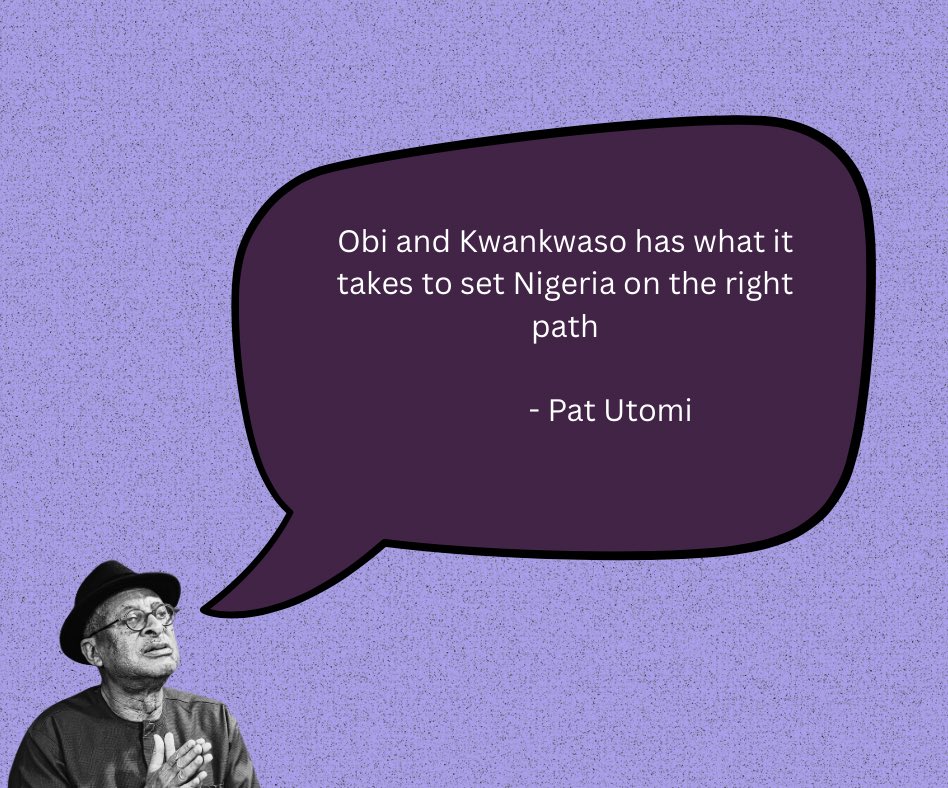
You can see why my support for @PeterObi is logical. When I was Executive Chairman of NERC, everyone acknowledged that I did not steal even N1 by any guise. I was radically honest.
I have argued that Nigeria's major and pressing problem is corruption. For me, the foremost qualification for any public office in Nigeria is that you will not steal public money.
If you will steal public money, I will never vote or campaign for you no matter how brilliant or competent. I am also a brilliant and competent, so I am not seduced by that. Brilliance is cheap. Honesty is expensive.
I will only vote for a man or woman who will not steal the money. Let us start from there.
Protecting Every Vote. Winning 2027. Together.
My fellow Nigerians at home and abroad,
Over the past months, wherever I go and in your many messages, two questions keep coming up: How will our votes be protected in 2027? And how will we win?
These are fair questions, and you deserve direct answers.
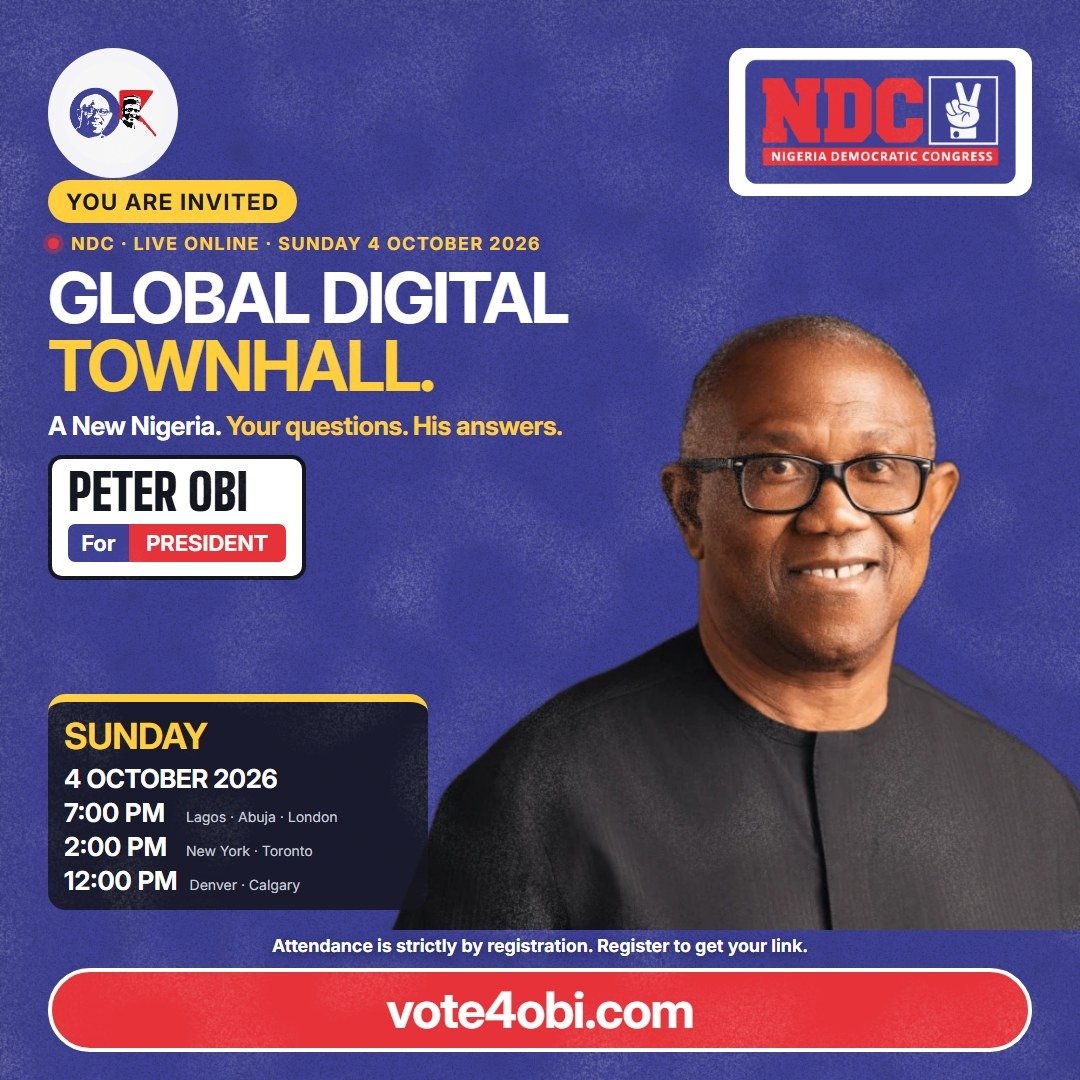
This Sunday, I will answer you directly, and more importantly, listen to you. I will join you for A New Nigeria Global Digital Townhall. We will speak plainly about protecting every vote and the path to victory.
But this is not only about speaking to you. It is about listening to you. I want to hear your concerns, your insights and your strategies. This movement has always been built by you, and your ideas will shape what we do next.
Sunday, October 4, 2026
7:00 PM WAT/GMT | 2 PM EST | 12 PM MST
Attendance is by registration: https://t.co/tBtGQWtcun
Let us continue this conversation together. A New Nigeria is POSSIBLE. -PO
Ahead of the January 16th, 2027 presidential election, I was asked why I believed Nigerians should choose Peter Obi.
My concern was not simply about personalities. It was about the system of government we had allowed to take root.
I argued that the PDP and APC, as structured at the time, were driven by what I called “transactional government.”
To emerge through that system, you had already made commitments, this person gets an oil well, another gets a ministry, another expects a percentage of the ministry’s budget.
And when government becomes transactional, the friends of those in power get richer while the country remains stuck.
I said then, “I’m not talking about stuff in the air. It’s stuff I have dealt with; I have spoken out personally to all of them aloud.”
That was the basis of my support for Peter Obi. I believed Nigeria needed to move away from transactional politics and toward a government focused on transformation.
When we speak about the possibility of a new Nigeria, we must look beyond political slogans and examine the records of those seeking to lead.
Peter Obi demonstrated in Anambra state that the government can be deliberate about education, healthcare and the management of public resources.
Under Peter Obi's administration classroom blocks were constructed across the state’s 177 communities, mission schools were returned to their churches, and Anambra rose to a high position in NECO results between 2011 and 2013. It was also in Peter Obi's administration that a state-owned teaching hospital which is the Chukwuemeka Odumegwu Ojukwu University Teaching Hospital located at Awka was also established.
Alhaji Rabiu Musa Kwankwaso’s record in Kano tells another important story. His administration invested heavily in education too, including thousands of classrooms, free feeding and uniforms for primary pupils, technical and vocational institutions, laboratories and scholarship programmes that supported a lot of young people in Kano state.
Both men have experience translating public policy into programmes that affect the lives of Nigerians in positive ways.
Peter Obi and Alhaji Rabiu Kwankwaso have chosen to work together because they found substantial common ground in their vision and mission for the good of Nigeria.
I believe Nigeria needs leadership that understands production, human capital, fiscal responsibility, education and opportunity.
If we are serious about moving Nigeria from poverty to prosperity, we should pay close attention to the possibilities created when experience, competence and a shared national vision come together.
The task before us is to build a Nigeria where the government works for the people and where every young Nigerian has a genuine opportunity to achieve greatness.
Peter Obi and Rabiu Kwankwaso are the ones best suited to lead the way forward.
If you know the positive influence Peter Obi has built among millions of Nigerians, you'll respect him.
People have started restructuring their lives to build integrity and live a very decent life while pursuing their goals because they have seen it to be possible with Peter Obi
ON THE ANAMBRA DEBT QUESTION
I have remained silent over the past few days because I have been grieving the loss of my very dear elder brother and friend, Chief Okey Ezeibe. However, the time has come for me to address some of the matters that have occupied public discussion in recent days.
I respectfully urge everyone to concentrate on the existential challenges confronting Nigeria and the hardships endured by its citizens, rather than on the needless distractions that have become widespread in our politics.
I wish to assure the public that I have no disagreement with my dear elder brother, Governor Soludo, or with any governor in Nigeria. I am not seeking the office of governor in any state, and I will not seek that position again, even if the Constitution is amended.
Accordingly, I appeal to governors to support whichever presidential candidate they choose while also permitting and assisting other presidential candidates and contenders for other offices to campaign freely and without interruption in their states. Ultimately, voters should be allowed to determine whom they wish to serve them.
Regarding the multilateral funding inaccurately described as “debt owed by Peter Obi” in Anambra State, I wish to state unequivocally:
As Governor of Anambra State, I did not approach any financial institution to borrow funds or issue a bond on behalf of the state. Indeed, at his farewell ceremony, the then Director-General of the DMO, Abraham Nwankwo, appointed me chairman and declared that, during his 10 years in office, I was the only state governor who had not approached him for a loan facility.
When I left office, the Anambra State Government owed no unpaid salaries, gratuities, or pensions. Neither did it owe any contractor or supplier who had completed work that the government had verified and certified.
Regarding development financing from the World Bank, these are concessionary development-support funds secured by the Federal Government for states selected by it to address specific needs. Repayment is spread over 25 to 30 years.
The Anambra State Government must therefore differentiate among three separate figures: the total amount approved for the multiyear development program; the amount Anambra State actually drew during my tenure; and the funding balance outstanding when I handed over on 17 March 2014.
The government has combined these distinct categories, added them together, and described the resulting US$123.77 million as “loans left by Peter Obi.” That is an incorrect application of public-sector accounting.
The eight facilities identified were primarily World Bank and IFAD development programs negotiated by the Federal Government, with participating states receiving access to the funds through subsidiary arrangements. They were not conventional commercial loans that I personally secured during my tenure.
This does not suggest that Anambra had no repayment responsibilities; rather, each facility must be examined in light of its approval, effectiveness, drawdown, and repayment record.
The clearest contradiction appears in the government’s own figures. It states that the original facilities amounted to approximately US$123.77 million and that US$92.35 million remained outstanding in June 2026. However, the DMO’s published records showed Anambra’s total external debt at approximately US$18 million when I began my tenure in March 2006, about US$30 million in March 2014, when I left office, and approximately US$45.15 million as of 31 December 2014, nine months after my departure.
The Anambra State Government must therefore clarify how a state whose recorded external debt was about US$30 million in March 2014 and US$45.15 million in December 2014 could supposedly have inherited US$123.77 million from Peter Obi, who left office in March of that same year.
On the day I left office, I left more than US$150 million as the dollar component of my investment in Anambra State as governor. I hereby provide documents that can be verified with the various banks. Had it remained untouched, this investment was expected to provide Anambra State with approximately US$10 million in annual income.
Even if their assertion were accurate—which it is not—that Anambra owed US$123 million, the government could have used the US$10 million generated annually from my savings to reduce the debt. It has now been 13 years since I left office, which would amount to US$130 million. The debt should have been fully settled by now.
Had they retained the funds I left in the bank, including the compound interest on the principal and the additional income, the total would be approximately US$335 million today. If they had chosen to repay the US$92.35 million funding, the entire amount would have been covered, leaving approximately US$242 million to be reinvested. That sum would have generated about US$20 million annually for Anambra State.
Let me reiterate that, when I left office, I left Anambra State in a strong financial position—the strongest of any state in Nigeria—and I stand by that position.
Through this clarification, I wish to state categorically that I will neither engage nor trade words with anyone regarding my tenure in Anambra State. My focus will now be on issues affecting the suffering Nigerian masses, which is the reason for my presidential ambition.
A new Nigeria is POssible. -PO
During my interview last night with the former senate president, Anyim Pius Anyim, the crucial question emerged: when politicians say it’s the south’s turn, which south are they talking about?
He talked about "the south's turn" and I challenged him to tell us: which south?
Because Nigeria’s south is not one political bloc. Obasanjo came from the south-west and had eight years. Tinubu, also from the south-west, is now being asked to take another eight.
So where, exactly, does this “south’s turn” leave the south-east? If “south” has effectively become shorthand for “south-west,” let’s have the honesty to say so.
And if Atiku can run in 2027 despite the supposedly sacred “south’s turn,” then perhaps we should stop pretending this is an equity argument. It’s a free-for-all.
Let every region produce its candidate. Let Nigerians decide. But please, let’s stop calling political preference “zoning” and selling it to Nigerians as equity.
Now, pour forth the torrent and set off a firestorm!
I made a website about @PeterObi. It details his entire life, his roots, offices held, source of wealth, documented donations, achievements as a governor, and more.
When they ask you what Peter Obi did as governor, send them https://t.co/MJy4SuUuXH
Retweet this to get it far!
@publikphigor@PeterObi One FACT that I'm willing to bet on is this:
When Peter Obi becomes President, real and actual talent/skills/enterprise will FLOURISH. All those political jobbers and "Wealth-without-Enterprise" will drastically reduce.
That's why they're all FIGHTING to stop Obi.
Sometimes, the greatest thing you fit give a young person no be money. Na opportunity.
Look at wetin happen when Baba entered Bae U’s world.
A man of his age and experience sat down with a young man whose style dey completely different from wetin he is used to.
Baba no just sit there looking serious.
He matched the energy, played along and showed Nigerians another side of himself.
And who helped make that connection happen?
CharlyBoy.
Fada believed in the young people behind that show enough to pull Baba into their space.
That one get lesson inside.
To the older generation: don’t only tell young people to succeed.
Give them room.
Open doors. Recommend them.
Trust them with opportunities.
To the younger generation: don’t wait for somebody to hand you a future.
Build something worth believing in.
When opportunity comes, be ready.
Because sometimes, all a young person needs is one person with influence to say:
“I believe in what you are doing. Go ahead.”
And sometimes, all an older person needs is the willingness to say:
“Let me enter your world and see what you are building.”
When generations support each other, everybody gets to grow.
Na so legacy suppose work.