After months of drafting, editing, & filming, I'm super excited to announce the launch of my online course finally
If you've ever wanted to craft story-driven, product-Led SaaS content, the frameworks I teach in this course will help.
Don't take it from me
Watch the...
@readswithravi Absolutely agree with this. I like to start with reading the moment I wake up in the morning. Then I exercise for 30-45 mins: Push ups, sit ups, some dumbells. Shower and off to work, where creating and reading isn't avoidable.
You have no responsibility to live up to what other people think you ought to accomplish. I have no responsibility to be like they expect me to be. It's their mistake, not my failing.
The primary reason why most content distribution endeavors fail is due to prioritizing tactics above strategy. I'll delve deep into how to avoid this in a live event today.
RSVP below:
https://t.co/B1epfcqxjM
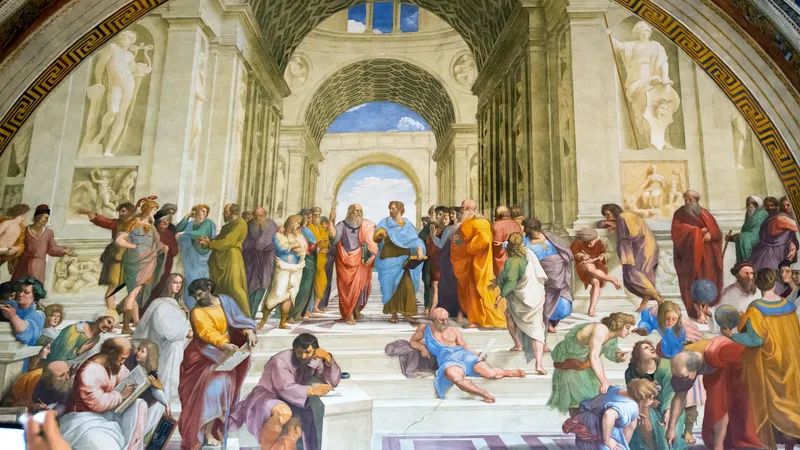
In his 3rd and least-read book of Rhetoric, Aristotle lays out his 4 steps for persuasive communication:
1. Exordium
2. Narratio
3. Confirmatio
4. Peroratio
What blows my mind is he wrote it 2,400 years ago.
Yet the structure still sets the foundation for modern-day logic, debate, and persuasion.
1. Exordium (“Beginning”)
Aristotle says a good intro should do two things:
• Capture the audience’s attention
• Establish the speaker’s credibility
He goes on to suggest four ways to create a great exordium:
• Use vivid language
• Ask rhetorical questions
• Tell a story (knew I liked him)
• Establish common ground with your audience
The beginning “sets the stage” for the rest of the work.
2. Narratio (“Narrative”)
Aristotle is referring to backstory, to additional context. He says backstory should accomplish three goals:
• Further establish credibility
• Create a sense of need to hear the argument
• Provide just enough info the audience knows what’s going on
Notice how the backstory comes after the hook. Plus, he suggests using as little as possible.
3. Confirmatio (“Establish”)
Aristotle argues your intro and backstory should naturally lead to your solution.
Then you use a combo of Pathos, Ethos, and Logos to persuade your audience.
But while schools like to display Aristotle’s famous three as an equilateral triangle, he doesn’t recommend using them in equal weight.
Quite the opposite.
Instead, he suggests finding the one that connects most to your audience and solely focusing on that.
“Rhetoric then may be defined as the faculty of discovering the possible means of persuasion in reference to any subject whatever.”
4. Peroratio (“Closing”)
Aristotle says your conclusion should inspire a specific action.
You weren’t talking just to talk – you want them to move, to decide, to laugh, to share, to vote, to do whatever it is you want them to do.
You have to ask for that thing. Nobody can read your mind.
Make the ask.
Point 1:
Aristotle believes the ultimate goal of communication is to persuade others to take a specific action.
The term he used was “Teleology.”
In Rhetoric it meant knowing the end goal first to craft the beginning and middle of your argument.
Authors like Toni Morrison and Neil Gaiman start with the end, then write the rest of their books to get there.
Same idea.
Point 2:
AIDA (Attention-Interest-Desire-Action) may be the most widely used copywriting framework in the world.
But it’s literally this idea from Aristotle re-worded.
In another of his less-read books, Poetics, Aristotle lays out his 6 key points for storytelling.
Those same points get re-worded in The Hero’s Journey, 3-Act Structure, and many other “modern” storytelling frameworks.
It’s been 2,400 years but Aristotle’s ideas are still everywhere around us.
***
“Naturalness is persuasive, artifice just the reverse.” – Aristotle
Follow me @nathanbaugh27 for more writing like this!
@david_perell Hi @david_perell
Our sister brand, https://t.co/yCRMKsjCDS, can handle this for you.
Here's a sample podcast brand we did:
https://t.co/zT9ZrqWHRY
Our process is detailed. Happy to share more.
I'm hosting a live event.
Come learn how to do B2B content distribution right. More details and a link to RSVP (seats are limited) below 👇👇
https://t.co/mNU1DVkCC7
i'm building a new course! "How to Edit"
~ 20 editing principles for improving written content
~ annotated examples for every editing principle
~ advice for writers looking to level up their career
~ editing checklist to download and keep
join the waitlist and i'll email you a discount code for 50% off
aiming to go live August 1st
waitlist: https://t.co/EuqYJqPH4d
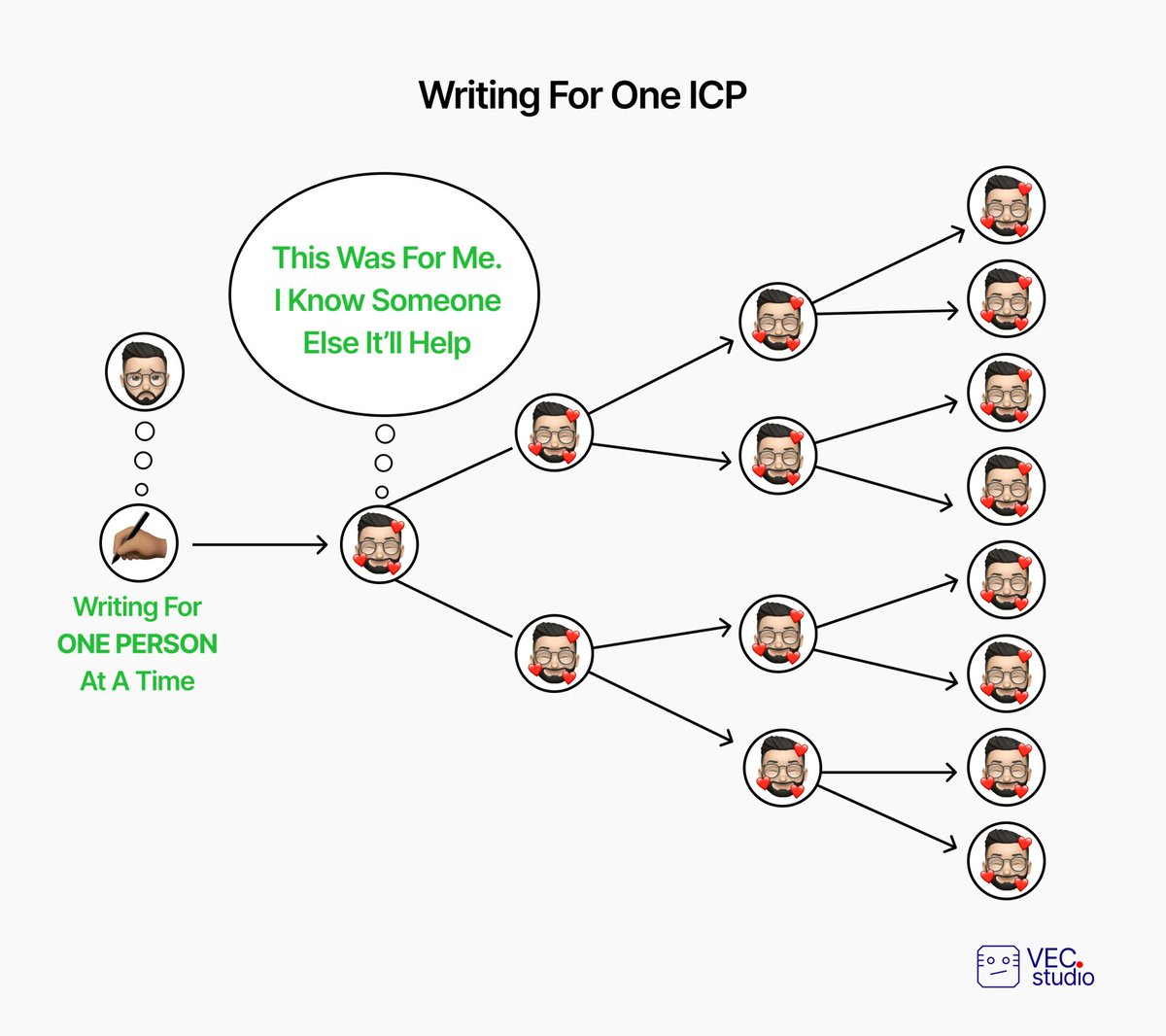
Becoming a way better B2B content marketer is easier IF you can learn how to write for one ICP at a time.
Learn how to do that here 👇:
https://t.co/zfgT9PziGr
...content.
Copywriting brings your brand's messaging to life and compels visitors to take your desired actions. Invest in it because it is the virtual salesman that works before your actual sales team.
Generating sales is a fruit-bearing consequence.
A consequence well-oiled marketing activities.
Simply put, investing in marketing activities early on and staying consistent yields sales fruits in the long run.
And how do you go about it?
Here are the steps we...
...that addresses the problems your product solves. This content should show (not just tell) target readers how your product solves their problems; it should also project your unique narrative subtly.
4. Invest in copywriting.
Copywriting sharpens the edges of your...