i soft-launched my course last week. 154 people are currently working through it 😱
it's $99. it contains everything i know about thought leadership content:
~ ideation frameworks
~ writing techniques
~ distribution tactics
~ examples and teardowns
https://t.co/RROAagZXuK
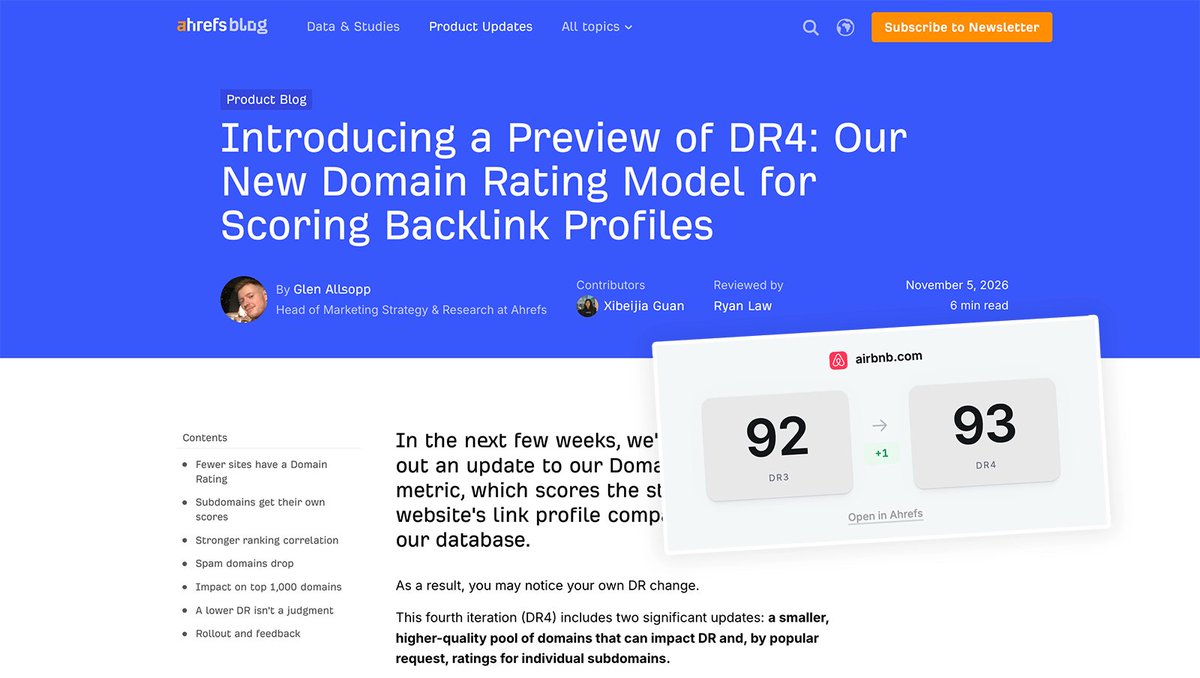
Today, we (Ahrefs) are releasing a preview of DR4: a new Domain Rating model for scoring backlink profiles.
Your own DR may change, so we're sharing two ways you can check before it rolls out on December 1st.
The two main changes:
1. Subdomains now have their own rating, so our help desk (DR 75) is scored differently than our root domain (DR 92)
2. The pool of domains impacting DR has essentially halved, to ~132M.
In our testing, DR4's correlation with Google rankings across all hosts is more than 2.5x stronger than our current model.
We've been analyzing the data for weeks and have already had some great outside feedback, but I'm sure there will be more.
That's why I'm opening up a direct feedback form for a short period of time.
I'll go through all of the comments myself and pass on what I see with the rest of the team.
We're pretty excited about finally sharing this with more people. 🙏
Link in the first reply
slop cannons vs thinkmaxxers: or, how to write with AI.
blanket statements are fun and polarising and perform well on social media but they shouldn't be taken seriously. "don't write with AI" is bad advice. "write everything with AI" is equally bad advice. both will hamstring you in different ways.
generative AI is an intensely powerful tool in every marketer's toolkit and like any tool it requires a measure of skill to know when it's appropriate to use it and when it's not.
at one extreme is the thinkmaxxer, someone labouring to pour maximal human intelligence and creativity into every utilitarian piece of prose. the thinkmaxxer operates under a perpetual category error, confusing the inherently pragmatic job of marketing a business and helping increase sales with an artistic act of self-expression. they forget that their words are not innately valuable; it is the outcome those words achieve that matters, regardless of their method of manufacture.
many - i would argue most - types of marketing content benefit greatly from being done faster and more efficiently. there is a proven format, and little to be gained in deviating from it. the content needs to exist in some finished form to be useful, and the more that exist, the better. there are vastly diminishing returns from additional time spent tweaking and refining beyond the basic template. thinkmaxxing in these situations is sheer self-indulgence masquerading as moral virtue. you misunderstand the job to be done. you waste everyone's time.
at the other end of the spectrum is the slop cannon, someone who has reduced all the shining facets of writing to a single homogenous AI paste, satisfied with the first passable simulacrum the LLM spits out in response to their prompt. for them, writing is solely mechanical, an irritation to be automated away in service of creating more content widgets.
but writing has vast utility beyond simply making widgets; it is a manifestation of thought, a timeless scaffold for arranging and improving thoughts. there are many marketing opportunities that don't come neatly bundled with a defined template to follow, and experimentation and messy play are necessary to discovering what works. sometimes, good outcomes are so rare and unpredictable that only herculean efforts to polish and improve writing are necessary to have any outcome at all.
the difficulty lies in working out where a given item sits on this spectrum; it is not always easy. you will make mistakes in categorisation, as i have. you will need to constantly evaluate AI's capabilities and revisit your previous taxonomy. you will need to sacrifice things you love and learn skills you never expected to need.
but this is our job now.
this is how you will explain and couch your value to everyone you encounter. whether you feel good about it or not (i still haven't decided), AI has irreparably changed the content marketing game. you need to create your own mental-model of its utility and value, assign the many tactics at your disposal somewhere along the AI/not AI spectrum, and be able to explain that model to your peers, your customers, your bosses.
so don't worry if you don't have some pithy stance on AI, or you don't fall neatly into an extreme viewpoint. the great irony is that both thinkmaxxers and slop cannons have abdicated responsibility over AI use and taken the easy, seductive path out. as long as you are engaging with AI in some capacity, making reasoned judgements about its utility, you are doing all you need to do to successful "write with AI" - whatever the hell that means
Last year, I interviewed a dozen copywriters for a role at @Ahrefs. Only one could tell me which books, frameworks, courses or thought leaders they'd studied to get better at their craft.
I posted about it on LinkedIn and it blew up. 545 comments.
Most people agreed with me...
Some others told me to just "judge the work," which I don't actually disagree with. Some people are just naturally very talented at putting ideas into words, without neccessarily knowing how they do it. 🤷
But even among those natural talents, many of them still take time to study the craft. And I'd argue those are the best of the bunch.
Now...
It's been 17 months since that post, and AI has gotten seriously good at writing copy.
Which definitely raised the bar of what "average" looks like...
But it didn't magically turn OK copywriters into AMAZING ones. (At least not from what I've seen.)
That being said...
We're looking for an AMAZING copywriter to join our team at Ahrefs.
Specifically, for the role of "Brand Communications Manager."
[Job posting linked in comments.]
If you know someone who would be a great fit for us, please tag them below. 🙏
Other than that...
Any help spreading the word to help us find an AMAZING copywriter is greatly appreciated! 🙏
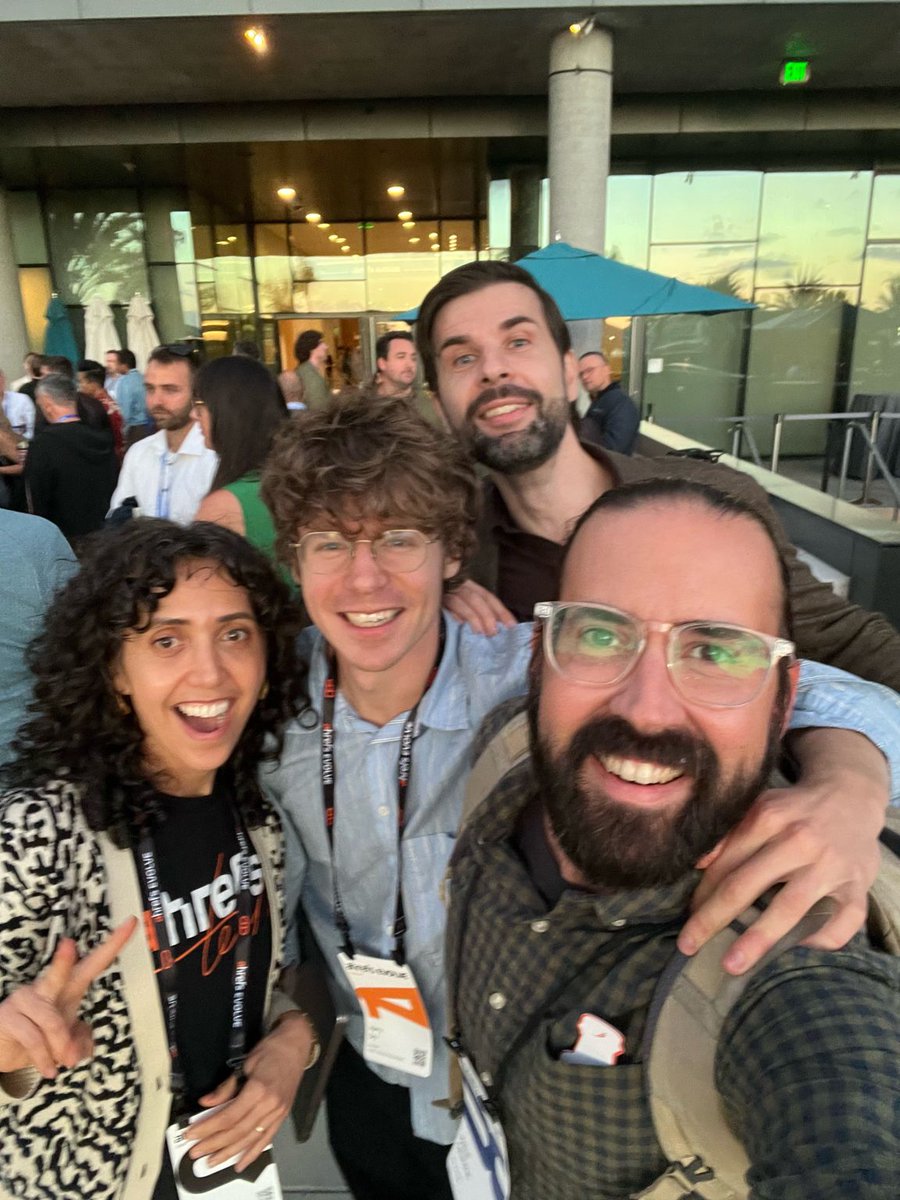
We had 4 book launches at @Ahrefs Evolve (which is kind of crazy).
Here's a shoutout to all four, starting from the bottom one:
📕 "Generative Engine Optimization" by Ross Hudgens / @RossHudgens
Haven't read it yet myself, but I've known Ross for many years and have absolutely ZERO doubts that he's poured his best GEO advice into this book. As someone deep in the trenches of this industry, I can't afford not to read it. So it's next on my list.
[available for purchase on Amazon]
📗 "Zero Click Marketing" by Rand Fishkin & Amanda Natividad / @randfish & @amandanat
Just finished this one a few days ago. The authors need no introduction, and this book is packed with their best thinking on how digital marketing has changed in the past few years, and what you should do to adjust. Data-driven and very entertaining.
[available for purchase on its own website]
📘 "ASAP: As SLOW as Possible" by Ann Handley / @MarketingProfs
This book is about knowing when to slow down in a world that's obsessed with shortcuts, especially now that AI makes the fastest path look like the smartest one. Ann is one of the true OGs of marketing, so I have no doubt her new book is worth your time.
It's not even out yet, so I had to improvise with the cover. 😅
By the way, we still have a few dozen pre-order copies of Ann's book to give away. 🎁 If you're in the US and want one, drop your state in the comments and we'll DM you a link to get "ASAP" for free.
[available as a free gift, see above]
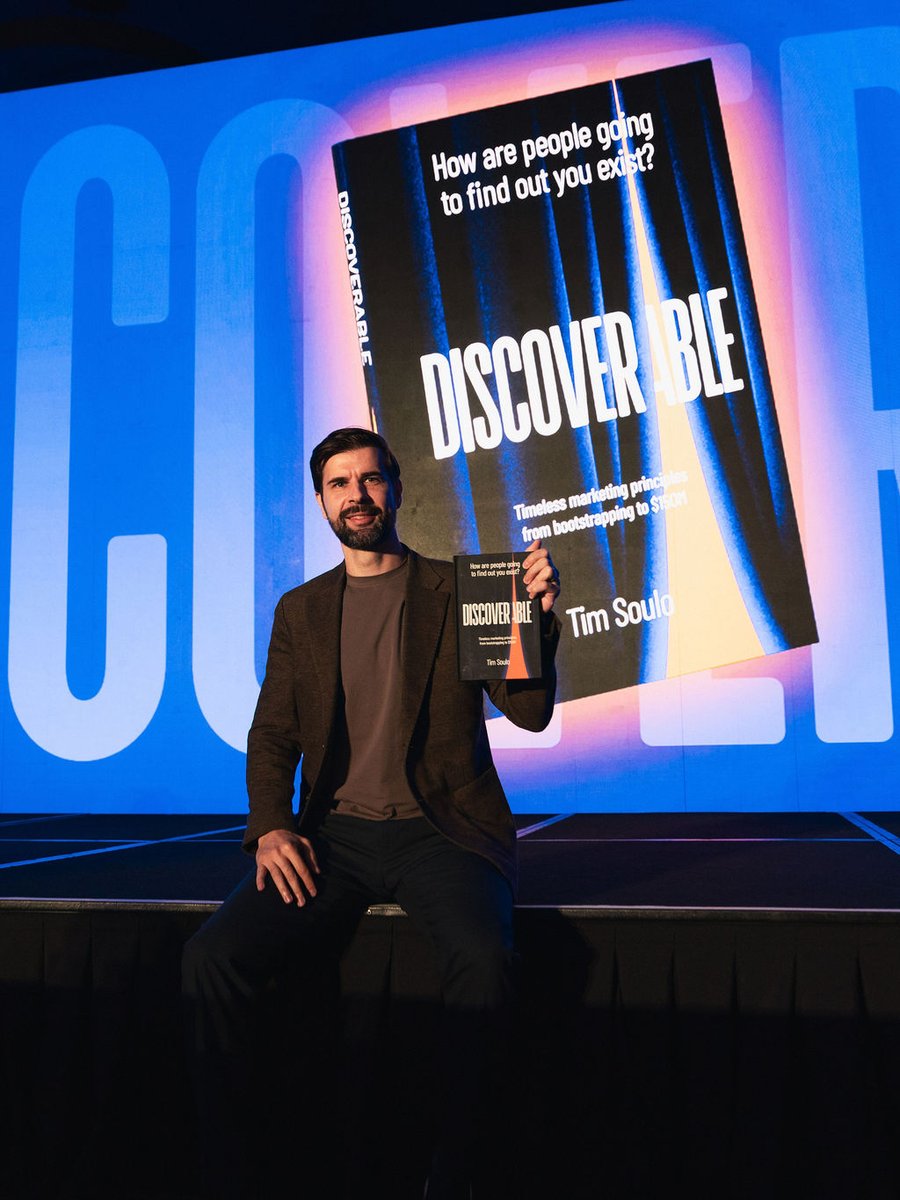
📙 "DISCOVERABLE" by Tim Soulo / @timsoulo
My book is:
- 60% - first principles of marketing that I've developed over 15 years of doing it
- 20% - stories of how we bootstrapped Ahrefs to $150M+ in ARR
- 20% - lessons from world's best marketers that inspire me
My goal with this book was to crystallize all of my marketing knowledge into a set of common-sense principles that will survive any platform shifts and algorithm changes.
Once you read it, you'll understand how my "marketing brain" works and how I make decisions.
[available for pre-order on Amazon]
--
P.S. Writing a book is a grueling task. And the best reward is seeing people actually read it. So I'm here to support my fellow marketing friends with their book launches. 👏
both people and Google are looking for signs of effort when making a website—and spending tokens is a form of effort, if they result in better data, better images, or a unique UX
this week on the @ahrefs podcast i walked @timsoulo through one of my vibe-coded side projects, including all of the decisions and data sources that turn a commodity website into something worth ranking
full episode: https://t.co/D3McbcbD0r
@JoeManna i just asked the engineers working on this, will let you know when i have an answer
(and "guest writer" is just the default label for user accounts in our CMS, i have flagged it to be updated!)
stuff like brand mentions in AI responses, sentiment of brand mentions, stability of brand mentions, citations in AI responses, share of voice in AI responses relative to your competitors, bot visits... loads of directionally useful things to measure, proxies to help you understand if/how you're influencing the buying process
gone are the days of compounding search traffic, ordinal search rankings, forecasting based on predictable click-through and conversion rates.
today, your content pages are grist for the AI mill, their contents scraped from the page, blended together with competing pages, and shown to the user—if you're lucky—in a context and format controlled entirely by a third party.
forgotten is the handshake agreement that good content will be rewarded by website visitors. instead, most people who interact with your content will do so through an intermediary like Google's AI Overviews or a ChatGPT response.
but most pages are still created with the assumption that people will visit them directly. how does content change if we abandon that idea?
my new article on the Ahrefs blog explores the idea of "headless" content marketing: https://t.co/xnM2aMkbWt
@PeterMindenhall@glenngabe@ahrefs no worries at all, tbh the "sign-up for free" button does make it seem like a product... i will pass that feedback on
@PeterMindenhall@glenngabe@ahrefs do you mean https://t.co/jUSlQ2FSF6? not a new product, we just moved some of our ongoing research onto the main website (used to live off-site)
16-hour flight back to Singapore... a few days as a jetlagged zombie... and I'm finally ready to drop my @Ahrefs Evolve recap.
In short: it was amazing.
It generated 260+ posts from 150+ people on LinkedIn (according to my AI agent). All of them positive. Not a single complaint.
Here are the highlights:
1. "What AI says about you is what the web says about you."
This line from my keynote ended up being the most-repeated takeaway from the event. I've always said that SEO (when done right) is a rather holistic marketing discipline. And now with AI search, that's become painfully obvious.
2. "Small Talks" were the breakout format.
We gave 9 attendees 5 minutes each on the main stage to share ONE cool thing. It was a massive hit!
I said in my kickoff talk that many people in the room were just as knowledgeable as the speakers on stage. The Small Talks proved it.
3. "Sponsor Grilling" was a big hit.
I asked our four sponsors tough questions on stage and didn't let them get away with vague answers (there were also some jokes involved). Nearly everyone I talked to said it was their favorite segment of the day. So we're definitely keeping this format for 2027.
4. On a more personal note...
Here's the irony of running a conference: you bring all these amazing people together and then you're too busy running around to actually talk to any of them.
I'm a bit jealous of our own attendees, honestly. They had way more quality time with the cool people we had at Evolve than I did. 😢
5. And finally...
Gotta give MASSIVE credit to my team. We pulled off this entire event with a tiny crew and limited resources.
I'm proud of every single person who helped made it happen and super thankful for your hard work and commitment.
Now back to you:
What's the ONE thing that separates a great event from a forgettable one for you personally?
We're already collecting ideas for 2027. 🙃
P.S.
I also announced the launch of my book at Evolve. It's called DISCOVERABLE and it's already available for pre-order on Amazon. 😉
if 🚨 "automating content creation" 🚨 sounds spammy or black hat... you might want to read this.
my awesome colleague @siquanong just shared how he uses content automation to automagically update articles, keep their data accurate and fresh, prevent hours of tedious work... and make content that is objectively better for the reader.
even if you never use AI to generate search content, there is a serious case for enlisting it to help update your existing content. SQ explains precisely how to he does it on the Ahrefs blog:
https://t.co/K2GVFYwrot
my 6 biggest takeaways from @brightonseo (and a recap video, ft. special guests @TheCoolestCool, @chimammeje, @SimpsonGareth):
- most companies are now in a routine of tracking AI visibility. it's not some niche tactic or edge case; it is viewed as necessary. more sophisticated companies are already moving beyond prompt tracking and starting to explore the distributions of their brands within different topics and models (something Brand Radar is uniquely good at, btw)
- SEOs are in charge of AI visibility, it falls within their purview, which is cool. that's a great opportunity for SEOs: we have a new thing to own, a new way to add value to companies, which is good because...
- organic traffic from content marketing continues to tank across the board, a common thread among every established company i spoke with
- there is still a big gulf in understanding how advanced AI has become, particularly for marketing workflows. many people are still stuck in the preconception that AI is just a chat interface you talk to and get things back from. fewer people are using things like agentic harnesses and MCPs to their full potential
- huge changes are underway for websites and website infrastructure. traditional WYSIWYG editors and CMSs are falling out of favor relative to headless CMSs and tools that allow AI to interact natively with web page content
- i sense a growing bifurcation in how content is created and the function it plays within companies. more companies are embracing content created primarily for AI retrieval, optimizing for brevity, directness, clear attribution... and assuming people won't read it. at the other end of the spectrum, there is still huge value in brand content, social media content, research, original perspectives, and ideas (just don't expect them to get much traffic from organic search)
as always, i learned a ton and got to chat with dozens and dozens of awesome, smart SEOs and marketers. until the next one :)
p.s. big thanks to Miro for the awesome recap video and the whole @ahrefs crew for all their hard work
Big announcement! I wrote a BOOK!!!
It's called DISCOVERABLE, and it's 223 pages of my best thinking about marketing.
It is:
- 60% first principles of marketing that I've developed over 15 years of doing it.
- 20% stories of how I helped grow @Ahrefs from under $8M to over $150M in ARR.
- 20% stories of other companies and brands that inspired me.
The underlying narrative is simple.
There are only three ways how people discover products and businesses:
1. They search. On Google, ChatGPT, TikTok, Amazon, etc.
2. They notice. Advertising, or content that gets organic traction.
3. They talk. People recommending you to their friends and peers.
In my book, I'm explaining the fundamental forces behind making each of these three pillars work for your business.
The book is not technical at all. No graphs. No diagrams. No dashboards. It doesn't teach you how to use marketing tools or how to succeed on specific platforms.
I wanted to make sure that the ideas from this book would be relevant for years to come, no matter what changes our industry will face going forward.
Without a doubt, this is the best piece of writing/thinking about marketing that I've ever produced.
And it would mean the WORLD to me if you'd grab a copy and give it a read. 🙏
Already available for pre-order on Amazon (dot com).
Release date: November 24, 2026.
P.S.
I was telling everyone it took me 2 years to write this book. Then I opened the revision history of the "master" Google Doc, and it was 4 years old.
announcing a fun side quest: Conference Spotter! find upcoming SEO and marketing events in the UK to attend, speak at, or even sponsor.
- see ~50+ upcoming marketing events in one place
- search and compare events by location, current lowest ticket price, event popularity, social buzz, even speaker experience
- for speakers: see a curated list of events with open speaker pitching processes
- for events organisers: add your own event!
i built it to solve my own problem: i want to speak at more events next year, but it's a nightmare trawling the web to find them. the site aggregates marketing/SEO events into one place, and updates key data (like best available ticket price) automatically each week. problem solved 😌
the whole site and infrastructure is built with @letaidocom (including buying the domain and deploying the live site, pretty cool!) and our new web mentions tool, Firehose. if you want to know more, i discuss the whole project with @timsoulo on an upcoming episode of the @ahrefs podcast!
importantly, the mascot is called Spot and he existed before ChatGPT's Dots and Meta's Muse...
check it out, poke around, and let me know if you have any cool feature ideas you'd like me to build: https://t.co/LQ5GLbXnBt
p.s. there is a soon-to-be-announced easter egg in these screenshots 🤫