Patch or Die!
Today we sent the following out to the CEOs in our portfolio regarding the widespread vulnerabilities that have been detected by AI agents:
The previous week should make it obvious that things have changed. Vulnerabilities are being discovered and exploited at a rate that has never been seen before. While there has been a flood of new vulnerabilities AI agents are being adopted at scale multiplying the potential risk. Agents not only help automate the attacker lifecycle, every ai agent is an insider threat. Your environments are designed to withstand attacks from the outside, not from within. As such, we are suggesting company leaders consider the following changes:
1 - Ensure you're sufficiently staffed for security. The average enterprise allocates roughly 10% of its tech spend to security. Consider doubling that. There are likely thousands of vulnerabilities that need fixing in your environments. Security through obscurity no longer works, all that can be exploited will be exploited.
2 - Establish a zero tolerance policy for secuirty bugs in new features and product releases. Re-examine launch and release schedules and consider delays to ensure all vulnerabilities are patched before deploying new features or products.
3 - Double tap the zombies. Find all old legacy environments that have been neglected and turn them off. Labs, test environments, zombie CI/CD projects etc. Turn it off for now. If it isn’t tied to revenue, kill it.
4 - End the risk acceptance process. Over the last 10 years the risk acceptance process has morphed from a way to accept risks to enable the business, to a way to justify never fixing security issues. Adopt a zero tolerance policy for security issues and risks.
Morgan Stanley reportedly emailed details of 100+ live deals by mistake.
A reminder that awareness alone is not enough
People make mistakes. Good GRC combines training & preventative controls like DLP & restricted sharing
One click should never be enough!
#GRC#RiskManagement
A supply-chain attack became a #databreach.
Malicious TanStack npm packages stole a GitHub token from an ex-CrowdSec employee whose access remained active. Attackers copied ~170 private repos and exposed data on 83 users and 51 potential investors:
👇
https://t.co/m7Bd7ytIJ5
For most of 2025, I was skeptical that AI was already playing a major operational role in real intrusions. Most public examples seemed limited to phishing and supporting tasks.
This report by my friend Eyal Eyal lines up with what I have been hearing elsewhere, too - in recent publications and in private conversations with people seeing this stuff up close.
I think that phase is over.
AI is moving into the operational core of attacks. With stronger models, open models, and jailbroken variants circulating, the economics have changed. Tailored tooling, exploit adaptation, and large-scale analysis get cheaper and faster.
I expect AI to play a major role in future campaigns, and that means more variation, more fresh tooling, and less reliance by attackers on recycled code.
All the more reason to focus on controls and detections that do not depend only on known samples.
Worth reading.
One of our very smart Active Directory experts has been putting together a series of blog posts about hardening AD. Already into its 7th installment, it covers SMB hardening, disabling NTLMv1, least privilege and more. Check the series out - https://t.co/KkKfarAX9a
CISA releases a Secure Software Development Attestation Form that will help ensure the software producers who partner with the US federal government leverage minimum secure development techniques and toolsets:
https://t.co/tyUp0tlU31
#Android: At BlackHat Europe researchers demonstrated that most #password managers for Android (1Password, LastPass, Dashlane, Keepass etc) are vulnerable to #AutoSpill attack allowing to steal account credentials on Android during the autofill operation:
https://t.co/dmUfu45JHU
The long-awaited Microsoft Cybersecurity Reference Architectures (MCRA) update is now live!
https://t.co/ZUd4ne90yD
In addition to the latest products & names, this is the first MCRA version integrated into the Microsoft Security Adoption Framework (SAF).
Share and Enjoy!
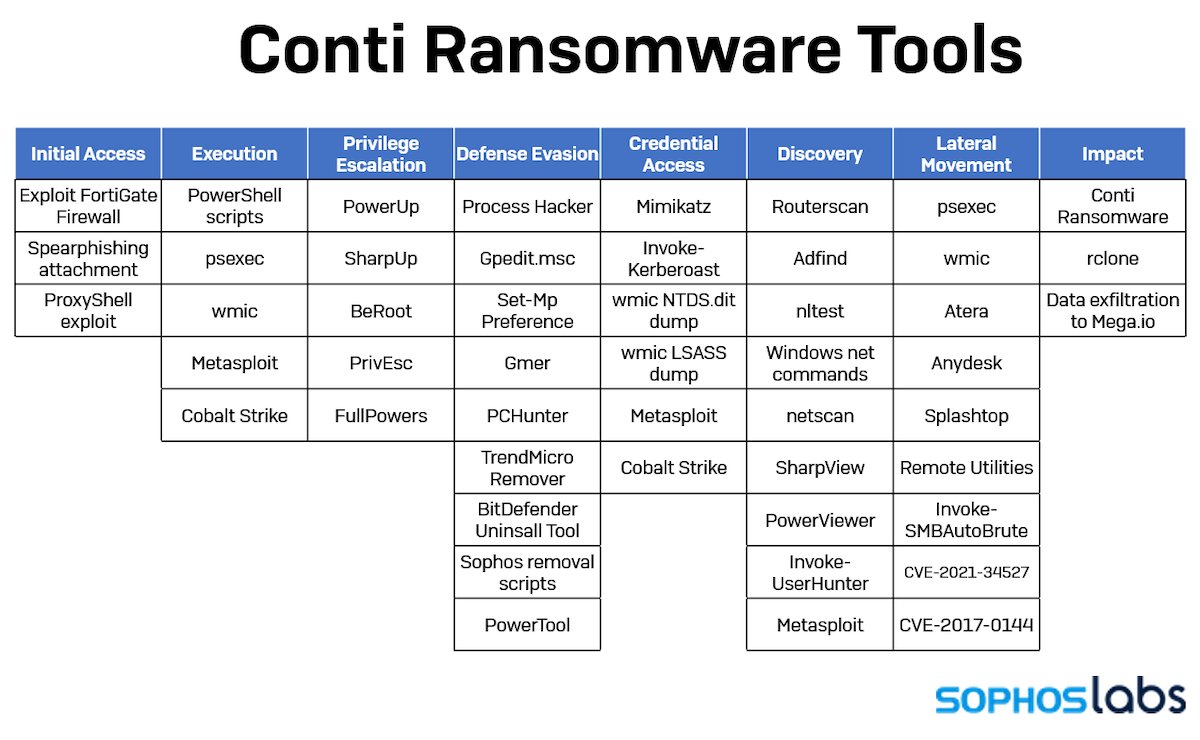
NEW: Conti affiliates use ProxyShell Exchange exploit in ransomware attacks ⚠️
In one of the ProxyShell-based attacks observed by Sophos, the Conti affiliates managed to gain access to the target’s network and set up a remote web shell in under a minute...
1/14
Wanted to do a quick blog on o365 audit logging and its quirks for a while now. Finally finished it. TLDR: enable it even if you dont monitor any of it. Atleast your incident responder will thank you.
https://t.co/azQ4Qb6oTY
Syncing your phone to the car or having a built in GPS are privacy risks. Cars don’t have the data protection of a modern phone. https://t.co/yjep5pyPqA