Harvard University is offering a FREE online course on the US Constitution! Understanding our Constitution has rarely been more important. Enroll in a free, short, engaging online course.
HarvardX: American Government: Constitutional Foundations | edX https://t.co/fm2LcQ1eZ2
On Valentine’s Day 36 years ago, at the request of Carl Sagan, NASA turned Voyager 1's camera back toward home for one last look.
From 3.7 billion miles away, it captured this: a mote of dust suspended in a sunbeam.
Here is how Carl Sagan beautifully described it:
“Look again at that dot. That's here. That's home. That's us. On it, everyone you love, everyone you know, everyone you ever heard of, every human being who ever was, lived out their lives. The aggregate of our joy and suffering, thousands of confident religions, ideologies, and economic doctrines, every hunter and forager, every hero and coward, every creator and destroyer of civilization, every king and peasant, every young couple in love, every mother and father, hopeful child, inventor, and explorer, every teacher of morals, every corrupt politician, every 'superstar,' every 'supreme leader,' every saint and sinner in the history of our species lived there — on a mote of dust suspended in a sunbeam.
The Earth is the only world known so far to harbor life. There is nowhere else, at least in the near future, to which our species could migrate. Visit, yes. Settle, not yet. Like it or not, for the moment the Earth is where we make our stand. It has been said that astronomy is a humbling and character-building experience. There is perhaps no better demonstration of the folly of human conceits than this distant image of our tiny world. To me, it underscores our responsibility to deal more kindly with one another, and to preserve and cherish the pale blue dot, the only home we've ever known.”
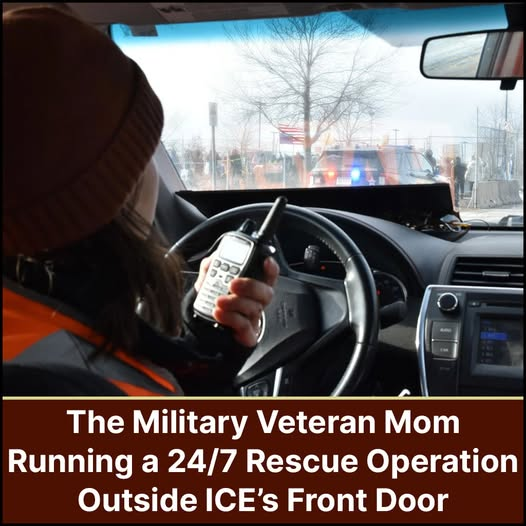
They were going to be the helpers that Mister Rogers said to look for. In early January, Natalie Ehret brought her sons to the Henry Whipple Federal Building -- the nerve center of ICE's months-long operation in Minneapolis -- to hand out cookies and hand warmers to the protesters keeping watch across the street. She didn't know people were being released from detention there in the frigid Minnesota winter.
Then one of her sons called her over. He'd found two young women who had just been released. They were freezing with no phone, no ID, and no ride. He'd already brought them to the family's car, given them food and water, and handed them a phone to call home.
Within days, the Army veteran and mom of two sons had founded Haven Watch -- a round-the-clock volunteer operation stationed at the gate of the Whipple building. Because what her son stumbled into that afternoon wasn't an anomaly. It was happening every single day. "From his act of kindness," Natalie later told MPR News, "that's what we do every day."
Like most Minnesotans, Natalie had no idea that federal agents were simply releasing people into the dead of a Minnesota winter with nothing.
But the pattern, once she saw it, was unmistakable. And appalling.
Detainees were being turned loose from Whipple at all hours -- day and night -- almost always stripped of their phones and identification during detention. No phone call before release. No one waiting for them outside. They walked out in whatever they'd been wearing when they were grabbed. Often without a coat. Into temperatures that regularly plunged into the single digits.
One volunteer, Kim Gerdes, described the moment it clicked for her: "They released someone in front of the Whipple Building in no winter clothes. It was freezing cold. She was just out in the cold." Gerdes gave the shivering woman everything she had on her -- her gloves, everything. "That's when I realized there was this immense need."
Another time, a mother and two children, ages 2 and 6, walked out of Whipple without coats. They had been detained in a facility in Texas holding thousands of people before being returned to Minnesota and released with nothing. "These kids are traumatized," Gerdes said. "They're out in the cold. They're shaking, crying. They just went through something so horrible."
The stories of who was being swept up and dumped back outside defied belief.
Natalie estimated that 60 to 70 percent of the people she met at the gate were American citizens. Detained for nothing more than observing ICE operations. Blowing a whistle at an agent. Being the wrong color in the wrong place. Stories like these have poured out of Minneapolis for months -- citizens tackled on sidewalks, dragged from cars, detained for hours, and nearly always released without charges or explanation.
Mubashir Khalif Hussen, a Somali American born in the United States, described a masked agent sprinting at him at full speed, tackling him, and dragging him handcuffed through the snow. "I told him, 'I'm a U.S. citizen.' He didn't seem to care."
Hussen was taken to Whipple and eventually released -- told to walk the seven miles in the freezing cold back to where he'd been grabbed.
Others -- legal refugees, immigrants with valid documentation -- were pulled from cars on the way to work, showed their IDs, and still dragged to Whipple. "To say that they're not criminals is a total understatement," Natalie said. "They're business owners and kids."
Gage Garcia, a U.S. citizen, was shackled and held for hours after blowing a whistle in an agent's face. He could see immigrant detainees through one-way windows -- "crying, curled up in a ball, distraught."
Inside Whipple, the conditions were horrendous. A Star Tribune investigation -- based on interviews with 30 detainees and nearly 200 court records -- documented a facility designed for 12-hour holds that had devolved into something far worse. Cells meant for 20 crammed with 100 people. Barely any food. Bleeding and injured people denied medical care. A young Muslim woman was shackled at the ankles and locked in a bathroom with three men for 24 hours.
Many people are held overnight or even multiple days in a facility with no beds, forcing people to sleep on concrete floors in freezing conditions with no blankets. Natalie described how she's had several teenagers in her car after being released "crying and shaking, telling me how cold they were."
"After some of these I just go cry in the parking lot because it's so devastating," Natalie reflects. "I just don't know how we got so lost that we can traumatize these people that are our community members."
For its part, DHS issued the same statement it always does -- that detainees receive "proper meals, medical treatment, and opportunities to communicate" -- but in a court hearing last week over its own failures to comply with release orders, a Department of Justice attorney admitted what everyone already knew: the system "sucks."
And for those that were released -- many of them hungry, sick, or injured -- they were walking into a Minnesota winter where exposed skin can develop frostbite in under ten minutes. Where being released outside without a coat isn't just cruel -- it's potentially lethal.
But as they have again and again over these past few months, ordinary Minnesotans stepped up when they saw their neighbors suffering. Here, they did it again -- with Haven Watch.
Volunteers in orange vests now station themselves outside the Whipple building around the clock. They never know when someone will walk out -- but someone always does and the need has only grown. Natalie told MPR News this week that "if anything, we're seeing more people coming through."
So the volunteers wait with warm cars idling -- all day and all night. Piles of donated coats in the backseats. Burner phones charged and ready. Snacks and water on hand. When the gate opens, they cross the street, bring the person to a car, hand them a phone, and stay with them until a ride arrives or drive them home themselves.
"So many of us were sitting at home doom-scrolling, watching it on the news wanting to make a difference," said volunteer Sarah Haraldson. "This was a way to do that."
But the work is devastating. The day-to-day vigils -- hours spent waiting in their cars, never knowing when someone will walk out -- are physically taxing. And the emotional toll of meeting person after person who has been traumatized, abused, or injured by their own government is relentless.
"Most people are upset, no matter how long they were in there and why they were taken in," Haraldson said. "I have had more grown men cry in my car in the last week than anyone should see."
For Haraldson, it's personal. She has a 20-year-old son, adopted from Ethiopia as a baby, who is a naturalized U.S. citizen. "It scares me every day when he is out that they could pick him up and put him in that building based on the color of his skin and nothing else."
The message Haven Watch carries to every person who walks out of that gate is simple.
"We want people to know as they come out of that building that we love them, and they are our friends, they are neighbors, they are family, and people love them and want to support them."
The story of what Haven Watch was doing spread quickly, and with it came a wave of support that stunned even its founders.
A GoFundMe campaign launched on January 17 has raised more than $700,000 from over 9,800 donors -- and support keeps growing. What started with phone calls and car rides has grown into something much larger. Haven Watch now operates a full website and has expanded into a broader community resource: legal and immigration questions, healthcare referrals, lost wages, rental assistance for families whose breadwinners are too afraid to leave home.
Countless Minnesotans have stepped up as volunteers, embracing the group's motto: "No One Walks Alone."
The need is not going away. Even with a drawdown of 700 agents from the area, there are still over 2,000 federal agents in the Twin Cities area. This is a massive number. It is still one of the largest occupations of an American city by the federal government in history.
People are still being grabbed. Still being held. Still being released with nothing into the bitter cold.
For many of them, the first kind face they see belongs to a Haven Watch volunteer in an orange vest.
"After I've seen who comes through that gate, I just can't be at home thinking we're missing someone," Natalie reflects. "Emotionally it feels unsustainable. But that's being human. I shouldn't pick my son up from soccer and pretend I didn't just hear a story that's so painful that it changed me."
The toll is immense. But so is the resolve. "We won't stop," she says. "But we are tired."
The simple act of waiting at a gate with a warm car and a charged phone is not a small kindness. It is the thing standing between a stranger and the cold. And right now, thanks to Natalie and the volunteers of Haven Watch, no one walks out alone.
"We all need to be a little bit courageous" Kayla Schultz the young woman who filmed the ICE agents killing Alex Pretti on CNN. Thank you Kayla #Minneapolisstrong
From @springsteen :
I wrote this song on Saturday, recorded it yesterday and released it to you today in response to the state terror being visited on the city of Minneapolis. It’s dedicated to the people of Minneapolis, our innocent immigrant neighbors and in memory of Alex Pretti and Renee Good.
Stay free, Bruce Springsteen
BREAKING: A letter from Alex Pretti’s Final Nursing Student:
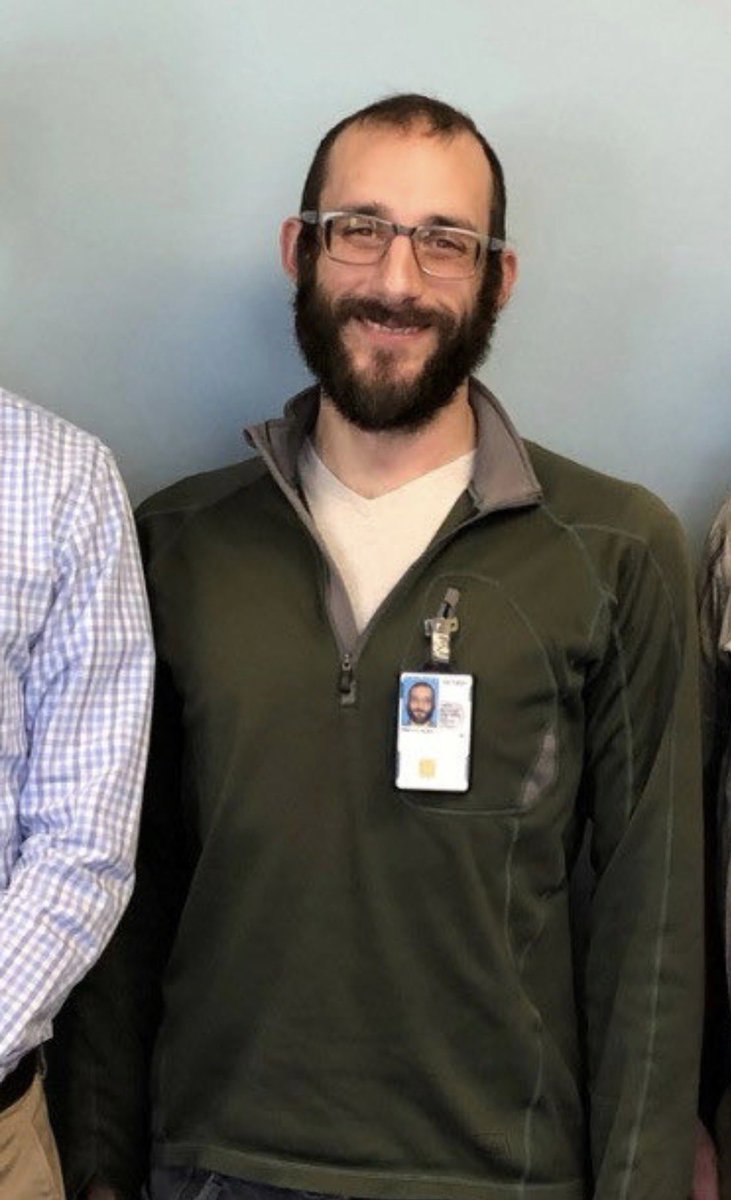
“I was Alex Pretti’s final nursing student. He was my friend and my nursing mentor. For the past four months, I stood shoulder to shoulder with him during my capstone preceptorship at the Minneapolis VA Hospital. There he trained me to care for the sickest of the sick as an ICU nurse. He taught me how to care for arterial and central lines, the intricacies of managing multiple IVs filled with lifesaving solutions, and how to watch over every heartbeat, every breath, and every flicker of life, ready to act the moment they wavered. Techniques intended to heal.
Alex carried patience, compassion and calm as a steady light within him. Even at the very end, that light was there. I recognized his familiar stillness and signature calm composure shining through during those unbearable final moments captured on camera.
It does not surprise me that his final words were, “Are you okay?” Caring for people was at the core of who he was. He was incapable of causing harm. He lived a life of healing, and he lived it well.
Alex believed strongly in the Second Amendment and in the rights rooted in our Constitution and its amendments. He spoke out for justice and peace whenever he could, not only out of obligation, but out of a belief that we are more connected than divided, and that communication would bring us together.
I want his family to know his legacy lives on. I am a better nurse because of the wisdom and skills he instilled in me. I carry his light with me into every room, letting it guide and steady my hands as I heal and care for those in need.
Please honor my friend by standing up for peace, preferably with a cup of black coffee in hand and a couple of pieces of candy in your pocket, just as he would. He would remind you that caring for others is hard work, and we must do whatever it takes to get through the long shifts. Step outside with your dog, breathe in the world, hike or bike as he loved to do, and let yourself find peace in the quiet moments within nature. Stand up for justice and speak with those whose views differ from your own. Hold your beliefs with strength, but always extend love outward, even in the face of adversity.
Take one step, no matter how small, to help heal our world. Through these acts, carry his light forward in his name. Let his legacy continue to heal.”
President Clinton is referring to the
1994 Budapest Memorandum on Security Assurances. The U.S. is indeed responsible for protecting Ukraine.
https://t.co/6sMUpTCe7U
https://t.co/AwIXp1RWWL
Bill Clinton: “WE forced Ukraine to give up nuclear weapons, cruise missiles, and strategic bombers, WE promised to protect Ukraine from Russia, WE made Ukraine vulnerable.
So yes, this is OUR war!”
When the US President speaks, not a conman property developer from Manhattan.
In just one week: A GOP president deployed Marines in a U.S. city, called for a Democratic governor’s arrest, the GOP Speaker called for him to be tarred and feathered, a Democratic senator was handcuffed, and two Democratic legislators were shot in their homes.
This is a very good short summary of the history of academia over the last 100 years and what has happened in USA academia in the last 100 days.
https://t.co/I9E3La4Jx7