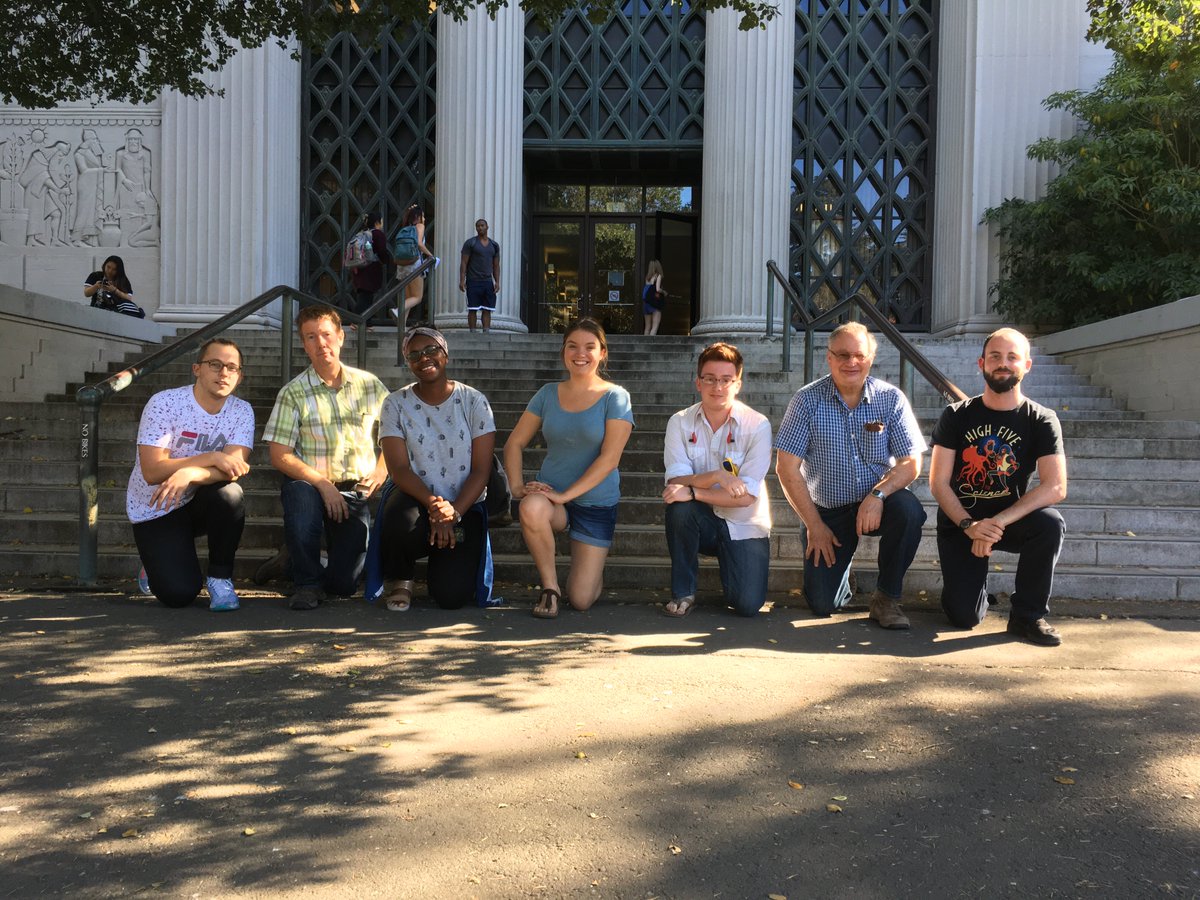
Dr. Wayne Getz and students exploring questions in population biology & behavior with application to epidemiology, conservation, & wildlife biology @UCBerkeley
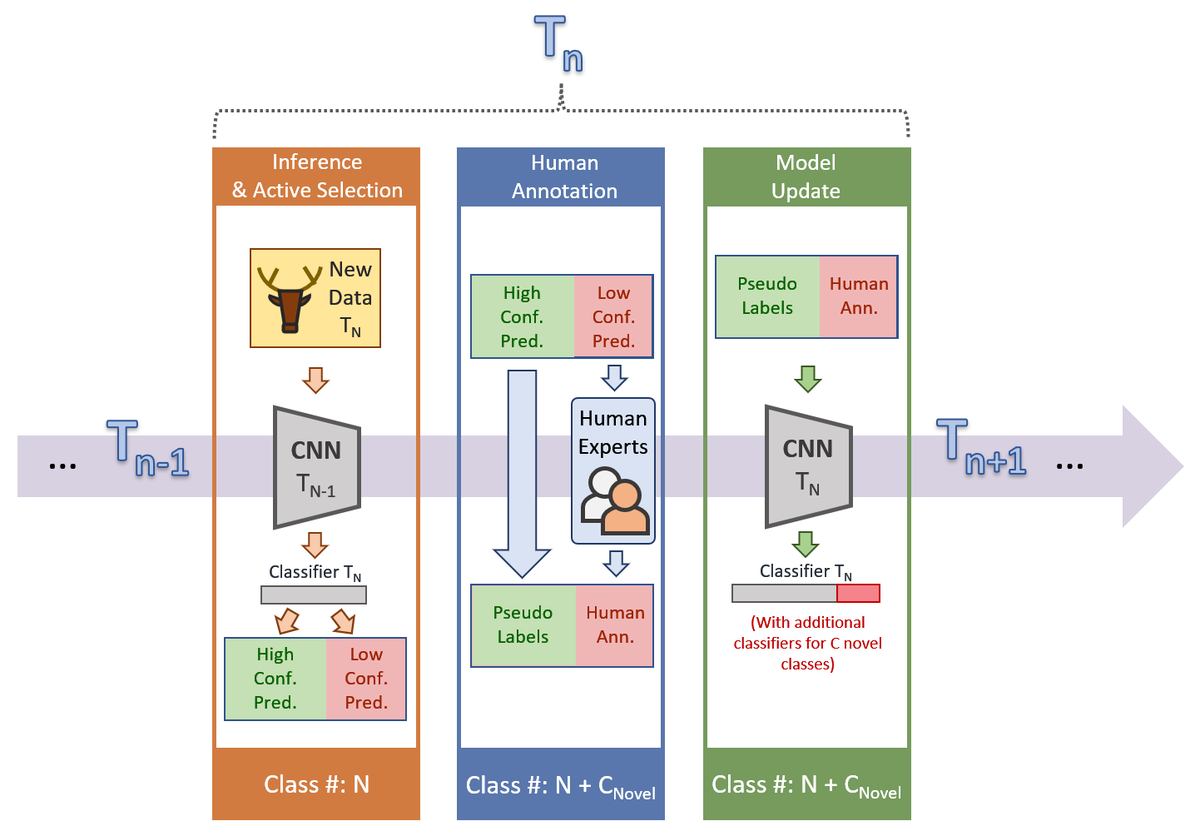
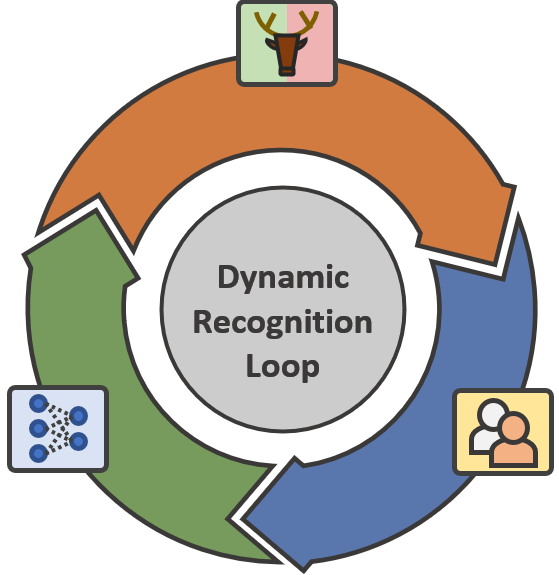
We design an iterative recognition framework with a synergistic collaboration of humans and machines. Our goal is to minimize the need for human intervention as much as possible, while maximizing the recognition performance/accuracy of each model update procedure!
Check out our most recent publication with @SpringerNature in Nature Machine Intelligence! This project, led by Zhongqi Miao, uses an iterative recognition framework that finally makes deep learning deployable for automatic wildlife recognition: https://t.co/01wBX7jNDz
In real-world applications, AI models do not stop at one training stage. As data collection progresses over time, there is a continuous cycle of inference, annotation, and model updating. When there are novel and difficult samples, human annotation is inevitable.
As we continue to grieve the lives lost to police brutality and racism (Breonna Taylor, George Floyd, Ahmaud Arbery, Tony McDade, & more), with the leadership of @kenleecalhoun & @prettynwhitty several of us ask @ESPM_Berkeley to take anti-racist actions bc words are not enough.
Thank you @CENDUCBerkeley for awarding me with the Thomas C. Alber Science & Engineering for Global Health Fellowship! I'm excited to be part of your 2019-2020 cohort 🥰 @VLSB5048
An amazing opportunity to see and advance some of the amazing work that has been done at the Etosha Ecological Institute (EEI)! I couldn't have completed my dissertation without them! I'm sure @VLSB5048 will be well represented! https://t.co/BQh5f92PS6
Though little is known about the relationship between surface water and antibiotic resistance (AR), ESPM grad student Eric Dougherty's research is working to change that. Dougherty's study focuses on how managing human AR inputs is a key issue. https://t.co/n4D34HmDsF
ESPM professor emeritus Wayne Getz and alum @ColinJCarlson studied the spillover interface, which is characterized by a spillover of wildlife, livestock, vectors, and the abiotic environment that result in new and distinct diseases. New paper here - https://t.co/SYxgCMX4xI
Another great paper out from our lab! Check it out!
"Ecological Methods and Metrics for GPS movement data" now published in the International Journal of Geographical Information Science https://t.co/AO7ukbhdur
Save the date! 📢
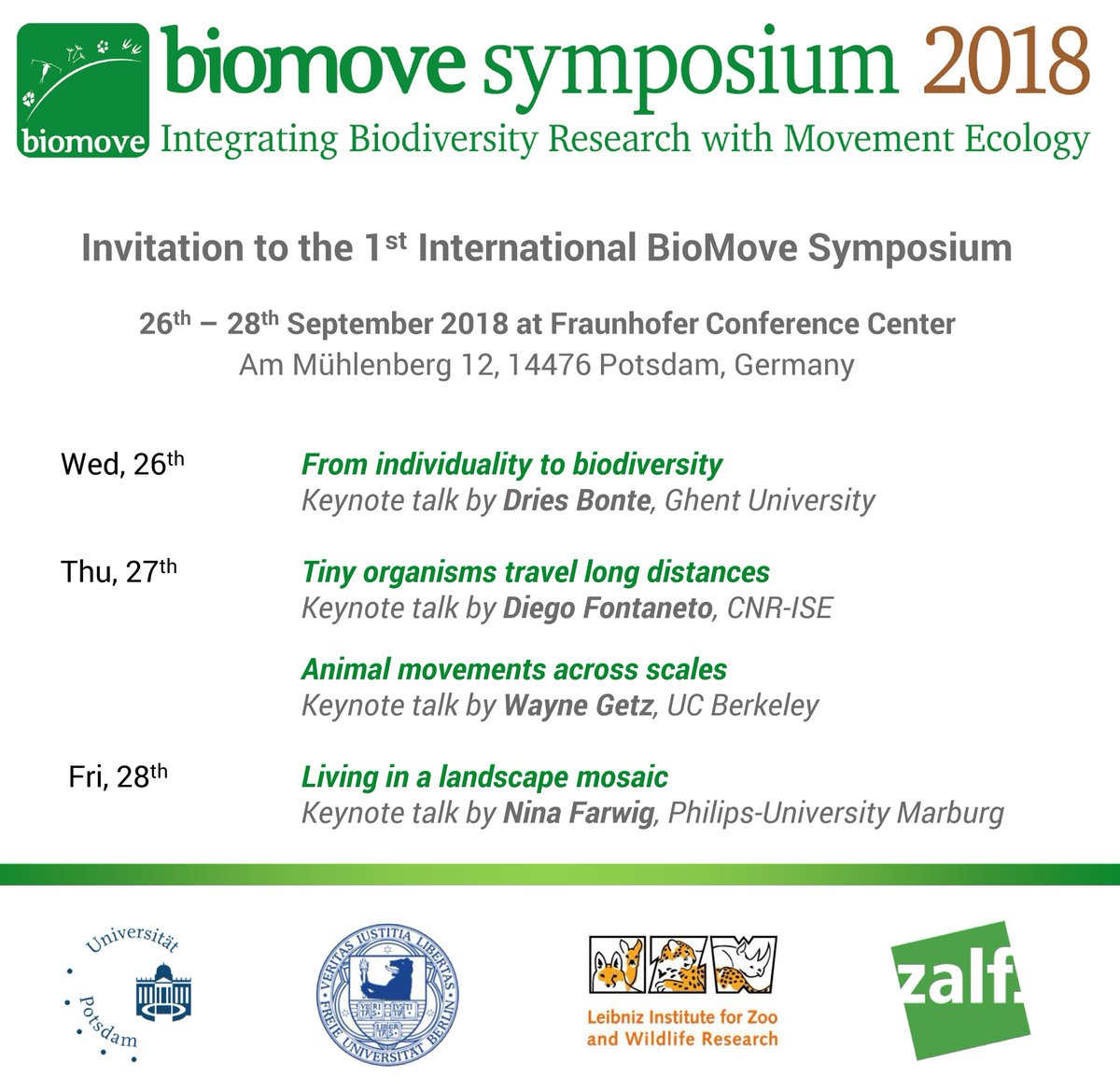
During our 1st BioMove Symposium on #movement 🐾 and #biodiversity research 🐭🐹 - taking place 26.-28.09. in #Potsdam - we will tackle the question how individual movements shape biodiversity patterns and vice versa! More infos via https://t.co/Al3cwWtDFr