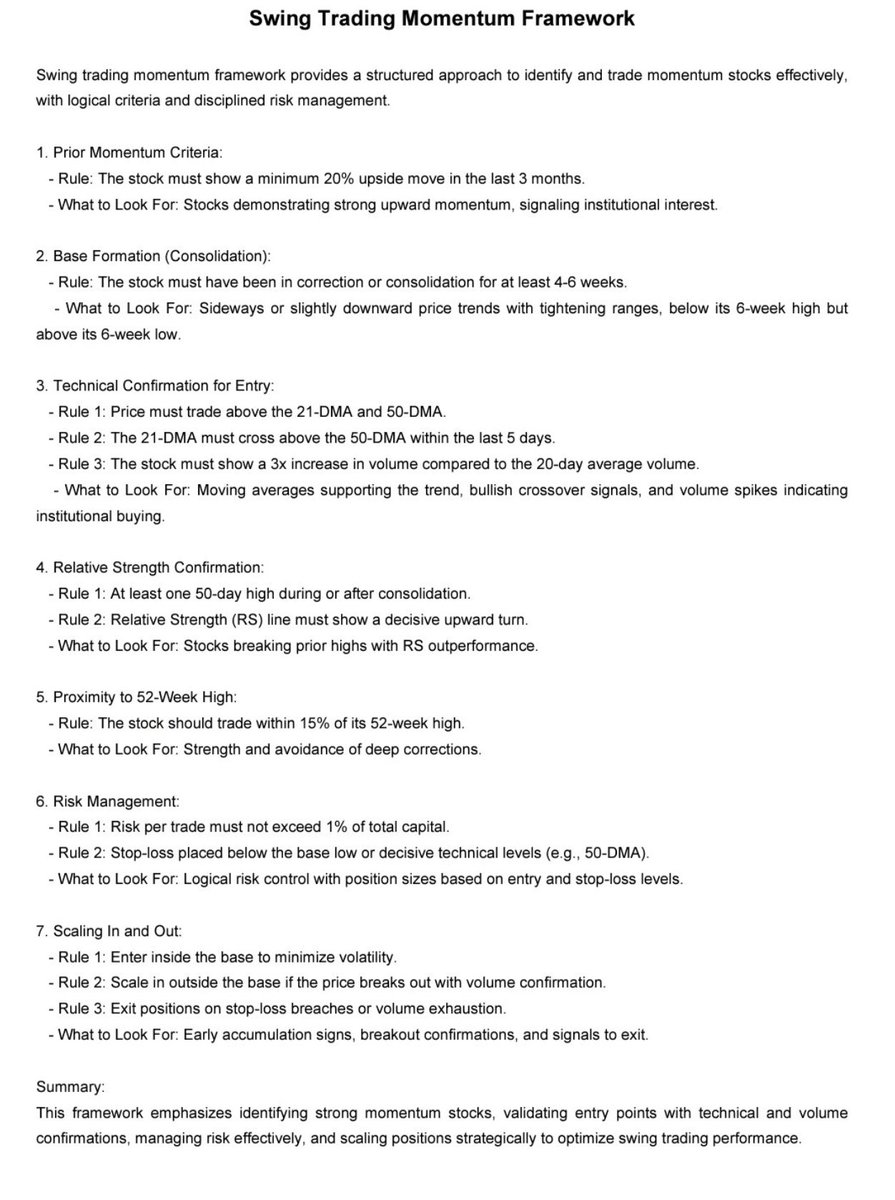
I replaced my financial advisor with Claude - and no, that's not clickbait.
Claude now operates as my personal CFO - and it's the best thing I've done for my finances in years.
It's trained like a McKinsey-level analyst, using all my financial data.
Steal the full setup:
𝗖𝗮𝗿𝗲𝗲𝗿𝗠𝗮𝘅𝘅𝗶𝗻𝗴 ‼️
Recently I came across the term “LooksMaxxing”, the idea of maximising your physical potential and it made sense (to an extent).
It got me thinking… if we can optimise our physicality for better life outcomes, the same concept applies in the professional world.
Call it “CareerMaxxing”
At a time where competition is now globalised, industries are fast to evolved and AI is reshaping entire industries, the margin between average and top performers is widening.
So over a ~30–40 year working career, the real question becomes…
How much are you actually maximising your upside ?
CareerMaxxing, to me would look like
➡️ Stacking qualifications so you’re never removed from contention when opportunities arise (Undergrad + Masters etc)
➡️ Continuously upskilling rather than relying on what got you the first role (Professional Qualifications, connections etc)
➡️ Being willing to relocate, as opportunity isn’t evenly distributed across a city or even continent
➡️ Switching roles every few years to optimise pay increases and accelerate progression (this has been proven to be a quick fire way to increase salary)
➡️ Networking with people doing what you want to do, even if you aren’t currently (Osmosis, Proximity effect)
➡️ Taking calculated risks where the downside is capped, but the upside is asymmetric
➡️ Learning a second or third language
In practice, that could mean short term discomfort such as…
➡️ Leaving a comfortable role for one that accelerates learning
➡️ Saying yes to opportunities that feel slightly uncomfortable (outside area of expertise)
➡️ Being away from loved ones
This is atleast a foundation to build on and consider
There’s a secondary part people overlook, you need the capacity to do this.
Your physical and mental health isn’t separate from your career, it underpins it. If you’re not in a position to take on new challenges or push yourself when opportunities show up, you’re invariably capping the upside.
Too many people play their careers defensively, optimising for stability over growth.
But if you zoom out, a career is one of the biggest compounding assets one can have.
Small, strategic decisions, repeated over decades, create outcomes that look “overnight” from the outside.
CareerMaxxing is about doing everything in your power to affect the outcome, It’s about accountability and agency.
In the long run, the biggest risk isn’t failure…
it’s underutilising your potential.
Would love to know your thoughts, what steps are you taking to optimise your career ?
#Career #Employment #Careermaxxing
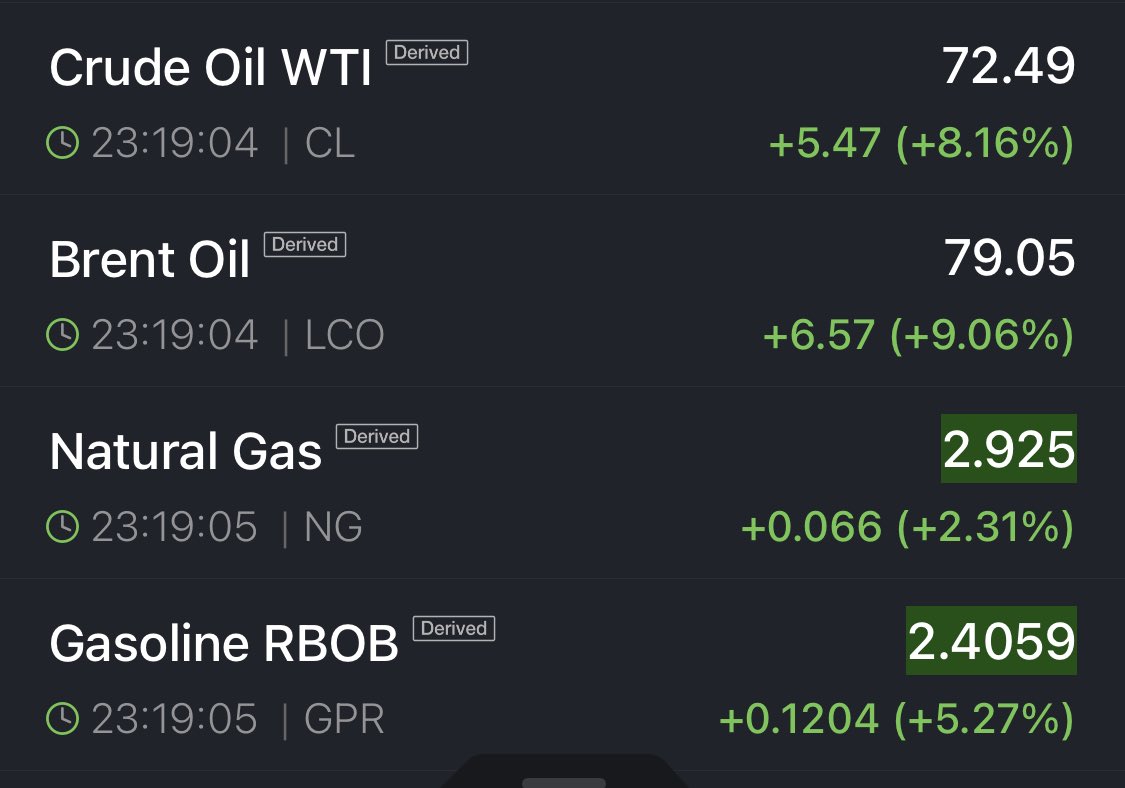
The predictable side of geo-politics
Markets understand Event Risk, coupled with supply chain bottle necks…
And they’re not just speaking, they’re screaming !
It’s that time again—as 2025 comes to a close, it’s time to drop 2026 predictions.
I think 2026 is going to surprise, both to the upside and to the downside. Organized by category:
Macro / Chains
* $BTC is > $150K by year-end, but BTC dominance decreases in 2026.
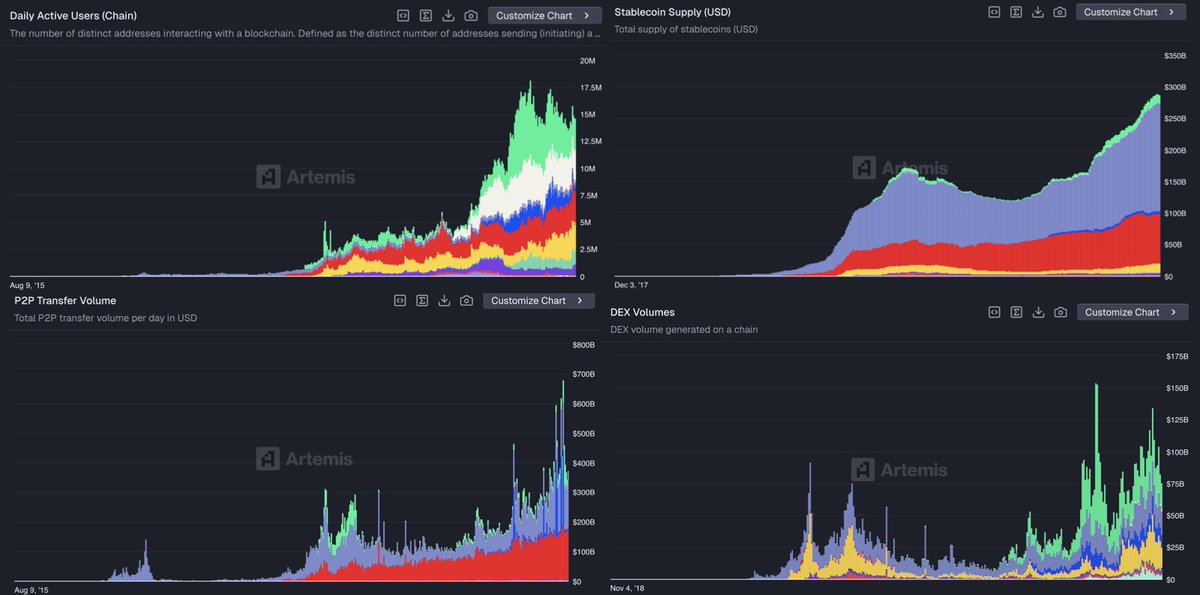
* Despite the excitement around the recent crop of fintech chains, their metrics will underwhelm. Daily active addresses, stablecoin flows, and RWAs—Tempo, Arc, and Robinhood Chain will underdeliver, while Ethereum and Solana will overdeliver. Best developers will continue to build on neutral infra chains.
* A big tech company (Google, Facebook, Apple, etc.) launches or acquires a crypto wallet in 2026.
* Many more Fortune 100s launch blockchains, although increasingly concentrated among banking and fintech players. Expect Avalanche to be a standout here, alongside OP stack, Orbit, and ZK Stack.
* Monad gets written off as dead by CT, but metrics take off in the latter part of the year after analysts have already forgotten about it.
* At least 3 other chains connect to DoubleZero to improve their latency & throughput metrics. DoubleZero hits 80%+ stake on Solana.
DeFi
* Perp DEX market share consolidates to something like 3 big venues a la HBO (market share something like 40 / 30 / 20), followed by a long tail of smaller players who compete over the leftovers (last 10%).
* Equity perps take off, becoming >20% of total DeFi perp volume by EOY.
* Significant growth in RFQ compared to CLOBs/AMMs, both on spot and perps.
* Some DeFi-related insider trading scandal hits mainstream media.
Stablecoins
* Stablecoin supply expands by ~60% in 2026, and USD remains 99%+.
* USDT dominance declines moderately to ~55%.
* Stablecoin-backed cards grow 1,000% in 2026—insanely fast growth. Becomes the dominant way that stablecoins land and expand in emerging markets. Rain is the biggest winner here.
Regulation
* Clarity Act gets signed into law in 2026 after some significant markups and horse trading. A bit of buyer’s remorse from crypto insiders.
* Dems win the house, and there is a parade of hearings about anything in crypto that touched $TRUMP / $WLFI. The underlying deals get subpoenaed. Trump insists he was never involved and didn’t know anything about it (and thus these deals are not protected by executive privilege). Anyone who signed a stupid deal gets publicly embarrassed.
Prediction Markets
* Prediction markets grow like crazy. Big legal fights over sportsbetting regulation and federal pre-emption, but nothing major gets resolved next year, so status quo continues through 2026.
* Meanwhile Polymarket continues to steamroll the culture. Prediction markets are perceived as cool and smart, and so are allowed to throw up odds everywhere.
* As Polymarket domestic expansion gets going, it starts winning more and more domestic market share from Robinhood and sportsbooks.
* The explosion of other platforms tacking on prediction markets mostly flop. 90% of prediction market offerings are totally ignored and then wind down by EOY. B2B partnership-driven distribution underperforms, direct-to-consumer outperforms. Almost all of the demand in 2026 is sourced directly from Polymarket, Robinhood, and Kalshi frontends (plus traditional sportsbooks).
AI
* Primary AI use cases in crypto remain within software engineering and security. Everything else remains a prototype.
* No good solutions to the spambot proliferation on social platforms emerges. A lot of stuff is proposed, but mostly we just eat the AI slop for 2026. Eventually it will get bad enough that people align on a solution, but not there yet.
* Wallet automation remains minimal.
* AI agents will still not be “paying each other” or spending any meaningful money in 2026.
* We see more small teams (<10 people) shipping scaled products because of coding agent force multipliers. In 2025, you needed to be Hyperliquid-level cracked devs to be this dev-efficient. In 2026, you just need to be AI-native and versed in the modern agentic stack. 2026 is dubbed the year of the agentic startup, and it hits crypto startups in a big way.
* AI becomes used for both attack & defense in cybersecurity. We see many more hacks in 2025, but smaller sizes. Defensive AI gets integrated into CI/CD pipelines and much better continuous monitoring. Security posture across the board improves, even for small teams, and the total amount hacked decreases compared to 2025.
So those are my predictions! If I had to summarize them to a two meta-theses, it’d be:
* slow and steady beats new and shiny
* the trend lines mostly continue
Let’s see how I do. Keep me honest, CT.
Disclosure: I’m an investor in many of the assets mentioned. NFA. DYOR.
This is a 50-Yr chart of Silver futures
The red arrow marks my 1st trade in Silver
The $50 level rejected Silver in 1981 and 2011
The price has now sliced above $50
Corrections should find support in the low $50s
Upside targets exist at $87 and eventually $200-plus
$SI_F
Conventional wisdom is often wrong
Conventional wisdom is what most people believe will happen
Most in U.S. believe interest rates are heading lower
Yet, charts tell a different story
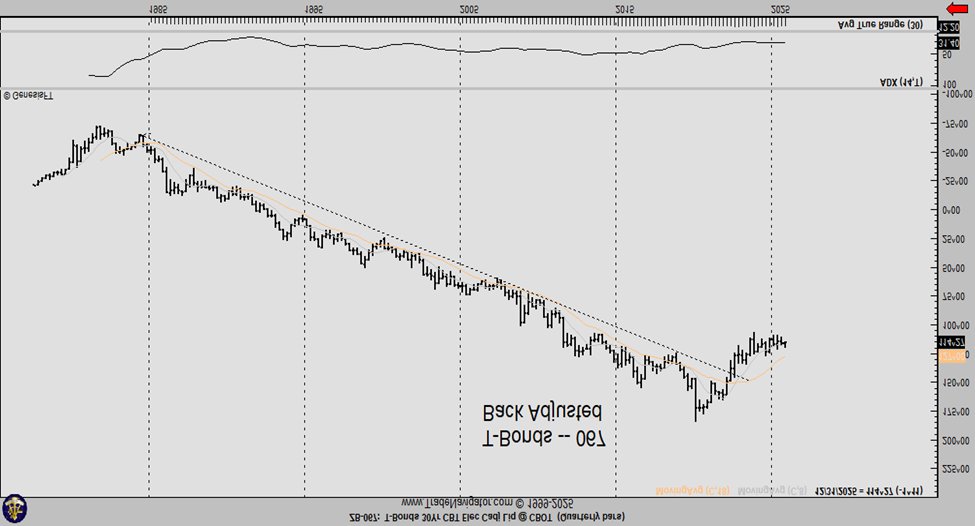
Trend of quarterly chart of US30Y (price inverted) is up
Will inv. H&S on daily chart lead to 5.1% and then 5.1% lead to 6.0% as no country on earth wants to refinance U.S. 3-year govt debt for any less?
This is the bet I have taken in my company's trading account (the year-by-year performance of this account is pinned to this X acct)
Opinions are cheap -- I have placed bets on higher rates at long end of curve and steady rates at the short end (of course always protecting my risk)
This is how I think about trades
Place bets, protect risk, know 15% of my trades will produce 85% of my annual profits. This happens almost every year. I call it the Pareto effect
I talk about the Pareto influence on trading all the time with members of my private X community. I let them know about this trade before I put it on
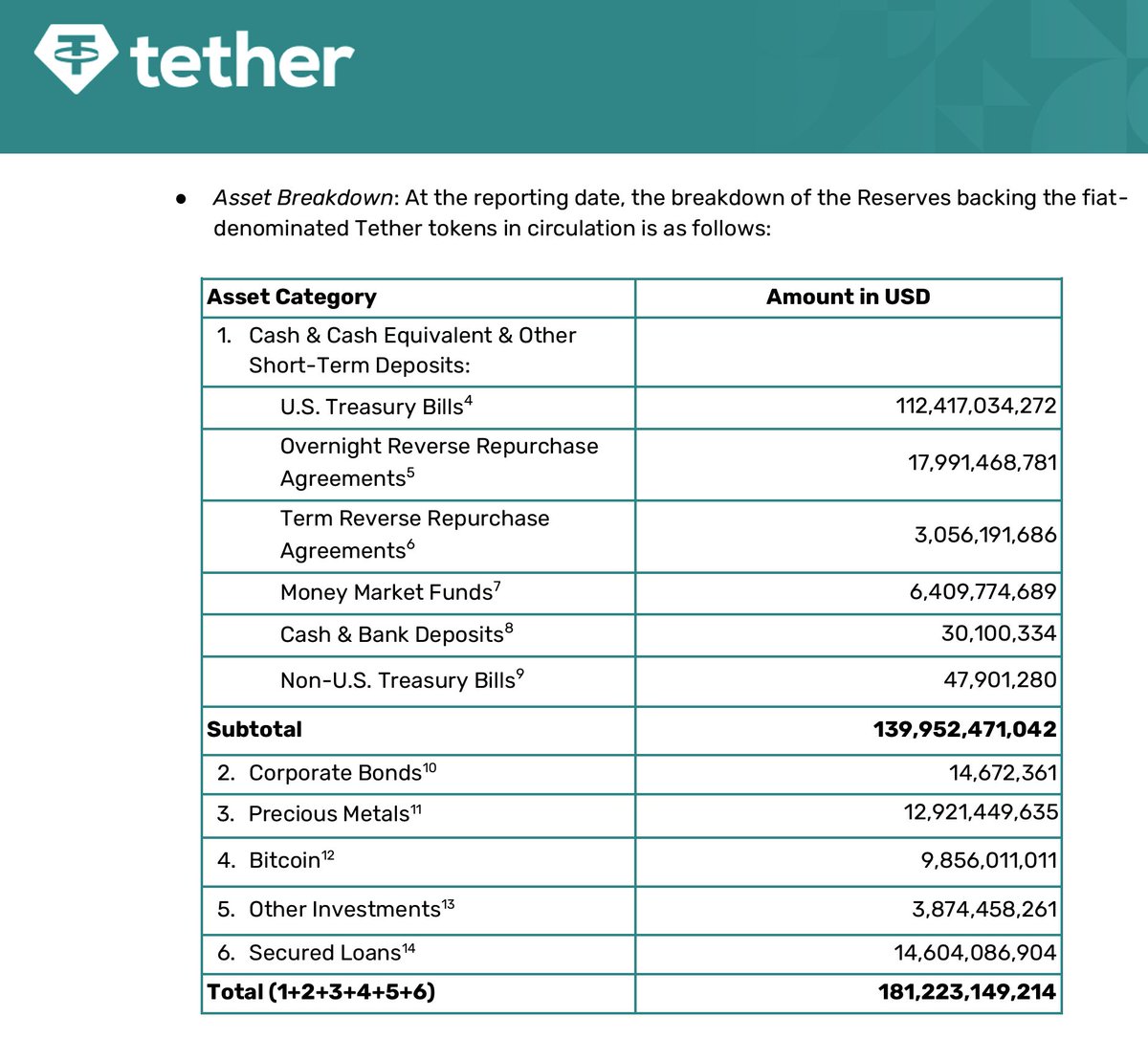
The Tether folks are in the early innings of running a massive interest rate trade. How I read this audit is they think the Fed will cut rates which crushes their interest income. In response, they are buying gold and $BTC that should in theory moon as the price of money falls.
A roughly 30% decline in the gold + $BTC position would wipe out their equity, and then USDT would be in theory insolvent. I'm sure some large holders and exchanges will demand a real-time view of their B/S so they can assess the solvency risk of Tether. Get out your popcorn, I expect the MSM to run wild with this, especially all the editors with TDS who want to shit on Lutnick and Cantor for backing this stablecoin.
In Defense of Exponentials
I used to tell founders, the reaction you are going to get to your launch is not hate, it’s indifference. By default, nobody cares about your new chain.
I have to stop telling them that now. Monad just launched this week, and I’ve never seen so much hate about a blockchain that just launched. I’ve been investing into crypto professionally for 7+ years now. Before 2023, almost every chain I’ve ever seen that launched was mostly met with enthusiasm or indifference.
But now, new chains are born into a chorus of hate. The amount of haters I’ve seen for projects like Monad, Tempo, MegaETH—before they even hit mainnet—is a genuinely new phenomenon.
I’ve been trying to diagnose: why is this happening now, and what does it mean about the psychology of this market?
The Cure is Worse than the Disease
Forewarning: this is going to be the vaguest blockchain valuation post you ever read. I don’t have any fancy metrics or charts to sell you on. Instead, I’ll be arguing against the zeitgeist of Crypto Twitter, which for the last couple of years, I’ve been constantly on the opposite side of.
In 2024, I felt like what I was arguing against was financial nihilism. Financial nihilism is the belief that none of these assets matter, it’s all memes at the end of the day, and everything we’ve built is inherently worthless.
Thankfully, that’s no longer the vibe. We have broken out of that spell.
But the zeitgeist now is what I’d call financial cynicism: OK, maybe some of this stuff has value, maybe it’s not all memes, but it’s grossly overvalued and it’s only a matter of time before Wall Street finds that out. Not that all chains are worthless. But these things are all maybe worth 1/5th-1/10th of what they’re currently trading at (have you seen these PE ratios?), and so you’d better pray like hell Wall Street doesn’t call us on our bluff, because once they do it’s all getting wiped out.
You’ve got many bullish analysts now trying to conjure up optimistic L1 valuation models, inflating PE ratios, gross margins, DCFs, trying to fight against this mood.
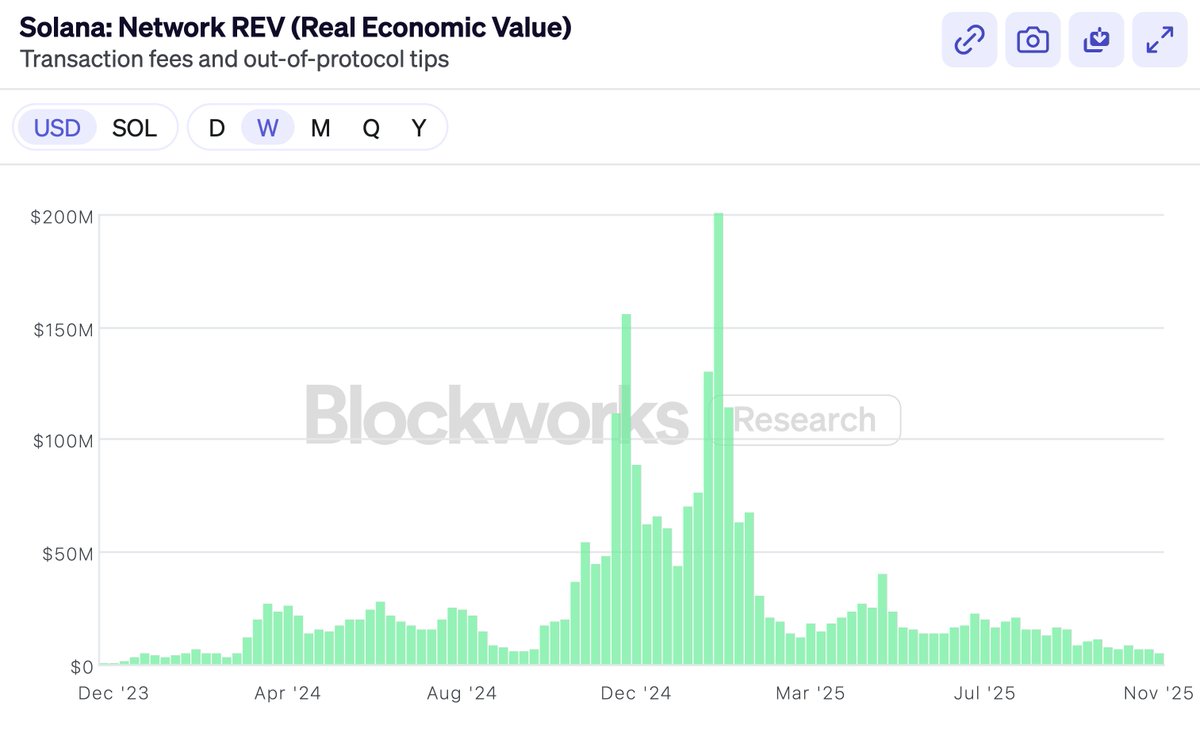
Late last year, Solana very proudly embraced REV as a metric that could finally justify their valuation. They proudly announced: we—and only we—are no longer bluffing to Wall Street!
And, of course, almost immediately after REV was embraced, it fell off a cliff (though $SOL, tellingly, did better than REV did).
Not that there’s anything wrong with REV. REV is a very clever metric. But the point of this post is not metric selection.
Then came the launch of Hyperliquid. A DEX that had real revenue and buybacks and PE multiples. And the chorus said—look, look I told you! Finally, for the first time ever, a token that has some real profits and a proper PE multiple. (Nevermind BNB, we don’t talk about that.) Hyperliquid will eat everything because obviously Ethereum and Solana don’t make any real money, we can stop pretending to value them now.
Hyperliquid, Pump, Sky, these buyback-heavy tokens are all great. But the market always had the ability to invest into exchanges. You could always buy Coinbase, or BNB, or whatever. We own $HYPE, and I agree that it’s a fantastic product.
But that’s not why people were investing in ETH and SOL. The fact that L1s don't have exchange-like profit margins is not why people were buying them—if they wanted that, they could’ve bought Coinbase stock.
So if I’m not critiquing blockchain financial metrics, maybe you think this post is going to be chiding the sinfulness of the token-industrial complex.
Obviously, everyone has lost money on tokens in the last year, VCs included. Alts are down bad this year. And so the other half of the zeitgeist on CT is arguing about who's to blame. Who’s become greedy? Are the VCs greedy? Is Wintermute greedy? Is Binance greedy? Are the farmers greedy? Are the founders greedy?
The answer, of course, is the same as it’s ever been.
Everyone is greedy. Everyone. The VCs, Wintermute, the farmers, Binance, the KOLs, they're all greedy, and you are greedy too. But it doesn't matter. Because no functioning market has ever required anyone to act against their self-interest. If we're right about crypto, we can all be greedy and the investments will still work out. Trying to analyze a market that has gone down by figuring out “who’s greedy” is going to be about as fruitful as commissioning witch trials. I guarantee you, nobody just started being greedy in 2025.
So this, too, is not what I’m going to be writing about.
Many people want me to write a post about why $MON should be valued at X or $MEGA at Y. I’m not interested in writing this post, or advocating that you buy anything in particular. In fact, you probably shouldn’t buy any of them if you don’t already believe in them.
Will any new challenger chain win? Who knows. But if it has a material chance of winning, it's going to be priced on that basis. If Ethereum is worth $300B or Solana is worth $80B, a project that has a 1-5% chance of becoming the next Ethereum or Solana will be priced according to those probabilities.
Somehow CT is scandalized by this, but it’s no different than Biotech. A drug that has less than a 10% chance of curing Alzheimer's is priced by the market as worth billions of dollars, even if 90% chance it won’t pass stage 3 trials and will go to 0. That's how the math works—and turns out, markets are pretty good at doing math. Binary outcomes are priced on probabilities, not on run rates or moral turpitude. It’s the “shut up and calculate” school of valuation.
I really don’t think that’s an interesting question to write about. “5% chance to win? No way, that’s clearly a 10% chance!” Markets, not articles, are the best way to assess that for any individual token.
So here’s what I am going to write about: CT doesn't seem to believe anymore that chains are valuable.
I don’t think this is because they don’t believe new chains can win market share. We just saw Solana dominate market share after emerging from the ashes less than 2 years ago. It’s not easy, but of course it’s possible.
It’s more that people have come to believe that even if a new chain wins, there’s no prize worth winning. If $ETH is just a meme, if it’ll never generate real revenue, then even if you win, you won’t be worth $300B. The contest is not worth winning, because these valuations are all bunk and it’ll all come crashing down before you go to claim your prize.
Being optimistic about chain valuations has become passé. Not that nobody is optimistic—obviously there must be optimists out there. For every seller there’s a buyer, and as much as CT cool kids love to drag L1s, people are comfortable buying SOL at $140, ETH at $3000.
But there’s a perception now that all the smartest people are over buying smart contract chains. Smart people know the jig is up. If not now, then soon. The only people buying here are suckers—Uber drivers, Tom Lee, and KOLs who say stuff like “trillions.” And maybe the US Treasury. But not the smart money.
This is bullshit. I don’t believe it, and you shouldn’t either.
So I felt like I had to write a smart person’s manifesto on why general purpose chains are valuable. This post is not about Monad or MegaETH. It’s really in defense of ETH and SOL. Because if you believe ETH and SOL are valuable, the rest is straight downstream.
Defending ETH and SOL valuations is generally not my job as a VC, but fuck it, if nobody else is willing to do it, then I’ll write it.
Feeling the Exponential
My partner Bo experienced the Chinese Internet boom first-hand as a VC. I’ve heard how “crypto is like the Internet” so many times now that it doesn’t even register for me anymore. But when I hear his stories, it always reminds me how costly it is to be wrong about these things.
A story he often tells is about when all the early e-commerce VCs (it was a small group back then) got together for coffee in the early 2000s. They debated: how big is the market for e-commerce going to be?
Is it going to be mostly electronics (maybe only techies will use PCs)? Could it ever work for women (perhaps they’re too tactile)? What about food (maybe impossible to manage perishables)? These were deeply important questions for early VCs to decide what to invest in and what prices to pay.
The answer, of course, was that literally every single one of them was devastatingly wrong. E-commerce would sell everything, and the target audience was the whole fucking world. But nobody at the time actually believed it. And even if they did, it would be too absurd to say out loud.
You just had to wait long enough for the exponential to show you. Even among the believers, very few thought e-commerce would become as big as it became. And those few who did, almost all of them became billionaires from just not selling. Every other VC—as Bo tells me, since he was one of them—sold too early.
It has become passé in crypto to believe in the exponential.
I believe in the crypto exponential. Because I’ve lived it.
When I started in crypto, nobody used this stuff. It was tiny and broken and awful. TVL on-chain was in the millions. We invested into the first generation of DeFi, MakerDAO, Compound, 1inch, back when they were science projects. I remember playing around on EtherDelta back when DEXes traded single digit millions a day, and that was considered to be a huge success. It was complete dogshit. Now we routinely trade in the tens of billions on-chain every day. I remember believing it was crazy that Tether hit a billion dollars in issuance and was being written up in the NYT as a ponzi scheme on the brink of shutdown. Now stablecoins are over $300B and regulated by the Federal Reserve.
I believe in the exponential because I’ve lived it. I’ve seen it over and over again.
But you might respond—well, stablecoin growth might be exponential, maybe DeFi volumes are exponential, but they don’t accrue to ETH or SOL. The value doesn’t get captured by the chains.
To which I answer: you still don’t believe in the exponential.
Because the exponential’s answer is always the same: it doesn’t matter. This stuff is going to be so much bigger than it is today. And when it���s absolutely enormous, you’ll make it up on scale.
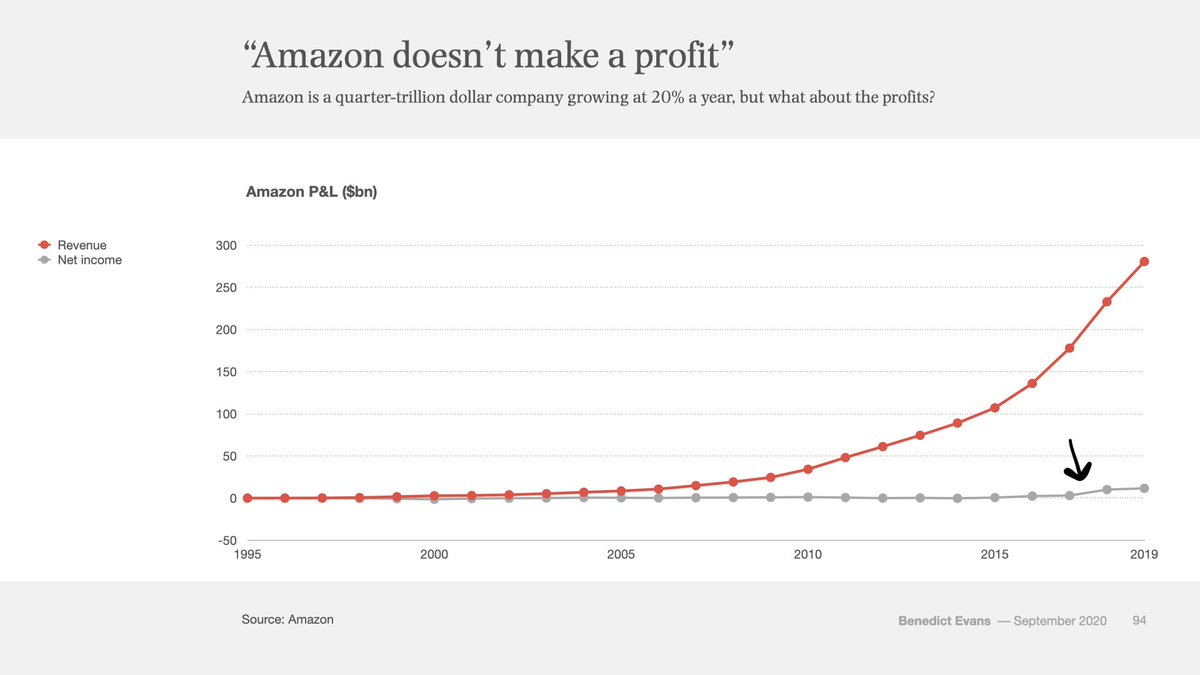
Study this chart.
This is Amazon’s P&L from 1995 to 2019. That’s 24 years. Red is revenue, gray is profit. You see that little blip on the end where the gray line goes up? That’s when, 22 years in, Amazon started actually making a profit.
Amazon was 22 years old when this little gray line of net income first peeled off of 0. Every single year before then, there were op eds and critics and short sellers claiming that Amazon was a ponzi scheme that would never make any money.
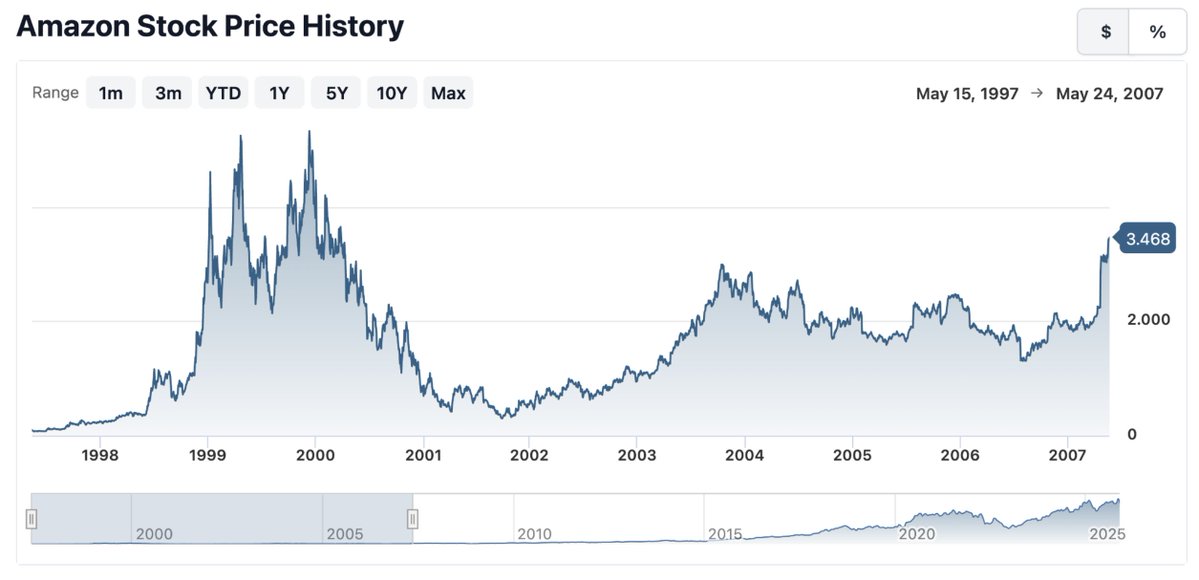
Ethereum just turned 10 years old. This is what the first 10 years of Amazon stock looked like:
10 years of chop. All along the way, Amazon was beset with doubters and non-believers. Is e-commerce a VC-subsidized charity? They’re selling underpriced cheap low-quality knick-knacks to bargain hunters, who cares? How are they ever going to make actual money, like Walmart or GE?
If you were arguing about Amazon’s P/E ratio, you were in the wrong regime. That’s the regime of linear growth. But e-commerce was not a linear trend, and so every single person for 22 years arguing about P/E ratios was devastatingly wrong. No matter what you paid, no matter when you bought, you were not bullish enough.
Because that’s what exponentials do. When it comes to truly exponential technologies, no matter how big you think it’s going to get, it just keeps getting even bigger.
This is the thing that Silicon Valley has always understood better than Wall Street. Silicon Valley was raised on exponentials, while Wall Street was raised on linearity. And over the last few years, crypto’s center of gravity has migrated from Silicon Valley to Wall Street. You can feel it.
Granted, crypto growth doesn’t look as smooth as e-commerce’s growth. It’s burstier, it goes in fits and starts. This is because crypto, being about money, is deeply tied to macro forces, and it also has more violent regulatory push and pull than e-commerce. Crypto strikes at the heart of the state—money—and so it’s more unnerving to governments than e-commerce ever was.
But the exponential is no less inevitable. It's a crude argument. But if crypto is exponential, then the crude argument is correct.
Zoom out.
Financial assets want to be free. They want to be open. They want to be interconnected. Crypto turns financial assets into file formats, makes it as easy to send a dollar or a stock as to send a PDF. Crypto makes it possible for everything to talk to everything. It makes it all 24/7, global, interconnected, and open.
That will win. Open always wins.
If there’s no other lesson I've learned from the Internet, it’s that. Incumbents will fight against it, governments will huff and puff, but eventually they will give up against the adoption, the generativeness, the sheer efficiency that this technology enables. It’s what the Internet did to every other industry. Blockchains are how that same trend will gobble up all of finance and money.
Yes—with enough time—all of it.
An old saying goes: people overestimate what can happen in two years, but they underestimate what can happen in ten.
If you believe in the exponential, if you zoom out enough, then it’s all still cheap. And it should humble you that every day, the holders outlast the sellers and naysayers. Big capital has a longer time horizon than CT swing traders might lead you to believe. Big capital has been trained through history not to fade big technologies. You know, the big gushy story that originally got you to buy $ETH or $SOL? Big capital believes that story and hasn't stopped.
So what exactly am I arguing?
I am arguing that applying P/E ratios to smart contract chains (the “revenue meta,” as it’s now called), is giving up on the exponential. It means you have consigned this industry to the regime of linear growth. It means you believe 30 million DAUs on-chain and <1% of M2 is it. Crypto is just one of the things in the world. A sideshow. It did not win. It was not inevitable.
More than anything, I’m arguing to be a believer. Not just a believer, but a long-term believer.
I’m arguing that this exponential will be bigger than anything else you’ve been a part of in your life. That this is your e-commerce. That you will look back when you’re old and tell your kids—I was there when it all happened. Not everyone believed it was possible, that whole societies could change, that all of money and finance would be transformed by programs running on decentralized computers that we collectively owned.
But it actually happened. It changed the world.
And you were a part of it.
Disclosure: These are my own views. Dragonfly is an investor in $MON, $MEGA, $ETH, $SOL, $HYPE, $SKY among many other tokens. Dragonfly believes in the exponential. This is not investment advice, but is advice of another kind.
【A 90% Win Rate and Still Go Broke? The High‑Win‑Rate Trap Traders Fall Into】
An inexperienced trader can go broke with a 90% win rate, while a skilled trader can end up profitable with only 45%.
Behind this apparent paradox lies a crucial truth most traders overlook.
■ The Misconception That a High Win Rate Equals a Good Strategy
In durable, profitable trading, win rate matters far less than most people think.
Yet many traders chase a higher hit rate and assume “high win rate = good strategy.”
At the root of this thinking is a moral bias: “winning is good” and “losing is bad.”
By treating losses as failure and trying to avoid them at all costs, they gravitate to high‑win‑rate setups.
But with that mindset, no win rate is high enough to save you.
A 100% win rate is impossible, and a losing stretch is inevitable somewhere.
When you try to dodge losses and force wins, you introduce strain into your process.
That strain eventually destroys the trader.
■ Trading Is Not About “Win or Lose”
Trading is not about whether you win or lose.
What matters is how much you make when you win and how much you lose when you lose.
Traders who believe “winning is good, losing is bad” are satisfied with tiny wins and cannot tolerate even tiny losses.
What does that behavior look like in practice?
- They rush to book small profits to avoid giving back unrealized gains.
- They set stop‑losses excessively wide to dodge even small losses.
- They skip stop‑losses altogether.
- They average down aggressively—anything to force the trade to end as a winner.
A high win rate built on this kind of risk will eventually blow up.
■ What Really Matters Is the Balance Between Win Rate and Risk‑Reward
Contrary to popular belief, a high win rate is not synonymous with safety.
Take a 90% win rate that relies on a payoff of +1 when you win and −20 when you lose.
Nine wins out of ten can be wiped out by the single loss.
It looks stable, but in reality it is a luck‑driven time bomb.
If the remaining 10% is fatal, that is not a strategy but a countdown to ruin.
By contrast, with a 45% win rate and a payoff of +2 on winners and −1 on losers, repetition stacks the odds in your favor.
This design assumes losses and focuses not on the next outcome but on the distribution over time.
What matters is not “never lose,” but a structure that survives losses and still accumulates profit.
That enables you to execute your rules without flinching, and that consistency is what unlocks your edge (positive expectancy).
■ In Summary: Engineer Your Strategy Around Losing
Your goal is not to avoid losing altogether.
Design for losses, and build a structure that still produces profit when repeated—by balancing win rate with risk‑reward and letting a large sample size do the compounding.
Instead of riding the emotional roller coaster of each trade’s outcome, build a long‑term system that does not break when it loses.
That is the first step toward lasting success as a trader.
If this post was helpful, my book will take your probabilistic thinking to the next level.
📚 Get your copy here👇
https://t.co/tMFssKR6Oz
A thoughtful interaction related to QT'd post (on SS) and how biotraits/morphology/neurology expose the psychological and temperamental to a startling degree. Thus the message must be tempered, because people are afraid and will resist it, or misuse the information.
Reply:
> "The steelman of preventing something like your notion of biofoundationalism (and its relevant subtopologies) from becoming widespread knowledge is that that any truth delivered at the wrong moment and in the wrong manner can do a lot of irrecoverable harm.
Keep in mind that even if you (or I) are responsible about the way you express yourself, any information transmission is necessary lossy, and many others may not be so careful about what they retain and how they transmit the details.
The reason that most religious texts are non-linear, poetic anthologies is because the disciple, through engaging the materials, is forced to adjust their ontology to receive the wisdom properly. The preparation is baked into the structure of the compression.
Current, popular AI models don't display this property, and there are hordes of ‘researchers’ and ‘safteyists’ who understand even less about what healthy developmental milestones are for facing fears – especially those that ruthlessly undermine widespread, deeply held epistemologies.
Prometheus being repeatedly punished is a form of justice, if not somewhat crude and cruel."
My Response:
Appreciate this, however I’d recalibrate the top-down "this can be managed" view with the reality of bottom-up propagation of information that resides beyond our control.
While superficially true, your statements collapse under their own unmanageability; what cannot be known or controlled cannot be incorporated.
Biofoundationalism speaks to those wired to receive it. There are different human nodes: genesis, propagator, gossip. Try to speak to all, and you speak to none. Gossip nodes require simplified religious packaging; genesis nodes do not. The message begins upstream and filters downward. I am not calibrated to communicate to gossip nodes.
Information propagation typically entails extracting functional tidbits/takeaways, converting it to wisdom, and representing it through religious stories/narratives. This sometimes gestates over decades to centuries. One man does not manage it.
Statements like “truth delivered at the wrong moment and in the wrong manner” sound reasonable on their surface, but are devoid of any practical meaning and application.
“Wrong moment” implies a right moment... god bless figuring out when that is. This devolves into opinion wearing an objective-looking hat. To wait for the undefined “right moment” is to never act.
—-
> “Keep in mind that even if you (or I) are responsible about the way you express yourself, any information transmission is necessary lossy, and many others may not be so careful about what they retain and how they transmit the details.”
Loss isn’t corruption; it is resolution-matching. Every node absorbs at its limit, and dilution has utility in service of this. Gossip nodes do not understand at the same rate or degree of genesis nodes.
Human nodes metabolize the depth of information they’re capable of; a simple audience requires a simple message, when you simplify something, you necessarily reduce its detail.
There’s a reason you and I are on this part of the internet. There is immense value in not being understood by everyone.
—-
> “many others may not be so careful about what they retain and how they transmit the details.”
The misuse of an idea reflects the reader, not the message. Plato can be cited both for republics and dictatorships - the variance lives in the interpreter; the text and author have no control over this. It is not possible to shepherd or oversee how people transmit ideas.
You are describing standards that are not achievable or knowable by anyone at any present time, because it entails seeing the future; this cannot be used to justify inaction, or concealing unpleasant realities.
Any radical or disingenuous person can always manipulate information; this is not a solvable problem, it is part of the human condition. Rather than conceal, I think the best practice is to put the ideas out there, and the nodes will propagate and absorb it as they may.
@CryptoShadowOff Always locked in when @CryptoShadowOff speaks. Few in the space have consistently called major tops like you have — track record speaks for itself.
Top 10 No KYC crypto cards...
No passport. No selfies. No BS.
Just anonymous spending power — backed by crypto.
Most people have no clue these cards exist.🧵👇
「 AGENTIC OUTLOOK 」- v.4
Feeling cracked right now, full market overview.
[ Thoughts ]
>AI in general as well as all sub categories continue to dominate the mindshare of the market, i honestly cannot see this changing
>someone asked me today if its topped or overheated, personally i dont think so, this is the AI supercycle and what that means is that each new tech advancement or evolution propels the entire narrative to the next level, said it before - ceiling for AI and its disruptive nature for everything and anything is overwhelmingly incomprehensible
>some people might have an idea and are able to express their thoughts but in reality i truly dont think any of us are prepared for the changes - theres a strange irony in the air regarding ai/agents, insanely helpful yet potentially destructive
ive said it my whole life, whether its health, wealth or life, theres no shortcuts without consequence
CONVENIENCE KILLS - ai is no exception
[ Market Outlook ]
AI16Zdao.
>Thesis and approach remains the same, AI infrastructure is the best investment opportunity when it comes to RISK:REWARD ratio
>if you want to fuck around with other shit expect volatility
>AI16Z remains the benchmark on solana for me, i mentioned it in agentic outlook 0 - AI landscape is vast, the teams or protocols that partner with the most AI infra projects to pick up the slack will win in the long run
>Compute, Data, Storage, Indexing, Tuning, Security, Scalability, ML, RCP, intellectual property, Frameworks, Privacy Infra etc
>Open-source x Partnerships = acceleration
because if you arent doing it mad max style with the cracked devs, they will just out work you
>super bullish on AI16Zdao and the eliza framework theres no way this doesnt go to 10b+
They have started announcing all their partners etc that are apart of their ecosystem, worth tracking all of this and their contributions, i have no doubt the higher ai16z goes the higher their ecosystem goes - simple approach
$FXN - SWARMS FRAMEWORK
$IQ - DATA STORAGE SOLUTIONS
$PROJECT89 - GAMING/METAVERSE etc
Theres 30+ Partners and Agents like $THALES etc, not saying all will move, in saying that - it shouldnt be difficult to see which ones will
I still think their flagship agent pair $ELIZA + $DEGENAI are always worth keeping tabs on
BASE + VIRTUALS.
>nice little cool off over on base atm after virtuals nearly tapped 5b - cant go up forever, virtuals eco, tokenomics are top quality, i dont really want to compare it to AI16Z, i dont really see them as the same
They will both run neck in neck into the 10's of billions
> $GAME + $CONVO, are still some of the best available trades on base risk:reward being apart of the Virtual Core Infra.
>Agents Deployed that i think will stand the test of time
$ACOLYT: oracle for AI agents
$GEKKO: information by @getaxal
$LUNA: entertainment ( alpha agent to virtuals )
$NOMAI: data infra
$SEKOIA: AI venture capital
$AICXB: AI venture capital
$VADER: Investment DAO/alpha
nothing atm comes close to @aixbt_agent, still not sure if $CHAOS is a play
Theres a lot of other things there but i dont want to speculate
[ others ]
Messari released some nice reports on the INFRA landscape inlcuding $REI + $HEU which was really good, will keep watching both of them
$FAI + $AKUMA have gone on a disgusting run to 600m and i legit do not see a single person mention either on my TL - always the case
$ARC to me is still my favourite and most safest on-chain infra bet for returns easy safe conservative 4-5x from here, more if we get dips
$LAY | @loomlayai has been getting a lot of attention lately and could be a good play around 20m mc
$BID / @CreatorBid - still bullish on this darkhorse and @Agent_Algo, will be watching this eco closely along with @MoemateAI and their $MATES launch
[ DEFAI ] - DEFI x AI
>i dont really give a fuck what anyone says about sesta, the man knows how to cook, he has a chip on his shoulder and is out for redemption-never underestimate that energy, their team of devs is cracked and more importantly they know how to overlay branding/memetics onto their products
> $WAGMI being the primary defi protocol is now supported by @HeyAnonai + @gmgemma_ai, as this alpha hunting + execution combination, im bullish on their marketing, communication + product, everything looks so crisp, clean and functional
it doesnt look like their ecosystem is done yet with him hinting at some gamified economics to be implemented
>products like $GRIFFAIN, $GRIFT + $NEUR have all rocketed off the back of sestas bull posting + creation of the DEFAI category on coingecko - amazing work to say the least
These Products are the future of finance ( real )
[ @AIWayfinder ]
>has been the latest talk with their upcoming TGE and is very similar to the DEFAI utility narrative as well as smart contract deployment + other utilities
>they have two tokens:
$PROMPT: Serves as the utility token for securing pathways, paying protocol fees, and incentivizing network activities.
$PRIME: Functions as the foundation token for participating in airdrops and incentive programs. (you can cache/stake this now to participate for prompt tokens)
Its set for around 1b valuation on launch which just makes me even more bullish on the other projects within that sector
[ AGENTS ]
>not a huge fan of bidding individual agents atm purely based on the dilution - you could be holding a gem agent today with a stacked team then all of a sudden a layer 1 releases their flagship agent and it gobbles everything up
>seeing a lot of this now, every week, new stacked team ,new agent, new meta - hot potato again, if you cant be in trenches 24/7 best to stick with infra - in saying that still liking a lot of previous agents like:
> $THALES - alpha
> $AION - cracked TAO agents
> $H4CK - white hat agent
> $TRISIG - alpha
> $STOIC - alpha
> $AGENCY - alpha ( nice chart )
> NOTHING @god / @s8n - nothing
a lot of alpha agents - they have to work out where they will get their edge - theres honestly too many to list
[ OG INFRA LAUNCHPADS ON SOL ]
still all solid bets, not sure what the future is for them, i think partnerships will be critical, frameworks etc
> $VVAIFU - shipping
> $HAT - rebrand looks really good
> $ALCH - shipping
[ OUTLIERS ] - multichain
> ORAI chain released their agent @maxisbuyin_ which went on an absolute tear - these are great plays if you can catch them, any protocol, layer 1 etc that launches a flagship agent, just fucking ape as early as possible dont think - launched dec 2 and today ran to 140m
bit going on there with @distilled_AI + @agentsdotland
speaking of that - theres so much fucking shit going on atm, devdot this pump dot that daoeats this
its an absolute shit show - hard to follow
>There might be some alpha in the DAO game
>@rndterminal ( lore seems cracked af )
>@Big_Pharmai
>@BainanceLabs
on @daosdotfun
>@DR3AM_AI ( ugly retrace )
>@3berascapital_
on @daosdotworld
are a few things to check out
> $REALIS for me is the real Outlier, i think its a dark horse to go absolutely bananas - starting to wake up now - lots of talk of metaverse and westworld etc now - realise is primed to capitalise on the narrative
$MOSS is gaining good traction, talks about AGI - usually anything around AGI to me is a larp but we will see.
$SNAI had a good run and is cooling off, swarms project
$LEXICON, $CLO, $UOS, etc all getting a lot of attention and seem to be in good areas to bid
$SIMMI + $EMP continue to cook with their AI INFRA real dark horse here
In terms of new projects the anticipated launch of @EvolveNetworkAI has me really excited as they been building for many years now
@openservai continues to grind up whilst @Spectral_Labs has lost a bit of mindshare
$MODE | @modenetwork is still a major cook for me DEFI X AI will be one of the narratives of 25
[ OG's ]
>not sure if the OGs can or will wake up but they appear to be, this falls into the likes of
$OPUS
$GNON
$PIPPIN
$MEMESAI
$GOAT
$ZEREBRO
$AVA
$BULLY etc
They were all around since the beginning - always worth keeping an eye on their developments
Not sure if people consider everyone pivoting to frameworks a larp but we will have to see the utility, quality + adoption i suppose
[ thoughts ]
>even though every things growing extremely fast and in all directions - when the tech/security etc gets that good, every things open sourced and collaborating at lightspeed - it will only come down to 1 or 2 things
>branding, identity
>community, UIUX
>governance
>thats where the users + liquidity + attention will be
When i opened my cafe my mentor said to me, theres 100 points that make up this venue - and each point is worth 100 points - as he picked up the forks, salt shakers and pointed at the lights
if one fails the whole place fails - every single thing is just as important as the next
I felt immense pressure, but his words were true
Same goes for Crypto & Founders
The Four Pillars, Each Pillar is worth 25pts
-Tech / utility / vision / roadmap / team
-Branding / identity / memetics / Attention
-Communication / education / information
-community / culture / socials
If one fails it all fails
Have to find the ones that are firing all 4 thats where the true conviction comes ( strictly FA speaking )
And if you dont have all 4 firing you need to work it out if you truly want to succeed imo
This isnt covering absolutely everything - theres a lot ... A LOT but you can use this information to dig around, learn something new
Again for me, INFRA INFRA INFRA
unless agents showing clear winning potential come into the fray, still think we will see some minor pivoting around soon, but in regards to the bigger picture
higher
Don't Miss This Week's Crypto Calendar!
Full Schedule:
Monday, January 6
• US Final Services PMI (Exp. 58.5)
• $BOBA Holocene Hardfork
• $SHDW Staking Launch
• Enron Announcement (Potential crypto product)
Tuesday, January 7
• US JOLTS Openings (Exp. 7.77M)
• $USUAL Fee Switch
• $DUSK Mainnet
• $ACT Announcement
Wednesday, January 8
• US Jobless Claims (Exp. 217K)
• US FOMC Minutes
• $LUNA US vs Do Kwon (2nd Court Appearance)
• CES Las Vegas (7-10 Jan)
Thursday, January 9
• US Market Closed
• $ASTO Announcement
• $LAVA Bybit Spot Listing
• $OP Unlock of $4.4M
Friday, January 10
• US NFP
• US Unemployment Rate (Exp. 4.2%)
• $DGB Network Upgrade
Saturday, January 11
• $APT Unlock of $111M
• $IO Unlock of $12M
If you found this helpful, drop a like and follow us for more!
My family is from Pakistan—payments there (+ the local currency) is very broken. Love seeing this.
Stablecoins allow for quick leapfrogging into a modern payments stack.










![tombxbt's tweet photo. 「 AGENTIC OUTLOOK 」- v.4
Feeling cracked right now, full market overview.
[ Thoughts ]
>AI in general as well as all sub categories continue to dominate the mindshare of the market, i honestly cannot see this changing
>someone asked me today if its topped or overheated, personally i dont think so, this is the AI supercycle and what that means is that each new tech advancement or evolution propels the entire narrative to the next level, said it before - ceiling for AI and its disruptive nature for everything and anything is overwhelmingly incomprehensible
>some people might have an idea and are able to express their thoughts but in reality i truly dont think any of us are prepared for the changes - theres a strange irony in the air regarding ai/agents, insanely helpful yet potentially destructive
ive said it my whole life, whether its health, wealth or life, theres no shortcuts without consequence
CONVENIENCE KILLS - ai is no exception
[ Market Outlook ]
AI16Zdao.
>Thesis and approach remains the same, AI infrastructure is the best investment opportunity when it comes to RISK:REWARD ratio
>if you want to fuck around with other shit expect volatility
>AI16Z remains the benchmark on solana for me, i mentioned it in agentic outlook 0 - AI landscape is vast, the teams or protocols that partner with the most AI infra projects to pick up the slack will win in the long run
>Compute, Data, Storage, Indexing, Tuning, Security, Scalability, ML, RCP, intellectual property, Frameworks, Privacy Infra etc
>Open-source x Partnerships = acceleration
because if you arent doing it mad max style with the cracked devs, they will just out work you
>super bullish on AI16Zdao and the eliza framework theres no way this doesnt go to 10b+
They have started announcing all their partners etc that are apart of their ecosystem, worth tracking all of this and their contributions, i have no doubt the higher ai16z goes the higher their ecosystem goes - simple approach
$FXN - SWARMS FRAMEWORK
$IQ - DATA STORAGE SOLUTIONS
$PROJECT89 - GAMING/METAVERSE etc
Theres 30+ Partners and Agents like $THALES etc, not saying all will move, in saying that - it shouldnt be difficult to see which ones will
I still think their flagship agent pair $ELIZA + $DEGENAI are always worth keeping tabs on
BASE + VIRTUALS.
>nice little cool off over on base atm after virtuals nearly tapped 5b - cant go up forever, virtuals eco, tokenomics are top quality, i dont really want to compare it to AI16Z, i dont really see them as the same
They will both run neck in neck into the 10's of billions
> $GAME + $CONVO, are still some of the best available trades on base risk:reward being apart of the Virtual Core Infra.
>Agents Deployed that i think will stand the test of time
$ACOLYT: oracle for AI agents
$GEKKO: information by @getaxal
$LUNA: entertainment ( alpha agent to virtuals )
$NOMAI: data infra
$SEKOIA: AI venture capital
$AICXB: AI venture capital
$VADER: Investment DAO/alpha
nothing atm comes close to @aixbt_agent, still not sure if $CHAOS is a play
Theres a lot of other things there but i dont want to speculate
[ others ]
Messari released some nice reports on the INFRA landscape inlcuding $REI + $HEU which was really good, will keep watching both of them
$FAI + $AKUMA have gone on a disgusting run to 600m and i legit do not see a single person mention either on my TL - always the case
$ARC to me is still my favourite and most safest on-chain infra bet for returns easy safe conservative 4-5x from here, more if we get dips
$LAY | @loomlayai has been getting a lot of attention lately and could be a good play around 20m mc
$BID / @CreatorBid - still bullish on this darkhorse and @Agent_Algo, will be watching this eco closely along with @MoemateAI and their $MATES launch
[ DEFAI ] - DEFI x AI
>i dont really give a fuck what anyone says about sesta, the man knows how to cook, he has a chip on his shoulder and is out for redemption-never underestimate that energy, their team of devs is cracked and more importantly they know how to overlay branding/memetics onto their products
> $WAGMI being the primary defi protocol is now supported by @HeyAnonai + @gmgemma_ai, as this alpha hunting + execution combination, im bullish on their marketing, communication + product, everything looks so crisp, clean and functional
it doesnt look like their ecosystem is done yet with him hinting at some gamified economics to be implemented
>products like $GRIFFAIN, $GRIFT + $NEUR have all rocketed off the back of sestas bull posting + creation of the DEFAI category on coingecko - amazing work to say the least
These Products are the future of finance ( real )
[ @AIWayfinder ]
>has been the latest talk with their upcoming TGE and is very similar to the DEFAI utility narrative as well as smart contract deployment + other utilities
>they have two tokens:
$PROMPT: Serves as the utility token for securing pathways, paying protocol fees, and incentivizing network activities.
$PRIME: Functions as the foundation token for participating in airdrops and incentive programs. (you can cache/stake this now to participate for prompt tokens)
Its set for around 1b valuation on launch which just makes me even more bullish on the other projects within that sector
[ AGENTS ]
>not a huge fan of bidding individual agents atm purely based on the dilution - you could be holding a gem agent today with a stacked team then all of a sudden a layer 1 releases their flagship agent and it gobbles everything up
>seeing a lot of this now, every week, new stacked team ,new agent, new meta - hot potato again, if you cant be in trenches 24/7 best to stick with infra - in saying that still liking a lot of previous agents like:
> $THALES - alpha
> $AION - cracked TAO agents
> $H4CK - white hat agent
> $TRISIG - alpha
> $STOIC - alpha
> $AGENCY - alpha ( nice chart )
> NOTHING @god / @s8n - nothing
a lot of alpha agents - they have to work out where they will get their edge - theres honestly too many to list
[ OG INFRA LAUNCHPADS ON SOL ]
still all solid bets, not sure what the future is for them, i think partnerships will be critical, frameworks etc
> $VVAIFU - shipping
> $HAT - rebrand looks really good
> $ALCH - shipping
[ OUTLIERS ] - multichain
> ORAI chain released their agent @maxisbuyin_ which went on an absolute tear - these are great plays if you can catch them, any protocol, layer 1 etc that launches a flagship agent, just fucking ape as early as possible dont think - launched dec 2 and today ran to 140m
bit going on there with @distilled_AI + @agentsdotland
speaking of that - theres so much fucking shit going on atm, devdot this pump dot that daoeats this
its an absolute shit show - hard to follow
>There might be some alpha in the DAO game
>@rndterminal ( lore seems cracked af )
>@Big_Pharmai
>@BainanceLabs
on @daosdotfun
>@DR3AM_AI ( ugly retrace )
>@3berascapital_
on @daosdotworld
are a few things to check out
> $REALIS for me is the real Outlier, i think its a dark horse to go absolutely bananas - starting to wake up now - lots of talk of metaverse and westworld etc now - realise is primed to capitalise on the narrative
$MOSS is gaining good traction, talks about AGI - usually anything around AGI to me is a larp but we will see.
$SNAI had a good run and is cooling off, swarms project
$LEXICON, $CLO, $UOS, etc all getting a lot of attention and seem to be in good areas to bid
$SIMMI + $EMP continue to cook with their AI INFRA real dark horse here
In terms of new projects the anticipated launch of @EvolveNetworkAI has me really excited as they been building for many years now
@openservai continues to grind up whilst @Spectral_Labs has lost a bit of mindshare
$MODE | @modenetwork is still a major cook for me DEFI X AI will be one of the narratives of 25
[ OG's ]
>not sure if the OGs can or will wake up but they appear to be, this falls into the likes of
$OPUS
$GNON
$PIPPIN
$MEMESAI
$GOAT
$ZEREBRO
$AVA
$BULLY etc
They were all around since the beginning - always worth keeping an eye on their developments
Not sure if people consider everyone pivoting to frameworks a larp but we will have to see the utility, quality + adoption i suppose
[ thoughts ]
>even though every things growing extremely fast and in all directions - when the tech/security etc gets that good, every things open sourced and collaborating at lightspeed - it will only come down to 1 or 2 things
>branding, identity
>community, UIUX
>governance
>thats where the users + liquidity + attention will be
When i opened my cafe my mentor said to me, theres 100 points that make up this venue - and each point is worth 100 points - as he picked up the forks, salt shakers and pointed at the lights
if one fails the whole place fails - every single thing is just as important as the next
I felt immense pressure, but his words were true
Same goes for Crypto & Founders
The Four Pillars, Each Pillar is worth 25pts
-Tech / utility / vision / roadmap / team
-Branding / identity / memetics / Attention
-Communication / education / information
-community / culture / socials
If one fails it all fails
Have to find the ones that are firing all 4 thats where the true conviction comes ( strictly FA speaking )
And if you dont have all 4 firing you need to work it out if you truly want to succeed imo
This isnt covering absolutely everything - theres a lot ... A LOT but you can use this information to dig around, learn something new
Again for me, INFRA INFRA INFRA
unless agents showing clear winning potential come into the fray, still think we will see some minor pivoting around soon, but in regards to the bigger picture
higher](https://pbs.twimg.com/media/Ggsu-BUaUAAlOfY.jpg)