I’ve been reading the Vedas a lot recently, and what’s stood out is how it doubles as an encyclopedia as well as a religious text. Astronomy, medicine, mathematics, metallurgy, linguistics, are all woven through hymns and rituals as one body of knowledge. Simply calling it “religious” forces it into a Western category that didn’t have the apparatus to recognize what it actually was. It’s closer to a tradition of formalized epistemology in which metaphysics, observation, and language form one continuous inquiry, which as a result led Indian civilization to develop along a fundamentally different path because of it.
You can see the effect most clearly in the sciences. Around 600 BCE, the Vedic record describes a surgical procedure that matches modern rhinoplasty and is still foundational to reconstructive surgery today. Centuries before Western Europe stopped treating eclipses as supernatural, Indian scholars had calculated the circumference of the earth within 0.2% and explained eclipses as shadows. Centuries before Plato and Aristotle rejected atomism, the Vedic tradition already held that matter is composed of indivisible particles combining into binary and triatomic compounds, transformable by heat. The first formal rules for zero and negative arithmetic appear in the Vedas, along with infinite-series derivations of π, sine, and cosine centuries before Newton and Leibniz.
The interesting question is how did they get so much right, so early? My best guess is language.
The Vedic tradition is unique compared to other oral traditions as it demanded letter-perfect oral transmission across generations. Around 500 BCE, scholars composed a generative grammar of Sanskrit called Panini so rigorous it anticipates Backus-Naur form, the notation that defines programming languages today, by 2,500 years. Sanskrit is recursive, rule-based, and built to minimize ambiguity. It reads more like mathematics than English.
When you think in a language built like that, the precision of the language becomes the precision of your reasoning. The West didn’t formalize this until much later. Kant argued our categories of understanding shape what we can know, Wittgenstein wrote that the limits of language are the limits of one’s world, and Kripke showed that naming doesn’t just describe things, it constitutes what they mean and how we can reason about them. All three touch the same insight which is that thought is downstream of language.
The Vedic tradition operated on that insight thousands of years earlier. To the point that they built a whole language first and used it to think clearly about everything else after. I find that all really fascinating.
We see our home planet as a whole, lit up in spectacular blues and browns. A green aurora even lights up the atmosphere. That's us, together, watching as our astronauts make their journey to the Moon.
US Can Play Important Role in De Escalation
Indian Must be pressed to Engage with Pakistan & Communicate so that Region could be saved from Broader conflict
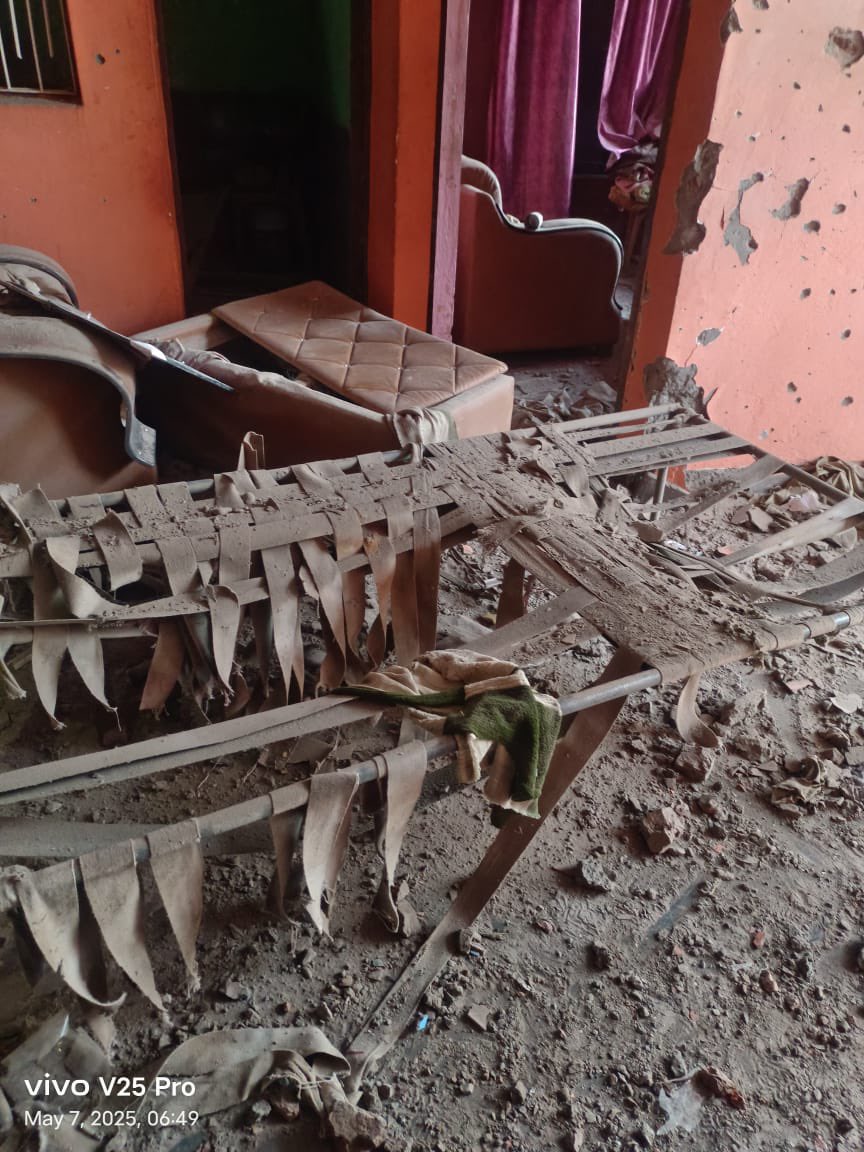
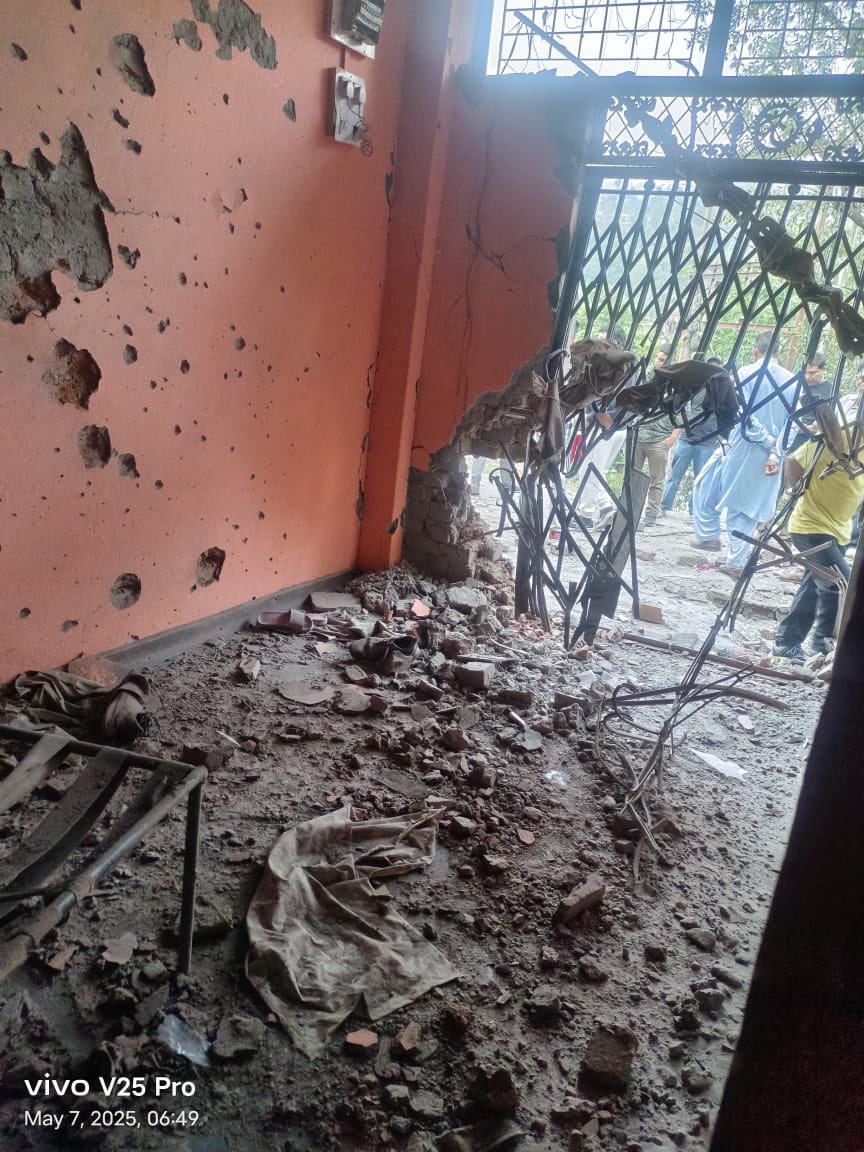
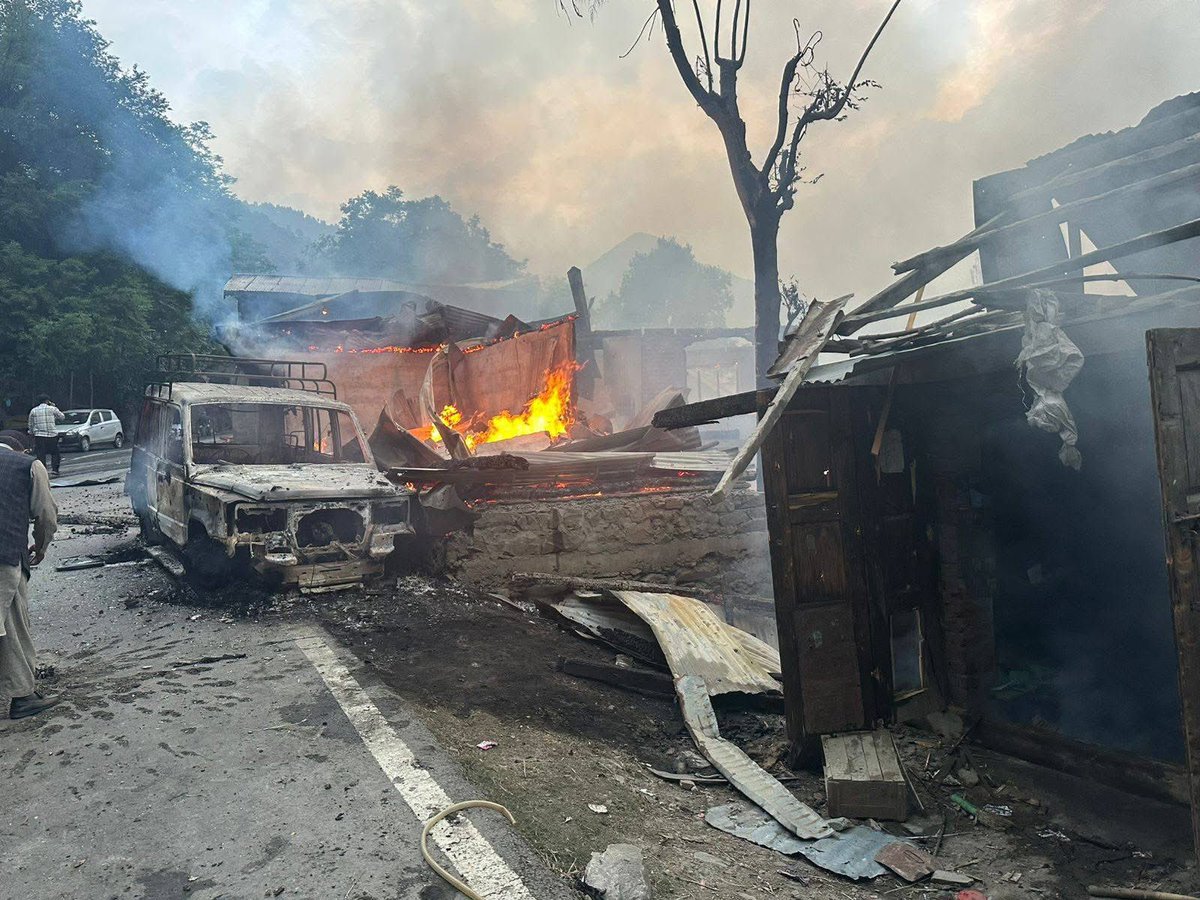
Visuals from Thandi Kassi, Rajouri.
Residential areas hit by Pakistani troops. Multiple civilians injured. My local contacts suggest there is one casualty too, but I can’t confirm the veracity of that claim at this point, because I couldn’t get any official source to authenticate it.
Sickening display by the #PakistanArmy along the LoC. Sikhs & gurudwaras being targeted. Women & children being killed by incessant shelling! Truly heinous!
Shame on you, Pakistan. You are worse than Israel. You’ve killed innocent Kashmiri Muslims children, civilians—who had nothing to do with this conflict. Stop this cruelty! https://t.co/jnm40gladv
If you want to know what Islamophobia looks like, go look at what the Pakistanis have done to children with their artillery in Poonch.
Heavily Muslim area btw.
@kushal_mehra A country of 1.4 billion people are literally crying for a medal. There was a rule in Olympics which was same for everyone. Instead of crying and behaving like a spoiled brat we should prepare for a next olympics…
The targeted violence against Hindus in Bangladesh is wrong, it's concerning, and it's a cautionary tale for victimhood-laced quota systems. Here's what happened: Bangladesh fought a bloody war for its independence in 1971. Hundreds of thousands of Bangladeshi civilians were raped and murdered. It was a tragedy, and it was rightly mourned. But in its aftermath, Bangladesh implemented a quota system for jobs in their civil service: 80% of the jobs were allocated to specific social groups (war veterans, rape victims, underrepresented residents, etc.), and only 20% were allocated based on merit.
The quota system proved to be a disaster. In 2018, protests led Bangladesh to scrap most of the quotas, but the victim-patrons fought back…and the quota system was reinstated this year. That triggered more protests which toppled the government, and the prime minister fled. Once chaos begins, it can't easily be reined in. Radicals are now targeting Hindu minorities. A quota conflict created to rectify the wrongs of rape and violence in 1971 is now leading to more rape and violence in 2024. Bloodshed is the endpoint of grievance and victimhood. It's hard not to look at Bangladesh and wonder what lessons we would do well to learn right here at home.