I've stopped reading Gulf war headlines. Here's what I track instead.
We run an India-focused equity fund. 85% of India's crude comes from imports. Half of that normally passes through Hormuz. So yes — this crisis is personal.
But the information environment right now is garbage. Trump says the war ends tomorrow. Iran says Hormuz is shut forever. One analyst says $150 oil, another says $60. You can't build a portfolio view on this.
So I've narrowed it down to 4 signals. These are priced by people with real money on the line. They don't lie.
1. Ship insurance premiums through Hormuz
This is the single best signal. Lloyd's underwriters have billions at stake on every pricing call. Before the war, insuring a tanker through Hormuz cost 0.25% of the ship's value. Today it's 3.5–10% — and almost nobody is buying. A $100M tanker that cost $250K to insure now costs up to $10M. When this drops below 2%, the people with the most to lose are telling you it's getting safer. No press conference can replicate that.
2. How many ships are actually crossing
Every ship carries a GPS tracker (AIS). You can count exactly how many cross Hormuz each day. Before: 100+. Now: 8. That's a 92% collapse. You can't spin a ship being somewhere it isn't. Iran is letting some Chinese and Indian ships through, but it's a trickle. When this number crosses 30–40, trade is resuming. You can track this free on the WTO Hormuz Trade Tracker.
3. Paper oil vs real oil
This one most people miss entirely. Brent crude (the headline price) is at $112. But Dubai physical — what Asian buyers actually pay for delivered oil — is at $126. That's a $14 gap. It exists because Trump's comments keep pushing paper prices down. Traders call it jawboning. But the refiners buying cargo aren't getting any discount. If you're looking at Brent to assess India's oil bill, you're looking at the wrong number.
4. The mid-April cliff
Multiple emergency measures expire around the same time. The 400 million barrel SPR release runs dry ~April 15. The US waiver letting India buy Russian crude expires. Formosa Plastics has declared force majeure from April 1. Right now these stopgaps are keeping the supply gap at ~5 mb/d. Without them, BCA Research estimates it doubles to 10 mb/d — the largest crude disruption ever. If Hormuz doesn't reopen by mid-April, we're in uncharted territory.
Bottom line: track the insurance premium, the ship count, the paper-physical spread, and the April timeline. Everything else is noise.
The Art And The Artist
Meet Professor Gali Madhvi Latha
Professor Civil Engineering at IISC Bangalore.
She spent 17 years along with her team to make Chenab river railway bridge a reality and a testament of India's rise.
Why India is isolated? Is it really isolated?
--------------------------
Below thread argues India is isolated internationally due to its social issues. This thread makes two mistakes:
1. assumes India is isolated 2. assumes social issues are a cause.
Let me provide rebuttal and alternate perspective.
I would argue. India is not isolated at all - far from it - it got everything it wanted from the international community.
This is despite verbal restrained support / neutrality by US, EU and Russia to India (rather than unconditional support that Pakistan, Israel etc get from time to time)
Remember USA, UK, Germany all have suffered terrorist attacks. Russia was hit the worst recently by ISIS K.
Do you think their leaders don't know who caused the attack on Indians? Do you think they have any sympathy with attackers or their backer?
Counter Intuitive examples first on India's dimplomacy:
--------------------------
One would expect India to have poor relationships with Gulf countries due to Hindu majority population of India (and Hindutva fanatics in India), compared to Pakistan being an Islamic nation.
Far from it!
-- India has a thriving relationship with Gulf. UAE's more than 40% population holds Indian passport (their skilled workers, doctors, engineers, manager are mostly from India).
- Saudi, UAE and Qataris arm twist Pakistan on India's behalf (thankful for it) from time to time.
Why India is so 'bad' as a society?
--------------------
One of the aspects of India is that it is well connected to internet and Indians speak english, so westerners easily get to see social evils in India. They think these things are uniquely Indian. They have forgotten their past. Also, they did not have think kind of access and visibility to China.
India has its own set of issues that is must overcome. Remember India is a 2500 USD per capita economy.
- Recall how China was 30 years back (I have seen videos of dirt & disfunction in China)
- how USA was in 1800s (read history of American expansion to the west - Mormons used to kill other Christians, there used to gangs to hunt down running away slaves, there used to be gang fights between Anglos and Italians etc).
- read Mark Twain London to understand how corrupt and dirty it used to be.
What India does well?
--------------------
For all India's shortcomings,
- a country of 1.4 billion
- with 5 major religions
- 28+ plus languages
existing is a miracle
These is no other country that comes close.
- Recall China has only 1.8% Muslim population, and what it had to do to keep them away from extremism, or what was done to make languages homogenised (lesser I talk about Cultural Revolution the better).
- Recall how Ukraine ended up treating its Russian minority.
For all its flaws, India has
- a functional democracy, equal legal rights (did you see picture of India's air chief marshal?)
- a thriving democracy growing at 7% lifting millions out of poverty.
- it has several dozen IIT Universities, top class research organization like ISRO, DRDO and many other (which other country with that low per capita income has them?)
- makes vaccines and pharma and supplied half the world cheap drugs
- is a major exporter of IT services,
- major producer of automobiles, heavy machinery, iron, coal (though all need to grow 5 fold)
Also, against all the wrong perception -
- India has a low homicide rate (3 compared to 7 in USA).
- India has highest percentage globally of women working in tech (35-40%)
- India has highest percentage of female pilots in the world (close to 20%)
- strongest affirmative action and
- wide social security (that 2500 USD per capita can support).
Pakistan has all India's issues and has them many times worse (e.g. it does not have equal rights to all religions, has blasphemy laws, no gay right - on and on and on, it has Baluch and Taliban insurgency, deadly fights between Shia-Sunnies etc.)
So below tweet is not a valid explanation for so called "isolation" of India.
(for same per capita, India could be a bit more cleaner, neater, less corrupt - those are my pet peeves. It will happen with all the awareness and rising expectations.)
But, is India really isolated?
---------------
As they say: Grown Men don't get hugs & kisses.
USA, EU, Russia, China, India are great power of the world. Pakistan, Bangladesh etc., however, influential or notorious they are, they are small countries.
Two great powers are never fully aligned, e.g.
- USA and EU have different perspective of Ukraine and always bicker. EU is not as supportive of Israel as USA is as whole.
- Russia and China are not fully aligned on all issues. Chinese nationalist want Siberia back. China has managed to keep them quiet through censorship.
- Russia hasn't fully forgotten what Pakistan did to them in Afganistan
India pursues independent foreign policy e.g.
- maintains good relations with Russia - & the world is better for it,
- has resisted the urge to participate in western efforts to contain China (it would need to rethink the policy)
- did not support USA & EU on second invasion of Iraq, attacks on Libya (how right was India!)
So this obviously gets public flak from USA and EU who would rather have India completely on their side.
Same is the case with Russia - India hasn't done everything that Russia has wanted it to do.
Pakistan is too small a power to matter to hold such grudge with it for anybody.
USA, EU & Russia's measured support for India is not a lack of sympathy to India, but rather a bargaining act to bring India closer to their orbit.
India is true wild card of 21st century 🐎
Everyone wants India on their side, including China
Recall everyday Chinese embassy in India, too embarrassed by their netizens and Pakistani propaganda, is posting messages on how great a friend China is to Indian people (I truly wish the issues are resolved, and their is great friendship, but India is going to be very suspect).
Actions matter more than word:
---------------
India did what it took to destroy terror bases in Pakistan.
Since Pakistan intervened on behalf of terrorist, it hit 10 plus air bases, including one very close to nuclear storage facilities. India called Pakistan's nuclear bluff.
No other nuclear power has dared so much against another nuclear power in history. That shows India's resolve. The entire political system and society stood behind the forces (beyond any expectation).
The world understands India is frustrated with Pakistan, and respects its right to take action. They would rather not have a nuclear war though, while 2 other wars are going on, and trade war is also happening. Hence, the mediation by USA.
If the world did not approve of India, you would see sanctions and other punitive measures.
Do you see any SANCTION on India? NO.
So it doesn't matter if US, EU, Russia are not throwing their verbal support in India's favour. Men don't patronise each other. They negotiate coldly like men.
That is what has happened between US, EU, Russia and India.
(though Indian internet if forever offended. Luckily India has diplomats & leaders much much smarter).
How can Brands win on Q-com?
Every consumer brand founder/executive today is thinking about Quick Commerce. The growth is undeniable. The buzz is real. But very few brands are actually winning on Q-com. By winning I mean both growth and bottomline- at least CM2 positive
I have been asked this question many times by many folks. And although Atomberg isn’t that big in q-com yet relative to other channels ( in absolute terms it is in single digit crores monthly revenue) , but I have advised many founders who are doing well on q-com
So from that experience and some first principle thinking, here’s an honest playbook: What actually works, what doesn't, and how to think about Q-com in a way that drives incremental revenue, not just another P&L line cannibalizing another channel
First — Let’s Acknowledge the Context
Yes, Q-com is exploding. The consumer value prop is unbeatable: 15-minute delivery, deep discounting, gamified apps, and tons of visibility
But that doesn’t mean it’s plug-and-play for every brand. Q-com is not just another e-com channel. It's a fundamentally different consumer behavior — and you need a different strategy to win here.
Why Consumers Buy on Q-Com (and Why That Matters)
Here I speak as a consumer who uses q-com almost 10 times a week
Your product on Blinkit or Zepto or Swiggy is competing with 15 other brands…in a 2-second scroll window.
The consumer is:
- Not reading your PDP copy
- Not watching your ad
- Not even seeing your full pack design
For most categories,
This is not a discovery-led channel like D2C
This is not a search-led channel like Amazon
This is not a recommendation-led channel like Retail
Q-com is a habit-led, impulse-led, shortcut-driven platform
And your brand's strategy has to reflect that
So, How Do You Win?
1. Pack Size + Price Point Fit
If your product doesn’t match the mental price anchors of Q-com for a particular category(₹49, ₹99), you will struggle. Even if you are a premium brand
This is very similar to how GT operates. The reason most new age brands failed to crack GT is because they don’t have Rs 5 and Rs 10 and Rs 20 packs. The same holds true for q-com, albeit in different price anchors
What sells:
- Singles
- Minis
- Combos that feel like a deal (₹99 for 3)
For most brands and most categories, You’re selling convenience + impulse — not features
You’re in the business of frictionless indulgence
2. Hero SKUs Only. No Range Play.
This is not the platform to push depth of catalogue. I have seen founders go out of their way to list more and more SKUs. It’s a death trap. In our case at Atomberg, I have done the opposite. The platforms wanted a bigger assortment but we looked at our sales data from across channels and suggested geography wise running models
Always Pick your top 2-3 highest velocity SKUs for that geography. Don’t list 20 products. Don’t confuse the algo.
Win velocity → win algorithm → win visibility → win more velocity. Flywheel only kicks in when you double down on what works.
3. Your Pack Design = Your Ad Creative
On Blinkit, there is no ad copy. No A+ content.
Your pack face is the ad. If it doesn’t stand out in thumbnail view, you’ve already lost.
Test your pack thumbnail at 100px resolution.
If the variant, brand name, and benefit isn’t legible — go back to design.
Some brands are now designing Q-com-first packs. This will become a norm.
4. Platform Schemes ≠ Brand Building
Yes, you’ll get “visibility slots” in exchange for margin burn
But unless you pair that with some brand demand generation, it’s just a spike
Run Q-com focused performance creatives on Meta/Google:
“Now on Blinkit/Zepto”
“Delivered in 10 mins”
Problem-Solution formats that mention Q-com CTA
Use pin-code level attribution if possible. You’ll be shocked at the lift when demand gen meets immediate availability
We have done this with some success at Atomberg
5. Focus on Availability and Visibility
Quick com mirrors GT in a lot of ways. Just like how availability and visibility is the key to success in GT, it is the same in Q-com. Obsessively track availability at a dark store level. And visibility at a city level.
My mental model has been to treat every dark store like an individual GT store. The right SKUs need to be available in right quantity and your brand must be visible whenever consumers are looking for the category
Metrics That Matter
Forget GMV. Focus on:
- Sell-through velocity (units per SKU per day per dark store)
- Weighted Availability
- Add-to-cart % vs category
- Repeat rate (ask your account manager)
- Share of Shelf ( which is nothing but SOV) vs Share of Sales
- Organic visibility % (i.e. how often you show up without a promo/paid ad)
These tell you whether you're building a business — or just renting a shelf
Q-com is seductive. Fast growth, fast movement, fast burn
But real success here doesn’t come from listing alone. And thinking like a consumer, not like a brand
If you’re in the right category (impulse, indulgence, top-up), and you pair smart merchandising with smart media —Q-com can be a serious growth engine
But if you approach it like D2C or modern trade or e-com, you’ll be 3 promos deep before you realize you’re not building anything sustainable
Writing this as an Indian who works on AI in leadership role for one the largest companies in the world (though strictly my personal opinion, but based on verifiable data).
You heard it first here:
—————————-
First some more shocks:
You heard DeepSeek.
Wait till you hear about Qwen (Alibaba), MiniMax, Kimi, DuoBao (ByteDance) all from China.
Within China, DeepSeek is not unique and their competition is close behind (not far behind).
IMHO, China has 10 labs comparable to OpenAI/Anthropic and another 50 tier 2 labs.
The world will discover them in coming weeks in awe and shock.
AI is not hard (I am not high)
————————————
Ignore Sam Altman.
Many teams that built foundation models are below 50 persons (e.g. Mixtral).
In AI, LLM science part is actually quite easy.
All these models are “Transformer Decoder only models”, an architecture that was invented in late 2017.
There are improvements since then (flash attention, ROPE, MOE, PPO/DPO/GRPO), but they are relatively minor, open source and easy to implement.
Since building foundation models is easy and Nvidia is there to help you (if not directly, then by sharing their software like “Megatron” that is assembly line to build AI models) there are so many foundation models built by Chinese labs as well as global labs.
It is machines that learn by themselves…if you give them data & compute. This is unlike writing operating system or database software. Also, everyone trains on same data: internet archives, books, github code for the first stage called “pre-training”.
What is part is hard then?
———————————-
It is the parallel & distributed computing to run AI training jobs across thousands of GPUs that is hard. DeepSeek did lot of innovation here to save on “flops” and network calls. They used an innovative architecture called Mixture of Experts and a new approach called GRPO. with verifiable rewards both of which are in open domain through 2024.
Also, there is lot of data curation needed particularly for “post training”
to teach model on proper style of answering (SFT/DPO) or to teach them learn to reason (GRPO with verifiable reward). STF/DPO is where “stealing” from existing models to save cost of manual labor may happen.
LLM building is nothing that Indian engineers living in India cannot pull off. Don’t worry about Indians who have left. There are plenty in the country as of today.
Then why India does not have foundation models?
———————
It is for the same reason India does not have Google or Facebook of its own.
You need to able to walk before you can run.
There is no protected market to practice your craft in early days. You will get replaced by American service providers as they are cheaper and better every single time. That is not the case with Chinese player. They have a protected market and leadership who treats this skillset as existential due to geopolitics.
So, even if Chinese models are not good in early days they will continue to get funding from their conglomerates as well as provincial governments. Darwinian competition ensures best rise to the top.
Recall DeepSeek took 2 years to get here without much revenue. They were funded by their parent. Also, most of their engineers are not PHDs.
There is nothing that engineers who built Ola/Swiggy/Flipkart cannot build. Remember these services are second to none when you compare them to their Bay Area counterparts. Also , don’t trivialize those services; there is brilliant engineering to make them work at the price points at which they work.
Indian DARPA with 3B USD in funding over 3 years
———————-
What we need is a mentality that treats this skillset as existential. We need a national fund that will fund such teams and the only expected output will be benchmark performance with benchmarks becoming harder every 6 months . No revenue needed to survive for first 3 years.
That money will be loose change for GOI and world’s richest men living in India.
@protosphinx@balajis@vikramchandra@naval
I was so grateful to host the International Emmy Awards 🇮🇳🙏 @iemmys Did a monologue to very formal, very beautiful people from across the world about...well...
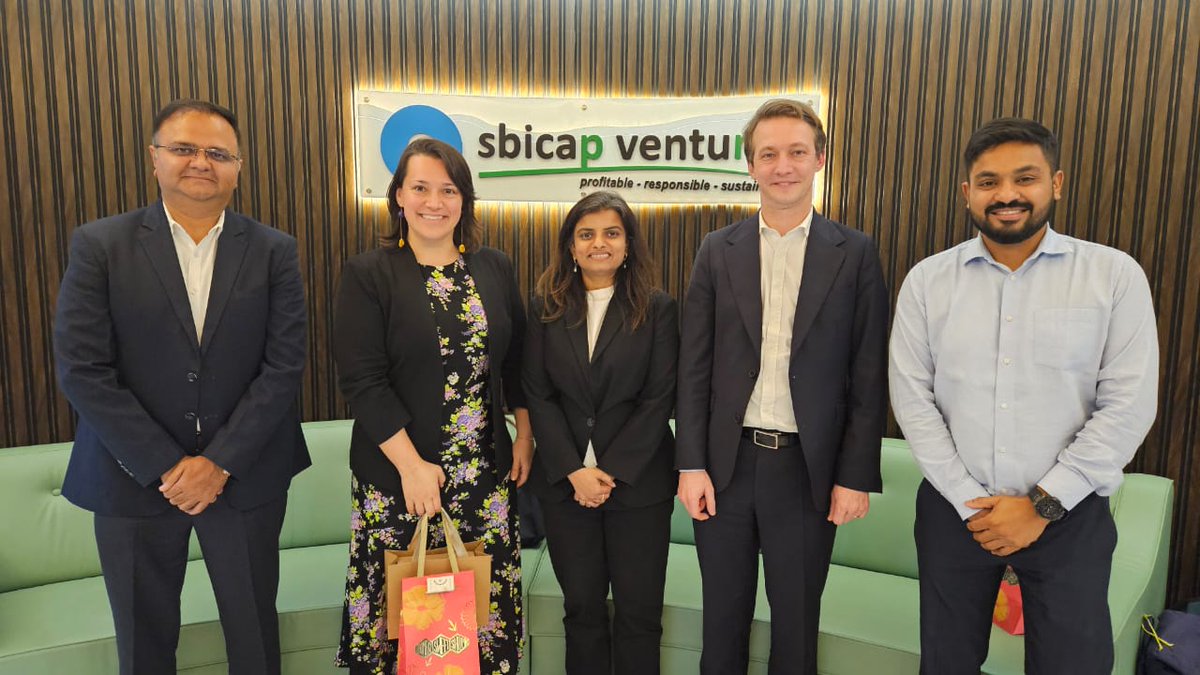
SVL (a @TheOfficialSBI Group company) had the pleasure of hosting colleagues from @EIB. @NeevFund, managed by SVL, participated in insightful discussions with Matthieu Ducorroy, Head of Private Equity Unit, and Irina-Maria Gaman, Private Equity Investment Officer, from EIB.
What would you do when your annual income crosses Rs 1 crore? Shipra Singh spoke to young Indian professionals who actually have an annual income above Rs 1 crore, to find out.
Under Kemps Corner Flyover on Wednesday, 22-Feb around 7:30pm.
Pedestrian signal is green & cars are passing by. No manual checking. Please look into it? An accident-prone zone already with multi-way roads and heavy traffic.
@MumbaiPolice@mybmc@mybmcWardD
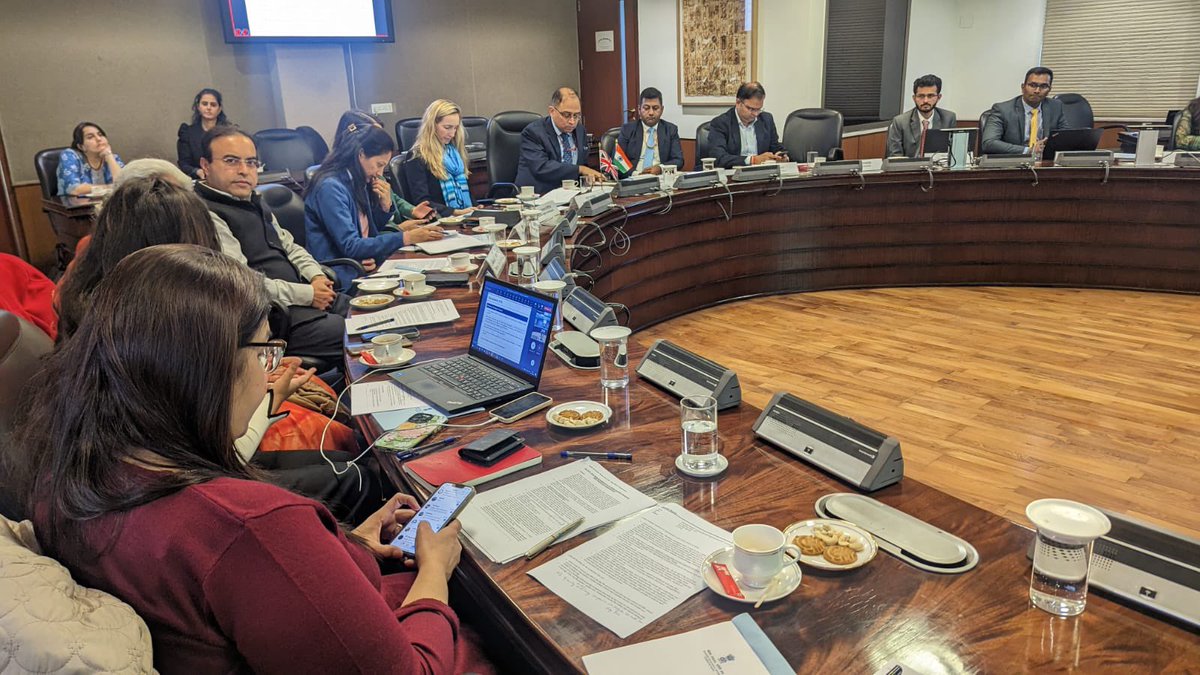
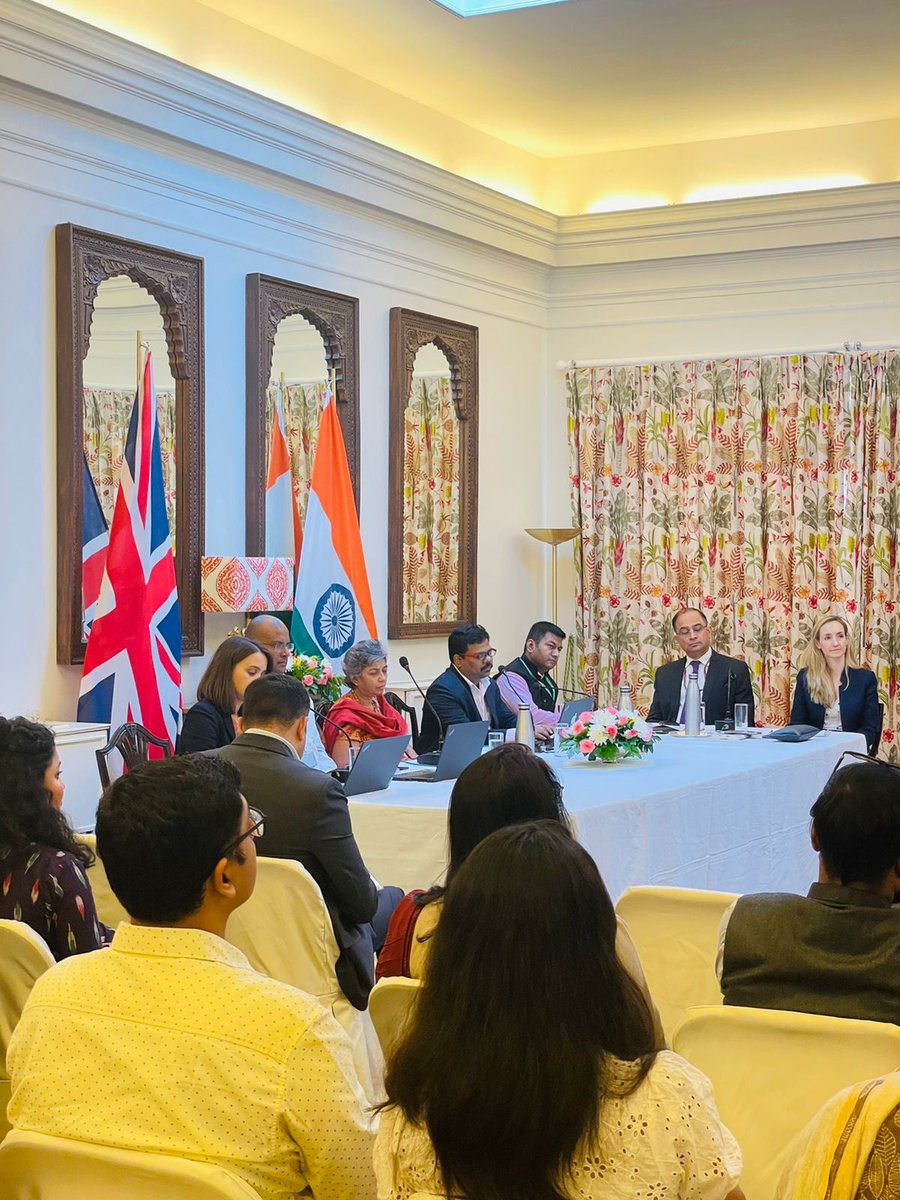
India & UK convened Early Market Engagement on the GIP Fund to identify potential fund managers. GIP is the 1st daughter fund to be set under TDC Fund of Funds. Many domestic & int'l fund managers participated with ideas
GIP-a blended finance approach to Triangular Devt. Coopn.
The day is here!
Unveiling #Pravah, an event by Self Reliant India (SRI) Fund, managed by SBICAP Ventures Limited, a @TheOfficialSBI Group company, we have Dinesh Khara, Chairman, SBI, sharing his insights on the expectations set.
Stay tuned for more as the day unfolds!
📢The Early Market Engagement by UK-India Global Innovation Partnership (GIP) Development Fund goes live on Wednesday, 1st February 2023, at 3 PM (IST)!
Register soon here: https://t.co/3EF41SKHrW
@UKinIndia@MEAIndia@Thrissurkaran@AkshayPanth@justkazi
I've seen a lot of people asking "why does everyone think Twitter is doomed?"
As an SRE and sysadmin with 10+ years of industry experience, I wanted to write up a few scenarios that are real threats to the integrity of the bird site over the coming weeks.
Today @MEAIndia & @UKinIndia organised Early Market Engagement on 🇮🇳🇬🇧Global Innovation Partnership, a new development partnership initiative. Large participation both on/off-line from Indian & int'l potential partners. Another step on this new road to sucess!
@sandiplomat
Finance Minister Nirmala Sitharaman's @nsitharaman statement saying, "Rupee is not weakening, Dollor is strengthening" is being discussed so much in social media especially by the so called trolls.
Let's dive into some facts:
(Cont..)
💰 How much do 🇮🇳 Indian startups pay their software engineers?
⌛ How long do they stay?
📈 How much hike do they ask for?
We at Weekday have collected compensation data of more than 50k engineers and lot of fun benchmarks. Thread on Indian software engineers’ salaries 🧵: