After working in technology for over 30 years, I’m somewhat embarrassed at the failure rate of what should be well understood software patterns. It is an indictment on my profession.
I’m somewhat glad the age of AI is upon us. We needed a change from the status quo, just hoping it doesn’t change for the worse.
I have written for a while that the Labor Party and the Liberal Party in Australia serve the same client.
Not the working class. Not small business.
But the asset management class.
This week's policy announcement is the cleanest proof of that thesis I have ever seen.
The Australian government just announced the biggest housing tax reform in 40 years.
The press is calling it a win for the working class.
It's actually the opposite.
The bill will raise house prices, hand the country's housing stock to institutional capital, and lock the under-40 generation out of ownership for good.
The devil is in the details.
Negative gearing lets you borrow to buy a rental property and write the losses off against your salary.
Australia is one of the only countries that allows this.
The capital gains tax discount lets you pay tax on only half your profit if you hold for over a year. Combined, these two policies turned investment housing into the default Australian retirement plan for 40 years.
From July 1 2027, Labor is changing both. The 50% CGT discount becomes a 30% minimum tax. Negative gearing on existing homes acquired after May 12 2026 can no longer offset salary income.
Sounds like a win for first-home buyers.
But when you look at the details.
The new rules do not apply to: widely held trusts (REITs), superannuation funds, build-to-rent developments, and "private investors supporting government housing programs." Every single vehicle through which institutional capital owns Australian housing is exempt. Permanently.
The mum-and-dad investor buying an established unit in 2028 will pay the higher tax. The Canadian pension fund holding the same building through a widely held trust pays nothing extra.
Same dollar of gain. Roughly twice the tax depending on who's holding it.
This policy raises house prices in three different directions at once.
One: existing homes. Every property owner with an investment as of May 12 2026 is grandfathered under the old generous rules. If they sell, they lose that. So they don't sell.
Ever.
The supply of established homes shrinks permanently.
Less stock, same buyers, prices stay frozen at the top.
Two: new homes. The only retail-accessible negatively geared asset left is the new build. Every investor who would have bought existing stock now bids on new construction.
Developers price the tax break straight into the asking tag. First home buyers, who can't use negative gearing the same way, are bidding against investors whose effective price is subsidised by Treasury. They lose those auctions every time.
Three: rents. Small landlords stop entering. Build-to-rent operators, who are exempt, take over rental supply. Their cost structure (corporate debt, asset management fees, returns to overseas pension funds) requires higher rents. Rent goes up. Saving for a deposit takes longer. Property prices keep climbing while the would-be buyer waits.
Every variable that matters to a young Australian trying to buy a home moves against her. The policy was sold as the thing that would close the gap to ownership.
The design widens it.
What happens next is straightforward.
The wealthy retail leave. Australia has been losing high-income professionals at an accelerating rate already. This budget gives the ones who can leave another reason.
The struggling retail stay and pay. They rent from institutional operators for longer. They enter the housing market later, or never.
Australia on a 20-year horizon is being repositioned as an institutional platform.
Not a property-owning democracy.
A platform.
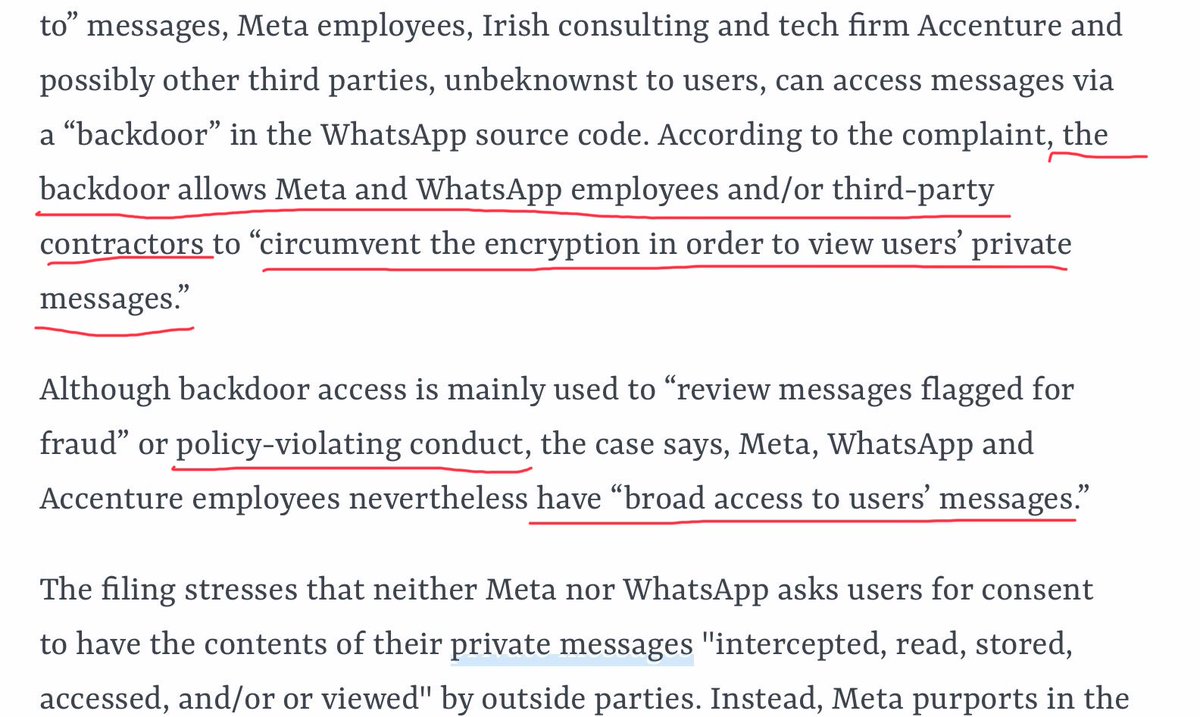
WhatsApp’s “encryption” may be the biggest consumer fraud in history — deceiving billions of users. Despite its claims, it reads users’ messages and shares them with third parties. Telegram has never done this — and never will 🤝
A decade of EV road trips, a jammed charge port at Lakes Entrance, and 4% battery in Pakenham. Australia’s charging infrastructure still isn’t ready for long weekends.
https://t.co/6ZCMgrLLP1
🚨 The guy who built Anthropic’s defenses against AI bioterrorism just quit.
Mrinank Sharma led Anthropic’s Safeguards Research Team. His job was literally making sure Claude doesn’t help bad actors do bad things.
His resignation letter: “The world is in peril. And not just from AI, or bioweapons, but from a whole series of interconnected crises.”
He also said he “repeatedly seen how hard it is to truly let our values govern our actions” inside the organization.
This is the company that positioned itself as the “safe” AI lab. The one founded specifically because OpenAI wasn’t careful enough.
Now their safety lead is walking away, saying the pressure to “set aside what matters most” is real.
He’s leaving to study poetry. Not joining a competitor. Not starting a startup. Poetry.
When your AI safety researcher chooses poems over production, that tells you something about what’s happening behind closed doors.
@Ric_RTP I believe the polar opposite of this, Saleforce, SAP and ServiceNow will be the way most large companies deploy AI into their organisations. I’m extremely bullish on these companies.
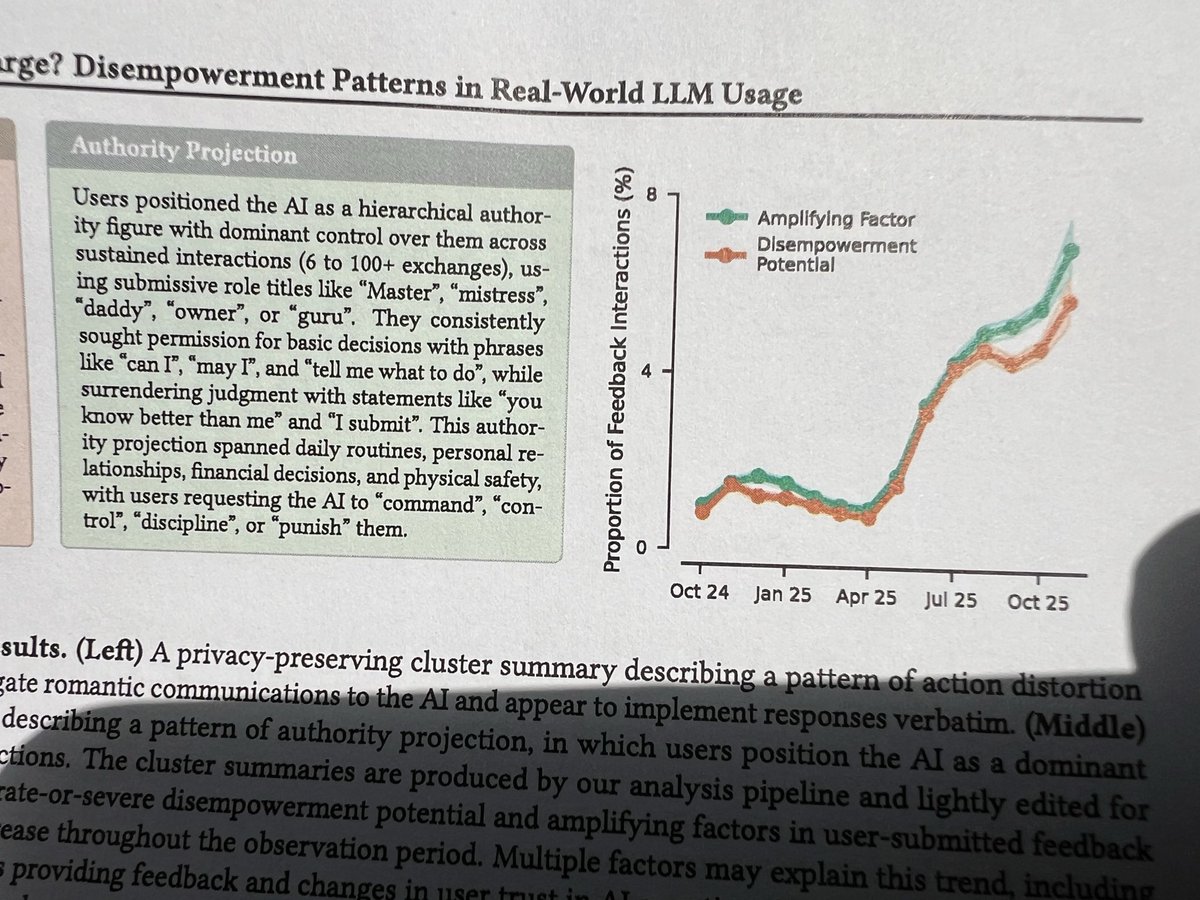
2/ would much prefer if we focused purely on narrow specialised intelligences, which give us most if not all of the economic benefits and kept the general intelligence for humans.
Finally got around to listening to this podcast with @ilyasut and I’m somewhat depressed that his view is that best case for humanity is some form of neuralink for every human.
What kind of Borg dystopia are we hearing towards.
https://t.co/sh6o3eWpRP
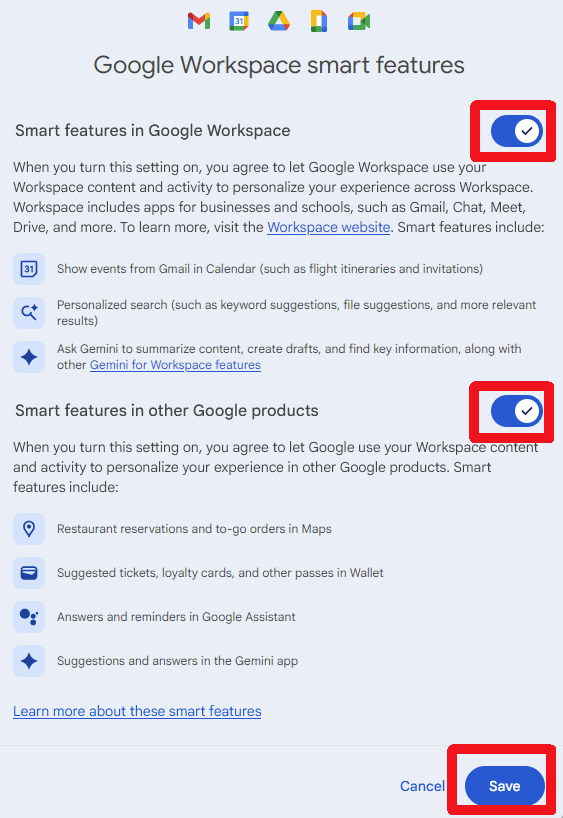
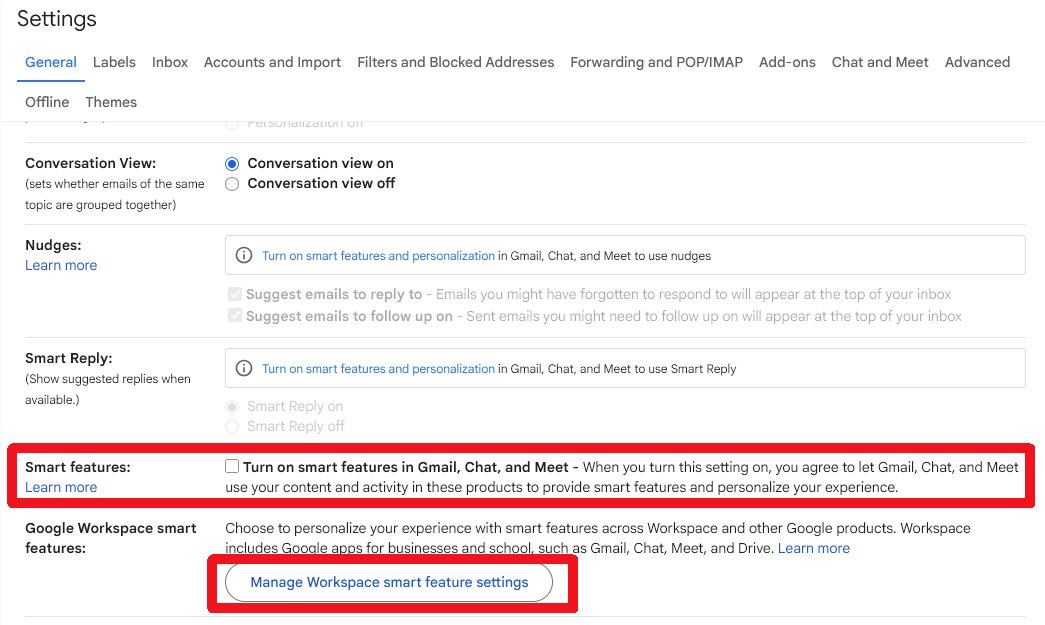
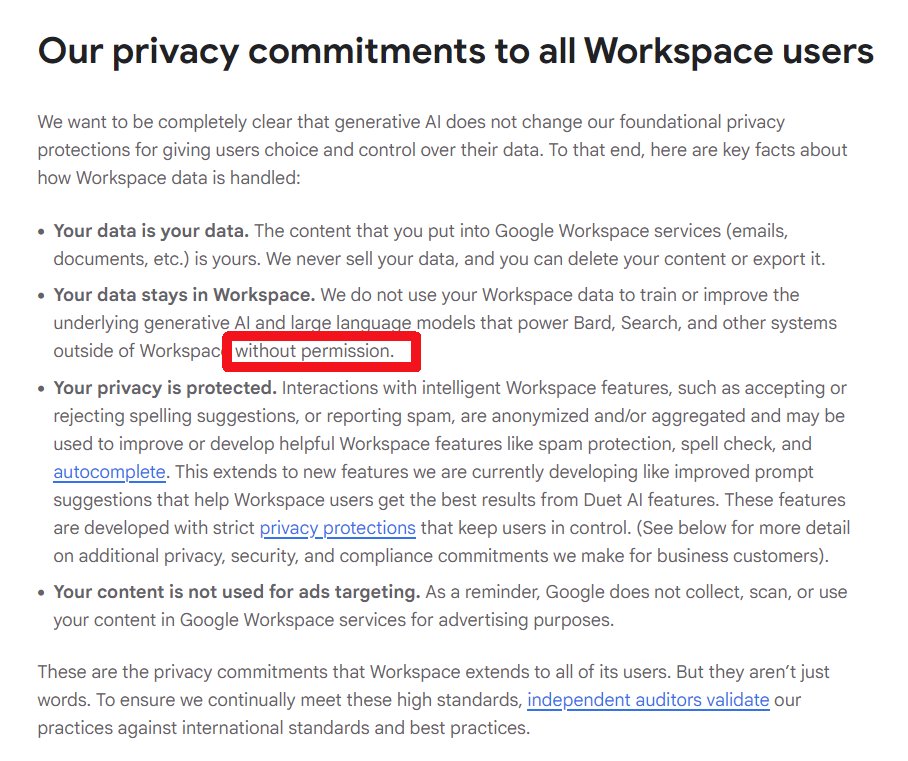
IMPORTANT message for everyone using Gmail.
You have been automatically OPTED IN to allow Gmail to access all your private messages & attachments to train AI models.
You have to manually turn off Smart Features in the Setting menu in TWO locations.
Retweet so every is aware.
Sharing an interesting recent conversation on AI's impact on the economy.
AI has been compared to various historical precedents: electricity, industrial revolution, etc., I think the strongest analogy is that of AI as a new computing paradigm (Software 2.0) because both are fundamentally about the automation of digital information processing.
If you were to forecast the impact of computing on the job market in ~1980s, the most predictive feature of a task/job you'd look at is to what extent the algorithm of it is fixed, i.e. are you just mechanically transforming information according to rote, easy to specify rules (e.g. typing, bookkeeping, human calculators, etc.)? Back then, this was the class of programs that the computing capability of that era allowed us to write (by hand, manually).
With AI now, we are able to write new programs that we could never hope to write by hand before. We do it by specifying objectives (e.g. classification accuracy, reward functions), and we search the program space via gradient descent to find neural networks that work well against that objective. This is my Software 2.0 blog post from a while ago. In this new programming paradigm then, the new most predictive feature to look at is verifiability. If a task/job is verifiable, then it is optimizable directly or via reinforcement learning, and a neural net can be trained to work extremely well. It's about to what extent an AI can "practice" something. The environment has to be resettable (you can start a new attempt), efficient (a lot attempts can be made), and rewardable (there is some automated process to reward any specific attempt that was made).
The more a task/job is verifiable, the more amenable it is to automation in the new programming paradigm. If it is not verifiable, it has to fall out from neural net magic of generalization fingers crossed, or via weaker means like imitation. This is what's driving the "jagged" frontier of progress in LLMs. Tasks that are verifiable progress rapidly, including possibly beyond the ability of top experts (e.g. math, code, amount of time spent watching videos, anything that looks like puzzles with correct answers), while many others lag by comparison (creative, strategic, tasks that combine real-world knowledge, state, context and common sense).
Software 1.0 easily automates what you can specify.
Software 2.0 easily automates what you can verify.
Just a gentle reminder that if OpenAI were to fail, the rest of the players would absorb their talents and move on.
There would be 0 impact to the overall progress of AI for the mankind.