Our Texas VR Team raised over $17 million in 2023 for teams, organizations & schools like yours. Thanks to their hard work, thousands of student-athletes, dancers, musicians, and more have the tools they need to be successful this year. Awesome job, VR Texas!
Saban's 4 essentials to improvement:
1. Identify the goal
2. Define what it takes to achieve it
3. Are you willing to put in the actual work?
4. Do you have the discipline to do it every day, even if you don't feel like it?
~ via @TheDaily_Coach
https://t.co/aEg2Lzj6RY
You learn a lot when you Coach.
After three decades of coaching, here are 28 of the most important things I have learned.
Maybe they will resonate with you.
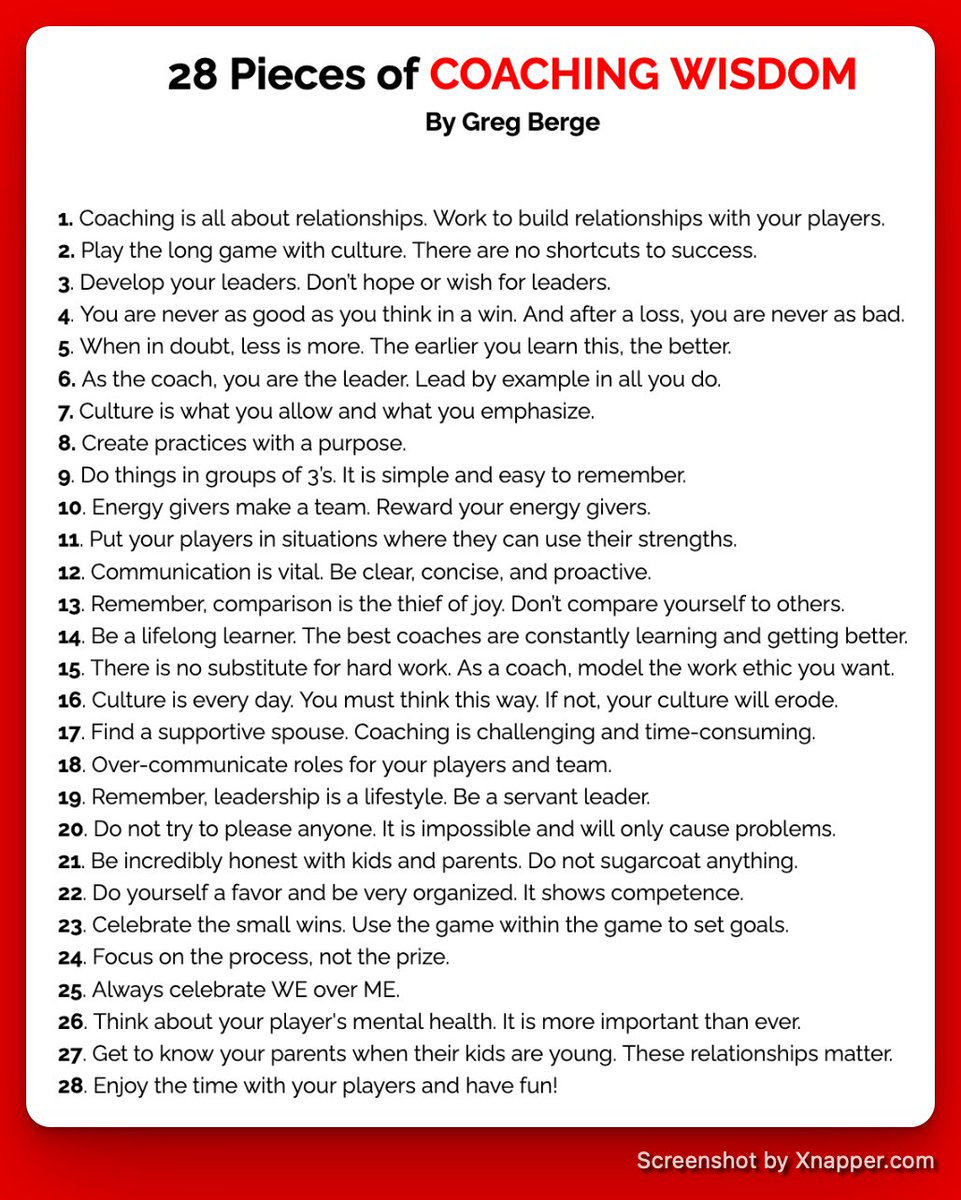
28 Lesson Learned.
1. Coaching is all about relationships. Work to build relationships with your players.
2. Play the long game with culture. There are no shortcuts to success.
3. Develop your leaders. Don’t hope or wish for leaders.
4. You are never as good as you think in a win. And after a loss, you are never as bad.
5. When in doubt, less is more. The earlier you learn this, the better.
6. As the coach, you are the leader. Lead by example in all you do.
7. Culture is what you allow and what you emphasize.
8. Create practices with a purpose.
9. Do things in groups of 3’s. It is simple and easy to remember.
10. Energy givers make a team. Reward your energy givers.
11. Put your players in situations where they can use their strengths.
12. Communication is vital. Be clear, concise, and proactive.
13. Remember, comparison is the thief of joy. Don’t compare yourself to others.
14. Be a lifelong learner. The best coaches are constantly learning and getting better.
15. There is no substitute for hard work. As a coach, model the work ethic you want.
16. Culture is every day. You must think this way. If not, your culture will erode.
17. Find a supportive spouse. Coaching is challenging and time-consuming.
18. Over-communicate roles for your players and team.
19. Remember, leadership is a lifestyle. Be a servant leader.
20. Do not try to please anyone. It is impossible and will only cause problems.
21. Be incredibly honest with kids and parents. Do not sugarcoat anything.
22. Do yourself a favor and be very organized. It shows competence.
23. Celebrate the small wins. Use the game within the game to set goals.
24. Focus on the process, not the prize.
25. Always celebrate WE over ME.
26. Think about your player's mental health. It is more important than ever.
27. Get to know your parents when their kids are young. These relationships matter.
28. Enjoy the time with your players and have fun!
Officials and Referees are getting hard to find.
And...
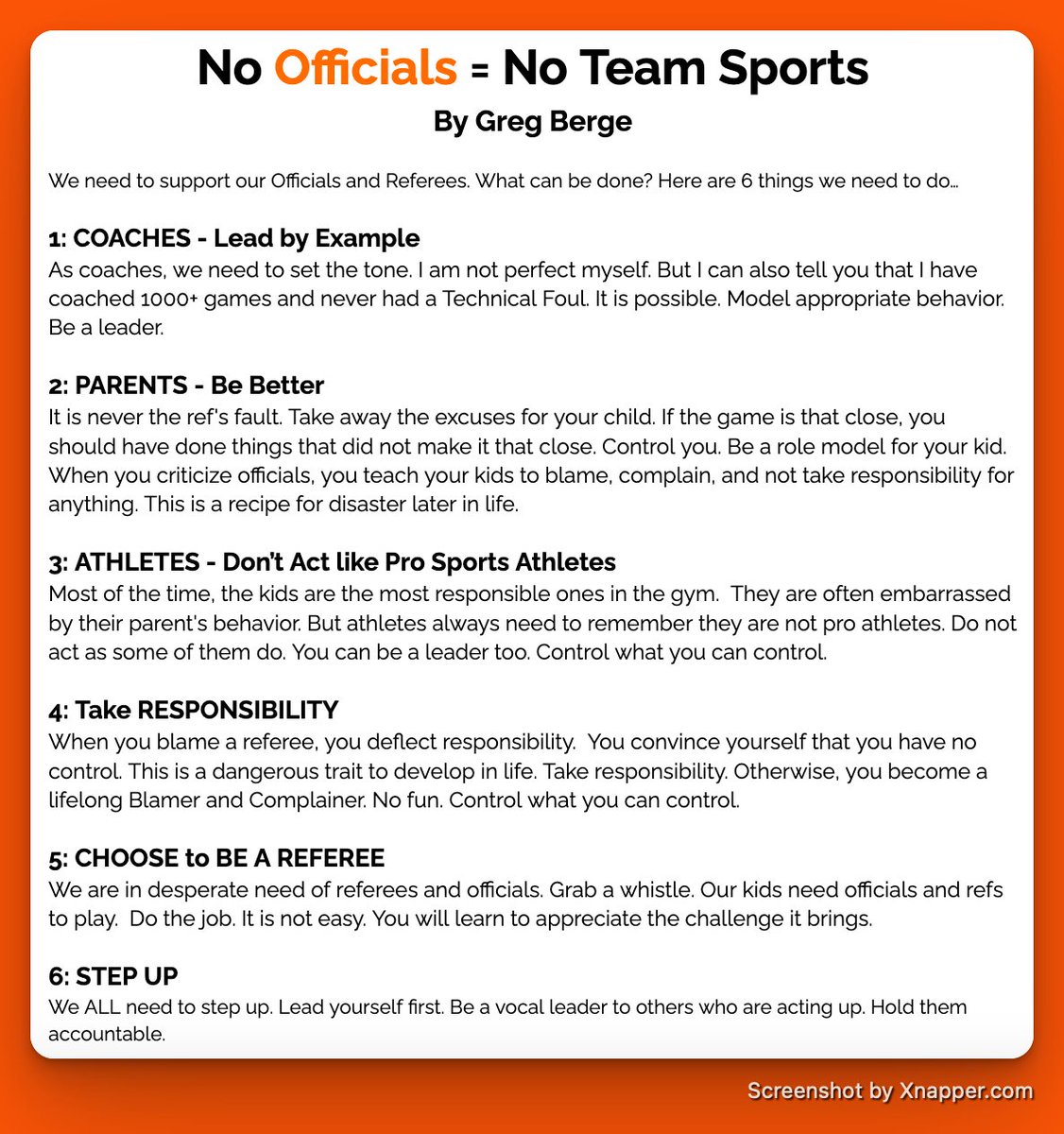
No Officials = No Team Sports.
As we start the fall sports season, we all must do our part to be better.
What can we do?
Here are six things...
1: COACHES - Lead by Example
As coaches, we need to set the tone. Players and fans follow our lead. Hold yourself accountable. Control the controllable. Model appropriate behavior. Be a leader. When you blame officials, you create a victim mindset in our players.
2: PARENTS - Be Better
It is never the referee's fault. Believe that. If the game is that close, you should have done things that did not make it that close. Control YOU. Be a role model for your kid. When you criticize officials, you teach your kids to blame, complain, and not take responsibility for anything. This is a recipe for disaster later in life.
3: ATHLETES - Play the Game
Most of the time, the kids are the most responsible in the gym. They are often embarrassed by their parent's behavior. But athletes always need to remember they are not pro athletes. Do not act as some of them do. You can be a leader too. Control what you can control. Play the game.
4: TAKE RESPONSIBILITY
When you blame a referee, you deflect responsibility. You develop a victim mindset and convince yourself that you have no control. This is a dangerous trait to develop in life. Take responsibility. Otherwise, you become a lifelong Blamer and Complainer. No fun. Control what you can control.
5: CHOOSE to be a REFEREE
We desperately need officials and referees. Grab a whistle. Our kids need officials and refs to play. Do the job. It is not easy.
6: STEP UP
We ALL need to step up. Lead yourself first. Be a vocal leader to others who are acting up. Hold them accountable.
_____
If you like this post, you will love my free weekly newsletter.
🏆 Great Teams - Better Leaders 123.
Actionable ideas on coaching, leadership, culture, and teams. Subscribe for free in my profile above.
Phil Jackson said, "The strength of the team is each individual member. The strength of each member is the team."
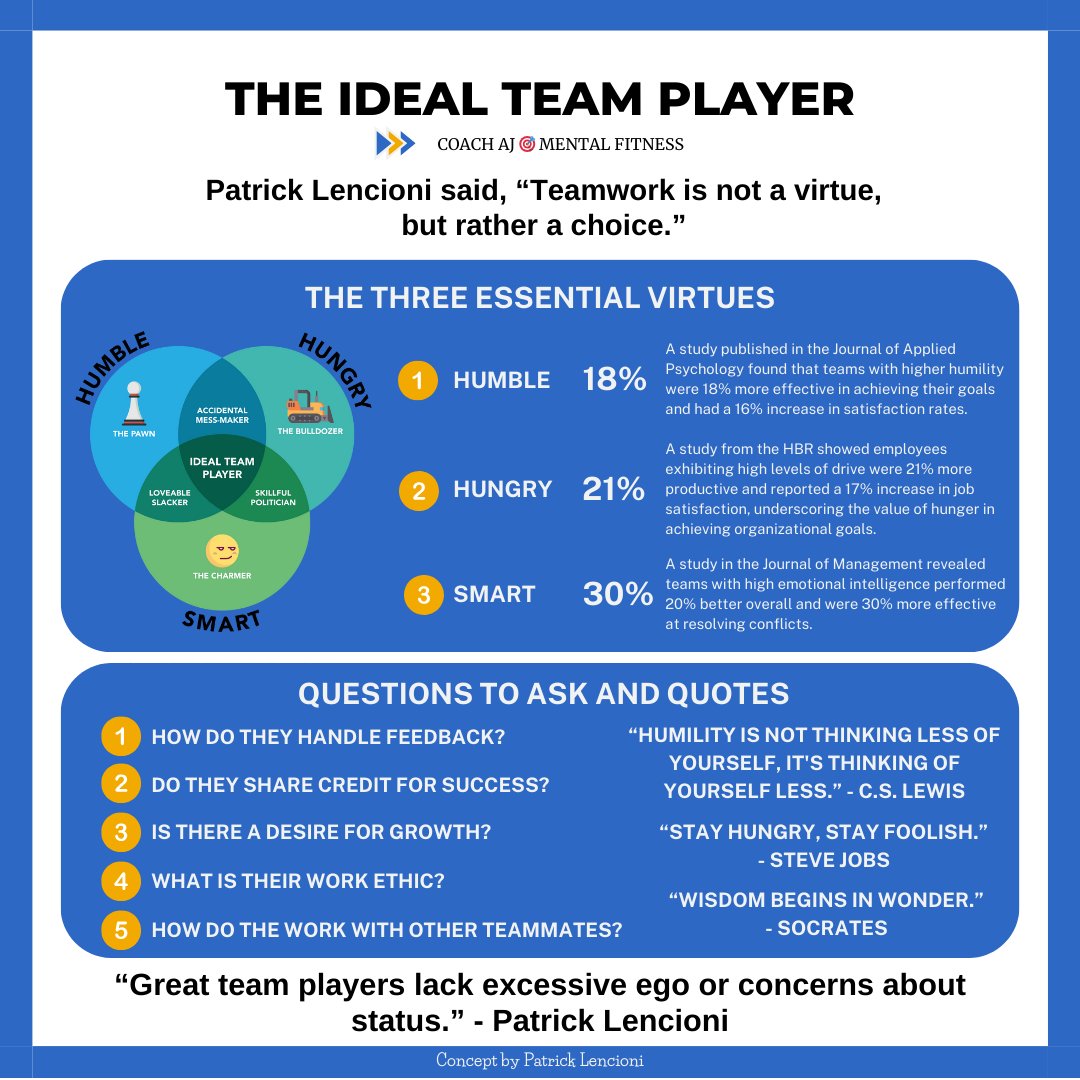
Patrick Lencioni said, "Teamwork is not a virtue, but rather a choice."
You choose to be a great teammate.
You choose it through actions, interactions, and decisions whether you want to be the ideal team player.
Great team players can be developed.
They develop it like any other skill through hard work, consistency, and improvement.
The 3 Principles of Being an Ideal Team Player (according to Patrick Lencioni):
1. Humble - Humility is a cornerstone of effective teamwork. A humble team player doesn’t think less of themselves, but rather thinks of themselves less.
• It means learning from others.
• It means being open to feedback.
• It means admitting you don't know.
Jay Wright said, "If you're not humble, it's hard to be coached. If you can't be coached, it's hard to get better."
2. Hungry - It means having a strong work ethic, a growth-mindset, and an unrelenting desire to achieve more.
• It’s the mindset of excellence.
• It's the mindset of giving to the team.
• It's being self-motivated and driven.
A hungry team player is always looking for ways to contribute, improve, and excel. They're self-motivated and driven by a genuine passion for their work and the team's mission.
3. Smart - Being smart isn’t about just being intelligent on topics, but also about being emotionally intelligent. It's being aware of how one’s actions impact others.
• It takes strong interpersonal skills.
• It means understanding team dynamics.
• It means resolving team conflicts.
Team players know the importance of effective communication and building relationships.
The importance of all three - The goal is to work with team members to develop all three attributes because when you are lacking one, you can undermine the effectiveness and cohesion of the entire team. For example, a team member who is hungry and smart, but lacks humility may come off as arrogant.
"Great team players lack excessive ego or concerns about status." - Patrick Lencioni
- - -
Follow @coachajkings for more posts like this!
The idea for this post comes from Patrick Lencioni's (@patricklencioni) book - The Ideal Team Player: How to Recognize and Cultivate The Three Essential Virtues. Great book and great read for everyone!
🚨CALLING ALL COACHES🚨 Super excited to be sponsoring the 2nd Annual BACK TO SCHOOL BASH!! OPEN TO ALL COACHES!
Come by booth 18019 to get your VIP wrist band a FREE drink tickets! Limited wristbands so HMU to reserve yours or stop by the VR booth!
#THSCA
Come see us and enter for a chance to win a PS5- also stop by for a wristband for our Back to School Bash we are throwing on Sunday night! Don’t miss us
@THSCAcoaches
We got you too!! Let’s talk about how you can get your own! DM me to learn about our premier platform and all that I can do to help you and your team(s).