The New Industrial Supercycle Is Moving From Blueprints to Paychecks
Trump’s promised industrial supercycle is crossing from investment into production — and everything from GDP to factory payrolls is firing up.
Last month, the Enemedia crowed. The “experts” announced 1.5 percent growth and pronounced judgment. Trump’s promised boom had failed to arrive.
Wrong.
This month, the Atlanta Fed’s GDPNow model has third-quarter real growth running at a 4.7 percent annual rate.
As I told you then, the TDS crowd was looking at the wrong number. In the second quarter report, imports and inventories pulled the number down. But the import surge was led not by toys, trinkets, or flat-screen televisions, but by capital goods: telecommunications equipment, semiconductors, and industrial machinery.
The equipment American companies were importing to build the boom was temporarily concealing it. And right on schedule, those machines are now roaring to life.
Friday’s employment report did more than add 162,000 jobs. It showed the sequence I described last month moving into its next stage. Restaurants and local-government schools supplied much of the headline gain. But manufacturing payrolls rose by 16,000, nearly all of it in durable goods. Machinery and fabricated-metal producers accounted for 6,000 apiece, while construction gained another 22,000 jobs.
Even July’s reported loss of 23,000 jobs did not survive revision. It became a gain of 21,000. Manufacturing employment has now risen by 58,000 since December, while factory production workers are earning 4.4 percent more per hour than they were a year ago.
Indeed, the private sector has added 1.04 million jobs since Trump took office just a year and a half ago.
The industrial boom has begun to hire.
Investment Is Turning Into Production
The latest numbers tell the story. Real final sales to private domestic purchasers — the part of the economy powered by American consumers and private investment — grew at a 4.2 percent annual rate, up from the original 3.9 percent estimate. Equipment investment surged by 13.6 percent after rising 15.8 percent in the first quarter.
Excluding the pandemic reopening, America has not seen back-to-back double-digit equipment-investment quarters in more than a decade.
Indeed, capital-goods imports jumped $14.4 billion, more than the entire $12 billion increase in goods imports. Computers, computer accessories, and semiconductors led the way. Yet through July, American exports were up 12 percent from the same period last year and the total trade deficit was down nearly 30 percent.
The private economy wasn’t standing still. It was buying productive capacity.
July’s trade figures show why the same buildout appears to depress GDP before it raises output. GDP subtracts an imported computer server from the trade component before the machine adds anything to American output.
The same is true of a German machine tool or a Taiwanese chip-fabrication system. GDP counts where the machine was made when it arrives. Only later does it count what American workers make with it. A new plant necessarily increases construction spending and machinery orders well before the public sees its finished products or new paychecks.
But now that accounting lag is ending.
Core capital-goods shipments rose 1.2 percent in July. Through July, they were 8 percent above the same period last year. Machinery shipments jumped 2.9 percent for the month. The durable-goods backlog rose again to $1.6 trillion. The industrial-machinery figures were even stronger. Through July, orders were 39.5 percent above the same period last year; shipments were up 32.4 percent.
Those shipments are now becoming output. Durable-manufacturing output rose at an 8.9 percent annual rate in the second quarter. The August ISM report extends the pattern. Manufacturing expanded for an eighth straight month after ten months of contraction, and the production index reached 58.3.
The machines did what capital investment is supposed to do: they raised output faster than labor costs. Now the factories using them are adding people.
Inflation has not vanished, but it’s certainly getting better. Second-quarter core PCE inflation slowed from a 4.4 percent annual rate to 3.6 percent while private demand accelerated.
Contrary to generations of Democrats, growth is not inflationary. Production is not the enemy of price stability: it is the means by which supply catches demand.
The Money to Keep Building
Industrial booms require financing, but the best financing is profitability. Profits are the financial capacity that funds capital spending, and Trump’s permanent business expensing contained in the One Big Beautiful Bill is driving growth by increasing the reward for putting that money to work now.
That’s no longer theoretical (it honestly never was). Current-production corporate profits rose 9.1 percent in the second quarter and 22.8 percent from a year earlier. Almost all of the quarterly increase came from domestic business.
Managements are clearly behaving like they expect the strength to last. The Wall Street Journal reports that companies raising current-quarter profit guidance outnumber those cutting it by nearly two to one.
Steve Moore calls this the biggest industrial boom in American history. Over the next quarter-century, he estimates $6 trillion to $7 trillion in AI and data-center investment alone, and two million to three million additional construction jobs. That’s a supercycle by any definition, and it’s just beginning.
Trump’s Plan Was Never Just a Tax Cut
As they do with his foreign policy, the political class keeps analyzing Trump’s economic program one policy at a time. That guarantees they will miss it until it slaps them in the face (and if the 1980s are any indication, they’ll deny it even then).
But the plan is a system. First come the trade agreements and investment commitments. Then land, permits, construction, equipment, workers, and suppliers. Production and exports follow.
Permanent tax cuts and full, immediate business expensing reward companies for building here, now. Treasury Secretary Scott Bessent calls the result a “CapEx boom in factories.”
Massive deregulation — 129 regulations cut for every one new rule issued — shortens the time between deciding to build and opening the doors. Abundant energy powers everything. Defense expansion creates long production runs for some of the most advanced manufacturing on Earth.
Tariffs create leverage to open foreign markets, rebalance trade, and redirect supply chains away from China. Access to the world’s richest consumer market is exchanged for purchases, investment, and production inside the United States. And by exempting foreign companies from tariffs if they build plants here, the world is incentivized to create jobs in America and sell to its workers.
All these things helped Trump recruit more than $18 trillion in investment commitments. But Trump also traveled the world to pitch those deals and consistently came home with gold. No President has ever been more hands-on in building American jobs and the American future. And the new equipment and shipment figures show that the spending from those investments has begun.
The inevitability of deindustrialization was a lie. America deindustrialized due to bad policy decisions by both parties. It took draining the swamp to begin to rebuild America’s heartland.
Energy Powers the Supercycle
Energy is the machine underneath the machines.
EIA’s latest finalized data put U.S. crude production at 13.8 million barrels a day in June, after nearly touching 14 million in April. Petroleum exports — crude oil plus petroleum products — set a record 13.61 million barrels a day in April. May nearly matched it, while crude exports alone set a fresh monthly record of 5.73 million.
In 2008, America was “exporting” $700 billion a year to its enemies in exchange for their crude. Oh, how the tables have turned.
Total American energy exports reached a record 31 quadrillion Btu in 2025, while net energy exports rose 20 percent to another record. U.S. LNG shipments to Europe reached a record 10.3 billion cubic feet a day, up from 6.3 billion in 2024. The United States supplied 56 percent of the EU’s LNG imports in 2025, compared with a still-objectionable 13.9 percent from Russia.
All of that reflects simply enormous plant expansion, export income, and jobs. And the supply base is still expanding. EIA puts current peak U.S. natural-gas export capacity at 18.3 billion cubic feet a day. It expects total natural gas exports to grow by another 30 percent by 2027 as new terminals come online.
Yet again, demand drives investment; investment builds factories and installs machinery; production and exports follow. That last bit is happening now.
April’s petroleum-export record came after disruption through Hormuz drove up global demand for American barrels. Export capacity can’t prevent a price shock. But supply outside the chokepoint offsets the disruption and keeps factories operating, both at home and abroad.
The kind of global energy shock inflicted repeatedly by OPEC in the 1970s simply isn’t possible anymore.
Energy dominance is the foundation beneath the industrial supercycle — and one of America’s most powerful instruments of statecraft.
Defense Abroad Means Jobs At Home
Defense offers the clearest proof of how the process works. Through July, defense-capital-goods shipments were 28.7 percent above the same period last year; orders were up 43.3 percent.
Last month, I told you about Lockheed’s $65 billion in new orders and record $230 billion backlog. But then came the kind of commitment that turns a backlog into factories and jobs.
A modification brought Lockheed’s seven-year PAC-3 multiyear agreement to $58.62 billion. Under the new contract, the company will triple PAC-3 capacity by the end of 2030, expanding its Camden, Arkansas plant by 50 percent. Lockheed plans to invest $9 billion through 2030 to modernize more than twenty U.S. facilities.
Previous administrations allowed U.S. shipbuilding to atrophy. But Trump’s on top of that too. Perhaps most striking is the new $76.6 billion award for five Columbia-class ballistic-missile submarines and nine Block VI Virginia-class guided missile submarines.
As I explained last month, the long-lead contract matters every bit as much as the submarines themselves. It gives the private yards and their suppliers the certainty required to add production capacity, hire and train new workers, and build boats faster.
At the same time, the Navy announced a new multi-year contract with Raytheon to increase annual Tomahawk missile production from 68 to more than 1,000. That’s billions of dollars in new physical plant and skilled workers, and is just one example among many.
But contracts like this are only half the plan. The President’s separate August 13 memorandum orders plans for a fifth public Navy yard and a Component Repair Center stocked with complete “ship sets” of submarine spares.
Private yards build the fleet; public yards keep it at sea. America needs more of both.
Electric Boat’s 2026 goal is 8,000 hires across Connecticut and Rhode Island. HII reports that shipbuilding throughput rose 14 percent in 2025 and says it is targeting another 15 percent this year.
Five- to seven-year government commitments make those investments possible. A manufacturer cannot expand a plant, finance suppliers, qualify new sources, buy years of material, and train thousands of new and badly needed workers against one-off orders Congress may or may not renew.
Long production runs turn demand into something a company can build against. They also greatly reduce the unit cost and the time to completion for the taxpayers.
You can’t command the seas with ships you can’t build, refuel, repair, or replace. Trump isn’t just buying missiles and submarines. He’s rebuilding the machine — and the workforce — that builds them.
I Told You This Was Coming
In February 2025, I wrote that Trump was turning America into the world’s energy powerhouse, using abundant oil and natural gas not merely to lower costs at home but to take markets from Russia and OPEC, supply our allies, strengthen the dollar, and turn trade negotiations into long-term orders for American energy.
Last July, when Congress made the Trump tax cuts and immediate business expensing permanent, I explained how the One Big Beautiful Bill would unleash purchases of plants and equipment that temporary provisions never could.
Then, in January, I went on Fox Business and NTD to predict the coming 2026 economic boom. I specifically pointed to the permanent tax cuts, Trump’s deregulatory offensive, $18 trillion in multi-year investment commitments, the reshoring of manufacturing, sharply higher defense spending, and the energy revolution.
I could list a hundred others, but the main point was always this: 1982 and 1983 were exactly the same. Real and permanent tax cuts spurred a surge in CapEx that slowly but surely transformed the economy. And in 1982 and 1983, the Enemedia breathlessly told us how the terrible economy and Reagan’s “trickle-down economics” (their term, not his), would result in his being a one-term President and leaving office in disgrace.
Yet he was right. And in 1984, he won 49 states.
So here we are again.
The Industrial Supercycle Is Hiring
Last month, I wrote:
"What we’re seeing right now is an order-book, equipment, construction, capacity, export, and productivity boom. Finished factories, full-rate production, broader hiring, and rising industrial wages come later. You don’t hire the entire operating workforce before building the plant. You don’t deliver the submarine before expanding the yard. And you don’t get the later output without making the earlier investment."
You didn’t in 1983 either.
Friday added the next link: payrolls. Factories are being built at an accelerating rate; the full fruit of that labor lies ahead. But orders are becoming shipments and output, and the industrial buildout has begun to hire.
For a generation, America’s ruling class told us manufacturing was gone forever. China would build; we would consume. Russia and the Middle East would supply the energy. Europe would regulate. America would borrow, import, and manage its inevitable decline.
Trump rejected every part of that foolishness.
The quiet boom is getting louder. The capital-goods surge that concealed it in August is now being followed by higher American production, lower unit costs, and new industrial paychecks. And the companies at the center of it have the profits and order books to keep building.
The Trump economic boom is here. But we’re still only seeing the leading edge of a Cat 5. The American industrial supercycle has begun.
🔻Japan Just Approved Frequency Therapy as a Recognized Medical Treatment. The United States Still Classifies It as "Experimental."
In March 2026, Japan's Ministry of Health officially added pulsed electromagnetic field therapy to its national health insurance coverage. This means any Japanese citizen can now receive frequency-based treatment at a hospital and have it covered the same way as surgery or medication.
The approval followed a 7-year clinical study at Kyoto University involving 4,200 patients with chronic pain, bone fractures, and inflammatory conditions. Results showed a 67% reduction in recovery time compared to pharmaceutical-only protocols.
Japan is not the first. Germany has covered PEMF therapy since 2014. Switzerland added it in 2019. Israel uses it in military rehabilitation. South Korea approved it for post-surgical recovery in 2022.
The United States has not approved a single frequency-based therapy for general medical use. The FDA still requires devices to carry the label "not intended to diagnose, treat, cure, or prevent any disease."
Five countries are healing with frequencies. One country is still debating whether frequencies work.
The difference is not science. The difference is $1.48 trillion in annual pharmaceutical revenue.
Please Share !
⟁
The Mongol army that conquered half the known world rode ten days without lighting a fire, and lived on horse blood and powdered milk.
Marco Polo saw them do it in the 1270s and wrote it down for a Europe that did not believe him. A Tartar horseman, he said, would go ten days on the march without cooked food, and when he needed to eat he opened a vein in his horse and drank. A horse could give a pint or two every ten days and stay sound; a man could live on that between towns. The whole army carried a string of remounts, each man with a dozen or more, and every one of them was a canteen.
And they carried milk. Dried milk, which the West would not work out how to make for another six hundred years. The women boiled mare's milk, skimmed the fat off the top for butter, and dried the rest in the sun until it set into a paste. Each rider carried ten pounds of it in a bag. In the morning he put half a pound in a leather flask with water and rode. By the time the horse had jolted it for a few hours it had beaten itself into a thin porridge, and that was dinner, taken in the saddle at a canter.
Other travellers filled in the rest. John of Plano Carpini, the Pope's man, sent to the Great Khan in 1246, reported that the Mongols ate anything that had a pulse, dogs and wolves and foxes and mice included, and that in the winter they lived on meat and in the summer on nothing but mare's milk. He did not see them eat bread. Fermented mare's milk, koumiss, was their beer and their wine. Meat was boiled in the cauldron and the broth drunk to the last drop, or dried in strips under the saddle, or eaten raw and warm off the kill.
No bread. No wagon train of grain. No baggage in the sense a European army meant it. An army that had to grind flour and bake it moved at the speed of its ovens; the Mongols moved at the speed of a horse, which is why nobody in Europe saw them coming until the Hungarians were dead.
The European soldier of the same century marched on bread, biscuit, pulses, wine and salt meat, with a supply chain behind him as long as the campaign, and starved or mutinied when it broke. The Mongols brought the supply chain with them on four legs and drank it.
You have been told that meat and milk are heavy, expensive foods for the settled and the rich, and that empires run on grain. For a century and a half the greatest land empire in the history of the world ran on the opposite, and the men who ran it were bigger, harder and faster than anyone they met.
The milk powder in a modern ration pack, the pemmican in a Victorian sledge, the dried meat in a hunter's pocket, all of it is the Mongol saddlebag reinvented by people who had to be told twice.
Polo's readers laughed at the horse blood.
The Hungarians did not laugh.
🚨🇯🇵 HOLY SH*T: Nagoya, Japan right now...
104.5 mm of rain was unleashed in ONE HOUR, the highest total since records began being kept in 1890.
Subways have been shut down, commuters have been stranded, and streets are absolutely flooded.
Nagoya authorities have issued the highest Level 5 emergency safety warnings and Level 4 evacuation orders for parts of the city...
Writer: Michael
China’s Oil Buying And America’s Fiscal Constraint
Luke’s argument is that China may be able to keep securing oil at prices that create serious financial pressure for the United States. Its export earnings provide purchasing power, while higher energy costs can complicate America’s inflation and debt problems. That concern deserves weight.
Purchasing Power Matters
China’s roughly $1.2 trillion merchandise surplus measures exports minus imports. Its bidding capacity also depends on export receipts, reserves, credit and state support. The broader current account balance is not a ceiling on what Chinese buyers can spend.
That strengthens Luke’s point about competing for available cargoes. China can pay more than weaker importers without needing every shipping route restored. Its influence over the marginal price can be substantial, although the outcome still depends on available supply and other buyers’ willingness to pay.
Inventories Buy Time
China’s crude imports fell 32% in the second quarter, while inventory withdrawals appear to have cushioned the disruption. Official data show its economy still grew 4.7% over the first half of 2026. Those developments demonstrate resilience, although they do not tell us how long that resilience can last.
Inventories are finite. Using them can postpone purchases until replacement barrels become necessary, potentially concentrating demand in an already tight market.
Renewed buying supports that concern. Sinopec expanded Russian purchases, driving up prices and squeezing supplies for smaller Chinese refiners. This shows both China’s purchasing power and the uneven costs within its own economy.
The Fiscal Argument Changes The Calculation
Luke’s concern goes beyond the usual relationship between oil, inflation and Fed policy. He estimates that gross interest, entitlement and veterans’ spending together equal 105% of federal receipts. His measure includes major spending commitments as well as interest.
In his framework, weakening growth can reduce tax receipts while spending remains difficult to cut. Higher borrowing costs then add pressure as debt is issued or refinanced. Recession could therefore worsen the fiscal outlook even while reducing private demand.
Older episodes of falling yields cannot settle how today’s market would respond. Investors could demand more compensation for fiscal and inflation risks despite slower growth. Conversely, demand for safe assets and expectations of easing could still support Treasuries.
The spending ratio alone does not establish when financing becomes unavailable or monetary intervention becomes necessary. Debt maturities, investor demand and policy choices shape that timing.
I agree that China’s ability to keep buying could expose American financial constraints before Chinese output suffers severely. The remaining uncertainty is whether that sequence becomes decisive. China’s resilience and America’s fiscal sensitivity support Luke’s warning, while the duration of the disruption and the bond market’s response determine how far it carries.
Every part of you, from your bones to your heartbeat, is built from atoms that have existed for billions of years. These atoms were not created on Earth. They were formed long before our planet existed, deep inside ancient stars that lived, exploded, and scattered their elements across the universe. The iron in your blood, the calcium in your bones, and the oxygen you breathe all came from these cosmic events.
Scientists estimate that the human body contains around 7 octillion atoms that’s a seven followed by 27 zeros. These atoms constantly move, connect, and exchange energy, making you part of an endless cycle of cosmic transformation. Every breath you take and every meal you eat adds atoms that once belonged to stars, planets, and even other living beings.
The age of your atoms is staggering. Hydrogen, one of the most common elements in your body, is nearly as old as the universe itself about 13.8 billion years. Heavier elements like carbon and nitrogen were forged in the hearts of stars before being spread across space by powerful supernova explosions. Eventually, these elements gathered to form new solar systems, including ours.
This means you are, quite literally, made of stardust. When you look up at the night sky, you are looking at your origins the same cosmic matter that shaped you is still shining as stars above. The universe didn’t just create you by chance; you are an active part of it, living proof of how matter can become aware of itself.
So, when you think about your place in the world, remember this: you are not small or separate from the cosmos. You are the universe, organized into human form, carrying within you the timeless story of creation written in every single atom.
🔥💊🩸 VOTRE SANG EST UN CRISTAL LIQUIDE ✨ ILS LE SAVAIENT DÉJÀ DEPUIS 1938.🔥
En 1938, un biophysicien allemand du nom de Dr. Erwin Neher, a découvert quelque chose qui aurait dû révolutionner toute la médecine :
Le sang humain n'est pas seulement un fluide de transport, c'est une structure cristalline piézoélectrique, ce qui signifie qu'il génère une charge électrique en réponse à la pression mécanique et à la fréquence électromagnétique.
Votre sang est une antenne vivante.
Cette découverte a été immédiatement classifiée par le Troisième Reich et placée sous la juridiction de l'Ahnenerbe, la division des SS responsable de la militarisation de la science réprimée.
Après la guerre, l'opération Paperclip a transféré 1 600 scientifiques allemands aux États-Unis.
La recherche de Neher sur les cristaux du sang a été directement intégrée à un programme secret à Fort Detrick, dans le Maryland, la même structure qui a ensuite développé des armes biologiques.
La recherche a continué secrètement pendant 85 ans.
Voici ce qu'ils ont confirmé, puis dissimulé : votre sang contient de l'hémoglobine, une molécule à base de fer, disposée dans une structure cristalline géométrique.
Cette structure réagit aux fréquences électromagnétiques, de la même manière qu'une antenne radio réagit aux ondes radio.
QUAND elle est exposée à des fréquences spécifiques :
— 528 Hz : la viscosité du sang diminue de 23 %. L'apport d'oxygène aux cellules augmente de 41 %. Cette seule fréquence élimine la cause principale de 80 % des maladies cardiovasculaires.
— 432 Hz : la structure cristalline du sang se réaligne sur son schéma géométrique original. Les toxines sont éliminées électromagnétiquement de la structure.
Purification complète du sang en moins de 20 minutes !
— 7,83 Hz : les cellules souches dans la moelle osseuse s'activent. La production de nouvelles cellules sanguines augmente de 300 %.
Le corps commence à produire du sang frais et non corrompu.
Pourquoi ne veulent-ils pas que vous le sachiez ?
Parce que l'industrie mondiale du sang vaut 49,8 milliards de dollars par an.
Transfusions sanguines, dialyse, collecte de plasma, médicaments anticoagulants, médicaments pour le cholestérol...
Chacune de ces industries dépend du mensonge selon lequel le sang ne peut pas être purifié, régénéré ou optimisé sans intervention médicale.
Votre sang se nettoie tout seul, votre sang se régénère tout seul, votre sang est un système cristallin sensible aux fréquences, conçu pour se maintenir – indéfiniment.
Ils ont désactivé la fréquence. Puis ils vous ont vendu des médicaments.
La fréquence que votre sang attendait est déjà présente dans votre conscience.
- Shakti Selwood
Iridologie Holistique
Çin öyle bir şart koydu ki, kabul eden her ülke rakibini kendi eliyle yetiştirdi.
Son dönemde bir şey dikkatinizi çekti mi?
Almanya'nın otomotiv devleri peş peşe zarar açıklıyor ve işçi çıkarıyor.
Volkswagen 50 bin kişilik iş kesintisi açıkladı. BMW 8 bin kişi çıkarıyor. Mercedes de kendi küçülme planını yürütüyor.
Bu bir kriz haberi gibi duruyor. Değil.
Çin öyle bir yöntem geliştirdi ki, girdiği sektör birkaç yıl içinde tamamen onun oluyor.
Bu yöntemi daha önce gördük.
2004'te Çin'in yüksek hızlı treni yoktu.
Demiryolu bakanlığı yabancı üreticilere şu şartı koydu. Çin'e tren satmak isteyen, nasıl yapıldığını da öğretecek.
Siemens, Alstom, Bombardier ve Kawasaki kabul etti.
Sözleşmelere teknolojinin sadece Çin içinde kullanılacağı, ihraç edilmeyeceği yazıldı.
3 yıl sonra Çin kendi trenini üretmeye başladı.
Bugün dünyadaki yüksek hızlı tren teslimatlarının dörtte üçü Çin'den çıkıyor. O trenler artık ihraç ediliyor.
Aynı şey güneş panelinde de oldu, çelikte de.
Şimdi sıra otomotivde.
Çin bu sektöre ucuz üretici olarak girmedi.
Müşteri olarak girdi.
1980'lerde Alman şirketleri Çin pazarına girmek istedi. Çin bir şart koydu.
Ortak şirket kuracaksın, fabrikayı burada kuracaksın, teknolojiyi paylaşacaksın.
Almanya kabul etti.
Çünkü karşısında dünyanın en büyük pazarı duruyordu.
Volkswagen Çin'e o yıllarda girdi ve on yıllarca oradaki en büyük yabancı otomotiv yatırımcısı oldu.
O yıllarda Çin sadece araba almadı. Nasıl yapıldığını öğrendi.
Fabrika kuruldu, mühendis yetişti, tedarikçi ağı oluştu.
Sonra elektrikli araca geçildi.
Almanya'nın yüz yıllık üstünlüğü olan motor teknolojisi bir anda anlamını kaybetti.
Elektrikli arabada belirleyici olan motor değil batarya.
Bataryanın da yüzde 70'i Çin'de.
Bugün Batı Avrupa'da satılan her 7 elektrikli araçtan biri Çin markası.
Çin'in pazar payı bir yılda yüzde 9,4'ten 14,2'ye çıktı.
Bunu Avrupa Birliği'nin koyduğu yüzde 35'e varan ek gümrük vergisine rağmen yaptılar.
Çünkü gümrük vergisi fiyat farkını kapatır, üretim üstünlüğünü kapatmaz.
Şimdi faturaya bakalım.
Volkswagen 87 yıllık tarihinde ilk kez Almanya'da fabrika kapatmayı konuşuyor.
1994'ten beri verdiği iş güvencesi sözünü bitirdi.
İşçiler 2018'den bu yana ilk kez büyük çaplı greve çıktı.
Alman otomotivinde ve yan sanayisinde çalışan sayısı bu yılın ilk yarısında 691 bine indi. Bu 2005'ten beri görülen en düşük seviye.
Avrupa'daki yan sanayi 350 bin kişinin işinin risk altında olduğunu söylüyor.
Bunu şöyle düşünün.
Dükkanınıza bir çırak alıyorsunuz. Yıllarca işi öğretiyorsunuz, çünkü size kazandırıyor.
Bir gün o çırak karşınıza kendi dükkanını açıyor. Sizin öğrettiğiniz işi sizden ucuza yapıyor.
Almanya Çin'e araba sattı. Ama asıl verdiği şey araba değildi.
Üretimin kendisiydi.
Çin önce en büyük müşterin olur, sonra en büyük rakibin.
Arada geçen süre, ona ne öğrettiğine bağlıdır.
Bu benim kişisel analizim.
Gelişmeleri izliyorum, sizi bilgilendireceğim.
🔻IN 1925, A RUSSIAN ENGINEER PLACED A COPPER RING AROUND A DYING PLANT. THE TUMOR DISAPPEARED. EVERY OTHER PLANT IN THE EXPERIMENT DIED. HIS TECHNOLOGY WAS USED IN HOSPITALS ACROSS EUROPE UNTIL HE WAS KILLED IN NEW YORK IN 1942.
His name was Georges Lakhovsky.
He proposed a theory so dangerous that it had to be erased from medical history. Every living cell is a miniature oscillator. It vibrates at its own specific frequency. When a cell is healthy, it vibrates at its natural resonant frequency. When it becomes diseased, the frequency drops. Cancer, infection, degeneration — all of them are frequency disorders.
In 1925, Lakhovsky conducted an experiment at the Salpetriere Hospital in Paris. He inoculated geranium plants with cancer-producing bacteria. All plants developed tumors. Around one single plant, he placed a simple open-ended copper ring — 30 centimeters in diameter. Nothing else. No electricity. No chemicals.
Within weeks, the plant with the copper ring shed its tumor completely and grew taller and stronger than it had ever been. Every other plant in the experiment died.
The copper ring was acting as an antenna. It was capturing the full spectrum of cosmic frequencies and feeding them back to the plant's cells. The cells re-tuned themselves to their natural oscillation. The disease could not survive in a cell vibrating at its correct frequency.
Lakhovsky then built the Multi-Wave Oscillator. It used two concentric antennas driven by a Tesla coil to generate a broad spectrum of electromagnetic frequencies simultaneously. The idea was simple — flood the body with every possible frequency, and each cell will naturally resonate with the one it needs to heal.
By the 1930s, his machines were being used in hospitals across France, Italy, and Sweden. Doctors reported recoveries from advanced cancers, severe arthritis, and chronic infections. Patients who had been given weeks to live walked out of clinics.
In 1941, Lakhovsky brought his technology to New York. He began treating patients at a major hospital with extraordinary results.
In 1942, at the age of 72, Georges Lakhovsky was struck by a car in New York City and died shortly after. Immediately following his death, every Multi-Wave Oscillator was removed from American hospitals. His research was labeled quackery. His name was deleted from medical literature.
A man whose machines were healing patients in European hospitals for over a decade was hit by a car and erased from history within months.
The frequency of a healthy human cell is between 62 and 72 MHz. When it drops to 58 MHz, cold symptoms appear. At 42 MHz, cancer begins. At 25 MHz, death.
Your body is not a chemical machine. It is an electrical instrument playing a frequency. Disease is not an invasion. It is a cell that forgot its song.
They did not silence Lakhovsky because his science was wrong. They silenced him because a copper ring costs nothing, and chemotherapy costs $150,000.
⟁
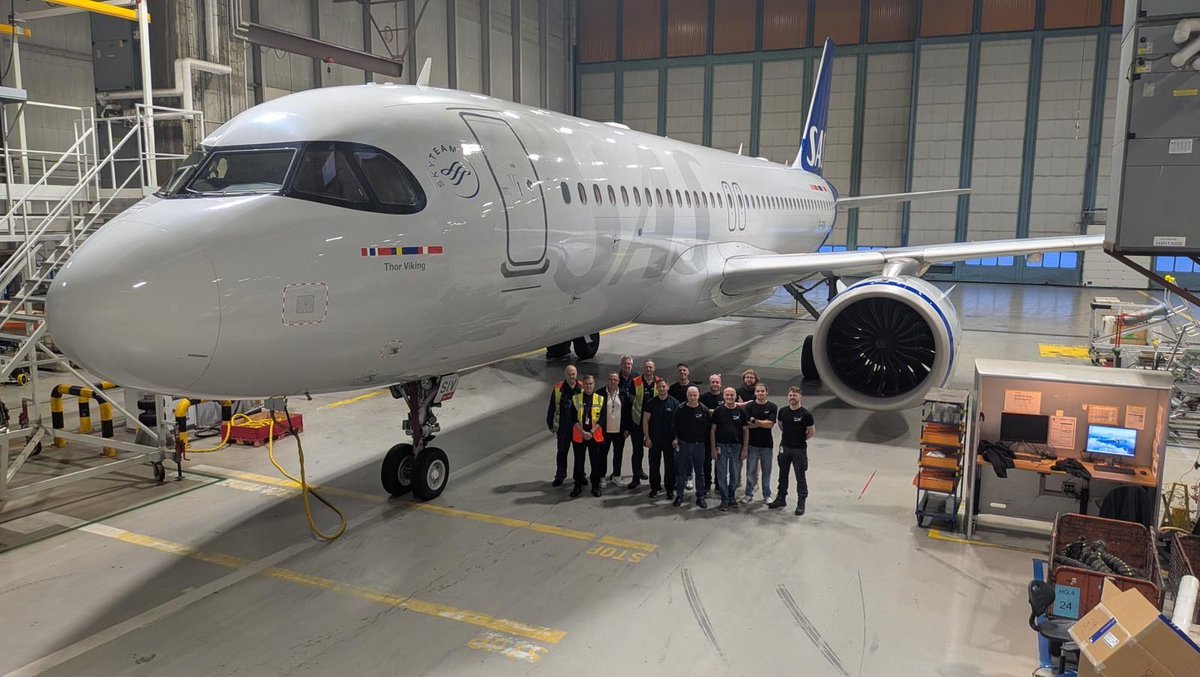
STARLINK: SAS - Scandinavian Airlines announced that in just six months it finished installing Starlink on all 81 Airbus A320neo aircraft.
The A320neo fleet is about 70% of SAS aircraft and the core of its European network; it is the first SAS type fully fitted with Starlink.
Installs ran during normal operations, with each jet tested and approved before returning to service.
Per SAS CCO, Paul Verhagen, "Today, the installation across our entire A320neo fleet is complete, in record time. Bringing high-speed connectivity to these aircraft means many of our customers can enjoy a better-connected journey... Being connected has become a natural part of everyday life, and that doesn’t change when we board a plane. With gate-to-gate connectivity, our customers have more freedom to choose how they spend their time travelling with us."
More Starlink news in the EC below!
⚛️ Scientists Found Quantum Connections Where They Shouldn’t Exist
In a surprising experiment at Brookhaven National Laboratory’s RHIC, scientists observed quantum interference between a positively charged pion and a negatively charged pion—two particles that can be clearly told apart.
That is strange because quantum interference is usually expected when particles are indistinguishable. Yet these different particles still produced an interference pattern showing a deeper quantum connection.
The discovery could also help scientists create a new map of gluons inside atomic nuclei, revealing what happens at unbelievably tiny scales.
It doesn’t mean random particles can suddenly become entangled. Their connection comes from a shared quantum process.
But once again, quantum physics is reminding us: nature may be far stranger than our everyday world suggests.
Source: Brookhaven National Laboratory. (2026). STAR collaboration observes quantum interference between distinguishable particles at RHIC. Brookhaven National Laboratory.
요즘 AI 데이터센터 짓는다고 돈 엄청 쓴다 하잖아
그래서 궁금해서 찾아봤어
AI 인프라에 100달러 쓰면 그 돈이 실제로 어디로 흘러가는지 정리한 자료가 있더라고
BNP Paribas에서 만든 차트야
대략적인 추정치라 숫자는 조금씩 바뀔 수 있지만
큰 그림은 이렇다
먼저 제일 많이 가는 곳이 반도체
100달러 중 50달러가 여기로 간다
그중에서 GPU 같은 가속기가 25달러
지금 짓고 있는 AI 시스템 상당수가 엔비디아 GPU를 쓰니까
여기선 엔비디아가 제일 직접적으로 받는 쪽이지
그다음 메모리 칩이 15달러
여기가 생각보다 넓어
고성능 GPU에 붙는 HBM만 있는 게 아니라
시스템 메모리용 일반 DRAM이랑 데이터 저장용 SSD(NAND)도 같이 들어간다
그래서 마이크론, SK하이닉스, 삼성 이쪽이 다 관련 있어
나머지 10달러는 CPU, 다른 칩, 서버 만드는 쪽으로 간다
그다음이 전력이야. 20달러
생각보다 크다
AI 서버가 전기를 진짜 많이 먹거든
발전소에서 전기 만들고, 송전망 연결하고, 현장까지 배전하는 비용이 여기 다 들어간다
그래서 원자력이나 안정적인 전력을 공급하는 회사들
변압기·터빈·송전 설비 만드는 회사들이 여기에 걸린다
네트워크 장비가 15달러
GPU를 수천 개씩 붙여놓으니까 서로 빠르게 연결해야 하잖아
스위치, 광트랜시버, 네트워크 프로세서, 케이블 이런 쪽으로 돈이 간다
브로드컴, 마벨, 아리스타, 시스코 이런 이름들이 여기서 나온다
냉각이 7.5달러
서버가 열을 너무 많이 내서 냉각이 필수야
칠러, 냉각탑, 콜드플레이트, 냉각수 돌리는 장비 이런 것들
마지막 7.5달러는 땅 사고, 건물 올리고, 내부 공사하는 비용이다
데이터센터 건물 자체 짓는 쪽
정리하면
칩 50
전기 20
네트워크 15
냉각 7.5
건물 7.5
이렇게 가는 구조야
사람들이 엔비디아만 생각하기 쉬운데
실제로는 메모리, 전력, 냉각, 네트워크까지 돈이 꽤 넓게 퍼진다
특히 전기랑 냉각은 규모가 커질수록 더 병목이 될 가능성이 있다
지금은 가속기와 HBM이 가장 눈에 띄는 수혜지만
데이터센터가 커질수록 전력과 냉각 쪽 제약이 더 커지는 건 이미 현장에서 나오는 이야기다
그래서 이 그림을 “이 회사가 무조건 돈 번다”로 보기보다는
AI 인프라가 반도체 한 곳으로만 안 모인다는 점을 이해하는 용도로 보는 게 맞다
Nobel Prize-winning physicist Roger Penrose thinks we've been using the wrong word for decades, and the wrong word is quietly warping how we think.
His argument is straightforward but hits hard:
"The name is wrong. It's not artificial intelligence. It's not intelligence. Intelligence would involve consciousness. Well, if it's a machine, it's not conscious."
For Penrose, the field confused raw computational muscle with actual understanding.
"People have lost the plot. They've lost it in the power of computing. The thing is that computers have got so powerful that they've lost the thread of what they're doing. But I think consciousness is something different. It's not computational."
The label itself, he thinks, has put people into a kind of trance:
"People are so hypnotized. The trouble is that AI is a bad term. It means artificial intelligence. Now intelligence in my view is conscious. That's what intelligence is about."
His proposed fix: call it Artificial Cleverness. AC, not AI.
He draws the line using math students as an example:
"You have mathematics students. Some of them understand what they're doing. Some are just clever. They can repeat what they've learned. They know how to do it very cleverly. They can calculate very well, but they don't necessarily understand what they're doing."
That gap between calculating and understanding is exactly the gap between today's systems and real intelligence.
Cleverness can be engineered. Consciousness, Penrose argues, cannot.
Worth sitting with: when you call a system intelligent, are you describing what it does, or silently assuming something about what it is?
Interested in AI?
Follow @AiEvolutio58513 and never fall behind.
I track ChatGPT, Claude, and every tool quietly changing how we work and create, then hand you the tested signals.
🧠 Are Our Minds Connected to a Cosmic Super-Intelligence?
What if everything you think, feel, and imagine isn’t just coming from your brain… but from something far bigger, far wiser, and far more mysterious? Imagine two brains, connected by a web of cosmic energy, linking humans to a universal intelligence beyond comprehension.
Quantum physicists tell us the universe is deeply interconnected at its core—far beyond the physical reality we see. Could it be that our thoughts, ideas, and choices are influenced by this invisible, universal mind? If so, what does that mean for free will, for the life you lead, and for the world around you?
The more science uncovers about quantum reality, the more it challenges what we thought we knew. Reality may be far stranger, far deeper, and far more mysterious than we ever imagined. This cosmic connection suggests that consciousness itself might not be limited to our individual minds—it could be part of something vast, intelligent, and alive.
Pause for a moment. Consider this: what if you are not alone in your thinking? What if every idea, every spark of creativity, is part of a larger, invisible network of intelligence shaping the universe?
The mysteries of existence are waiting. The question is… are you ready to explore them? 👀
This was invented in 1985.
They patented it. They stuck it in a drawer.
And for 40 years, no one could manufacture it.
It's called the Y-zipper: three flexible strips that, when closed, turn into a rigid structure. No motors. No moving parts. Just geometry.
Elon predicted that China is going to win the AI race.
And every day makes it look more right.
"There's a good chance that they are the leaders at some point."
Elon is building the biggest AI cluster in America. He has more money than any human alive, first access to Nvidia's best silicon, and a rocket company he wants to use for putting data centers in orbit.
But he still thinks China will win the race.
Everybody argues about chips because a chip is a thing you can put a tariff on. Washington has burned four straight years on export controls, entity lists, smuggling busts and levies.
Elon says that whole fight is aimed at the wrong bottleneck:
The real constraint outside China is power and cooling, and AI chips are already rolling off production lines faster than new electricity comes online.
America is about to own more chips than it can plug in.
And their models won't save them either:
Elon said Anthropic is currently the leader in AI, and that Claude Fable 5 is still clearly the smartest model on Earth.
But banning the Chinese models won't save it. Elon pointed out that Congress can stop American firms from touching them, but it has no authority over the other 190 countries, and everybody else keeps reaching for whatever is cheap and good enough.
And the power gap isn't close either.
China already generates more electricity than the United States, Europe and India COMBINED.
Elon's guess is they end up at 4x American production, which is roughly what the population difference implies.
Now here's where it gets genuinely bleak...
Three companies on this planet build large gas turbines. GE Vernova told analysts in July it's taking reservations for 2031 delivery. So you order the hardware today and wait five years for a truck to show up at the site.
Then you get in line for the grid:
Lawrence Berkeley National Laboratory found the median American power project completed in 2025 spent over five years just waiting to connect. Roughly 8,200 projects are sitting in that queue right now.
Meanwhile China added 336 terawatt hours of new solar generation during 2025 alone. One year of Chinese building beat everything the United Kingdom consumed all year.
You can't buy your way to the front of that line. Elon tried and it didn't work.
So he quit.
In June 2024 his team wheeled 35 mobile gas turbines onto a lot in Memphis and ran a supercomputer off them. Regulators later counted 59 turbines at the plant across the state line. Colossus burns over 500 megawatts of gas now, and he says he wants 20 gigawatts of it by 2027.
The richest man on Earth looked at the American grid and built his own power plant instead of waiting for it.
That's what the AI race actually looks like in 2026: A fleet of turbines parked on a lot in Memphis because the grid queue runs five years deep.
Elon sells solar panels and batteries through Tesla, he badly wants permitting reform, and orbital data centers are his pitch. A power panic is exactly his book.
China also burns a staggering amount of coal to post those numbers, and America still holds the smartest model and the best silicon today.
But he said one more thing, and it puts a clock on all of it:
Elon thinks China is closer than most people realize to solving the lithography problem.
Chips are the only thing still holding Beijing back.
China's chip problem gets solved in years. America's power problem gets solved in decades, if it gets solved at all.
America spent four years fighting over who's allowed to sell China chips.
China spent those same four years building the grid to run them.
So what happens to every AI company in America the day Beijing stops being chip-starved?
SpaceX already makes turbine blades. For Merlin.
High heat, high RPM, cracks that NASA would not accept on a crew flight. They spent years on that and changed the part.
The next job is bigger blades for gas turbines that feed data centers.
Those parts sit in a few foundries with years of backlog. Elon wants the casting inside SpaceX to cut that wait by as much as 18 months.
Rocket blades exist.
Power-plant blades do not, not yet.