Do you agree that the goal of taxonomy should not be taxonomy itself but that it should be identification? Do you agree that identifying something as Escherichia coli may not be sufficient? Here we ask the simple question if it is worth exploring alternatives.
Assistant Professor position @virginia_tech in Plant Resilience to Water Stress. Many opportunities to collaborate with colleagues in @vtspes@VT_TPSC@globalchangevt and many more cross-campus initiatives and ARECs across the state https://t.co/ac4k3jcjvr
Postdoc opportunity at UC Berkeley to work on a collaborative project between UC Louvain, Virginia Tech, and UC Berkeley. The goal is to characterize Xylella fastidiosa diversity on forest & agriculture trees/shrubs in temperate climates. Message me for details. @APSbacteriology
For any plant pathologists or fungus enthusiasts doing DNA barcoding, here’s a one-tube rapid DNA extraction method from diseased tissue or tiny immersed fruitbodies that might be useful for DNA-based identification of plant pathogens.
The method was developed by Dong et al. (2022) for use in diagnosing rice blast lesions in rice (causal agent Pyricularia oryzae =Magnaporthe oryzae) using PCR and specific primers.
It involves heating a 2x2 mm fragment of a disease lesion at 95 °C for 10 minutes in an extraction buffer composed of 25 mM Tris-HCl (pH 8.7), 2.5 mM EDTA (pH 8.0), 250 mM KCl, and 0.02% Tween 20 (a detergent). 1 μL can then be used directly for PCR.
The extraction method was capable of producing PCR-ready DNA that produced amplicons of 570 bp to 1,139 bp in length without additional dilution or PCR additives. DNA extracts frozen at -20 °C were stable enough to produce PCR amplicons for three months after extraction (longer testing was not reported).
Breaking down the buffer composition, it’s a pH-buffered (via Tris-HCl) high osmotic pressure (via KCl) solution containing EDTA to inhibit nucleases and a non-ionic detergent (Tween-20) to aid in wetting and cell lysis.
It's very similar to several other published methods but I don't think I've seen this exact formulation combined with heat lysis and direct PCR before. Let us know if you have!
The formulation is safe, inexpensive, and should have a good shelf-life at room temperature. It also seems very effective for rice blast lesions, suggesting that it might work well for detection of similar plant disease-causing microorganisms.
The 10-minute one-tube thermal lysis for direct PCR approach makes it easy to use on single samples, for high-throughput approaches, or for rapid field extractions, for example when using Bento Lab in the field.
All of these factors could make it a great additional DNA extraction method for professional or "DNA-enabled" field mycologists interested in plant-associated microfungi or plant diseases!
The method has also been recently cited in three studies on plant pathogenic fungi (by a different research group), where it was used to extract DNA from fungal cultures. It probably has many other possible applications too!
You can find the article here:
Dong et al. (2022). A rapid and simple method for DNA preparation of Magnaporthe oryzae from single rice blast lesions for PCR-based molecular analysis. The Plant Pathology Journal, 38(6), 679. https://t.co/rVX2qZqisy
Image shows a photo of rice blast symptoms on rice stalks by Donald Groth, USDA Forest Service.
We have a FULLY-FUNDED PhD OPPORTUNITY between @SIPBS_Strath@SCompbiol (me) & @JamesHuttonInst@HuttonCMS (@AshHolmes_micro & Sonia Humphris) investigating how bacterial pathogens cause disease:
Project: https://t.co/Wua7V0yd5Q
Apply by 2025-01-06: https://t.co/DJbK2MUibk
Plant pathogen detection and disease diagnosis technologies have undergone significant advancements. Read the Review article by Jaime Cubero et al. to learn more: @INIA_es @SciMelb @IAS_CSIC@etsiaab@IA2_UZ_CITA@AnoveObtentores https://t.co/6bkF9EIWYg
Happy to share my first manuscript from my PhD! I’ve been fascinated by the functional diversity of FLS2 and how certain variants can recognize immune-evaded flg22 from important plant pathogens. In this work, we employed various approaches to engineer expanded flg22 perception.
Ever wondered how we’ve transformed from decoding a few hundred DNA bases to unraveling the entire human genome in just days? 📜🔬 My latest article on takes you on a fascinating journey through the evolution of sequencing technologies!
https://t.co/b82tPvBdiU via @LinkedIn
In Lisbon for @Neobiota2024, my first time. Looking forward to all of the invasive species science.
Also let’s chat if you’re interested in joining @ISWGvt as we have 3 positions open now!
A pangenomic atlas reveals eco-evolutionary dynamics that shape type VI secretion systems in plant-pathogenic Ralstonia @TLowePower #plantpathology#plantdisease#scicomm#openaccess https://t.co/Z9rfsdL9t0
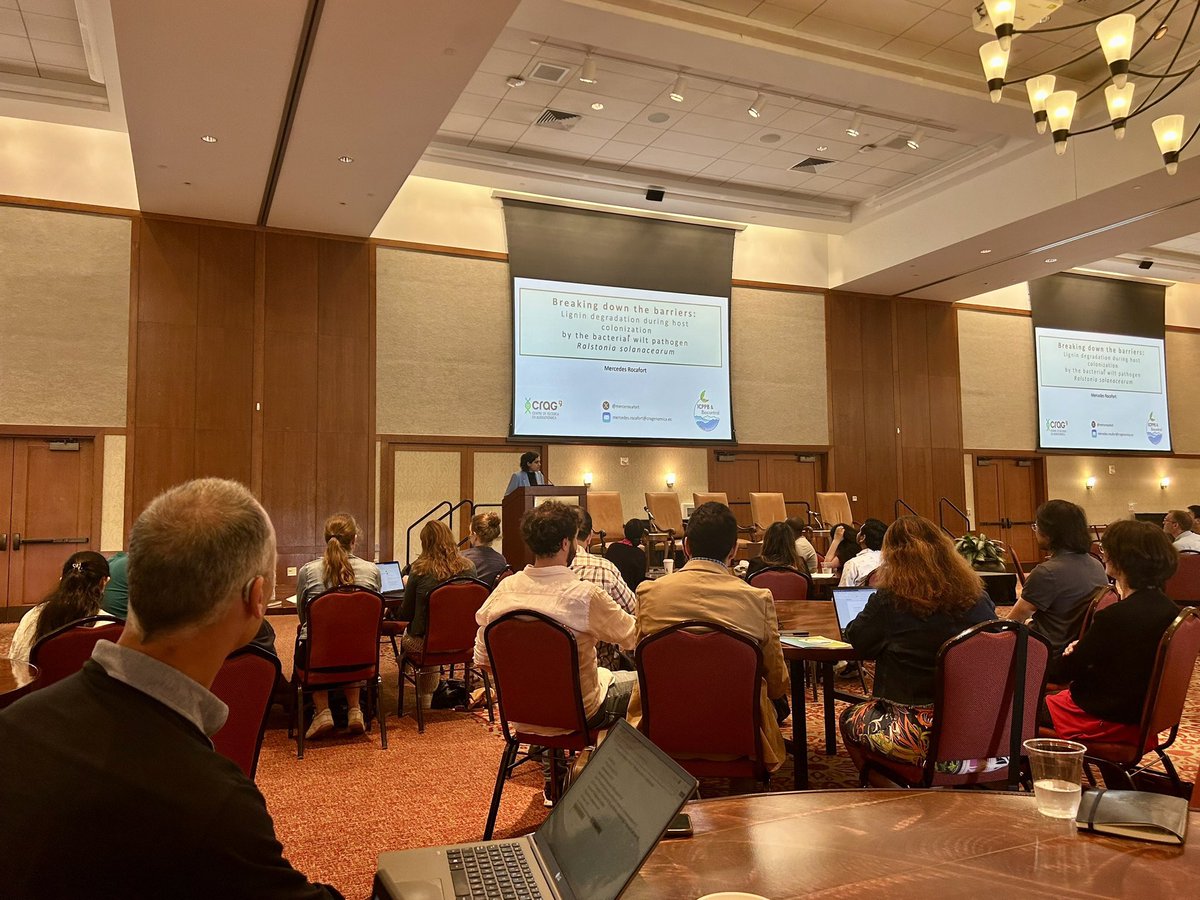
I had a blast at the @Icppb2024 🌱! It’s the end of a great week meeting so many great scientists and the start of new collaborations! Thank you for the opportunity to give a talk about my favorite pathogen and the great organization✨✨
Bioinformatic postdoc position in identification of both plant & animal pathogens using genomic & metagenomic sequencing. Become a member of a team of computer scientists, plant pathologists, and veterinary pathologists at Virginia Tech. https://t.co/Q8A0uaWHae.
Happy to see this work finally out! A great collaboration with Marie-Agnès Jacques, Jeff Jones, @VinatzerLab, Tal Pupko, and @jgi! https://t.co/JrkE1LwgvV
Our paper is finally out in Lance Microbe.
In this study we tracked the source of a SARS-CoV-2 cryptic lineage from the main treatment plant in a WI city all the way to a single set of bathrooms... using nothing but wastewater sampling and sequencing.
1/
https://t.co/YULU75F3es
Preprint alert! How does pathogen population respond when challenged with host defense and ozone stress? Can we predict pathogen evolution under altered environment? We seek answers to these questions in this manuscript. https://t.co/zNA3Wxgwbm
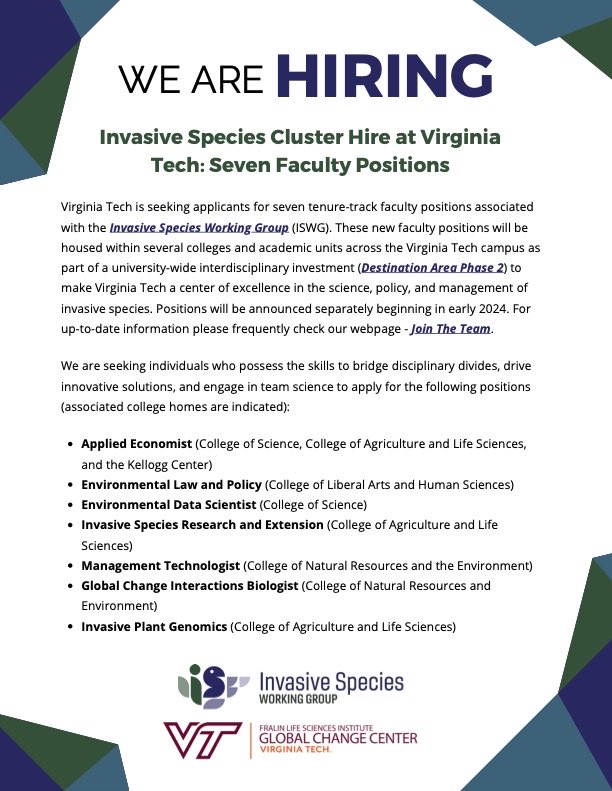
The @ISWGvt is thrilled to announce an invasive species-based cluster hire @virginia_tech for 7 new tenure track faculty!
We are seeking individuals who possess the skills to bridge disciplinary divides, drive innovative solutions, and engage in team science. 🧵