Many ppl consider this as a trekking point and spoil the decorum of this most sacred place shikharji by doing unwanted things.
That's the reason why this lady is frustrated, although her words may not be appropriate but constant occurrence of such incidents have been a pain in overall community and managing commeettee.
Religious places are most sacred irrespective religion/caste it is & we shud learn to respect it.
Watch this ..
https://t.co/K5zYUEq2SZ
ALL NINE COPS TO BE HANGED!!!
In a landmark judgement, the honourable First Additional District and Sessions Judge of Madurai, G Muthukumaran pronounced death penalty for all nine policemen in the Jeyaraj and Beniks custodial torture and death case.
Inspector S Sridhar, sub-inspectors P Ragu Ganesh & K Balakrishnan, head constables S Murugan and A Samidurai and constables M Muthuraja, S Veil Muthu, S Chelladurai & X Thomas Francis have all been found guilty of the double murder.
On 19th June 2020, Jeyaraj went to his son’s mobile shop in at Sathankulam in Thoothukudi. Police arrested him for violating Covid rules.
Following the father’s arrest, Beniks went to the police station and requested for his father’s release. Beniks apparently had an argument with the cops. They arrested him also and tortured him and his father through the night and later sent to judicial remand.
Beniks died at Kovilapatti Government Hospital on 22nd June, 2020, and Jeyaraj passed away the next day.
The investigation later revealed that the mobile shop wasn’t open beyond the permissible hours. Basically a false case was slapped.
Later, a female constable, Revathi came forward to tell the truth of their torture. Not only were the son & the father beaten brutally throughout the night but were also made to clean up their blood off the police station floor and walls with their clothes.
Beniks sustained 13 external injuries and Jeyaraj had 17 wounds that ultimately led to their deaths. They were bleeding from their rectums when they were sent to jail!!!
Following a huge social media uproar and protests, there was pressure on the then Tamil Nadu government to conduct a fair investigation into their deaths.
If you go through the whole case, you will realise that 59 year old Jeyraj and 31 year old Beniks were killed purely because the ego of the policemen was hurt.
They were angry that Beniks questioned why his father was arrested and being beaten up.
Family of the victims hope this will be a lesson to all policemen who think they can get away with any crime.
But unfortunately in our country most police don’t play by the rules. It is either their ego or orders from above or corruption that drives them. Hoping for better policing and a system that stands for victims, especially the voiceless ones.
what a boring planet… no fairies, no elves, no mermaids, no dragons, no vampires, no ware wolves….. just bills, stress, gossip, and insufferable people
Roger Federer: "Effortless is a myth. I worked very hard to make it look easy."
"I left school at age 16 to play tennis full-time. So I never went to college. But I did graduate recently. I graduated tennis. I know the word is 'retire', but retired sounds awful. Like you, I finished one big thing and I'm moving on to the next. Like you, I'm figuring out what that is."
Lesson 1: Effortless is a myth.
"People would say my play was 'effortless.' Most of the time, they meant it as a compliment. But it frustrated me when they'd say, 'He barely broke a sweat' or 'Is he even trying?' The truth is, I had to work very hard to make it look easy."
Roger shares the wake-up call:
"An opponent at the Italian Open publicly questioned my mental discipline. He said, 'Roger will be the favorite for the first two hours. Then I'll be the favorite after that.' Everyone can play well the first two hours you're fit, you're fast, you're clear. After two hours, your legs get wobbly, your mind starts wandering, your discipline starts to fade. My parents, my coaches, even my rivals were calling me out. So I started to train harder. A lot harder."
He explains the paradox:
"I got the reputation for being 'effortless' because my warmups at tournaments were so casual that people didn't think I'd been training hard. But I had been working hard before the tournament when nobody was watching."
Roger redefines talent:
"Yes, talent matters. But talent has a broad definition. Most of the time, it's not about having a gift, it's about having grit. A great forehand can be called a talent. But discipline is also a talent. Patience is a talent. Trusting yourself is a talent. Embracing the process, loving the process, these are talents too. Some people are born with them. Everybody has to work at them."
Lesson 2: It's only a point.
"You can work harder than you thought possible and still lose. I have many times. Tennis is brutal. Every tournament ends the same way: one player gets a trophy. Every other player gets back on a plane, stares out the window, and thinks, 'How the hell did I miss that shot?'"
Roger shares the statistic that changed his mindset:
"In the 1,526 singles matches I played in my career, I won almost 80% of those matches. But what percentage of points do you think I won? Only 54%. Even top-ranked tennis players win barely more than half of the points they play."
He explains what this teaches:
"When you lose every second point on average, you learn not to dwell on every shot. You teach yourself to think: 'Okay, I double-faulted. It's only a point.' 'I came to the net and got passed again. It's only a point.' Even a great shot, an overhead backhand smash that ends up on ESPN's Top 10, that too is just a point."
Roger shares the key mindset:
"When you're playing a point, it has to be the most important thing in the world. And it is. But when it's behind you, it's behind you. This frees you to fully commit to the next point with intensity, clarity, and focus."
He reflects on losing Wimbledon 2008:
"Some call it the greatest match of all time. Okay, all respect to Rafa, but I think it would've been way better if I had won. Looking back, I feel like I lost at the very first point. I looked across the net and saw a guy who just a few weeks earlier crushed me in straight sets at the French Open. And I thought, 'This guy is maybe hungrier than I am.' It took me until the third set to remember 'Hey buddy, you're the five-time defending champion. You're on grass. You know how to do this.' But it came too late."
Roger shares what champions understand:
"The best in the world are not the best because they win every point. It's because they know they'll lose again and again, and have learned how to deal with it. You accept it. Cry it out if you need to. Then force a smile. Move on. Be relentless. Adapt and grow. Work harder, work smarter."
Lesson 3: Life is bigger than the court.
"A tennis court is 2,106 square feet. That's where singles matches happen. Not much bigger than a dorm room. I worked a lot, learned a lot, and ran a lot of miles in that small space. But the world is a whole lot bigger than that."
Roger explains his philosophy:
"Even when I was just starting out, I knew that tennis could show me the world, but tennis could never be the world. I knew that if I was lucky, I could play competitively until my late 30s, maybe even 41. But even when I was in the top five, it was important to me to have a life, a rewarding life full of travel, culture, friendships, and especially family. These are the reasons I never burned out."
He shares what matters most:
"Tennis has given me so many memories. But my off-court experiences are the ones I carry forward just as much. The places I've travelled, the platform that lets me give back, and most of all the people I've met along the way."
Roger concludes:
"Tennis, like life, is a team sport. Yes, you stand alone on your side of the net. But your success depends on your team, your coaches, your teammates, even your rivals. All these influences help make you who you are."
His final words:
"Whatever game you choose, give it your best. Go for your shots. Play free. Try everything. And most of all, be kind to one another, and have fun out there."
आप All India Institute of Medical Sciences तक पहुँच जाते हैं, लेकिन डॉक्टर बनना लक्ष्य नहीं बस एक backup चाहिए, इसलिए UPSC Civil Services Examination में बैठ जाते हैं। एक सीट वहाँ घेर ली, एक यहाँ भी।
कहानी यहीं खत्म नहीं होती। पहली बार Indian Police Service मिल गया, तो भी संतोष नहीं… फिर से परीक्षा दोगे, ताकि अपनी प्रतिभा से Indian Administrative Service बन सको।
उधर Indian Institutes of Technology में भी यही हाल। इंजीनियर बनना नहीं है, लेकिन सीट चाहिए… क्योंकि पता है कि यहाँ से UPSC का रास्ता आसान हो जाता है।
हिंदी माध्यम के ना कोचिंग संस्थान वाले ना ही ऐस्पिरेंट कभी सरकार से सवाल करता है। मैकाले चाचाजी पीढ़ी-दर-पीढ़ी आपको हटाकर कुर्सी पर एलिट क्लास वाले को बैठाएंगे।
और कोचिंग संस्थान और भोले भाले ऐस्पिरेंट आपके मुंह की रोटी छीन ली जाएंगी।
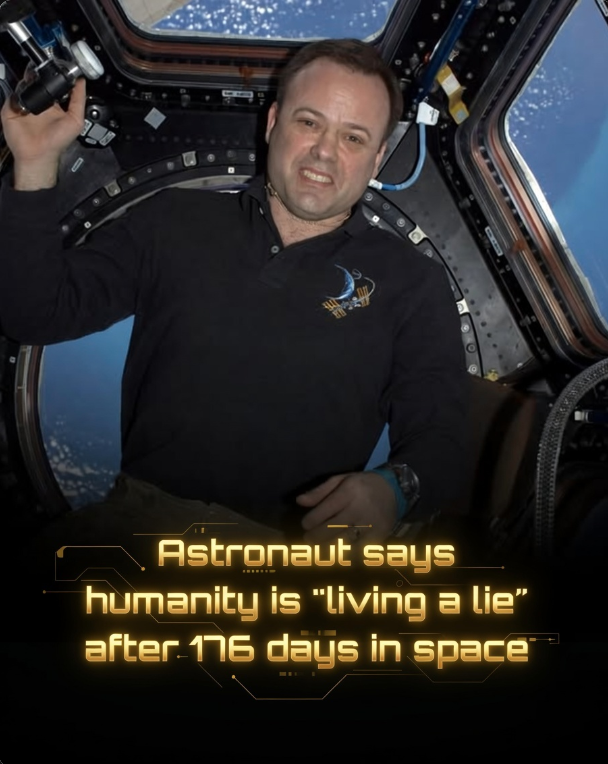
Former astronaut Ron Garan returned from space convinced that humanity is “living an enormous lie.”
During his 178-day mission aboard the International Space Station in 2011—spending nearly six months in orbit and covering over 71 million miles—Garan experienced the transformative “Overview Effect.” From 250 miles above Earth, the planet appeared as a single, delicate blue marble suspended in the void, with no visible borders, nations, or divisions. Political lines vanished; instead, he saw a fragile, interconnected biosphere wrapped in an astonishingly thin atmosphere—the sole protective layer sustaining all life against the deadly vacuum of space.
This perspective shattered his prior worldview. He observed an iridescent, teeming world of life but no trace of the global economy that humans prioritize. Garan realized the “enormous lie” we perpetuate: the illusion that we are separate from one another, from nature, and from the planet itself. Our systems treat the Earth’s life-support mechanisms—air, water, ecosystems—as mere subsidiaries of the economy, when the orbital view reveals the opposite truth: the planet comes first, then society, then economy.
In his words, this realization highlighted how crises like climate change, deforestation, and biodiversity loss stem from this fundamental misperception of separation. Garan argues that embracing this unified, fragile reality—seeing ourselves as crew members on “Spaceship Earth”—is essential for collective survival and effective global stewardship. The view from space didn’t just change his outlook; it underscored an urgent call for humanity to realign priorities with the undeniable interconnectedness of our shared home.
TRANSPARENCY IN UPSC EXAMS
In compliance with the judgment of Supreme Court in W.P. (C) No. 118/2024, UPSC has formulated guidelines to release the Provisional Answer Key on its official website after the Preliminary Examination is conducted. This will be implemented from the Civil Services (Preliminary) Examination 2026 onwards, for all structured examinations conducted by UPSC. Marks of the Preliminary Examination shall be released only after the declaration of final result of the Examination
In order to ensure level playing field across optional subjects, UPSC applies inter-subject moderation to ensure that no candidate, regardless of the optional subject chosen, is placed at any disadvantage
CSAT is a qualifying paper and its purpose is to ensure a minimum standard of quality and analytical competence. The level of questions corresponds to the matriculation level
Read here: https://t.co/Uo8s90oX0O
#ParliamentQuestion
“I’m tired, boss. Tired of bein’ on the road, lonely as a sparrow in the rain. Tired of not ever havin me a buddy to be with, or tell me where we’s coming from or going to, or why. Mostly I’m tired of people being ugly to each other."
—The Green mile
Just perfect👌
In The Green Mile (1999), when John Coffey walks toward his execution after enduring so much pain and injustice. There’s something devastating about how quietly he accepts it all, carrying the weight of everyone’s suffering with compassion and innocence.
India's own government think tank put a number on this. NITI Aayog's October 2025 report says that if nothing changes, the tech services workforce drops from 8 million to 6 million by 2031. Customer service goes from 2.5 million to 1.8 million. That's 2.7 million jobs gone from just two sectors in six years.
But the same report shows the opposite outcome is just as plausible. If India moves fast on AI skilling, the tech workforce could grow to 10 million, with 4 million new AI-native roles by 2030. The gap between losing 2 million jobs and gaining 4 million comes down to what happens in the next 3 to 4 years.
WEF projects 92 million jobs displaced worldwide by 2030, but 170 million created, a net gain of 78 million. In India specifically, EY forecasts that 38 million jobs will be transformed by GenAI by 2030. ServiceNow estimates agentic AI will redefine 10.35 million Indian roles in that same window, with manufacturing taking the biggest hit at 8 million.
Over 60% of formal-sector jobs in India are expected to be susceptible to automation by 2030, according to NITI Aayog. The most exposed roles: L1 customer support, QA testers, data-entry operators, and routine coding. Entry-level BPO jobs that once absorbed millions of graduates are already drying up. Annual hiring growth in business process management has fallen from tens of thousands to under 20,000.
The pipeline math makes this personal. India produces 1.5 million engineering graduates a year. In 2022, IT companies hired 600,000 of them. By 2024, that collapsed to 70,000. AI talent demand in India is growing at 25% annually, but the supply of AI-skilled workers grows at only 15%. NITI Aayog flagged that India produces fewer than 500 AI PhDs per year. Its share of global AI patents has dropped to under 5%.
Reliance committed $115 billion over seven years for AI infrastructure starting in 2026. India's AI Mission has deployed 38,000 GPUs, triple the original target. NASSCOM projects 1 million new AI-related roles. Those roles need people who can fill them, and right now, only 45% of Indian graduates are employable in the digital economy, according to NASSCOM's own data.
"Millions of jobs disappearing" is half the story. The other half is millions of new jobs appearing that most of the current workforce can't fill yet. What India is staring at is a replacement cycle in which the entrance to the new economy is blocked while the exit from the old one is accelerating.