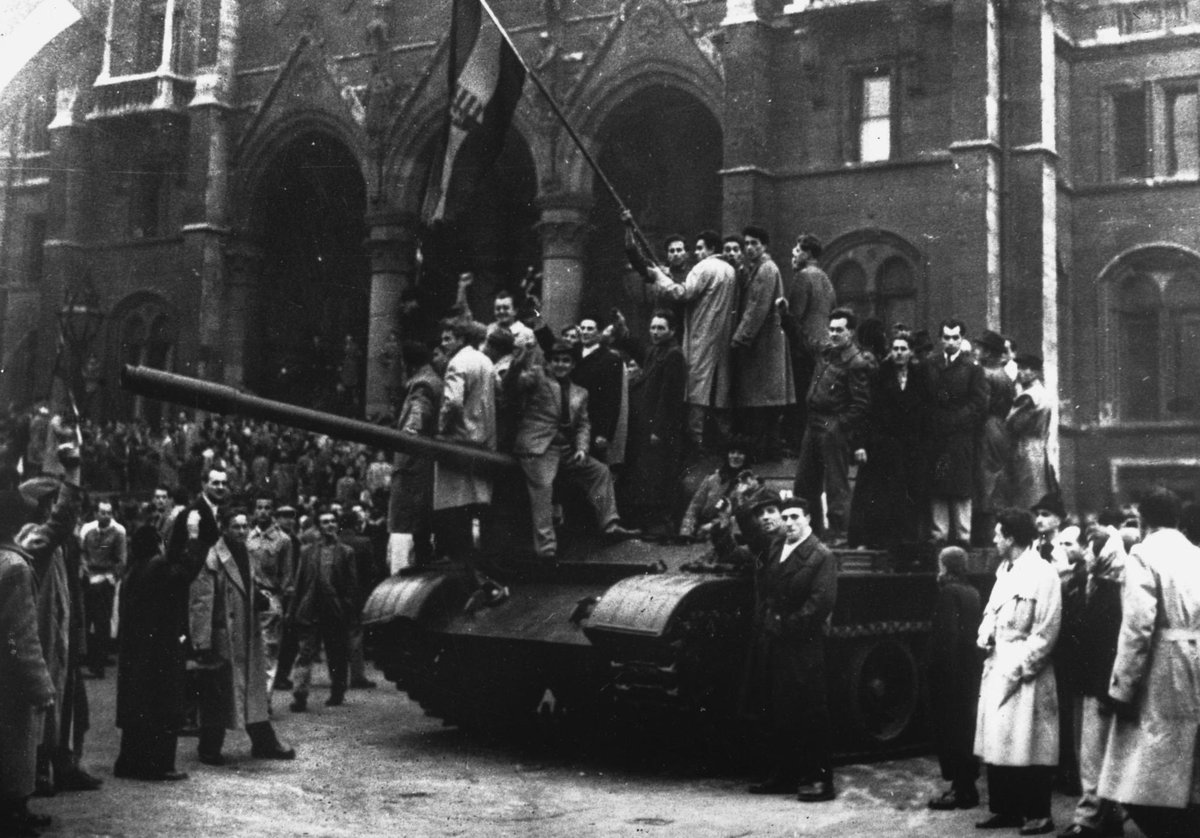
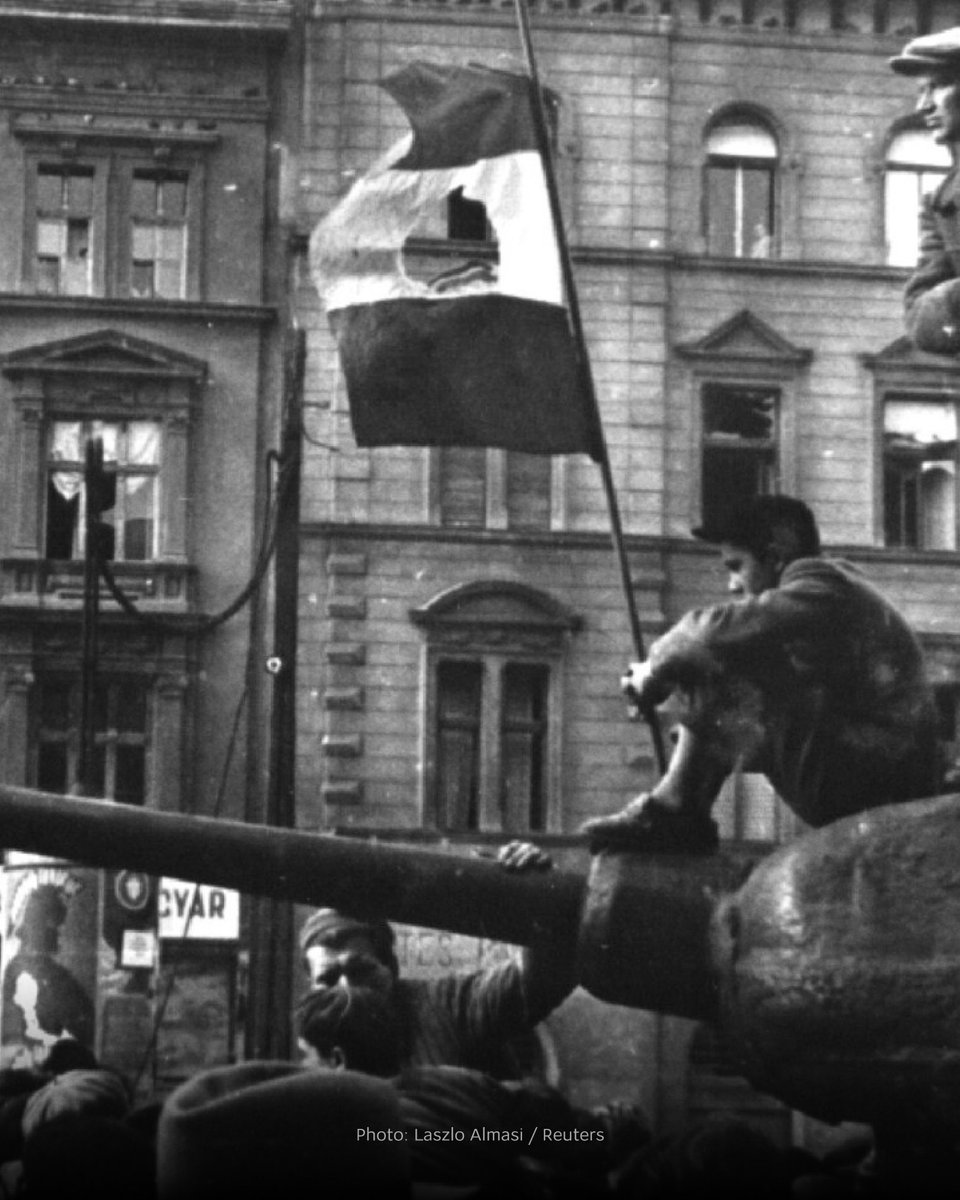
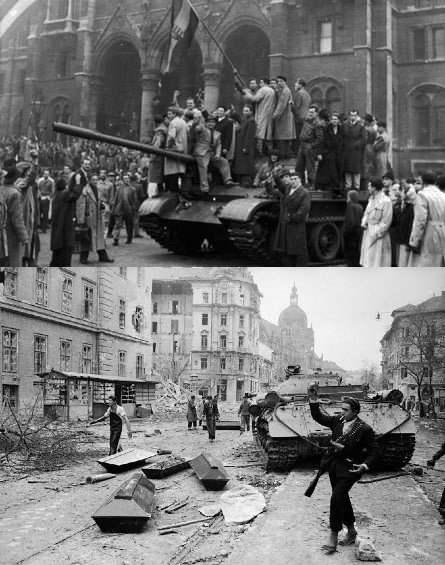
🇭🇺 | 70 years ago, in 1956, Hungarians rose up against communist oppression, ready to sacrifice their lives for freedom, democracy and national sovereignty.
Their courage reminds us that freedom must never be taken for granted.
Today, as politically motivated imprisonment takes place in Hungary, their legacy stands as a warning: freedom must be defended, authoritarian regimes must be challenged, and human dignity must never be surrendered.
#Hungary1956
It was the 70th anniversary of the revolution of '56, which (very much sadly) I couldn't attend at home qwq
Anyway, tisztelet a hősöknek and #neveragain
🇭🇺 On the 70th anniversary of the 1956 Hungarian Revolution and Freedom Fight, we honour those who gave their lives for freedom. The Hungarian nation made world history by being the first to rise up against Soviet oppression, inspiring freedom movements across Central Europe.
Honoured to attend the commemorations of the 1956 Hungarian Revolution in Budapest.
70 years ago, Hungarians rose up against oppression.
They fought for freedom, democracy and justice.
The very values at the heart of Europe today.
Their courage lives on.
Seventy years ago, the Hungarian people rose against Soviet oppression and stood up for their freedom.
Moscow sent tanks to demolish freedom, kill protestors, and persecute the Hungarian people. But ultimately, Moscow lost. Hungarians persisted through decades of oppressive rule and gained their freedom back.
The victims of those autumn days seventy years ago and the scars left by that brutal oppression on the Hungarian nation must never be forgotten.
Since 1956, the courage and heroism of Hungarians have became a powerful symbol of resistance for generations of Europeans and continue to inspire us today.
The values and aspirations of the 1956 Hungarian Revolution resonate deeply with Ukrainians today as we defend our freedom and independence against Russian aggression.
Today, we pay tribute to the heroes of the 1956 Hungarian Revolution. Their sacrifice is a lasting reminder of the price of freedom and the importance of European unity in the face of Russia’s ongoing aggression.
Tisztelet a hősöknek! Együtt erősebbek vagyunk! Ruszkik haza!
The Hungarian Revolution of 1956 was a nationwide uprising against the Hungarian communist government and Soviet control that lasted from October 23 to November 4, 1956...
Hungarians suffered under years of harsh totalitarian rule, forced Russian influence, and terror by the ÁVH (secret police). In 1956, Soviet leader Nikita Khrushchev gave a secret speech denouncing Joseph Stalin, which inspired hope for reform across Eastern Europe. On October 23, 1956, thousands of university students and citizens gathered in Budapest. They demanded free elections, the withdrawal of Soviet troops, and the appointment of reformist leader Imre Nagy as prime minister, listing their demands in a 16-point manifesto. Crowds toppled a massive bronze statue of Joseph Stalin. When protesters went to the state radio building to broadcast their demands, the ÁVH secret police fired into the crowd, killing and wounding several people. This turned a peaceful protest into an armed revolt as regular Hungarian soldiers joined the people.
. . .
On October 22, 1956, thousands of university students crowded into an assembly hall at Budapest’s Technical University. They had grown up beneath communist rule, surrounded by its slogans, spies, portraits, and lies.
Someone in the meeting asked by what right Soviet troops remained in Hungary.
The hall erupted:
“Go home!”
For years, those words could cost a Hungarian his education, his livelihood, or his freedom. Now thousands were shouting them together.
And once the fear broke, the demands began.
. . .
Hungary had emerged from WWII beneath Soviet occupation. The Communist Party eliminated its rivals piece by piece until no meaningful opposition remained.
Mátyás Rákosi, Hungary’s Stalinist ruler, called the process “salami tactics.”
Elections became performances. Newspapers repeated Party’s version of reality. The secret police—the ÁVH arrested, tortured and imprisoned suspected enemies. Show trials forced innocent people to confess to imaginary crimes. Cardinal József Mindszenty was tortured and sentenced to life imprisonment after refusing to place the Catholic Church beneath communist control.
Economy was commanded from above. Peasants were pressured into collectives. Workers struggled to meet quotas devised by bureaucrats. Ordinary goods remained scarce while propaganda celebrated imaginary triumphs.
Communism claimed to liberate workers while denying them right to strike. It claimed to represent the people while refusing to let them choose their government. And it claimed Hungary was sovereign while Soviet troops occupied the country.
By 1956, few Hungarians still believed the slogans.
But a dictatorship does not require belief. It requires each person to remain convinced that everyone else is too frightened to resist.
On October 22, that illusion collapsed.
Students packed the assembly hall until there was scarcely room to move. Speakers condemned Soviet domination and the crimes of the Stalinist government. Then students began writing what became 16 Points.
They demanded the withdrawal of Soviet troops. Free elections. Freedom of speech and press. A free radio. Independent courts. The release of political prisoners. The right of workers to strike. An honest accounting of Hungary’s economy. And the removal of Stalin’s enormous statue from Budapest.
These were not requests for a kinder dictator. They were a rejection of communist claim to rule.
They named lies plainly: If Hungary were sovereign, Soviet troops would not occupy it. If Party represented the people, it would not fear an election. If workers ruled, they would not need permission to strike. If communism had produced prosperity, the government would not need to conceal its failures.
The students announced that they would march the following day in solidarity with Poland’s resistance to Soviet control. They invited Budapest’s workers to join them. Then they carried their list into the streets.
. . .
#archaeohistories
@MarceszHu Aki vezette, a néphadseregben erre a típusra lett kiképezve, mivel '56-ban elvittük az akkori egyik legmodernebb szovjet harckocsikat (JSz-3) és sokáig nem kaptunk újakat
Meg ha jól emlékszem aki vezette azt mondta hogy pont azért vitte el nehogy olyan kezébe jusson aki nem...
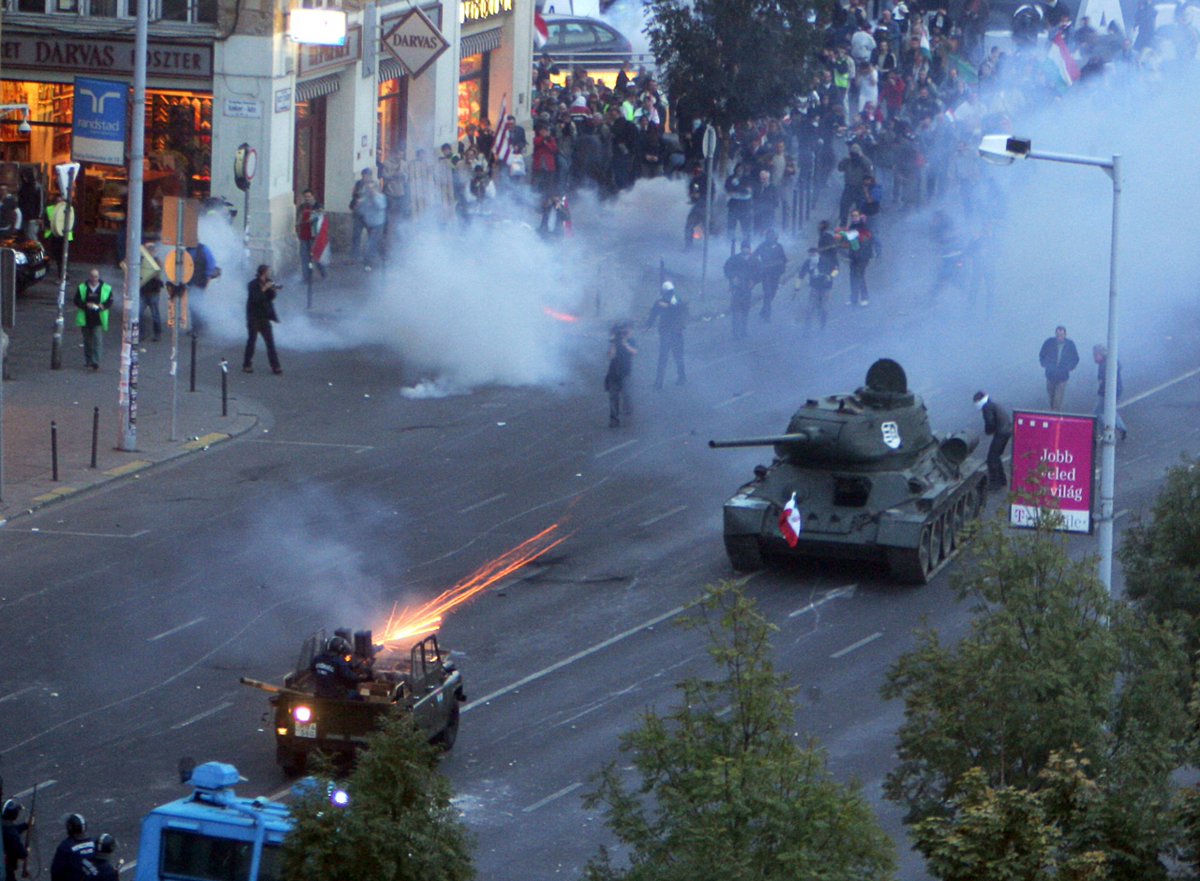
🇭🇺20 years ago today, on the 50th anniversary of the 1956 Hungarian revolution, protesters stole a T-34 Soviet era tank from a Museum.
They then rode the tank for 100 metres, before being apprehended by the police authorities.
A tank in European protests have not been used since.
Calling all tiny creatures!!
Are you a human or some other creature of similar size AND you like interacting with dragons?
Send me the reference of your OC in the comments so I can include you in a future drawing!
(This is just for followers, but new followers are welcome)
We just lost a legendary animator today 😔
Some animators bring characters to life. Loyd Price helped shape entire worlds that generations grew up loving. 🕊️
Aardman animations has announced the passing of Loyd Price, a gifted animator, mentor and longtime creative force who dedicated more than 30 years to the studio. Over the decades, Price rose to become Aardman’s Head of Animation, helping guide both the performances audiences saw on screen and the generations of animators who followed him.
His career stretched across some of stop-motion animation’s most beloved films, including:
- Chicken Run — Supervising animator
- Wallace & Gromit: The Curse of the Were-Rabbit — Supervising animator
- The Nightmare Before Christmas — Animator
- Wallace & Gromit: A Close Shave — Animator
- Wallace & Gromit’s Cracking Contraptions — Co-director and writer
- Shaun the Sheep Movie — Animation supervisor
- A Shaun the Sheep Movie: Farmageddon — Animation supervisor
- The Pirates! Band of Misfits — Animation supervisor
- Early Man — Animation supervisor
- Wallace & Gromit: A Matter of Loaf and Death — Animator
- Chicken Run: Dawn of the Nugget — Animation supervisor
On The Curse of the Were-Rabbit alone, Price led a team of 30 animators, helping bring Wallace, Gromit and an entire cast of characters to life frame by painstaking frame.
His work as supervising animator also helped shape Chicken Run, while his career connected Aardman’s classic shorts to its modern feature-film era.
Stop-motion is built one tiny movement at a time. Loyd Price spent decades making those movements feel alive, and teaching others how to do the same.
The characters will keep moving. His influence will keep moving with them.
Rest in paradise, Loyd Price. 🤍
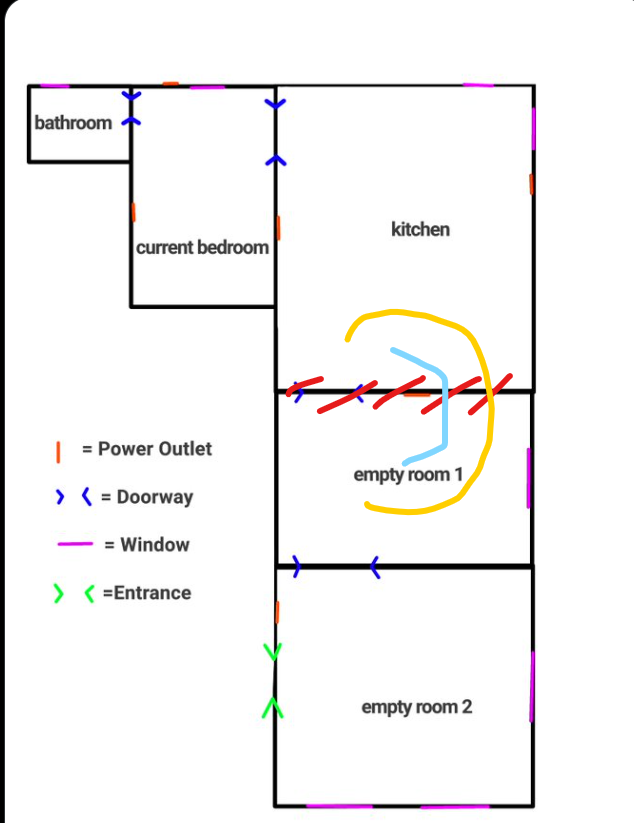
tear down the wall marked with read
giant rogon sculpture where the yellow is, then the light blue is the setup
you get power with l long ass cables hitten under the floorboards