@he1kumwya Dis is not assault this is parenting dudes … clearly the kid was not listening …. N u guys ever come to India lol whoever is supporting dis shit….
Is Rakshabandhan patriarchal, misogynist and sexist?
Can only sisters tie Rakhis around their brother’s wrist? Is a Rakhi tied for the protection of the sister or the brother? Watch this video to find out.
🚨 JUST IN: 🇮🇳 Government to bring in a third-party inspection agency to audit around 5,000 km of expressways and highways, days after PM Modi reportedly asked officials, “DO WE NOW NEED TO GO FOR A FOURTH-PARTY AUDIT?"
The agency will inspect projects from the start of construction to completion, helping identify quality issues early and allowing corrective action before they lead to premature failures.
The move aims to strengthen quality checks and accountability amid concerns over poor construction quality.
Charlie Munger:
“The big money is not in the buying or selling, but in the waiting.”
Howard Marks showed why during an interview at Wharton:
“As I recall, I think Amazon was $90 in ‘99 on the tech bubble. And then when the bubble burst in 2000 or 2001, it was $6.
So it went from $90 to $6. It was down 93%. So what if you were smart enough to buy it at $6?
Would you have held it at $12? Or would you have said, well, I’ve doubled my money. I’m going to take some off the table. I’m going to take out my cost and let my profits ride.
And let’s say you held it at $12. You’re tough.
What about when it got to $60 and you’ve made 10X your money? Would you sell it? Most people would.
What about when it got to $600 and you’ve made 100X your money? Would you sell half? Would you sell 3/4? Would you sell 90%?
And at the time I wrote it, as I recall, Amazon was $3,300. So if you sold it at $600, when it was up 100X, you left, basically, 85% of the money on the table.”
Peter Lynch put it this way: “Stand by your stocks as long as the fundamental story of the company hasn’t changed.”
Most people use this line as a reminder when their stocks are down…
But it also allows you to stay invested long enough to make 100X or more when your stocks are up.
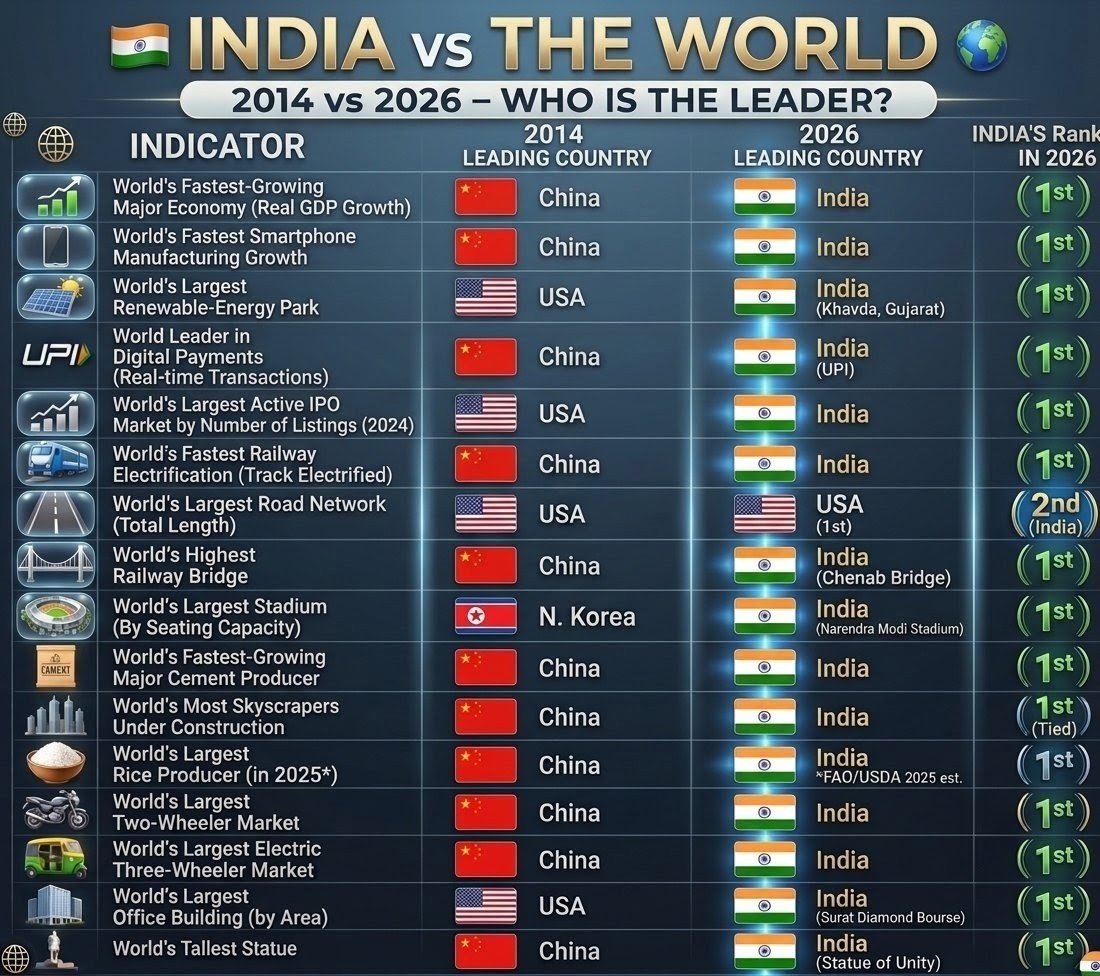
🚨 India is planning to build its own Samsung, Vivo, or Xiaomi.
• India could see its first strong indigenous smartphone brand by mid-2027.
• The government has launched a ₹62,500 crore scheme to support Indian smartphone brands.
• The scheme will support Indian brands, product design, R&D, and local sourcing.
• Indian brands must have more than 51% Indian ownership to qualify.
• India already makes 99.2% of the mobile phones sold in the country.
• Indian brands once had around 35% market share in 2015 but now have less than 1%.
• Lava is expected to be one of the biggest beneficiaries of the new scheme.
• The government aims to create ₹39 lakh crore worth of mobile phone production and 60,000 direct jobs in five years.
• The bigger goal is to make India a country that not only manufactures smartphones but also creates a global smartphone brand.
Warren Buffett explains the only honest scorecard for a capital allocator:
Stuart K of Mataran Capital Management in Stamford, Connecticut asks Buffett a deceptively simple question.
Buffett has spent decades describing his job as allocating capital. So how can a shareholder, armed with nothing but Berkshire's financial statements, judge whether he has actually been good at it?
Buffett does not reach for a story.
He gives two tests.
The first is an earnings test:
"Well, the real test uh will be whether the earnings progress at a rate that's commensurate with the amount of capital that's being retained."
That is the entire logic of retained earnings stated in one line.
Every dollar Berkshire keeps instead of paying out is a dollar taken from the owner and redeployed. If earnings do not grow in proportion to the capital withheld, the allocator has destroyed value regardless of how good the annual letter reads.
The second is a market test, and Buffett is upfront about its flaws:
"and um over time a market value test. But markets can be very volatile and capricious, but over time obviously... unless the market value of Berkshire [is] significantly greater than the amount of capital that we have kept from you, retained and used to buy businesses, uh you know the verdict is against us if we ever start selling at a discount to that factor."
Note the standard he sets for himself. Not "the stock went up." Not "we beat the S&P this year." The bar is that the market value of the business must exceed the capital he refused to hand back to shareholders. Trade below that line and the jury has already ruled.
He then disqualifies almost every timeframe investors actually pay attention to:
"it is not a perfect measurement and certainly is not on any three month or six months or even one year basis"
And restates the bargain in plain terms:
"but over time if we're going to keep your money, we have to earn a better than average return uh on that money we keep. And that has to translate into the stock selling at a premium over the money we've retained from you."
Then the self assessment, with the sting attached:
"And so far we've done okay on that, but the job gets tougher every year."
Munger cuts in with a distinction most investors never draw:
"Yeah, we we have uh continued to beat the market averages. We just aren't beating our own past record. And I guarantee that will continue."
Buffett, hedging the guarantee: "At least the last half of it."
Munger, refusing to hedge: "Yeah. Guarantee all of the last half of it."
Source: 2011 Berkshire Hathaway Annual Meeting
.@chellaney urges greater transparency and international oversight for China's plan to build the world's largest-ever dam—a project that could affect two billion people. https://t.co/RCQ8hebZqv
@NDTVProfit Forget these TV anchors … just a tip …. Investments should not be based on future prospects by Sectors …. But it should b based on the economic prospects of the businesses
This oil deal with Venezuela is absolutely insane.
President Trump just announced that the US has reached a deal to secure "majority control" of over 65 billion barrels of Venezuelan oil reserves.
Furthermore, the US currently has ~46 billion barrels of proven crude oil reserves.
Combined with the 65 billion barrels covered by this agreement, the US would have domestic reserves plus control over ~111 billion barrels of oil.
To put this into perspective, the entire world has roughly 1.57 TRILLION barrels of proven crude oil reserves.
In other words, the US is set to control ~7.1% of all proven oil reserves in the world under this new agreement with Venezuela.
At ~111 billion barrels, the US would be almost exactly in-line with the United Arab Emirates, which has 113 billion barrels of proven crude reserves, and it would exceed Kuwait's 102 billion barrels.
Assuming the agreement is structured as outlined in President Trump’s announcement, the implications for global energy markets will be enormous.
We will publish more in-depth analysis soon.
🚨 JUST IN 🇮🇳 India’s Gross FDI Hits 15-Year High at $30.7 Billion
India attracted $30.7 billion in gross foreign direct investment (FDI) during April–June 2026, the highest quarterly level in 15 years, up from $26.7 billion a year earlier.
Net FDI also turned positive at around $7.8 billion during the quarter.