If America were really a Christian nation, we wouldn’t have homeless people and hungry children while mega-churches and billionaires hoard piles of wealth.
British Army officer Colonel Isaac Barre coined the term "Sons of Liberty" in his February 6, 1765 speech to Parliament opposing the Stamp Act.
"They nourished up by your indulgence? They grew by your neglect of them: as soon as you began to care about them, that care was exercised in sending persons to rule over them, in one department and another, who were perhaps the deputies of deputies to some member of this House ¾ sent to spy out their liberty, to misrepresent their actions and to prey upon them; men whose behavior on many occasions has caused the blood of those Sons of Liberty to recoil within them; men promoted to the highest seats of justice, some, who to my knowledge were glad by going to a foreign country to escape being brought to the bar of a court of justice in their own."
Aethelstan is the most famous of Edward The Elder's children but his siblings (half siblings to be more exact) were quite notable as well. Among Edward's other sons included two more kings, Edmund, who fought alongside Aethelstan at Brunanburh, and Eadred who succeeded Edmund. Among Edward's daughters included Eadgifu who was married to Charles The Simple and Eadgyth who was the first wife of Otto The Great. Another of Edward's daughters, Eadburh, was a nun who became known for her singing and was later made a saint.
The Bloody Trifecta
How the Army of Tennessee Bled White Before It Ever Saw Franklin
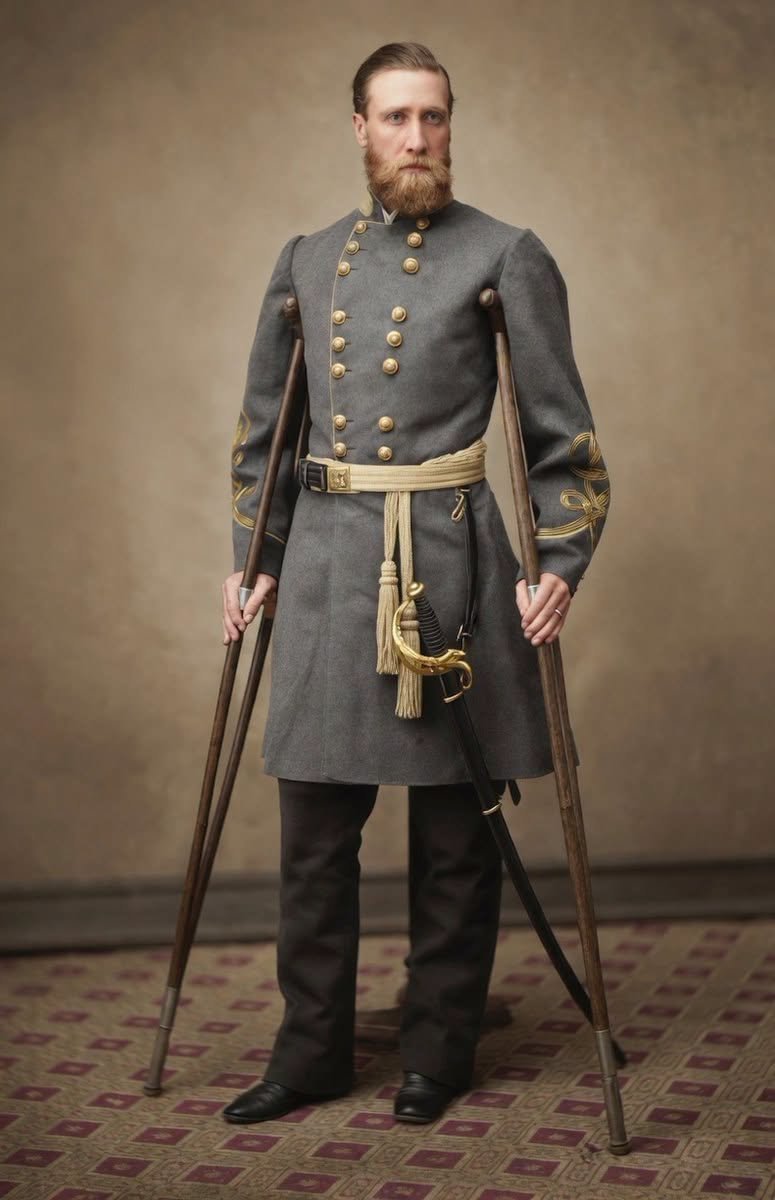
They lifted him into the saddle every morning—two aides taking his weight between them, guiding the ruined leg into its accustomed place and lashing it fast with a leather strap, so that a man who could no longer stand unaided might still sit a horse and pass, for the length of a day, as a soldier in the field. The left arm hung from the shoulder in something like the shape of an arm, though it had done no useful work since Gettysburg and would do no useful work again for the rest of his life. Chickamauga had taken the leg. Two battles, less than three months apart, had between them cost him half a body, and he had bought both wounds leading from in front of the line and not from behind it—which was precisely the trouble, though nobody in Richmond seemed to see it yet.
Joe Johnston had spent two months and more falling back through north Georgia, trading ground for time the way he had always meant to fight this campaign—Dalton, Resaca, Cassville, Kennesaw, one delaying position after another, each of them costing Sherman more than it cost him, none of them a battle Johnston meant to stand and lose. It was a sound enough strategy for a general who understood the Confederacy could not replace what it spent, and a maddening one for a President who had never much cared for Johnston and liked him less with every mile of Georgia surrendered without the decisive fight Davis kept waiting for. By the middle of July, with Sherman across the Chattahoochee and Atlanta itself in plain sight, Davis ran out of patience for the war Johnston was willing to fight, and on the seventeenth he relieved him and handed the Army of Tennessee to John Bell Hood.
What Hood inherited, by the most careful counting available—Johnston's own return of July the tenth, the last full accounting taken before the axe fell—was fifty-nine thousand one hundred ninety-six officers and men present for duty. Not sixty-two thousand, whatever round number later attached itself to the moment; that larger figure—sixty-two thousand seven hundred forty-seven, to be exact—belonged to the return of June the thirtieth, three weeks and a bloody repulse at Kennesaw Mountain earlier, and armies do not hold still in the telling any more than they hold still in the field. Call it what it was: the Confederacy's second army, behind Lee's alone, worn some but not broken, handed now to a man who had never held a corps together for as long as it took his own men to carry him off it on a litter.
He was thirty-three years old, and there was no one in either army who seriously doubted his courage, nor much cause to doubt it: he had proved it at Gaines's Mill, at Second Manassas, at Antietam, at Chickamauga, in a war that had already used up most of the men who started it beside him in the old Texas Brigade. Davis and the war department jumped him over a long list of officers senior to him to give him the place, and gave him the rank of full general only as a temporary grade, tied to the command itself, as though even Richmond understood this was an experiment and wanted to keep the receipt. But courage was a virtue that scaled poorly upward. What a division needed from Hood—a fist thrown hard and straight, at a moment and place he chose for himself—was not what an army needed, which was patience, and cold arithmetic, and the harder gift of knowing when not to throw the fist at all. He had spent his whole career learning to be the hammer. Nobody had ever asked him to be the hand that decided whether to swing it, and so he swung it the only way he had ever been taught: hard, and often, and mostly at whatever stood in front of him. Davis had asked for a general who would fight. Hood meant to give him one, and it did not occur to him—or he would not let it occur to him—that a man might satisfy Richmond to the letter and ruin the army meant to carry the satisfaction out.
Sherman gave him the chance to prove it inside of three days. George Thomas's Army of the Cumberland was crossing Peachtree Creek in the sweltering third week of July, its three corps strung out and only partly over the water, cut loose for the moment from the rest of Sherman's converging columns—the best opening any Confederate commander would get in the whole campaign for Atlanta. Hood meant to hit it at one o'clock in the afternoon of the twentieth, while the gap in Thomas's line was still open. He did not hit it until past three, delayed by a corps that had to countermarch behind its own lines to reach position, and in those two lost hours Thomas's men dug, the way Federal soldiers in this war had gotten very good at digging, and the gap that might have decided a battle closed itself with shovels.
When Stewart's and Hardee's men went forward that afternoon it was into works that had not existed at one o'clock, across open pasture and through scrub timber with the July sun flat on their backs, Federal artillery finding the range early and holding it without much trouble after that. Twenty-five hundred Confederates fell in a few hours of fighting—the figure that has best survived the passage of time and the correcting of Federal exaggeration; Thomas, writing that night to report a victory, claimed a good many more, which was a habit of Union dispatches that whole summer, as though a fight not quite finished demanded a larger butcher's bill on the other side to make it feel finished after all. Hood had lost his chance in the space of an afternoon, and twenty-five hundred men along with it, and Sherman, reading the reports the next morning, understood something about his new opponent that would hold true for the rest of the campaign: this was a man who would attack, reliably, and not always wisely.
Two days later he tried again, and the design this time was better than the execution, which was fast becoming the pattern of Hood's command. Hardee took two full corps on a night march of some fifteen miles around the exposed left flank of McPherson's Army of the Tennessee, through country so choked with timber that units lost touch with each other in the dark and arrived on the morning of the twenty-second already used up before they had fired a shot. The surprise Hood needed was there to be had. The men meant to deliver it were too spent to deliver it well.
General W.H.T. Walker, riding ahead of his division to look over the ground, was shot dead by a Federal picket before the battle had properly begun—a division commander lost to one startled private's musket, in the careless way this war took generals as readily as it took privates, and with no more ceremony about it. On the other side of the field, a few hours later, James McPherson rode down a wooded lane alone to check his own lines and rode instead into a company of Confederate skirmishers who called on him to surrender; he wheeled his horse to run for it and was shot from the saddle, and was dead within the hour—the only commander of a full army, on either side, killed in action in the whole war. Sherman, told of it, could not at first speak, and then wept, for an officer he had called more than once the best young soldier in his command, and for a war that could take a man like that as casually as it took the nameless dead piling up on both sides of the field all that afternoon.
The fighting rolled on past McPherson's death into the evening, Cleburne's division doing what Cleburne's division nearly always did, breaking a Federal line and carrying guns it could not quite hold onto afterward. When it finally quit, Hood had spent fifty-five hundred men to gain nothing he could keep, against a Federal army that had lost its commanding general and something near three thousand of its own soldiers—a trade that looked, on the returns, almost even, and was not close to even at all, because armies never measure what they have lost only by counting rifles.
Six days after that, on the twenty-eighth, it happened a third time. Sherman was sliding west now, feeling for the one railroad still feeding Atlanta, and Hood sent Stephen D. Lee—new from Mississippi, commanding an infantry corps for the first time in his life—out to block him along the Lick Skillet road. What should have stayed a defensive fight, taken from behind whatever cover the ground offered, turned instead into a string of frontal assaults against breastworks that Logan's men had gone ahead and built, log by log, while they waited, the way Sherman's soldiers had learned to build faster than almost anyone else in that war. It was the most lopsided of the three fights. Many of Lee's men, veterans now of two hard battles inside of a week, went forward that afternoon into works they must have understood they could not carry, and did not carry, and paid for the trying without changing the shape of anything Sherman meant to do regardless. The Confederates lost somewhere near three thousand men. Logan's corps, fighting from behind its logs, lost a little over six hundred. Eleven thousand men, in eight days, in three battles that decided nothing Sherman could not have gotten anyway by patience—more than Joe Johnston had spent in the whole retreat from Dalton, sixty-odd miles and ten weeks of maneuver that Richmond had judged too timid to bear a moment longer.
On the thirty-first of July the returns came in, as they came in at the end of every month, war or no war, and a clerk somewhere behind the lines set down the figure that would follow this army through every retelling of the story afterward: fifty-one thousand, seven hundred ninety-three.
It is a number worth stopping over, because it has been put to work ever since as something it never was. Fifty-one thousand seven hundred ninety-three was the count of men present for duty—meaning they answered the morning roll, meaning they drew their rations, meaning the war department in Richmond could still enter that figure in a ledger and call it an army. It was not the count of men who could shoulder a rifle and stand in a line of battle against George Thomas's veterans, because present for duty swept in the teamsters and the cooks, the men laid up sick in the division hospitals, the details guarding bridges and depots thirty miles from the nearest picket line—all present, all counted, none of them available to Hardee on the morning a fight opened. Present for duty is the army as the paymaster counts it. Effective strength is the army the enemy actually meets. The two figures wear the same uniform in the official returns and mean entirely different things, and by the end of that July the gap between them in Hood's army had grown wide enough to hide a division in.
Call the next four months what the men who lived through them mostly called it: marching, and waiting, and marching again, broken now and then by the old violence. At the end of August, with Sherman's infantry finally astride the last rail line into the city, Hardee took two corps south to Jonesboro to save it and could not. The fighting ran two days, the thirty-first and the first of September, and on the second day the Federals found a thin stretch in Cleburne's line, broke through it, and walked around behind Brigadier General Daniel Govan's brigade and took it whole—Govan and several hundred of his Arkansas men marched off to a prison camp before most of them had fired more than a few rounds all day. Jonesboro cost the army close to three thousand more. It cost Atlanta as well; Hood pulled his army out of the city that same night, and Federal soldiers marched into it the following morning.
A month later, on the fifth of October, Sam French took his division north against a Federal supply depot at Allatoona Pass, held by a Union brigadier named John Corse who had reached the position with reinforcements only hours ahead of French's advance. French sent in the standard demand—surrender the works and spare the garrison further bloodshed to no purpose, in the formula nearly every such note used that war—and Corse sent back word that he meant to hold what he had, whatever it cost him. It cost both sides plenty. The fighting ran close around the redoubts for most of a morning, and when it ended French had lost close to nine hundred men taking a position he could not, in the end, afford to keep. His own report, filed a few days later, would only own to seven hundred ninety-nine—a discrepancy that says less about French's arithmetic than about a soldier's reluctance to write his own butcher's bill any larger than the facts strictly required.
Add to those two fights the slower bleeding of the weeks between and around them—a handful of men lost tearing up a water tank here, a handful more lost holding a bridge there, the small change of a war now being fought over Sherman's supply line instead of over Atlanta itself, no single clerk ever troubling to add the whole business into one clean total because no one action seemed worth a total at the time—and the combat bill for August, September, and October comes to something in the neighborhood of six thousand men. Not the ten thousand that later tellings have sometimes claimed. The larger figure, when it turns up, generally comes from counting the July fighting a second time, or from mistaking a monthly return for a butcher's bill, and the two were never the same thing and ought never to be added together as though they were.
The rest of what the rolls lost between the end of July and the third week of November went missing the way armies always bleed once the fighting stops being the whole story: men detailed away to hospitals and depots and never called back to their regiments; men whose year of enlistment simply expired, in an army that had stopped pretending by 1864 that such things mattered less than they once had; men down with the dysentery and the camp fevers that killed more Confederates in four years than Federal lead ever did; and men who, marching now through country some of them had been born in, stood their muskets against a fence rail some evening and walked home. The soldiers had their own name for it, half joke and half epitaph—a walking furlough, they called it, no leave papers required and no questions asked by anyone left with the authority to ask them. It was desertion by any name Richmond cared to give it, and it said something about the temper of an army that the enemy's bullets alone cannot be made to explain—something Hood, from the saddle he could no longer sit without help, chose for the most part not to see.
Set the two counts side by side and the shape of that whole autumn becomes plain enough, whatever quarrel a careful clerk might raise with the last exact digit. Fifty-one thousand seven hundred ninety-three present for duty on the thirty-first of July. Something between thirty-three and thirty-five thousand—Forrest's troopers counted in now—crossing the state line into Tennessee come the third week of November. Call the difference sixteen thousand men, call it seventeen; the two returns were not kept to quite the same standard, and an army that has stopped advancing keeps worse books than one that hasn't. But of that gap, the enemy's rifles and the enemy's prison stockades can be made to answer for something under six thousand. The rest—call it two men in every three the rolls lost that autumn—Hood lost without Sherman firing a shot at all.
While Hood's infantry bled away by that slower method, Nathan Bedford Forrest gave the Confederacy one more look at what audacity could do when judgment rode alongside it instead of standing in for it. In the last days of October he took his troopers up to the Tennessee River at Johnsonville, put guns on the bluffs above a Federal supply base that had never once imagined an enemy could reach it, and in an afternoon burned gunboats, transports, and several million dollars in Army stores before Federal reinforcements could organize any answer at all. It was the kind of clean, disproportionate victory Hood had spent the whole summer trying to manufacture with three infantry corps and had never once managed—a Confederate cavalryman asking the situation for everything it had to give, and getting it, because he had troubled to understand the situation before he acted on it. Forrest reached Hood at Florence in the middle of November with something over four thousand of his troopers, not all of them mounted and not the full strength Richmond had once promised, because even Forrest could not conjure horses that Alabama and Georgia no longer had left to give him. But he came. And Hood's arithmetic, for one more month, looked a little less desperate for his having come.
On the twenty-first of November, in a cold rain that would turn to sleet and then snow before the campaign was a week old, they lifted Hood into the saddle once more, strapped the dead leg fast against the stirrup, and pointed what remained of the Army of Tennessee north across the state line, toward Columbia and Spring Hill and Franklin, and toward an ending the arithmetic of that whole bled-white autumn had already gone a long way toward writing before a single Federal soldier fired a shot in Tennessee at all.
He had asked Richmond for the chance to attack, all the way back in July, and Richmond—glad of a general who still wanted to, after two years of generals who mostly hadn't—gave it to him, and kept giving it to him, every time he asked again. In four months of command, nobody in a position to stop him troubled to ask the one question that might have mattered more than any other: whether the army could survive being made to do everything Hood believed a Confederate general owed his president. He might, in fact, have answered that question more honestly than most men in his position could have. It was the one kind of arithmetic nobody had ever trained him to do, in a career built entirely on teaching him to do the other kind. He had learned, at Gaines's Mill and Second Manassas and Antietam and Chickamauga, exactly how to lead men into fire, and exactly what it cost him personally to do it—an arm, a leg, most of what a body has to give and still call itself a body. Nobody had ever taught him when to say that the price the army would pay could not be met. By the time he might have learned that lesson for himself, on a ridge above Franklin before that November was out, there was no one left in Richmond whose good opinion was worth the learning, and no army left large enough to be saved by it.
Dear MAGA: If you dropped off your child to his school as a boy and picked your child up as a girl, please return her back, you picked up the wrong child. Thank you.
I continue to follow with deep concern the ongoing and escalating violence in the #HolyLand, where, in recent days, many civilians, both in the West Bank and in Gaza, have once again fallen victim. I make a heartfelt appeal for a return to negotiations to achieve a just political solution, founded on the equal dignity and equal rights of every human person. At the same time, I urge the rejection of further military actions and unilateral decisions, especially those that violate the respect for and the status quo of the holy places of every religion.
American history is full of men who were failures in ordinary life. But when a crisis arose, they answered the call of duty and became something much more.
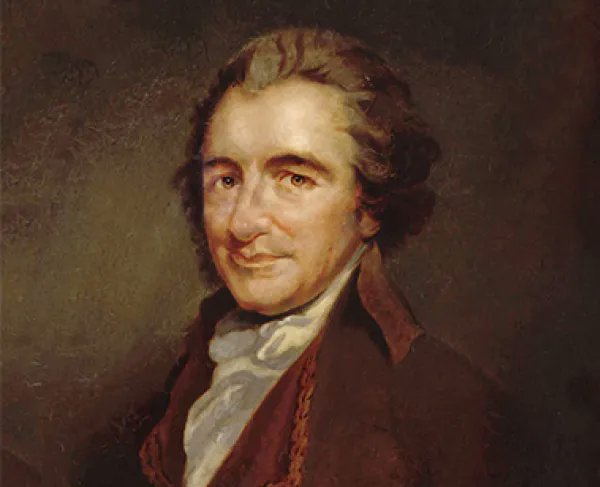
Thomas Paine failed at every trade he tried, from corset-making to shopkeeping. Then wrote a little pamphlet called Common Sense.
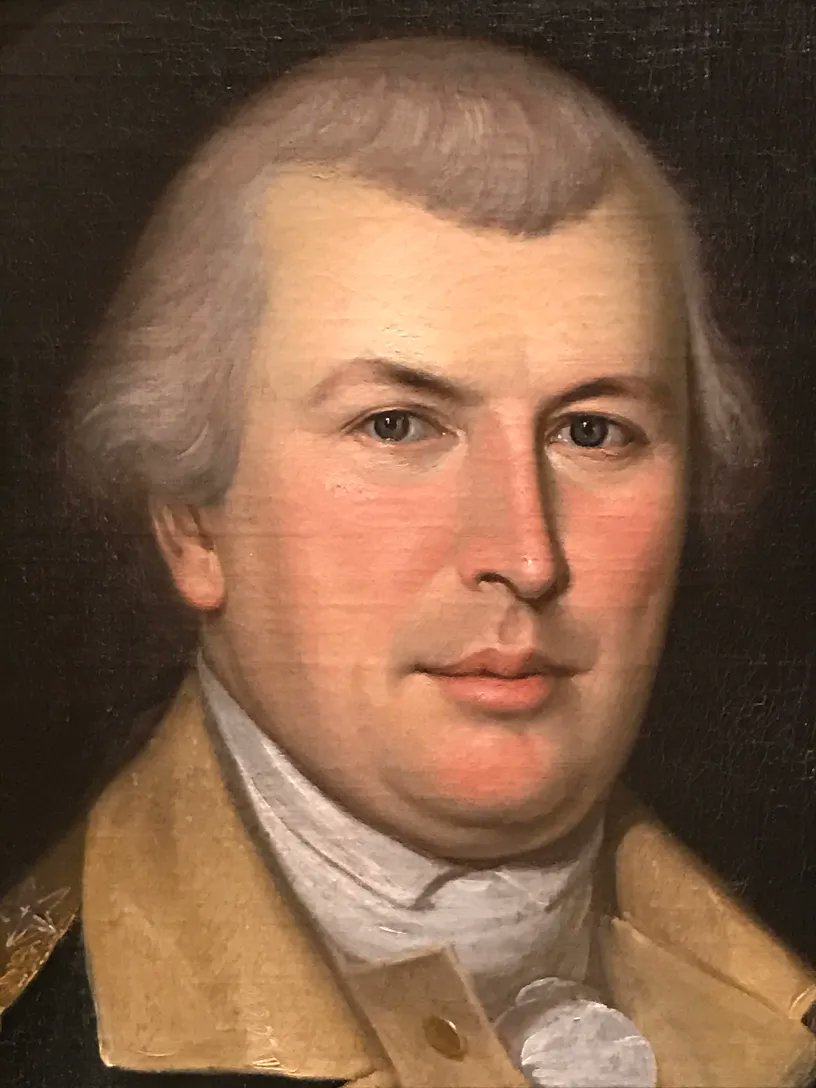
Nathanael Greene was a limping Quaker with no military training, rejected as a "blemish" by his own militia. He taught himself war from books and became Washington's most trusted general.
Ulysses S. Grant was clerking in his family's leather goods store at 38, broke with nothing to show. Within four years he commanded the entire Union army and had the ear of the president.
Harry Truman went bankrupt running a shop and was a washed-up businessman in his late thirties. He rose to make the heaviest decision of the 20th century.
None of them initially looked like the answer. But they turned out to be exactly what the moment required.
The Battle of Killiecrankie fought #OnThisDay 27 July 1689
The first Jacobite Highland charge against British (Scottish & English) Regulars.
After waiting all day for the sun to lower the Highlanders unleashed a devastating attack down the slopes of Killiecrankie Pass.
Years ago, a USAF general came to the Naval War College and said: "Strategy? Strategy is just ordnance on target."
The faculty said: Uh, no.
But today that mindset - lethality! - clearly dominated our Iran planning.
And that's why we are where we are.
26 July 1780. The Continental Congress adopted its new system for the quartermaster department that Quartermaster General Nathanael Greene vehemently opposed especially because the change occurred in the middle of the campaign season. With the states now responsible for supplies, a decrease in salaries, and the principal men on whom he depended removed, Nathanael believed it was impossible to conduct business. For two and a half years he had struggled with constant difficulties and lack of cooperation that Congress failed to recognize. He submitted his resignation letter to Samuel Huntington, president of the Continental Congress stating:
“But however willing I might have been heretofore to subject myself to the fatigue and difficulties attending the duties of this Office, justice to myself, as well as to the public, constrains me positively to decline it under the present arrangement, as I do not choose to attempt an experiment of so dangerous a nature, where I see a physical impossibility of performing the duties that will be required of me. Wherefore I am to request Congress will appoint another Quarter Master General without loss of time… My rank is high in the line of the army; and the sacrifices I have made on this account—together with the fatigue and anxiety I have undergone, far overballance all the emoluments I have derived from the appointment nor would double the consideration induce me to tread the same path over again, unless I saw it necessary to preserve my Country from utter ruin, and a disgraceful servitude.”
Nathanael sent a letter to Washington outlining his grievances and seeking approval of his intention to quit. But the wording and tone of Nathanael’s resignation letter to Congress so infuriated members that they threatened to remove him from the army. Washington supported him and put a stop to the threats.
Rev War Tales
Assessing Fortress New York
26 July 1781, Dobbs Ferry, New York. In the allied camp, French Chief Engineer Brigadier General Louis Duportail advised General George Washington that an assault on British-held New York City would require at least 20,000 troops—far more than the combined Franco-American forces could field at the time. Recent reconnaissance of northern Manhattan’s formidable defenses confirmed the daunting challenge: strong redoubts, abatis, and naval support made a direct attack highly risky without overwhelming numbers. Duportail, Washington’s trusted chief engineer, underscored the stark manpower shortfall. A southern operation against British forces on the Chesapeake Bay now appeared far more promising—provided Admiral de Grasse’s French fleet could secure naval superiority and support the move. This counsel helped pivot allied strategy toward Virginia, setting the stage for the decisive Yorktown campaign. #RevWar #AmRev #History #RevWarTales
Rev War Tales
The Marines Have Landed
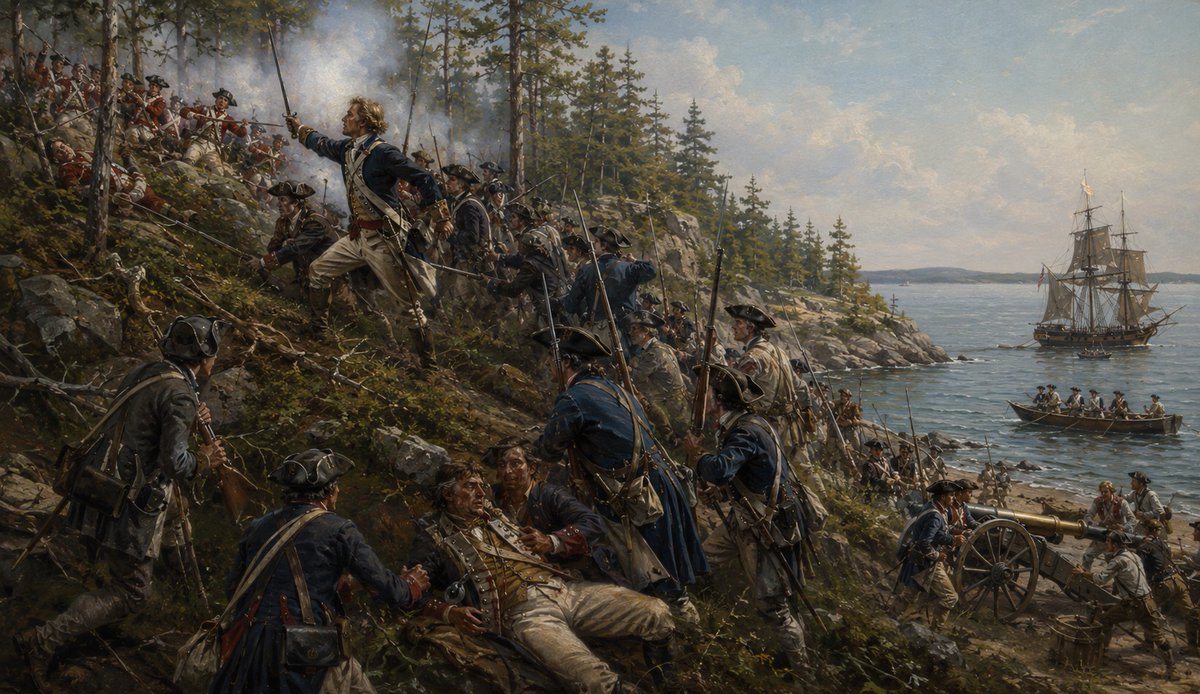
26 July 1779, Nautilus Island, Penobscot Bay, Massachusetts ( present-day Hancock County, Maine). During the ill-fated Penobscot Expedition, Captain John Welsh led approximately 150–200 Continental and Massachusetts Marines in a daring amphibious assault on Nautilus Island (also known as Banks Island). Scaling a steep, wooded cliff under fire, the Marines quickly overwhelmed a small British detachment manning a battery of four guns. The swift 20-minute action secured the strategic island, which commanded the harbor entrance. Colonel Paul Revere then landed with his artillerymen, repositioned the captured guns, and established a new American battery to threaten British warships under Captain Henry Mowat. Captain Welsh was mortally wounded leading the charge. #RevWar #AmRev #History #RevWarTales
Rev War Tales
Drums Along the Mohawk
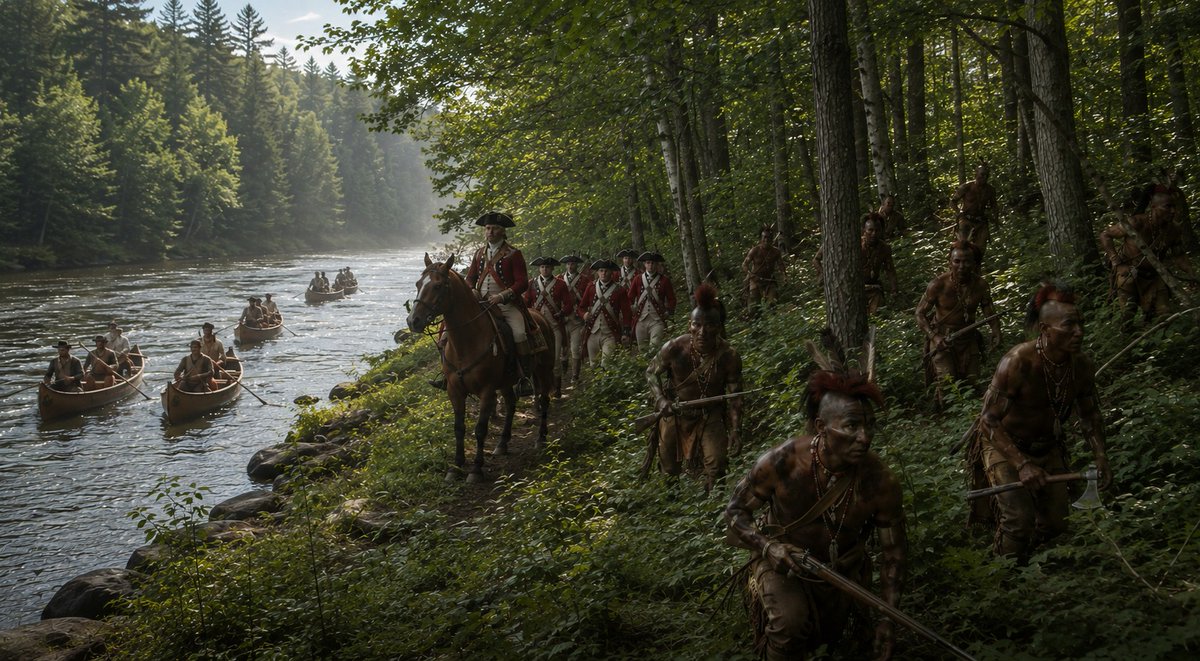
26 July 1777, Oswego, New York. Lieutenant Colonel Barry St. Leger marched with approximately 1,800 British regulars, Loyalist rangers, and Iroquois warriors under Joseph Brant. Advancing down the Mohawk Valley, he aimed to capture Fort Stanwix, rally local Loyalists, and form the western pincer of General John Burgoyne’s grand invasion from Canada. St. Leger’s force was to link up with Burgoyne’s main army, driving south toward Albany, thereby splitting American resistance. Though the expedition reached the fort by early August, fierce Patriot resistance, the bloody Battle of Oriskany, and timely deception forced St. Leger’s withdrawal on August 22. The failed campaign left Burgoyne isolated and contributed to the pivotal British defeat at Saratoga. #RevWar #AmRev #History #RevWarTales