Self-assembly and materials for optical, biological, repellent and more interfaces/applications. Lab of Prof Nicolas Vogel @UniFAU. PostDoc run account.
We are happy to launch our new webpage: https://t.co/4ke8w4vpZ2 It will provide: information about lectures, news about recent publications, highlights from the lab, (soon) a (popular) science section, current open positions, and our brand new particle and monolayer shop 👩🔬🏐🦋
Why does the hydrophobicity of nanogels influence whether oil-in-water or water-in-oil emulsions are stabilized and how can it be predicted? Find out more in our last paper in collaboration with @klinger_lab
https://t.co/wp9a2dq3MX
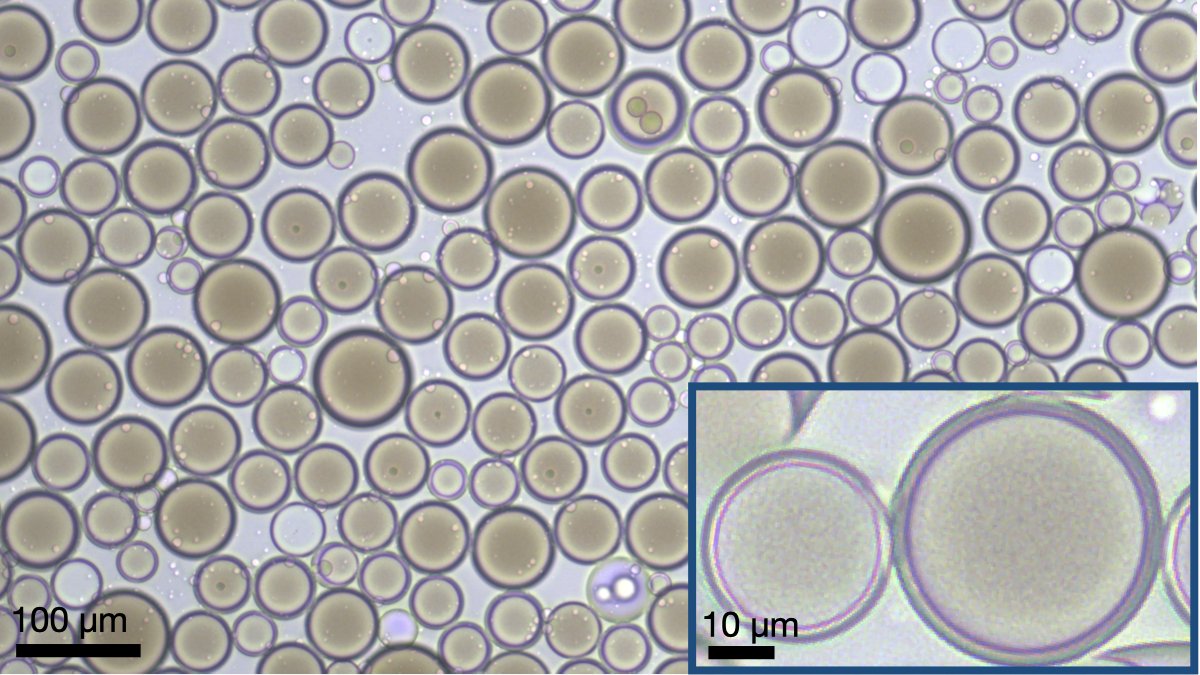
This method is reported in: J. Wang, S. Hahn, E. Amstad, N. Vogel, Tailored Double Emulsions Made Simple. Adv. Mater. 2022, 34, 2107338. https://t.co/VWHK8p9FXP
Double emulsions are great for many different experiments, but their fabrication is challenging, right? In this video-tutorial, we show you how to make well-defined single-core double emulsions in the simplest possible way, following only a few easy steps. https://t.co/LrsZi7xcNO
Little budget, no microfluidic experience, but want to make water-in-oil-in-water droplets? No problem! With @SMaL_EPFL, @_Wang_JW_ developed a method to make double emulsions of a single core and a micrometre-thick shell, using centrifuge tubes and a vortex mixer. In Adv. Mater.
Clean up after your experiments! What helps in the lab is even more important in the real world! We show how we can remove colloidally stable submicron-particles from wastewater by a synergetic combination of electrophoresis and particle-stabilized foams.
In out last paper on @ChemCommun we propose a new inverse opals sensing concept, which does not rely on a change in the proprieties of the wetting liquid but on changes to the surface upon binding of the analyte. This method will allow to expand the range of molecules detected!
Inverse opals are more than just shiny materials! We combined smart surfaces changing their wettability in different environment with the structural color of IOs to prove the feasibility of a new colorimetric sensing concept. Read more here: https://t.co/m1najDuKeO
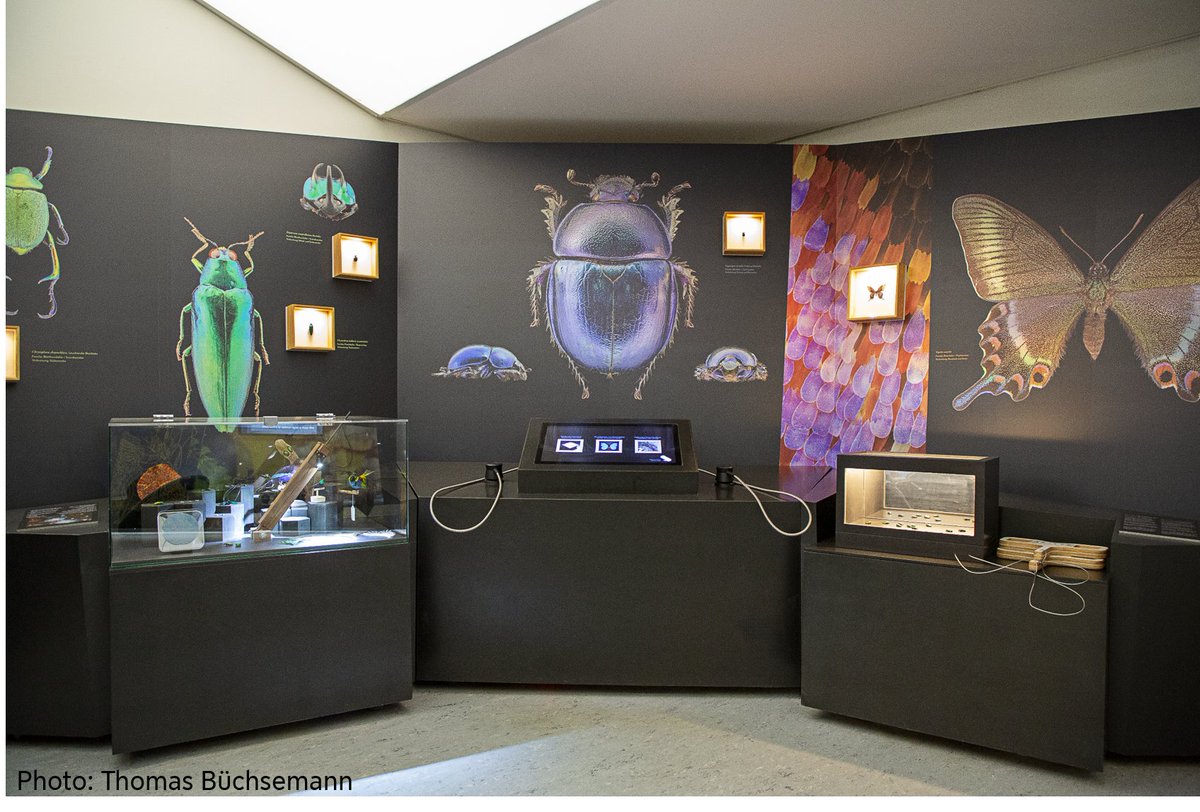
Prof. Vogel (@VogelLab) explained the origin of color during the opening of the exhibit “Schillernd Schön” at the #Bionicum Nürnberg. The team of CRC1411 complemented the beautiful pictures of Thomas Büchsemann with a video 🦋and with lab-made structural color materials.
Die Farben der Natur faszinieren das @VogelLab@UniFAU und den Fotografen Thomas Büchsemann. In der Ausstellung “Schillernd schön” im #Bionicum treffen Forschung und Kunst aufeinander.
Zur Eröffnungsfeier hat Prof. Vogel Regenbogenschokolade dabei!🤩@SNSB_Aktuell @museen_nbg
These findings underscore the significance of absorber integration, offering efficient methods for preparing colloidal photonic crystals with saturated structural colors.
Carina's and Gudrun’s recent article has been featured on the cover of Advanced Materials Interfaces! In this paper, we demonstrate how to enhance optical effects by integrating Polydopamine (PDA), a synthetic melanin, into photonic crystals. PDA is incorporated in two ways 1/n
Chromaticity analysis in the L*a*b* color sphere reveals structures with optimal color saturation. Simulations suggest that homogeneous absorber distribution is most efficient, yet heterogeneous incorporation outperforms it, allowing for precise adjustment of absorber content.
1- gradually increasing PDA shells in core-shell particles, maintaining a constant total diameter, to create homogeneous crystals, and co-assembling varying ratios of polystyrene (PS) and 2- absorbing PS@PDA particles for heterogeneous crystals.
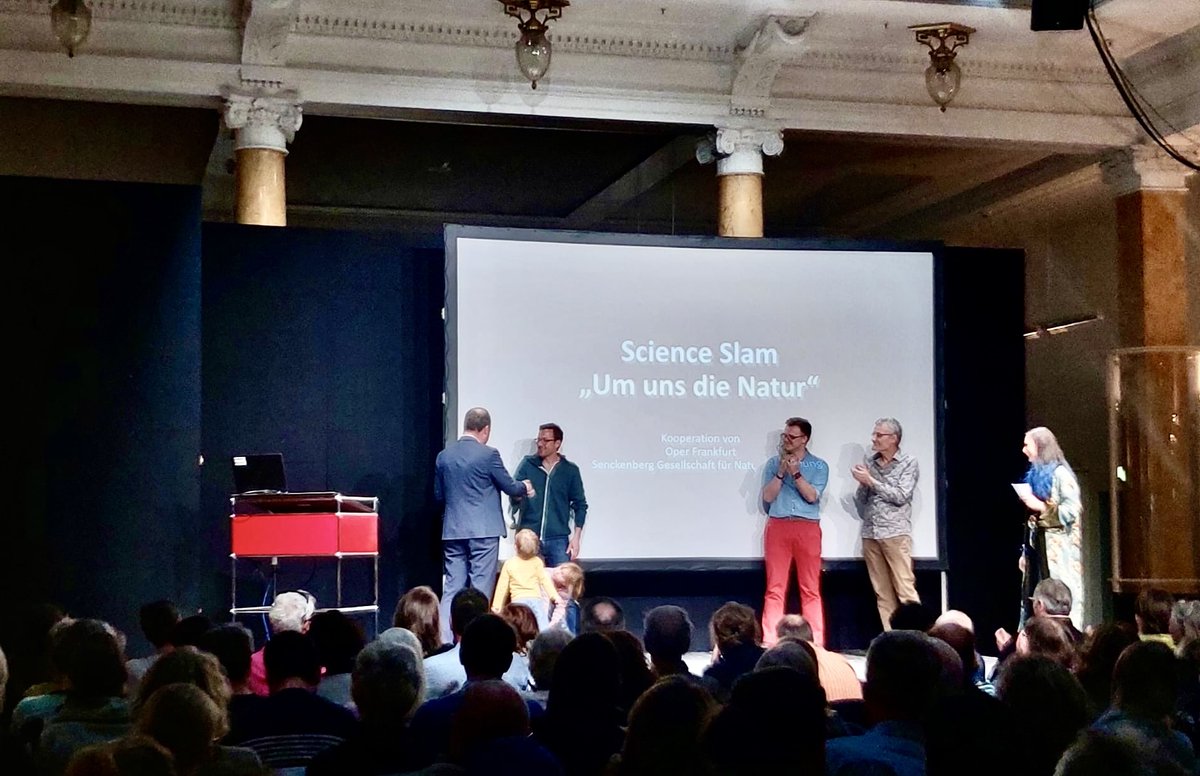
Last Monday Niki presented how structural color works at the science slam "Um uns die Nature" organized by the Senckenberg Gesellschaft für Naturforschung and the Frankfurter Museums-Gesellschaft e.V. at the Opera house in Frankfurt and won the second Prize for his presentation!
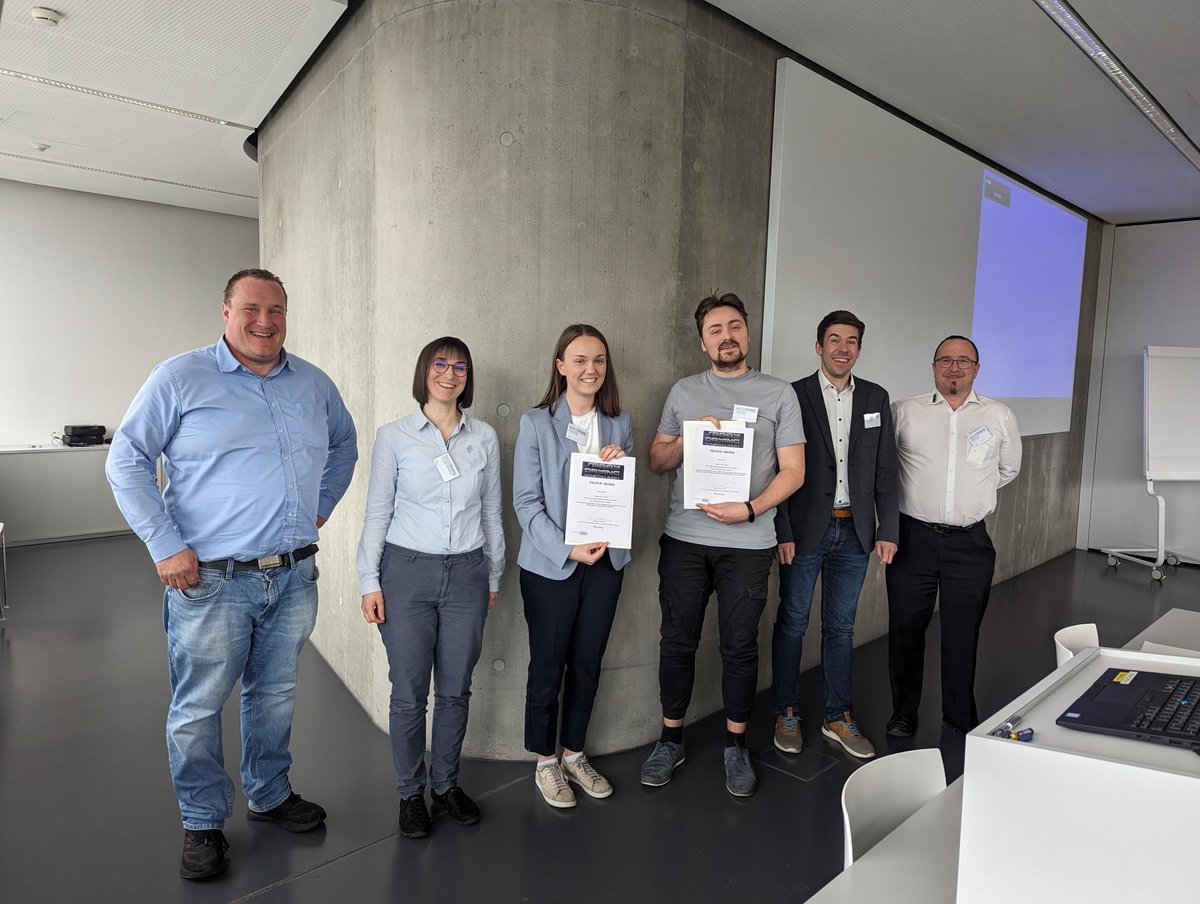
Our Master Student Sonja won the🥇 first prize 🥇 for her poster "Determining the Organization of Binary Colloidal Supraparticles by matters of Diffusiophoresis and Channel Formation” at the Spray Drying Symposium Würzburg. 🤹♀️We are very proud of her achievement!🎉🎉
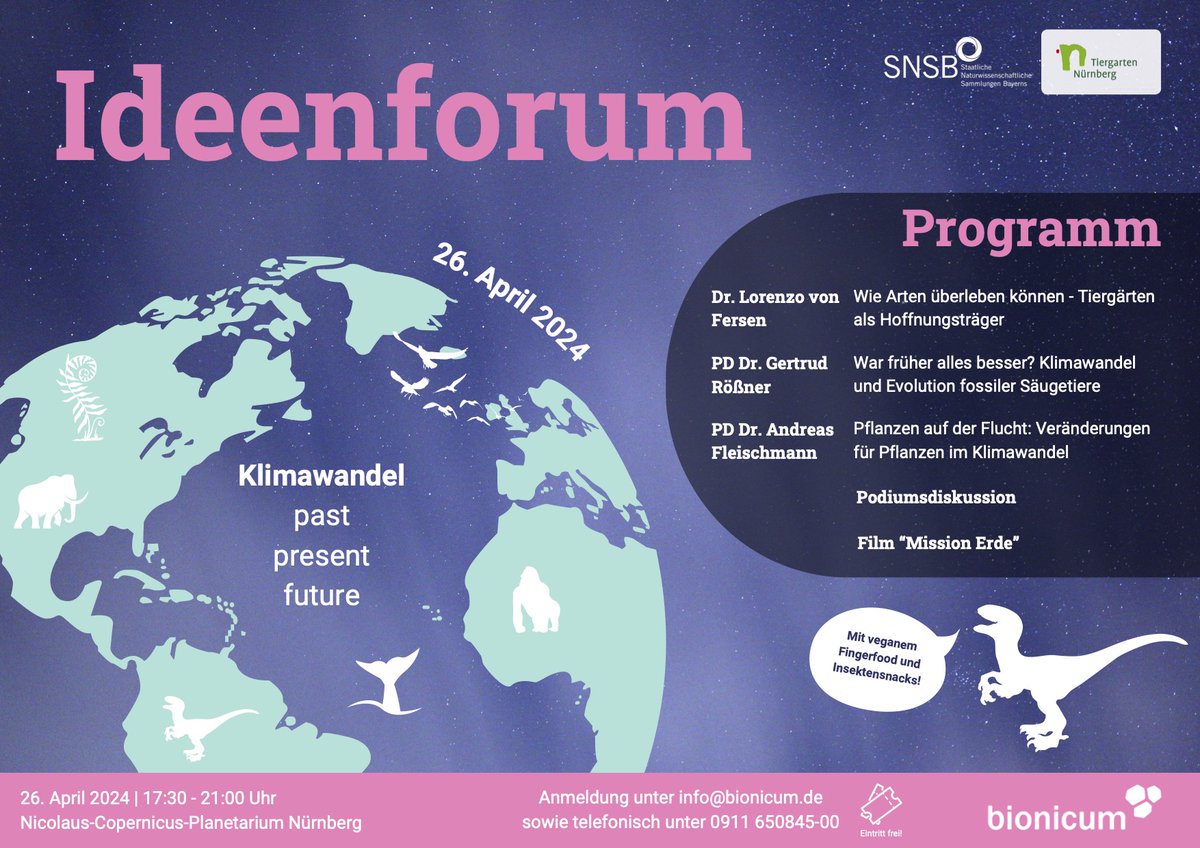
Are you passionate about climate change? Then join the event organized by Bionicum at the Planetarium in Nuremberg on April 26th for exciting presentations and discussion on the topic!
And the last of our job openings is here! We're looking for a PhD candidate to work on the synthesis of hierarchical porous materials for nanoparticle chromatography. Read more on our website https://t.co/3jyu9JDu1A and in the comments below⬇️⬇️
Skills required:
✔️Knowledge of colloidal and interface science,
✔️Expertise in colloidal synthesis, self-assembly, and surface functionalization
✔️Experience in the fabrication andcharacterization of porous material
✔️Knowledge of chromatography