@GEODNET Testing every station before shipping is what separates real infrastructure from cheap DePIN hardware. 21K+ miners across 170 countries don't happen by accident.👍
@ionet The pricing gap is real. But 'vendor-neutral' from a vendor is still a vendor pitch. What's the actual uptime SLA on ionet clusters for multi-day training runs?
@akashnet Smart split. Managed Console for devs who just want to ship, Console Air for those who won't touch anything without self-custody. Two different users, two different tools — same network underneath.
DIMO is a connected vehicle platform for the session-based economy. The owner connects their car via an OBD2 dongle or manufacturer app — and the data (location, speed, engine status) starts flowing into the network. The data belongs to the owner — they decide who gets access.
The chart shows how the network grew since November 2022. Blue bars — new vehicles connected each week. Orange line — total vehicles in the network. Two notable peaks: April 2024 and December 2024, nearly 10K new vehicles in a single week. 192K vehicles in the network today.
The onboarding pace has slowed — ~150 vehicles per week. No active onboarding campaigns. According to the DIMO team, the protocol has entered Phase 2 — focus has shifted from user acquisition to building the app ecosystem and B2B infrastructure.
@DIMO_Network #DIMO #DePIN
@TakElSayed@peaq This is exactly what DePIN is about physical work, automatic payment, no middlemen.
A robot completes a task. Owners get paid instantly. That's a new reality, not a concept.
@grass The network is more reliable than ever — and on-chain data backs it up.
Retention, volume quality, and decentralization all improved after the purge.👇
https://t.co/2WrAKfhj3t
@grass network is healthier than ever — here's the proof.🌱
On-chain data is clear.
After the bot purge in May:
✅ For the first time in the token's history returning wallets exceeded new ones — real users are staying
✅ Avg volume per wallet grew to 33,914 GRASS — highest since March
✅ Top 10 concentration dropped to 36.6% — all-time low in decentralization Bots are gone.
Real participants stayed and trade more.
Ahead of the July 7 Token Holder Call — the data speaks for itself.
Full dashboard 👇
#GRASS #DePIN @grassfdn
@renaissxyz Built an on-chain dashboard tracking Renaiss activity since launch — mints, unique buyers, holder distribution, all mapped to product drops.👇
https://t.co/LKY19cZinZ
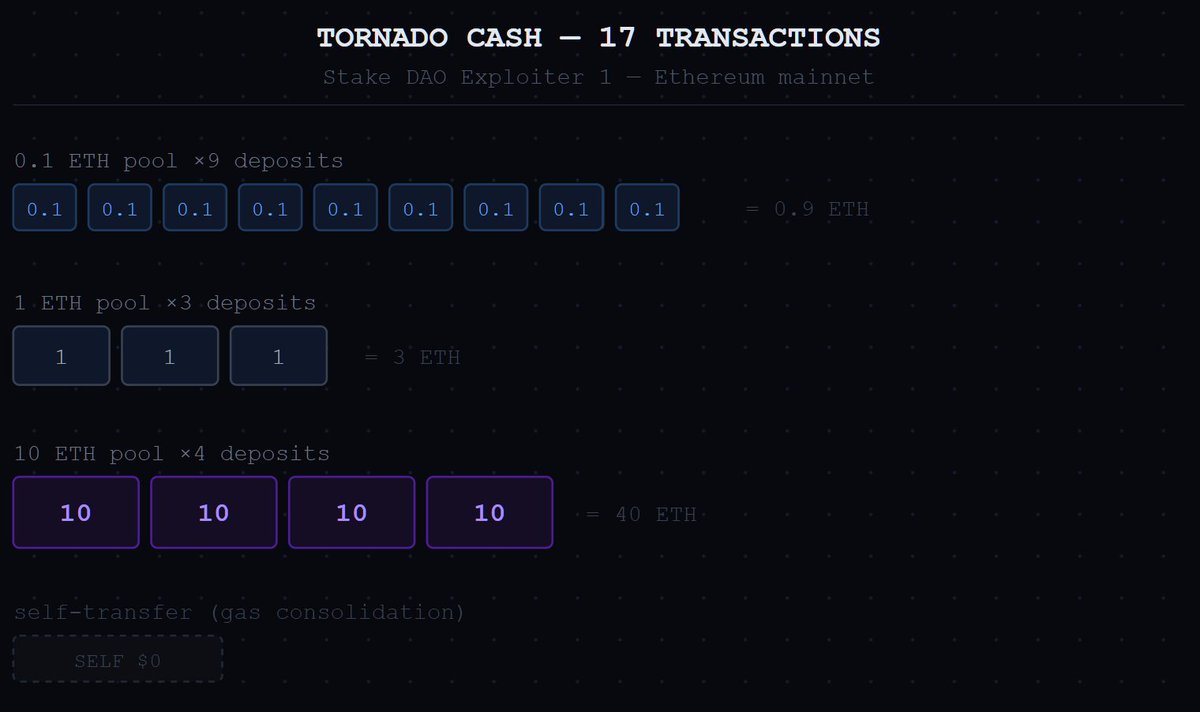
🚨 StakeDAO exploiter has fully exited.
43.97 ETH (~$91K) deposited into Tornado Cash in 17 txs:
▪️10x 0.1 ETH
▪️3x 1 ETH
▪️4x 10 ETH
Funds are now mixed. Trail goes cold.
Exploiter: 0xeF3C054d8F7eD0a7D61c8da56ff55F090577aa25
#StakeDAO#Exploit#DeFiHack#TornadoCash
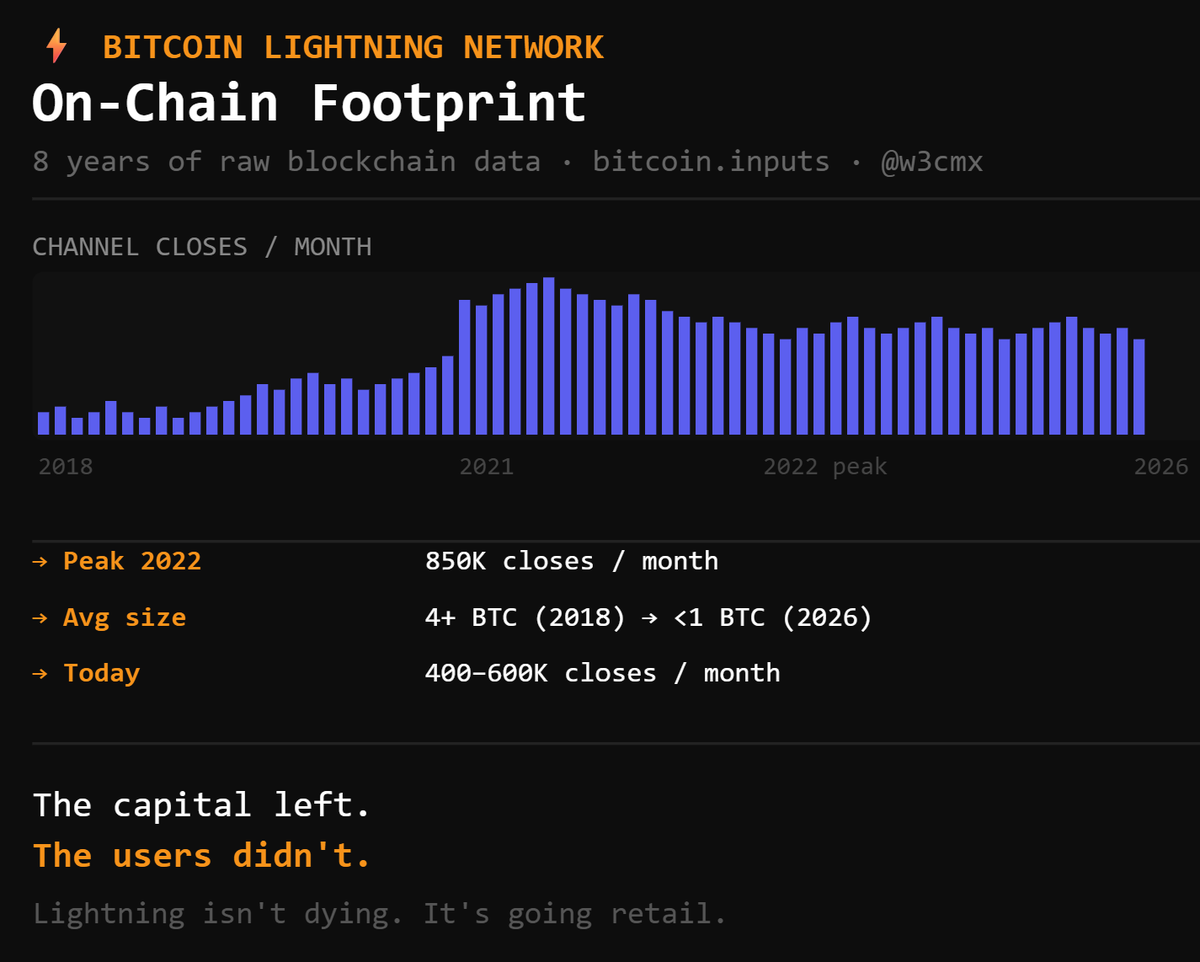
Small correction — the 4+ BTC average channel size is from 2018, not today. By 2026 it's dropped below 1 BTC. So the trend actually points the other way: away from large routing nodes, toward retail-scale usage.
Which is exactly what Lightning was designed for in the first place — fast, low-cost peer-to-peer payments (Poon & Dryja, 2016).
⚡Most people track Lightning Network via node count or capacity stats.
But the real signal is on-chain — in the closing transactions themselves.
8 years of raw Bitcoin data. Here's what it shows:
🔸Peak: 850K channel closes in a single month (2022)
🔸Average channel size: 4+ BTC in 2018 → under 1 BTC today
🔸Close count: Still 400–600K/month
The capital left. The users didn't.
Lightning isn't dying. It's going retail.
Full dashboard 👇
#Bitcoin #BTC #UTXO #LightningNetwork