Los húsares alados polacos. ¿La mejor caballería pesada?
El origen de los húsares polacos no es polaco. La palabra húsar procede del serbio gusar (vagabundo, pendenciero), y las primeras unidades que aparecen en los registros de la Corona polaca en torno a 1500 son mercenarios serbios procedentes de Hungría (los llamados Rascians), reclutados para enfrentarse a la caballería sipahi otomana en la frontera sureste. Stefan Báthory, príncipe transilvano coronado rey de Polonia en 1576, los transformó entre ese año y 1586 de caballería ligera de frontera en la unidad de choque de caballería pesada más eficaz que produjo Europa entre el siglo XVI y el XVIII.
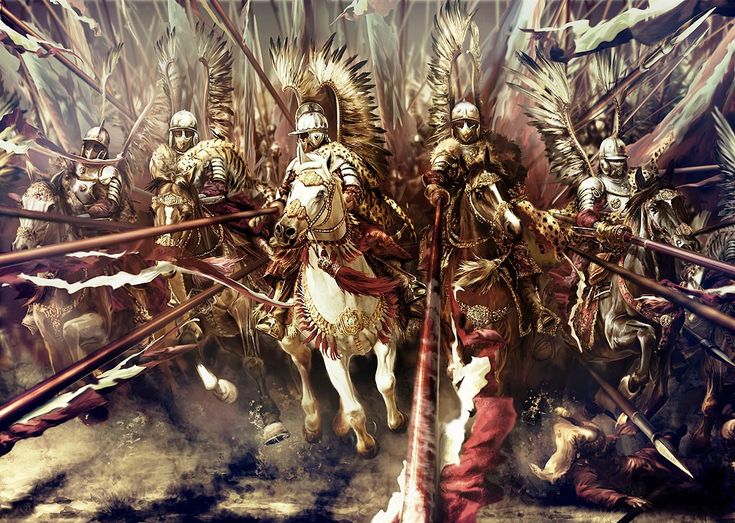
La kopia husaria era el arma que definía a la unidad, no las alas. Lanza de madera de abeto ahuecada (dos mitades encoladas) para reducir peso, con una bola de madera (gałka) como guardamanos y punta de acero forjado, su longitud oscilaba entre 4,5 y 6,2 metros, suficiente para superar el alcance de las picas de infantería occidentales (que rara vez pasaban de 5 metros). Estaba diseñada para romperse en el impacto: los carros de suministro que acompañaban a la formación llevaban lanzas de repuesto para permitir cargas repetidas, algo que ninguna otra caballería europea de la época hacía de forma sistemática. Junto a la kopia el húsar llevaba bajo el muslo izquierdo el koncerz (estoque recto de hasta 1,6 metros, sin filo, sección triangular o cuadrada, pensado para penetrar por las juntas de la armadura), bajo el muslo derecho el palasz (espada de tajo recta), la szabla (sable curvo) al costado, pistolas de rueda y en algunos casos un nadziak (martillo de guerra con pico opuesto).
Las cifras de Kircholm (27 de septiembre de 1605) resumen lo que esta unidad era capaz de hacer. El hetman de campo Jan Karol Chodkiewicz disponía de unos 3.600 hombres frente a 10.868 suecos de Carlos IX con artillería, infantería de pica y mosquete en posición elevada. Chodkiewicz fingió una retirada para atraer a los suecos fuera de su posición y lanzó la carga de húsares cuesta arriba contra los cuadros desorganizados por el avance. La batalla se resolvió en veinte o treinta minutos. Las bajas polacas fueron unas 100 muertos y 200 heridos frente a entre 5.000 y 9.000 bajas suecas según las fuentes (los burgueses de Riga afirmaron haber enterrado casi 9.000 cuerpos) y 500 prisioneros. En Kluszyn (1610), con una proporción de 5 a 1 en contra, los húsares destrozaron un ejército ruso-sueco combinado.
El 12 de septiembre de 1683, Jan III Sobieski lideró la carga que levantó el asedio otomano de Viena. Aproximadamente 3.000 húsares alados formaban parte de una fuerza combinada de 18.000 jinetes que descendieron del Kahlenberg contra las líneas del gran visir Kara Mustafa, en lo que se considera la mayor carga de caballería documentada de la historia. El Papa Inocencio XI concedió a Sobieski el título de Defensor de la Fe.
Las alas, que son lo que todo el mundo recuerda, probablemente no se usaron siempre en combate. La primera representación conocida de caballería polaca (la pintura de la batalla de Orsha, 1514) los muestra sin alas ni armadura pesada. Las alas montadas en la espalda aparecen hacia 1605 y su función exacta sigue siendo objeto de debate: protección contra lazos y golpes de sable por la espalda, intimidación psicológica (el sonido de las plumas al galope está documentado en fuentes contemporáneas) o simple ostentación nobiliaria.
Ilustración de Mariusz Kozik
Bibliografía recomendada:
– Brzezinski, R., Polish Winged Hussar 1576-1775, Osprey, 2006.
– Sikora, R., Husaria pod Wiedniem 1683, Znak Horyzont, 2017.
– Wisner, H., Kircholm 1605, Bellona, 2011 (3ª ed.).
👤 82 lata temu, 18 kwietnia 1944 roku, zginął Antoni Palluth, wybitny inżynier i cichy bohater złamania szyfru Enigmy.
W historii złamania szyfrów Enigmy najczęściej pojawiają się nazwiska trzech matematyków: Rejewskiego, Różyckiego i Zygalskiego. Rzadziej mówi się jednak o ludziach, którzy sprawili, że ich skomplikowane teorie i abstrakcyjne rozwiązania zaczęły działać w praktyce. Jedną z takich postaci był Antoni Palluth, inżynier, współtwórca zaplecza technicznego polskiego wywiadu radiowego i człowiek, bez którego sukces kryptologów mógłby pozostać jedynie elegancką teorią.
Palluth był związany z wytwórnią AVA w Warszawie, firmą działającą w ścisłej współpracy z Biurem Szyfrów. To właśnie tam powstawały kopie niemieckiej Enigmy oraz urządzenia wspomagające jej łamanie. W latach 30. w Polsce nie istniała żadna „instrukcja” budowy tych maszyn, inżynierowie musieli najpierw zrozumieć konstrukcję i schemat ich działania, a następnie odtworzyć ją z ogromną precyzją, często bez dostępu do pełnej dokumentacji. To zadanie wymagało nie tylko wiedzy technicznej, ale też kreatywności i zdolności do pracy na granicy tego, co było wówczas technologicznie możliwe.
Prace nad kopią Enigmy były ciągłym dialogiem między kryptologami a zespołem Pallutha. Modele matematyczne testowano w praktyce, co ujawniało ich ograniczenia i prowadziło do dalszych korekt. Te z kolei wymuszały zmiany konstrukcyjne urządzeń. Ta pętla sprzężenia zwrotnego, teoria i praktyka wzajemnie się korygujące, była jednym z kluczowych elementów całego przedsięwzięcia.
Szczególnie istotny był wkład Pallutha w budowę tzw. bomby kryptologicznej, urządzenia automatyzującego proces poszukiwania ustawień Enigmy. Choć koncepcja matematyczna wyszła od polskich kryptologów, jej realizacja wymagała rozwiązania szeregu problemów inżynieryjnych: zapewnienia synchronizacji mechanizmów, niezawodności działania oraz możliwości szybkiego testowania ogromnej liczby kombinacji. To właśnie na tym etapie teoria nabierała realnej wartości operacyjnej. Bez skutecznej implementacji cały wysiłek kryptologów nie miałby praktycznego znaczenia.
Po wybuchu wojny Palluth, podobnie jak wielu pracowników Biura Szyfrów, przedostał się do Francji, gdzie kontynuowano prace kryptologiczne w ośrodkach PC Bruno, a następnie Cadix. W 1942 roku został aresztowany podczas próby przedostania się do Hiszpanii i trafił do niemieckiego obozu koncentracyjnego Sachsenhausen. Zginął 18 kwietnia 1944 roku w wyniku alianckiego nalotu na obiekty przemysłowe w rejonie obozu.
Życiorys Pallutha przypomina, że za każdym wielkim sukcesem stoi nie tylko błysk geniuszu, ale również praca inżynierska - precyzyjna, żmudna i absolutnie niezbędna.
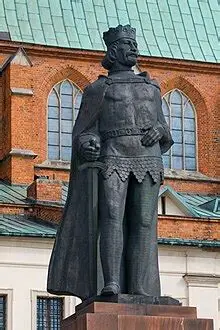
On April 18 in 1025: Bolesław I the Brave was crowned the first King of Poland in Gniezno. After decades of bold expansion, military victories against Bohemia and the Holy Roman Empire, and shrewd diplomacy that secured Poland’s independence, this coronation transformed the Piast Duchy into a full Kingdom. It was a landmark moment in Medieval Europe – Poland now stood as a sovereign Christian realm on the European stage. Bolesław (known as “the Brave”) died just months later, but his legacy as the founder of the Polish Kingdom endures to this day.
#OnThisDay #MedievalHistory #MedievalEurope #Poland #PiastDynasty
For two centuries, the Ottoman Empire had pushed westward, swallowing kingdoms whole.
Vienna was on the brink of collapse, the gate to all of Europe was about to fall open.
Then, over the ridge of the Kahlenberg hill, came the largest cavalry charge in recorded history.
🔸By 1683, the Ottoman Empire was the most powerful military force on earth. Grand Vizier Kara Mustafa marched with more than 150,000 soldiers toward Vienna, pulling with him over 300 cannons and a supply chain that stretched back to Constantinople.
🔸On July 14th, the Ottomans surrounded Vienna and began digging. They ran tunnels beneath the city walls, packed them with gunpowder, and detonated them one by one. The city's 12,000 - 15,000 defenders watched their walls crumble from the inside out.
🔸After two months under siege, Vienna was dying. Food had run out, disease was spreading through the streets, and the garrison had lost a third of its men. The city's commander, Ernst Rüdiger von Starhemberg, sent desperate messengers through enemy lines begging for relief.
🔸Holy Roman Emperor Leopold I had spent weeks negotiating one of the most unlikely alliances in European history. Catholic Austria, Protestant German princes, and the Polish-Lithuanian Commonwealth agreed to set aside their rivalries and march together. King Jan III Sobieski of Poland would lead them.
🔸Jan Sobieski was already a legend before Vienna. He had spent his career fighting the Ottomans on Poland's eastern frontier, and the Turks called him the "Lion of Lechistan." When the Pope personally wrote to him asking for help, Sobieski mobilized 74,000 men and began the march south.
🔸On the evening of September 11th, the allied commanders gathered on the Kahlenberg hill overlooking Vienna. Below them, the Ottoman camp stretched across the plain like a city of its own, with silk tents, horse herds, and cooking fires as far as the eye could see. Sobieski turned to his son and said: "Tomorrow we fight."
🔸The battle opened at dawn on September 12th with infantry clashing in the woods and ravines below the hill. For eight hours the fighting ground on, neither side breaking. Then, at around four in the afternoon, Sobieski ordered his cavalry to the ridge.
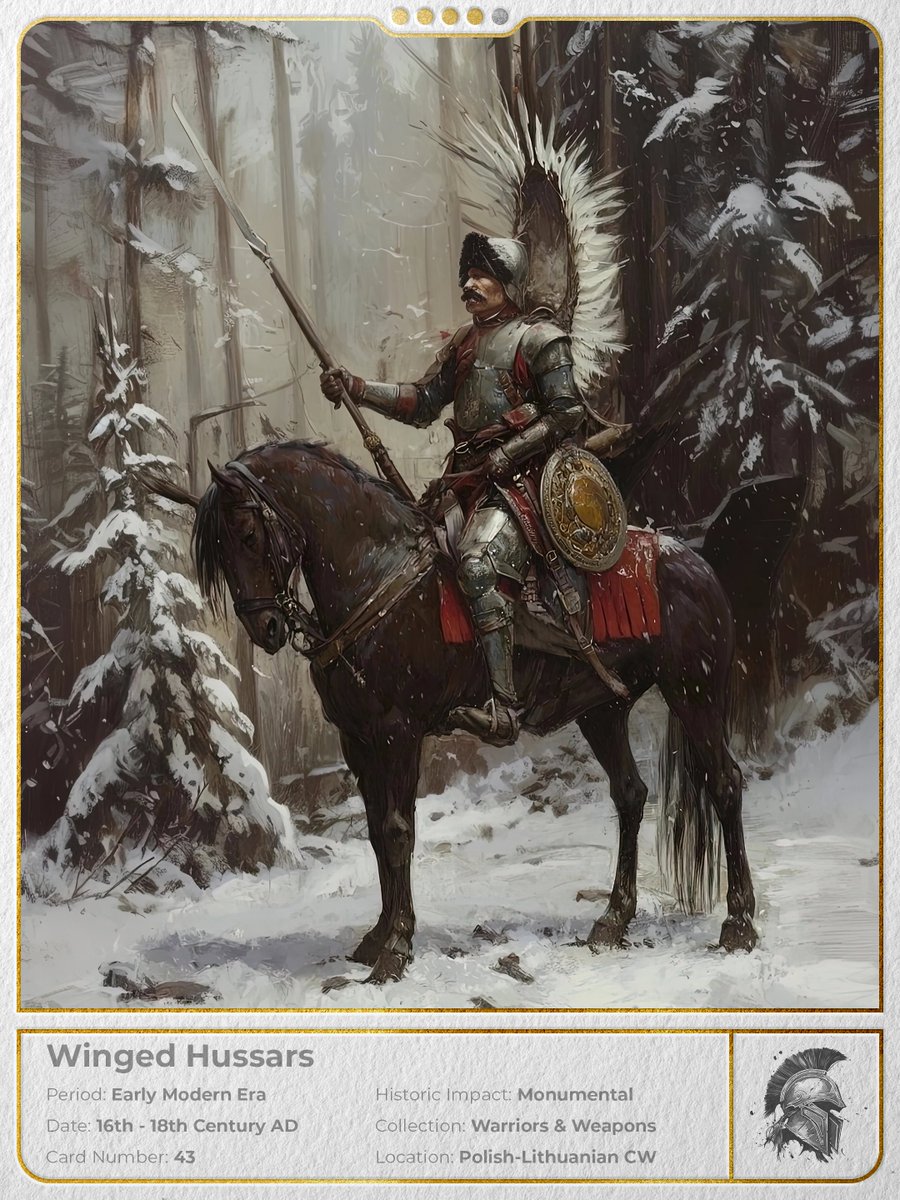
🔸The Polish Winged Hussars were the most feared heavy cavalry in the world. They rode massive warhorses, carried 16-foot lances, and wore wooden frames on their backs that held enormous eagle and ostrich feathers. At full gallop, the wings created a roaring sound that witnesses said was unlike anything they had ever heard.
🔸18,000 horsemen crested the hill and began riding downhill toward the Ottoman camp. Sobieski led from the front with 3,000 of his Polish Winged Hussars.
The ground shook. The Ottoman lines, which had held all day, looked up to see a wall of horses, lances, and screaming wings descending on them at full speed. The formation collapsed almost immediately.
🔸The battle raged for 15 hours after which the Ottoman army was in full retreat. Kara Mustafa abandoned his command tent, his treasury, his artillery, and the green banner of the Prophet Muhammad. The Poles captured so much coffee from the Ottoman camp that it is credited with introducing the coffeehouse culture to Vienna.
🔸Kara Mustafa fled to Belgrade, where he was executed by order of the Sultan three months later. The Ottoman Empire never again threatened central Europe with the same force. The siege of Vienna is now considered the high-water mark of Ottoman expansion into the West.
🔸On the evening of the victory, Sobieski wrote a letter to the Pope. In it, he borrowed the words of Julius Caesar and wrote: "I came, I saw, God conquered." He had just saved Western Europe. He sent the letter before the bodies were even cleared from the field.
🔸The Winged Hussars charged for the last time at Vienna, and they won the most consequential cavalry battle in modern history. Within a generation, the age of mounted shock warfare would be over forever.
Most people have never heard of the Battle of Vienna or of Jan Sobieski (he will receive his own card in due time). I believe it is vital you are now part of the group that does.
History has a way of burying the moments that changed everything. Europe was about to fall. These men ensured it didn't.
Thanks for sticking with me. Tomorrow I've got another fantastic story lined up for you.
Following the joint German–Soviet invasion of Poland in 1939–1941, nearly 1.7 million Polish citizens were deported by the USSR to gulags and forced-labour settlements in Siberia and Kazakhstan. Men, women and children were transported in cattle cars, with many dying from hunger, cold and disease.
The situation changed in July 1941, after Nazi Germany attacked the Soviet Union. Under the Sikorski–Mayski Agreement, Polish prisoners were granted an “amnesty” and the Polish Armed Forces in the East were formed under Gen. Władysław Anders, himself a former NKVD prisoner.
In 1942, more than 110,000 people — including around 40,000 civilians and tens of thousands of children — were evacuated via Central Asia to Iran. Emaciated and exhausted, Polish refugees finally found food, medical care and freedom. Iran became a crucial refuge, with camps in Tehran, Isfahan and Ahvaz, before Anders’ Army went on to fight in Italy, including at Monte Cassino in 1944.
📷 Cyrus II of Persia
Watch the amazing scene from the movie "Jak rozpętałem II wojnę światową" between Marian Kociniak - as Grzegorz Brzęczyszczykiewicz and Emil Karewicz - as a German SS-Obersturmführer. What a great Polish tongue twister! English subtitles.
Marian Kociniak was born on 11 January 1936.
Polish cryptologists' breaking of the Enigma cipher accelerated the Allies' victory in WWII and saved millions of lives.
On 31 December 1932, Marian Rejewski, Henryk Zygalski, and Jerzy Różycki cracked the German Enigma code—many years before Alan Turing.
https://t.co/e75tHhwAtE
Chwałę za złamanie Enigmy przypisuje się dziś powszechnie Brytyjczykom i Alanowi Turingowi.
Zapomina się często, że klucz do tego sukcesu nie powstał w Bletchley Park, ale w tajnym ośrodku w polskich Pyrach.
To właśnie tam, na długo przed wybuchem II wojny światowej, trwał cichy pojedynek intelektualny z III Rzeszą.
Polska znajdowała się w śmiertelnym niebezpieczeństwie i za wszelką cenę musiała poznać tajne plany rosnących w siłę Niemiec, aby zapewnić sobie przetrwanie.
Polskie Biuro Szyfrów jako pierwsze na świecie zrozumiało, że nowoczesna kryptologia to nie zadanie dla lingwistów, lecz dla matematyków.
Do pracy zatrudniono trzech wybitnych absolwentów Uniwersytetu Poznańskiego, którymi byli Marian Rejewski, Jerzy Różycki i Henryk Zygalski.
Dlaczego im się udało? Podczas gdy inne wywiady błądziły i próbowały zgadywać hasła, Rejewski potraktował Enigmę jako skomplikowane równanie matematyczne. Dzięki zastosowaniu teorii permutacji zdołał odtworzyć wewnętrzne okablowanie niemieckiej maszyny, chociaż nigdy wcześniej nie widział jej na oczy.
Polacy nie tylko złamali kod, ale zbudowali też pionierskie urządzenia zwane bombami kryptologicznymi oraz płachty Zygalskiego. Pozwalały one na zautomatyzowane odczytywanie niemieckich depesz przez większość lat 30.
Sytuacja zmieniła się dramatycznie w 1939 roku. Niemcy przygotowywali się do wojny i skomplikowali system przez dołożenie nowych wirników oraz zmianę procedur.
Polakom zaczęło brakować środków finansowych i mocy obliczeniowej, by nadążyć za tymi zmianami w pojedynkę. Wobec nieuchronnej inwazji podjęto decyzję ostateczną, że wiedza nie może przepadnąć i musi zostać przekazana sojusznikom.
Dlatego 25 lipca 1939 roku do tajnego ośrodka w Lesie Kabackim zaproszono asów wywiadu z Francji i Wielkiej Brytanii. Goście przyjechali przekonani, że Polacy ponieśli klęskę i będą prosić o pomoc. Tymczasem otrzymali bezcenny prezent w postaci gotowych replik Enigmy i pełnej dokumentacji matematycznej. To ten gest pozwolił Brytyjczykom kontynuować pracę w Bletchley Park i ostatecznie wpłynąć na losy całej wojny.
@infodexx Maria SKŁODOWSKA-Curie. She was Polish, born in Russian-occupied Warsaw, even after her departure she remembered her origins, always using her Polish surname, naming polonium after Poland (Polonia in Latin), and supporting science in Poland after regaining independence in 1918.
“For years Poland was slandered for sharing responsibility for the barbaric crimes committed by the Germans. It is historically false and scandalous. Thousands of Poles died saving Jews (...) No nation fought longer and suffered more than Poland," said yesterday @TomRoseIndy, the @USAmbPoland.
Thank you for standing firmly against historical falsehoods and unjust accusations.
Polish subtitles.
🎼 Today we commemorate the 165th anniversary of Ignacy Jan Paderewski's birth. He was a 🇵🇱 pianist and composer who became a spokesman for Polish independence.
In 1919, he served as PM and Foreign Minister, during which time he signed the Treaty of Versailles, ending the WWI.
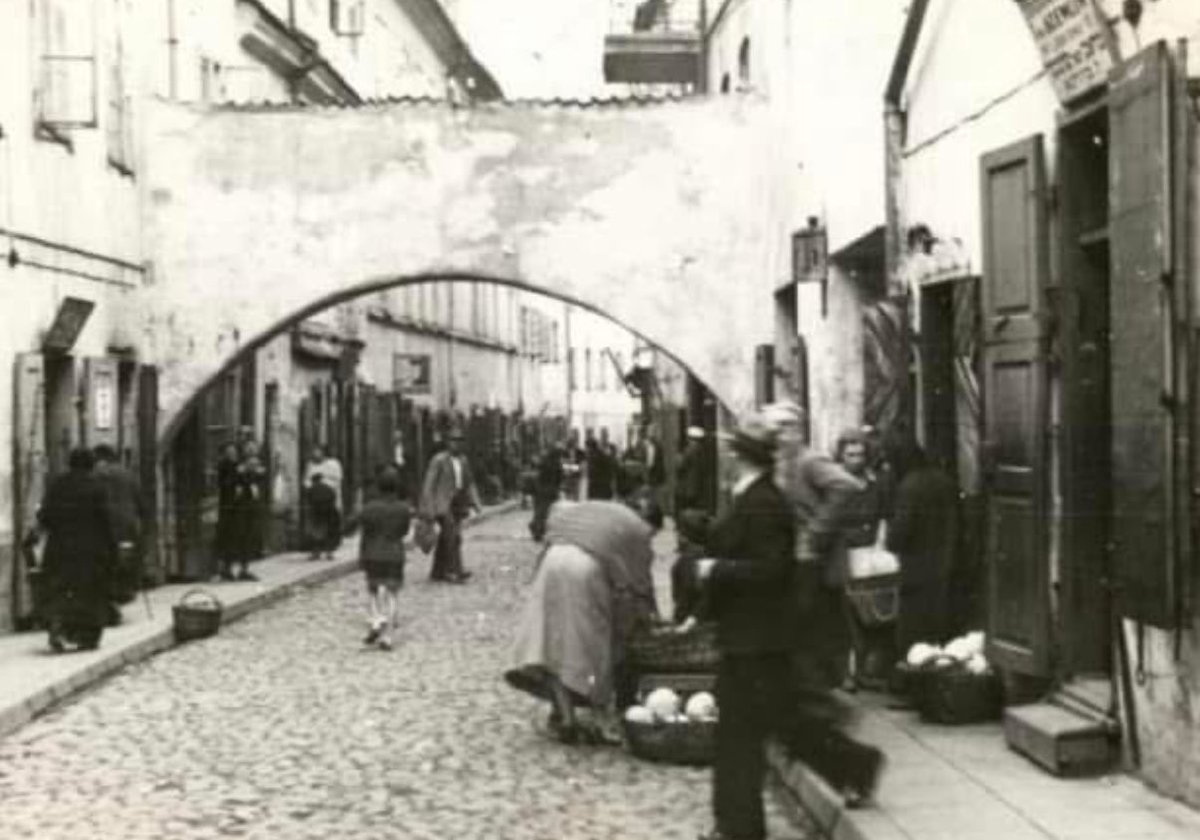
Wilno, German-occupied Poland, 1943.
A city crushed under occupation, where every choice carried the weight of life or death, and where offering help to a Jew meant a death sentence for one’s entire family. In this world of terror and silence, Grzegorz Turyillo made a decision most people would not have had the strength to make.
He opened his home.
In the cellar and in the attic of his modest house he sheltered forty-nine Jewish men, women and children—human beings who had nowhere left to run and who lived from moment to moment under the shadow of annihilation. For them, his home was not only a hiding place but a fragile island of dignity in a world that had lost its conscience.
There were nights when even a footstep outside could tighten the air with fear. There were days when he had to ration every scrap of food so that no one starved and no one drew attention by going out to find more. Every knock on the door could have been the last.
Then came the day the Germans arrived.
They stormed the house, tearing open the cellar where forty-one of the hidden Jews were hiding. When they discovered the truth, they executed them on the spot—and Grzegorz Turyillo died beside them, refusing to abandon the people he had sworn to protect.
Yet, even in this horror, a small miracle occurred.
The remaining Jews he had hidden in the attic were not discovered. They lived. They survived because of the courage of a single man who put their lives above his own.
Grzegorz Turyillo is not remembered with parades or monuments, but he belongs to the moral history of the world. In a time when cruelty was law, he chose mercy. In a time when silence was survival, he chose to act. His name, and the lives he fought to protect, are part of the quiet, defiant truth of human goodness that the darkness could not erase.
We honor him by remembering.
Photo: Wilno Ghetto
PrzewodzikFilmowy
PrzewodzikWarszawski
Fragment filmu "Miasto na wyspach" z 1958 roku pokazujący centrum Warszawy (13 lat po wojnie!) jako pełną gruzów i pustą dziurę w środku wielkiego miasta. Link do całego filmu (niecałe 9 min) w komentarzu .
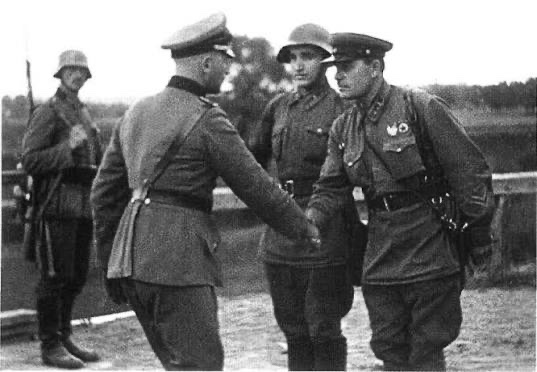
After the Soviets invaded Poland on September 17th, 1939, the Polish government declared: “Without a formal declaration of war, the Soviet Union invaded Poland, violating international law and Poland’s sovereignty.” Soviet propaganda called it a “liberation,” but in truth it marked the beginning of another occupation, one defined by terror, arrests, and mass deportations.
Between 1940 and 1941, the NKVD organized four great waves of deportations of Polish civilians. Men, women, and children were wrenched from their homes at night, given minutes to gather belongings, and crammed into cattle cars bound for Siberia, Kazakhstan, and the far reaches of the Soviet Union. Up to 1.5 million Polish citizens were deported eastward. As historian Timothy Snyder wrote: “The Soviet deportations were meant to remove all those deemed hostile to Soviet power. In practice this meant entire families, uprooted and transported in conditions so harsh that many never survived the journey.”
Conditions were brutal. Food was scarce, disease rampant, and countless perished on the journey or in exile. Survivors remembered the horror: “We were packed so tightly in the wagons that we could barely breathe. The dead lay among the living until the train stopped.”
The Soviet regime targeted all layers of Polish society, officers, intellectuals, landowners, priests, civil servants, and ordinary villagers alike. For many, deportation was followed by forced labor, imprisonment, or execution. The most infamous atrocity was the Katyn Massacre, where in 1940 the NKVD executed more than 22,000 Polish officers and intelligentsia, a crime denied for decades.
As historian Norman Davies concluded: “The Soviet invasion of Poland was not an accident of war but a calculated act of imperialism, accompanied by the systematic uprooting of the Polish nation.”
For Poland, the Soviet invasion was not liberation but catastrophe, its people torn from their land, its elites destroyed, and its society scarred for generations.
Poland remembers.
@mfa_russia Of course. There’s no equality between Third Reich and Soviet Union. Soviet Union was worse. Red Army alongside their Nazi German friends invaded Poland in 1939, occupied half of the country, committed many cruel war crimes, and never apologized for that. We’ll never forget.
The Battle of Vienna (Odsiecz Wiedeńska), led by King Jan III Sobieski of Poland in 1683, was a turning point in history. It marked the end of the Ottoman Empire's expansion into the Christian world. Sobieski and his army, including the legendary Winged Hussars, saved Europe, our civilisation, and Christianity. Jan III Sobieski was born on 17 August 1629.