🚨 New preprint alert!
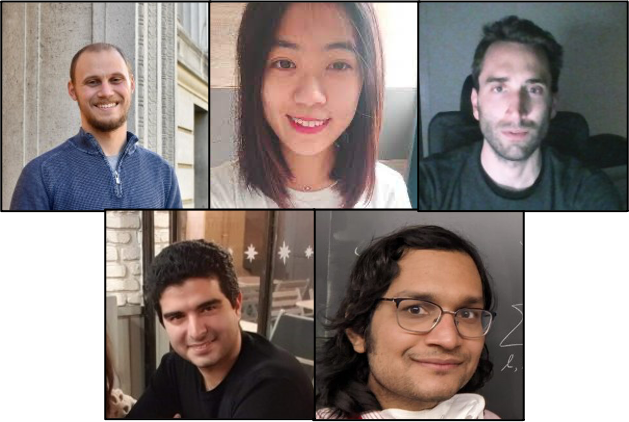
I am excited to present a collaboration between the @doudna_lab and Zev Bryant lab, with co-first authors @Noor_AlSayyad and @kevin_wasko and me. Curious about what drives high-efficiency genome editing by Cas9? Let’s dive in!👇🧵https://t.co/pvjXKhM2tP
We're excited to announce #AlphaFold 3 with @GoogleDeepMind in @Nature: our new AI model for predicting biomolecule structures with unprecedented breadth and accuracy.
Expanding beyond proteins to tackle DNA, RNA, small molecules to fuel advances in biology & drug design 🧵
Congrats to @DemisHassabis and John Jumper for winning the Nobel Prize for their work on AI that does protein structure prediction!
AI breakthroughs are winning Nobel Prizes🤯
I'm excited to see what other scientific mysteries AI will help solve in the coming years/decades.
Last week was National Postdoc Appreciation Week. Postdocs are critical to the research success at national laboratories. They bring new ideas and knowledge, and are our next-generation of scientific leaders. I greatly appreciate the outstanding work of our postdocs. #NPAW
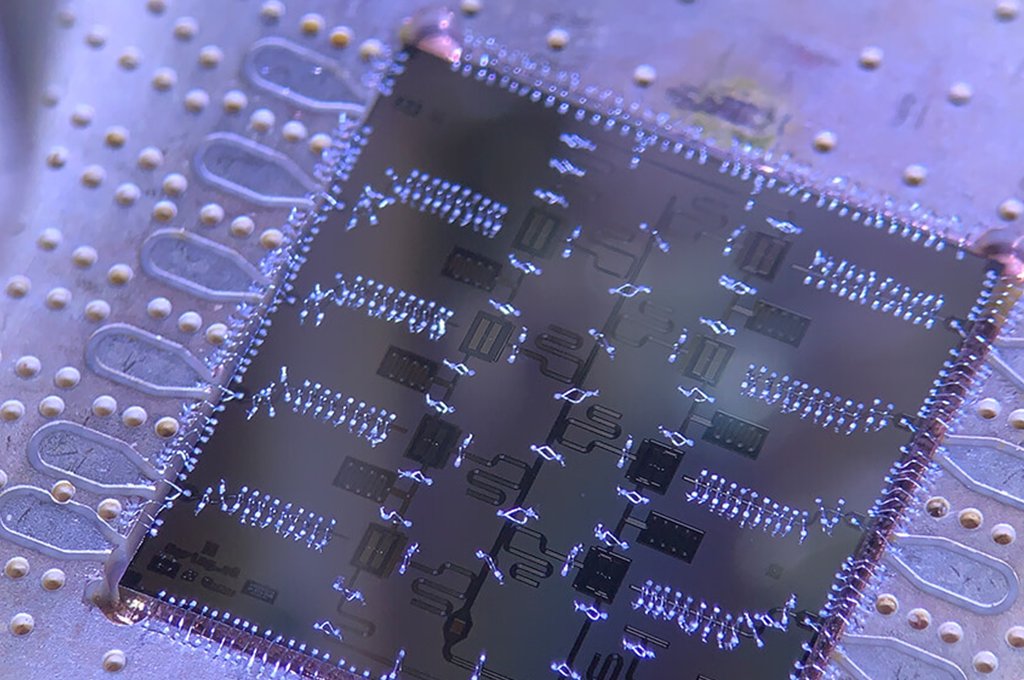
Exciting breakthroughs in #quantum information systems are revolutionizing a fast-growing field! 15 @QSAcenter institutions are at the forefront of cutting-edge science. Led by @BerkeleyLab w/ @SandiaLabs as lead partner, @QSAcenter is @doescience center. https://t.co/rPBBuzThu7
"A #quantum computer gives us the potential to study problems that realistically reflect the complexities of nature and solve specific tasks faster than classical computers." – @LBNLcs' @wa_de_jong. #BringingScienceSolutionsToTheWorld
Learn more ⬇️
https://t.co/sqRtt5S12P
Thrilled to announce that @CompAudition will be moving to @CornellPsychDpt, where I will be an assistant professor from Fall 2024. I will be recruiting for my new lab @Cornell, so please reach out/forward if relevant. @CompAudition will also continue at the @MPI_ae through 2025.
Hans Krebs identified the citric acid cycle - also known as the Krebs cycle. The cycle is a series of reactions that convert nutrients into other molecules with a large amount of chemical energy.
Do you know why it is so important?
New results from the world's most sensitive #DarkMatter detector put the best-ever limits on particles called WIMPs, a leading candidate for what makes up our universe's invisible mass. @BerkeleyLab#ParticlePhysics https://t.co/xf1I6HamXq
Congrats to our #RD100 winners for their world-changing innovations!
➡️ Inexpensive Electrode for Selenium-Laden Wastewater Treatment
➡️ gpCAM: software for autonomous labs of the future
@LBNLcs@BerkeleyLabETA@RD100Awards@RandDWorld
https://t.co/2VB03BIVGE
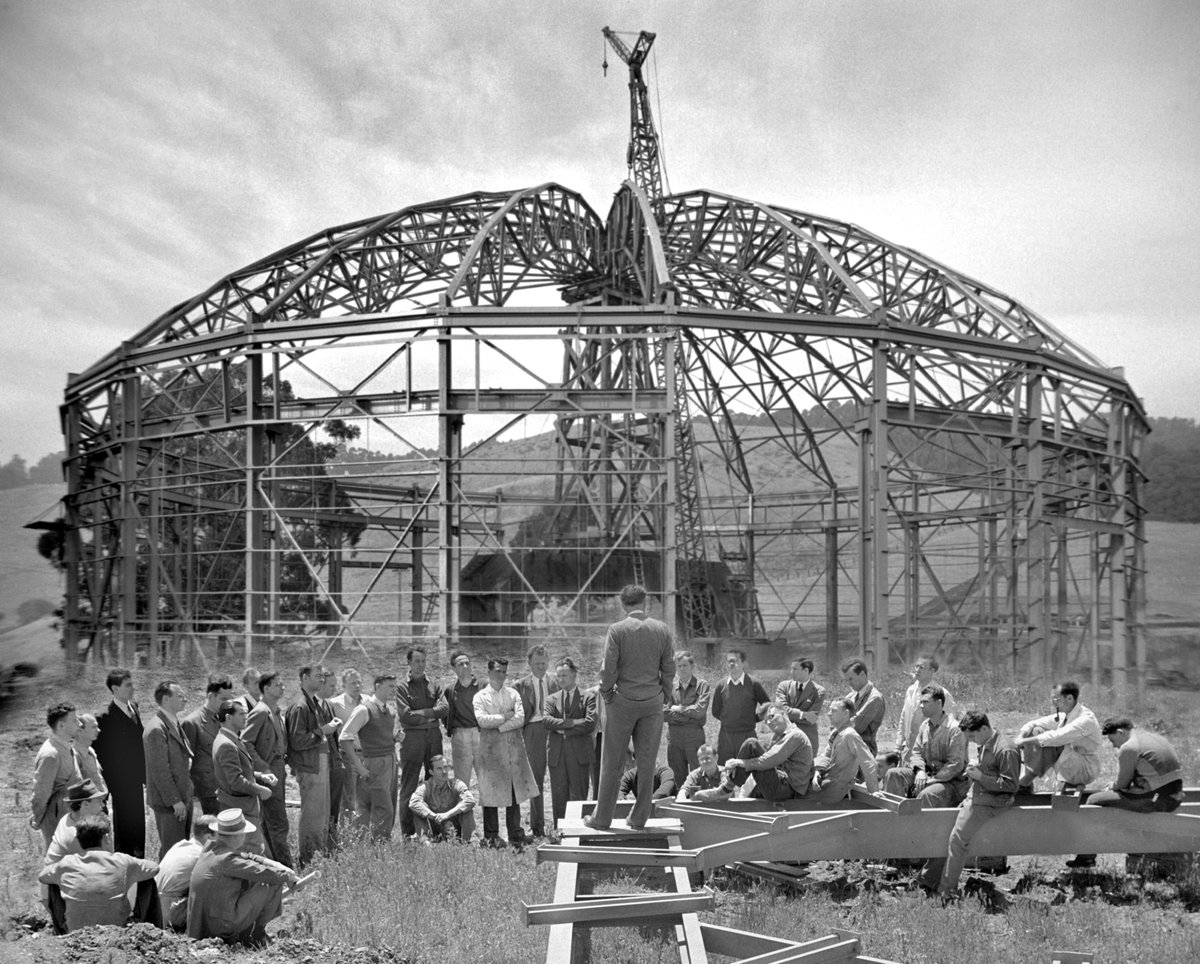
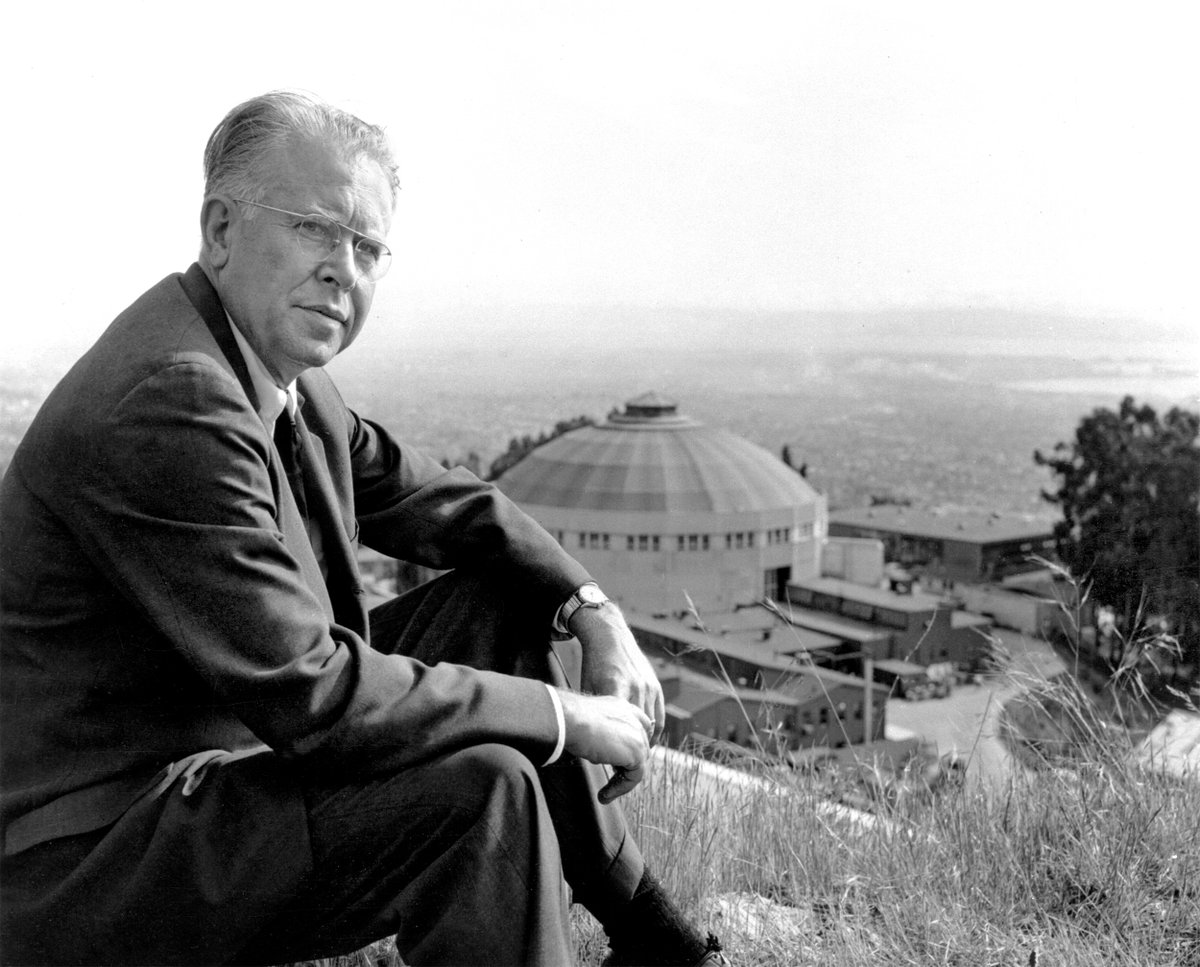
Today we celebrate our 93rd birthday! On this day in 1931, our founder Ernest O. Lawrence received permission to open up a lab at @UCBerkeley to pursue his studies in #ParticleAcceleration. Journey back in time with us as we celebrate Founder’s Day! 🎂 🎉 https://t.co/xEB0fj0En2
⚡️Our Technology-Powered Thought Laboratory
AI and neurotech are reinventing the very nature of the thought experiment.
Think about it. There may be no greater engine of transformation than the human brain. And throughout history, thought experiments have been the silent engines of intellectual progress, driving paradigm shifts in science, philosophy, and human understanding. From Plato's Allegory of the Cave to Einstein's elevator, these mental exercises have allowed thinkers to transcend the limitations of their physical world and explore the realm of pure ideas.
The power of thought experiments lies in their ability to distill complex concepts into digestible narratives, making the abstract tangible and the impossible imaginable. In ancient Greece, Zeno's paradoxes challenged our understanding of motion and infinity, laying the groundwork for calculus two millennia before its formal development. During the Scientific Revolution, Galileo's thought experiment of dropping balls from the Leaning Tower of Pisa (which he likely never actually performed) helped overturn Aristotelian physics and pave the way for Newton's laws of motion.
Revolutionizing Science and Philosophy
Perhaps no field has benefited more from thought experiments than physics. Einstein's famous musings about riding alongside a beam of light led to the development of special relativity, revolutionizing our understanding of space and time. Schrödinger's cat, a paradoxical feline both alive and dead, illuminated the bizarre implications of quantum superposition. These mental exercises have pushed the boundaries of human knowledge, allowing us to probe realms far beyond the reach of contemporary technology or experimentation.
The Dawn of Neuro-Enhanced Thinking
Now, as we stand on the brink of a new technological revolution, the humble thought experiment is poised for a dramatic evolution. The convergence of brain-computer interfaces (BCIs) like Neuralink, "thought-to-text" technologies, and large language models (LLMs) promises to transform the landscape of intellectual exploration in ways our predecessors could scarcely have imagined.
Imagine a world where the barriers between mind and machine dissolve, where thoughts can be transmitted at the speed of neurons firing. This is the promise of advanced BCIs and thought-to-text technologies. No longer constrained by the relatively slow process of typing or speaking, this new technology could potentially transfer complex ideas, hypotheses, and entire thought experiments directly from their brains to computer systems in ways that make "the blink of an eye" seem antiquated and sluggish.
AI as the Cognitive Amplifier
Enter large language models, the artificial intelligences that have already demonstrated remarkable capabilities in processing and generating human-like text. When coupled with the rapid influx of direct "pre-language thought" input, these LLMs could serve as cognitive amplifiers of unprecedented power.
As thoughts flow directly from the mind mind into the AI system, the LLM could instantaneously expand on the initial concepts, drawing connections across vast databases of scientific knowledge. It could generate multiple variations and permutations of the original thought experiment, identify potential flaws or inconsistencies in the logic, and suggest novel approaches or angles that the human mind might not have considered.
The Expanded Laboratory of the Mind
This symbiosis of human creativity and AI processing power could create a feedback loop of innovation, with each iteration refining and elevating the original concept. In this new and startling reality, a modern-day Einstein could conceive of a thought experiment akin to riding a beam of light, and within seconds have the concept fully articulated and modeled by the AI, receive instant feedback on its implications across multiple fields of physics, see visualizations of how this thought experiment interacts with our current understanding of the universe, and explore dozens of variations and extensions of the original idea.
The potential for scientific breakthroughs in this environment is staggering. Complex problems that might have taken years of contemplation and collaboration could potentially be unraveled in days or even hours. We're not just enhancing thought experiments—we're creating an entirely new domain of intellectual exploration, a "laboratory of the mind" where the boundaries between imagination and computation blur, where abstract ideas can be manipulated, tested, and evolved with unprecedented speed and precision.
Thinking About Ethics
However, this brave new world of thought experimentation is not without its challenges and ethical considerations. Privacy concerns are paramount—how do we ensure the sanctity of one's innermost thoughts when they can be so easily externalized? There's also the question of cognitive equality—would such technology create an insurmountable gap between those with access to these advanced systems and those without?
It's also critical to consider the potential for cognitive dependency. If we rely too heavily on AI-augmented thought processes, do we risk atrophying our natural cognitive abilities? How do we maintain the uniquely human aspects of creativity and intuition in this new landscape?
Future Thought
Despite these challenges, the potential benefits of this technology are too profound to ignore. We stand at the threshold of a new Cognitive Age, one where the constraints on human thought and creativity are dramatically loosened. This fusion of direct brain-computer interfaces, thought-to-text technology, and advanced AI could spawn a new generation of thinkers—modern-day Einsteins equipped with cognitive tools beyond anything we've seen before.
The future of thought experimentation is no longer confined to the limits of individual human cognition. Instead, it expands into a vast, collaborative space where human creativity and artificial intelligence dance in a symphony of ideas, pushing the boundaries of what's possible and redefining the very nature of thinking itself. As we stand on the shoulders of giants like Plato, Galileo, and Einstein, we prepare to take a leap into a future where the power of thought knows no bounds.
https://t.co/0jwJqiuU7q
#AI #cognition #LLMs @BrianRoemmele@lexfridman@elonmusk@neuralink@jordanbpeterson
“LLMs are unlocking the realm of ideas. The cognitive interface enables users to engage with machines on a conceptual level, moving beyond the retrieval of information to the exploration and refinement of thoughts.”
Very proud of this work that shows how physical systems can be designed to passively respond to certain environmental features in a meaningful way. One can call it embodied intelligence.
I am pleased to announce my appointment as President and CEO of @NYSCF. I am inspired to continue to advance the field of stem cell research and honored to lead this tremendous organization in its next chapter. https://t.co/P7dDQGjear #stemcells#precisionmedicine#biomedicine