Yikes, every fund is suddenly ESG now. That rush usually means dilution, not progress. I'd rather hold fewer names with real governance than chase the label.
esg flows keep climbing while the chart shows clean higher lows.
capital rotates toward funds with real emissions data, not vague green labels.
the trend is early, so position before the crowd notices.
@JimChuong n price moves trace back to weather, not charts. Three rules for ags: track planting windows, watch WASDE reports, respect seasonality. Skip these and you're just gambling on rain.
Normalize dinner conversations for men where, instead of sports, discuss:
“Who is your tax lawyer?"
“Which accounting firm do you use?"
“When did you set up your kids' trust fund?"
“How did you make your first $10 million?"
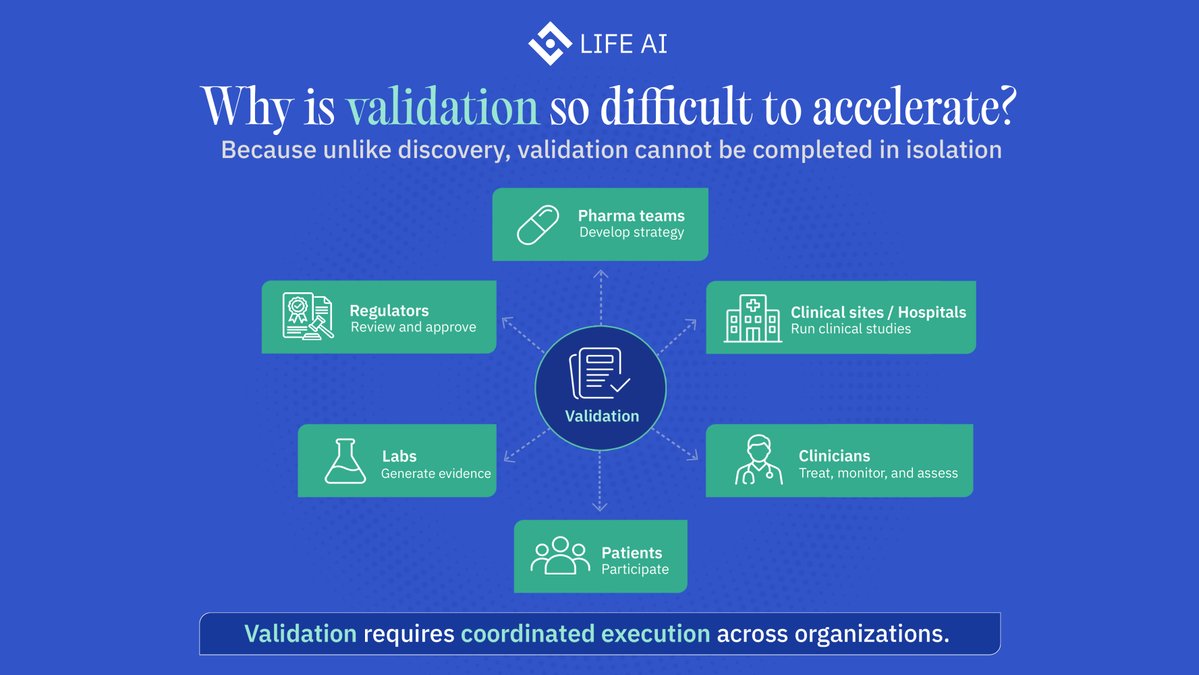
Why is validation so difficult to accelerate?
Because unlike discovery, validation cannot be completed in isolation.
An AI-generated drug candidate still has to move through key players across the healthcare value chain, including pharma teams, clinical sites, hospitals, clinicians, patients, and regulators. Each operates with different timelines, evidence requirements, compliance constraints, and operational priorities.
A candidate can move forward on one front while remaining constrained elsewhere, whether by patient recruitment, study execution, evidence generation, or the decisions required to advance it.
This makes validation more operationally complex than discovery. Discovery can be accelerated within a model, platform, or controlled environment, while validation depends on how effectively these key players coordinate and execute across the development process.
With more candidates entering development, that operational complexity compounds, requiring more evidence generation, clinical execution, patient participation, and coordinated decision making across organizations.
As AI accelerates discovery, the need for better coordination and the infrastructure to support it becomes increasingly important downstream.