World Weather Attribution turns 10 today 🎉
To mark the occasion, we've launched our study tracker – an interactive tool to explore our analyses on extreme weather events around the world.
https://t.co/9fDxnl3OMa
The death toll from this week’s devastating floods in south-east Spain has now risen to over 200.
Human-induced #ClimateChange doubled the likelihood of the heavy rainfall in the region and made it more intense, as Dr @FrediOtto from @WWAttribution at @imperialcollege explains.
World Weather Attribution turns 10 today 🎉
To mark the occasion, we've launched our study tracker – an interactive tool to explore our analyses on extreme weather events around the world.
https://t.co/9fDxnl3OMa
Building on more than 80 vulnerability and exposure assessments, today's study outlines the top actions needed to save lives in the face of worsening extreme weather.
They include improving early warning systems, boosting the resilience of cities, and protecting at-risk people.
The world’s 10 deadliest climate disasters of the past two decades killed more than half a million people, and a new study by @WWAttribution found global warming fingerprints on all of them, from cyclones and hurricanes, to heatwaves, droughts and floods. https://t.co/vZiq8PmUh8
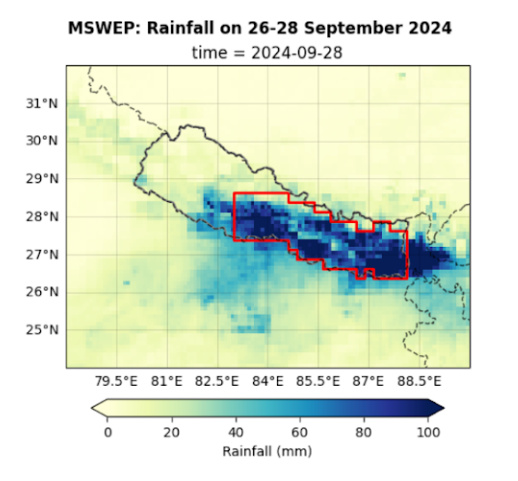
Rapid urbanisation and climate change key drivers of dramatic flood impacts in Nepal, new analysis by @WWAttribution reveals.
The researchers found that heavy rainfall has become around 10% more intense and 70% more likely due to a warming climate.
https://t.co/yLCd6QV0Ss
A study by @WWAttribution on the Nepal floods found:
● Climate change has made extreme three-day downpours in Nepal about 10% more intense.
● Bursts of rainfall will become even heavier
● Reducing development in flood-prone areas.
#climatekiseema
I am sharing the findings of a rapid attribution analysis, where I had the opportunity to collaborate with leading researchers to assess how human-induced climate change has increased the likelihood & intensity of extreme rainfall, causing devastation in Nepal in late Sept. 1/3
While eastern US states are still reeling from the devastation left by Hurricane Helene, Hurricane Milton, which is looking to be even *more* powerful, is quickly approaching.
Our episode w/ Dr. Fredi Otto breaks down how climate change is impacting the risk of extreme weather.
Learn more about our datasets, methodology, the IRIS storm model developed by @ImperialCollege and resilience measures in Florida:
📰https://t.co/0IWO54sYxv
Without climate change, #HurricaneMilton would have made landfall as a Category 2 instead of a Category 3 storm.
Furthermore, #Milton's rainfall & wind were both more likely & intense due to climate change, according to our latest analysis.🧵
📰https://t.co/0IWO54sYxv
Learn more about the three different methods used to produce the above findings:
⛈️The IRIS model https://t.co/ovEVCmXpfD
🌊Climate Shift Index for oceans https://t.co/InrOoEIVc9
📊The Standard WWA approach: https://t.co/IGXVj6O3eu
#HurricaneHelene’s deadly rainfall & wind, which created a trail of destruction across 500 miles of the US Southeast in late September, was increased by #ClimateChange📈
Our new study urges inland US regions to plan for ‘unimaginable’ hurricane floods 🧵
https://t.co/B1KY3Zk9vB
Dr @FrediOtto, lead of WWA and Senior Lecturer at @ImperialCollege said:
"We need leaders who are honest about the fact that addressing climate change is inevitable [to ensure] [...] future generations do not have to live in a world of climate chaos."