@lithos_graphein@b4ud3r I’m not sure if there are any designs larger than xLight but with the several smaller ones, it’s still a wide open field. Maybe fabs just need a wide open field in waiting.
@lithos_graphein@b4ud3r Do you think there’ll be substantial evolution in the size and configuration of the light source? I wonder how much Terrafab and other future fabs will have to build in flexibility to adapt to different technology variants.
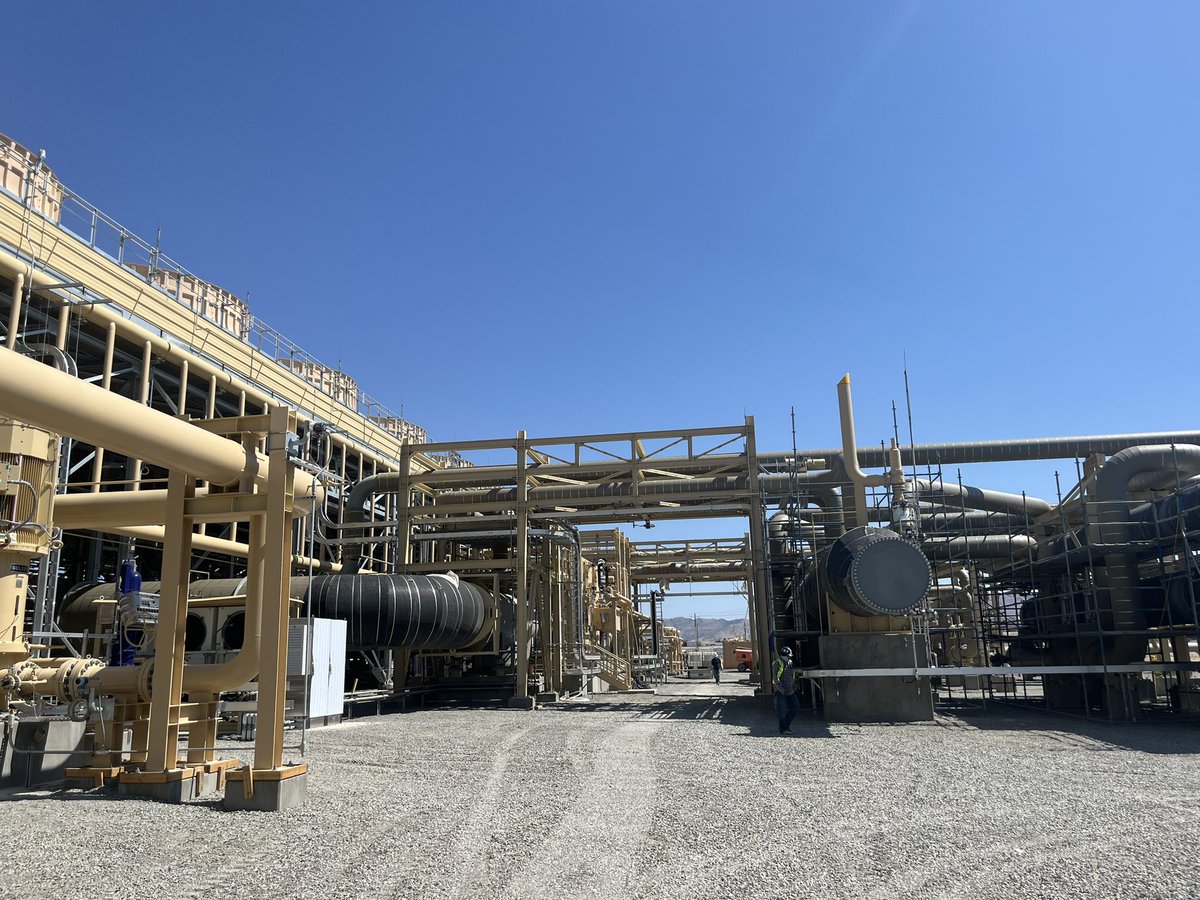
Steel in the ground. At a time when our country is slow to build infrastructure, @fervoenergy is going at warp speed. You’re looking at 33MW of clean firm power - of what will be 100 MW this year and 500 MW over the next few years. So great to see the progress!
@Alex_Intel_@magicsilicon Makes you think about industrial site planning looking at that substation in the middle. Years ago, Intel and SRP could have spent more on a much more compact substation…maybe still could.
@ira_joseph@bataille_chris@TotalEnergies@Shell@ColumbiaUEnergy Same problem with geothermal, but the magnitude of both government stimulus and shareholder commitment to the new tech are much lower and oil companies know drilling, so seemingly a better match. But that was what we said about offshore wind 10 years ago.
@wang_seaver The interties go through one of the most promising geothermal regions in the world across Northern Nevada, Northeast California, and Southern Oregon. There are utility plans to build more. The pieces are there for a North-South load diversity + geothermal grid expansion.
@ts_fisher@SlBrandin In your consumer regulated private grid proposal, do you contemplate that the consumers would ever ask the state for eminent domain power to build transmission? If I’m a prospective customer, I’m concerned private grid expansion has one hand tied behind its back.
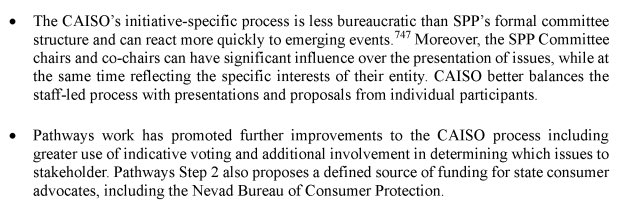
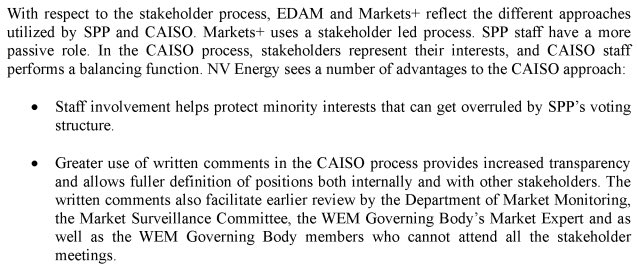
@TKavulla@pjminterconnect@bonnevillepower Whatever the scope of the RTO’s charge, the most effective model will be to empower staff to cut through the issues and drive toward real solutions. Stakeholders who want to deploy their muscle should do so in their written comments and at the governing board level.
@TKavulla@pjminterconnect@bonnevillepower One thing that’s interesting about how western markets are shaping up is that the IOUs are in favor of the CAISO stakeholder model, eschewing a closed committee structure. For example, NVE’s state EDAM appreciation:
On top of what’s recycled domestically already, there’s more scrap steel available that is currently being exported that could feed additional electric arc furnace plants.
Nucor makes a quarter of the country's steel by melting scrap, old cars, rebar, and busted appliances in electric arc furnaces that hit 1,600 degrees Celsius on nothing but current and graphite electrodes. What goes in as garbage comes back out as new steel, at under a third of the carbon of the old blast-furnace route. It's one of the only circular heavy industries on the planet. American steel was written off. Then we rebuilt 70% of it on scrap and electricity. I manufacture chemicals, and I see it in our own plants. Most hard limits are a side-effect of your process. Change it and the limit goes away. Steel is proof of that at national scale.
@ts_fisher@Matthuber78@ramez One thought: like @ramez suggests above, somehow force independent, competitively procured transmission into the mix, with a focus on connecting regions where the value to ratepayers (and new independent generators) is high and incumbent utilities have chosen not to act.
Much more to come in Oregon in support of US semiconductor technology leadership. Should we be thinking about a dedicated new research industrial park in Hillsboro @magicsilicon?
📣 NSF awards 12 new NSF Regional Innovation Engines to fuel research, drive innovation and support economic growth across the nation. Topics span energy grid security, critical mineral mining and quantum computing. https://t.co/b84hzb63eV
Redefining our future – together. We're thrilled to share that an Oregon State University led coalition has been awarded up to $160M by the @NSF to accelerate semiconductor innovation in Oregon. Learn more about the NSF FAST Engine and its partners: https://t.co/kgJcvbhcWm
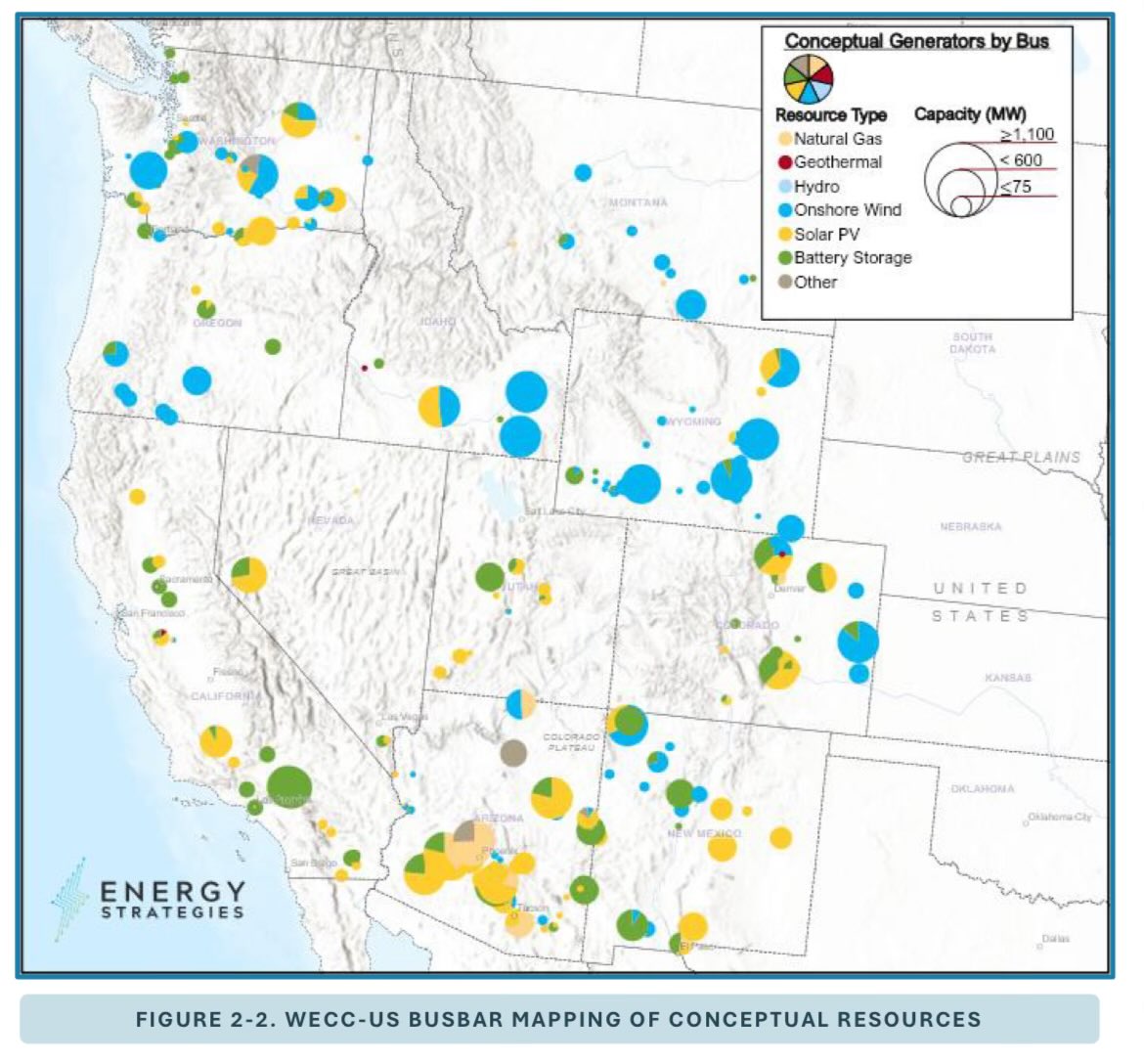
@NiyerEnergy To really get that amount of wind in WECC, there would have to be a RTO-style transmission planning body, and things are moving that way. I’m just exploring whether it should be a little less wind centric and focus more on geothermal and solar.
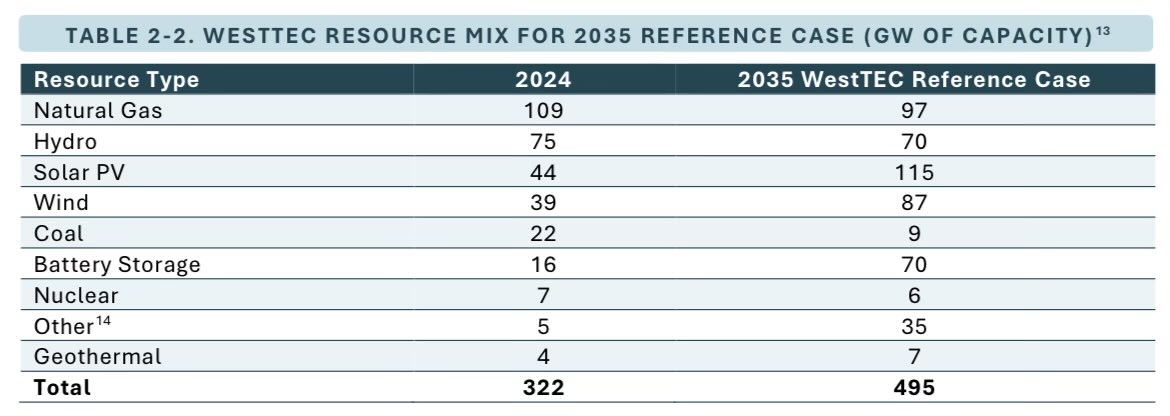
In the west, some of the planning still assumes large wind additions. See WestTEC transmission study. I don’t see the movement from utility procurement trends to get there. Maybe data center buyers will step in, but even so it might be time to plan the grid for less wind.
Wind's capacity value starts pretty high and then quickly collapses at very low penetrations. Solar requires storage to have capacity value at all for evening peaks, but sorta feeds of storage and can keep moving. Once you have renewables + storage capacity value combined above the "baseload" tho, it all mostly collapses.
/6
@NiyerEnergy Sadly, that’s happening. And for west coast states, the transmission reality limits what they can realistically get from intermountain states even if they really wanted it. Also a lot of political pressure for in-state jobs - thus the now stalled push for offshore wind.
@NiyerEnergy Another way of looking at it: how much of a penalty do you have to assign to gas capacity to get the optimal mix to shift to solar + storage + clean firm with minimal wind? Find that threshold and map it to real world policies/procurement trends to see if it’s actually happening.