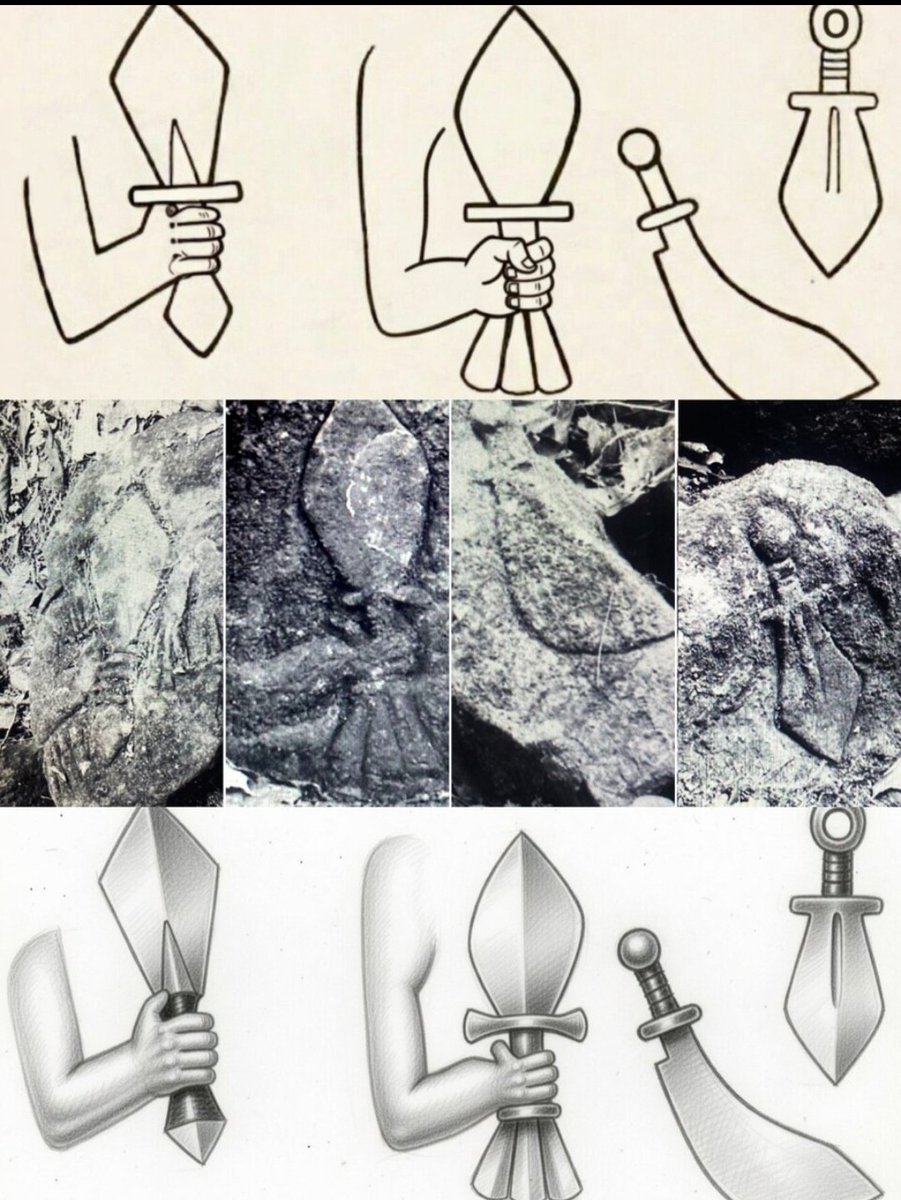
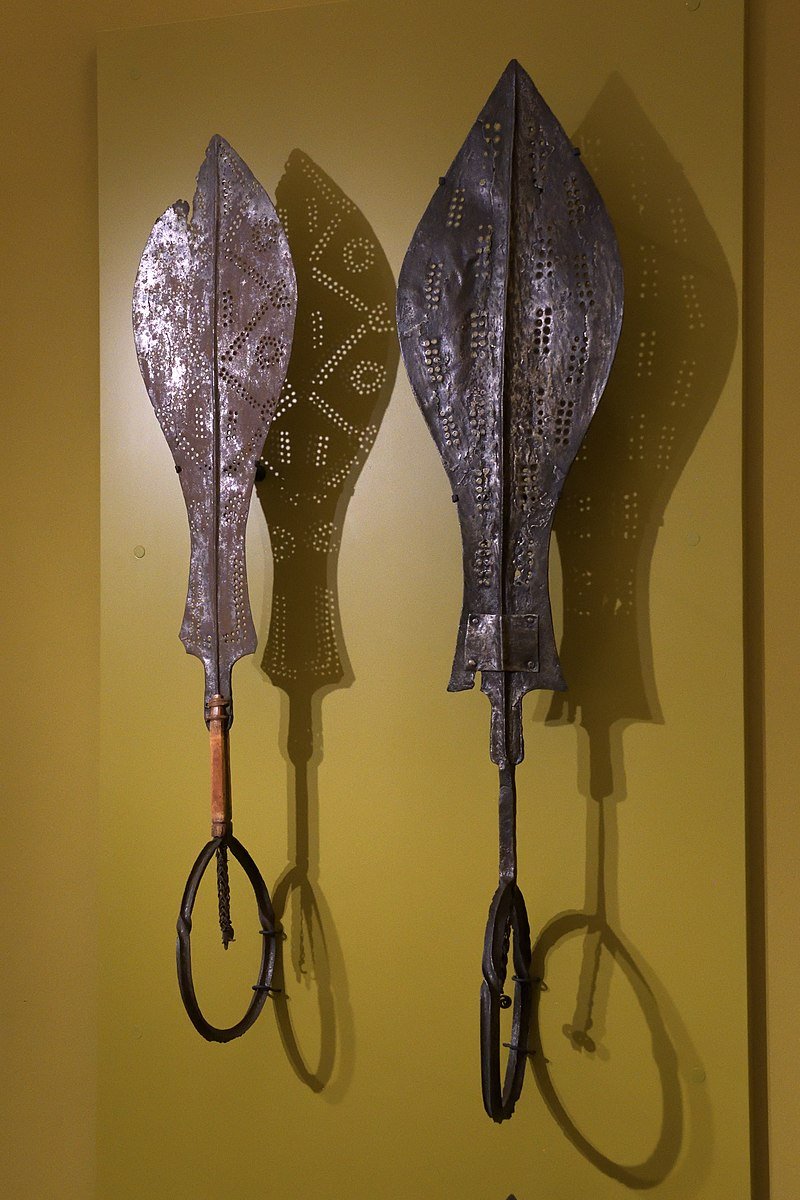
The Ada and Abẹ̀rẹ̀ (often called Eben in Benin) are depicted in art that predates the earliest surviving Benin examples.
The clearest earlier evidence comes from Ilé-Ifẹ̀:
Agidi Grove (near Ilé-Ifẹ̀) – Archaeologists Kenneth Murray (1945) and Frank Willett (1957) documented rock relief carvings of both the Ada and Abẹ̀rẹ̀. These carvings are associated with the early Ifẹ̀ monumental period, generally dated to c. 1000–1400 CE.
Ada Elédìsí (Ilé-Ifẹ̀) – Another carved ceremonial sword preserved in Ifẹ̀ and associated with early Yoruba royal traditions.
Igbo Orodi (Ilé-Ifẹ̀) – A stone sculpture depicts a figure holding a curved ceremonial sword in one hand and an ìrùkẹ̀rẹ̀ (fly whisk) in the other, iconography associated with sacred and royal authority.
These Ifẹ̀ carvings are significant because they predate or are contemporary with the earliest surviving Benin bronzes (the oldest of which date to about the 12th century).
They also align with Benin oral traditions that aspects of royal regalia, including ceremonial swords, were introduced from Ifẹ̀ during the formation of the Benin monarchy.
So, in terms of currently known archaeological evidence:
Earliest engraved depictions: Ilé-Ifẹ̀, approximately 1000–1400 CE.
Later royal use: The Kingdom of Benin developed and elaborated the Ada and Eben as central symbols of Oba authority, but the iconographic evidence from Ifẹ̀ is at least as early and, in some cases, earlier than surviving Benin examples.
Yoruba culture influenced societies in both Nigeria, West Africa and beyond.
The Ada of Ogun and Abere are state swords of authority to the Yoruba.
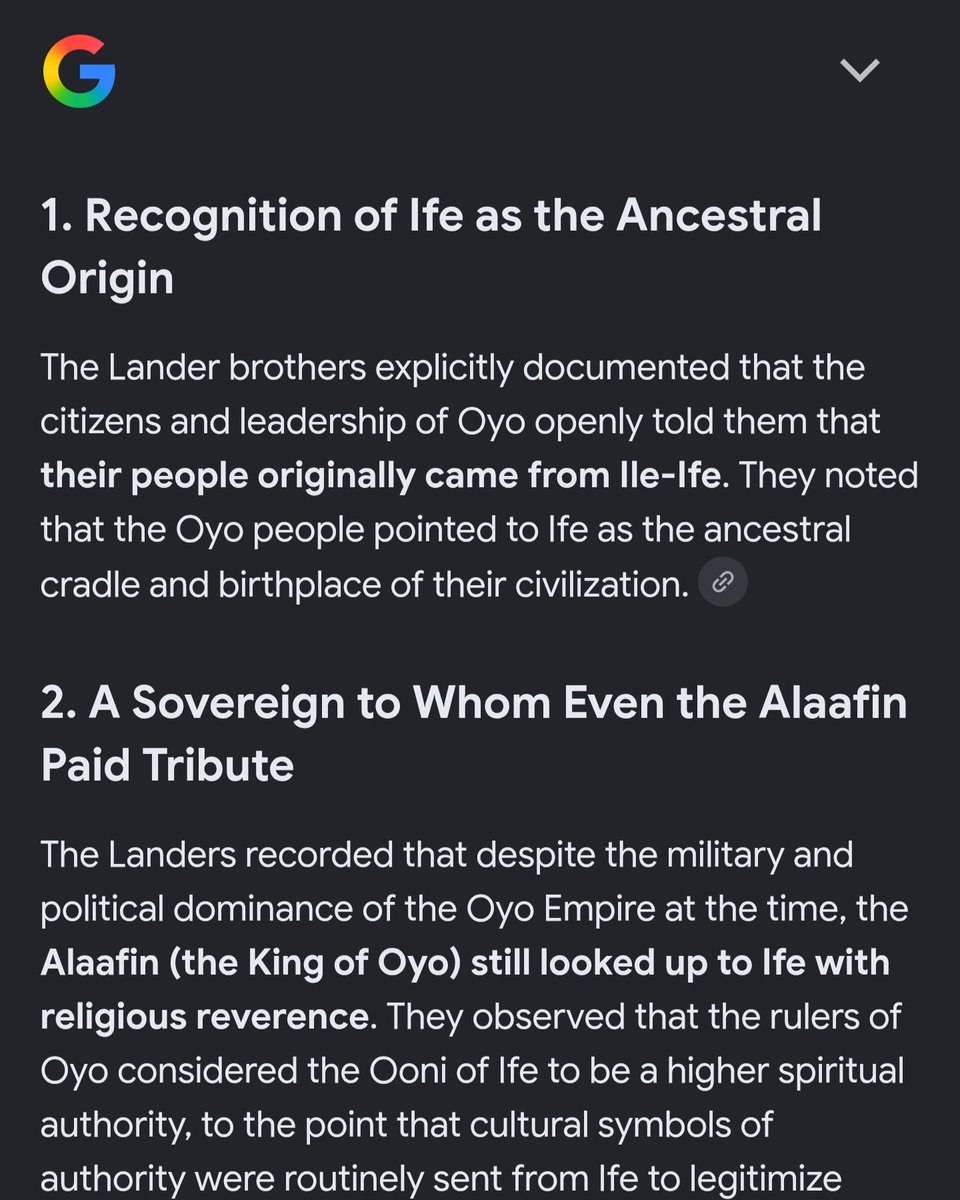
During coronations, individual Yoruba Kings would contact the Oranmiyan to acquire a "sword of state"
State swords have been used for centuries to represent the ancient rights bestowed from Ife to various Yoruba and neighbouring groups, including the Fon, Ga, and Benin Kingdom. #GreatIFE
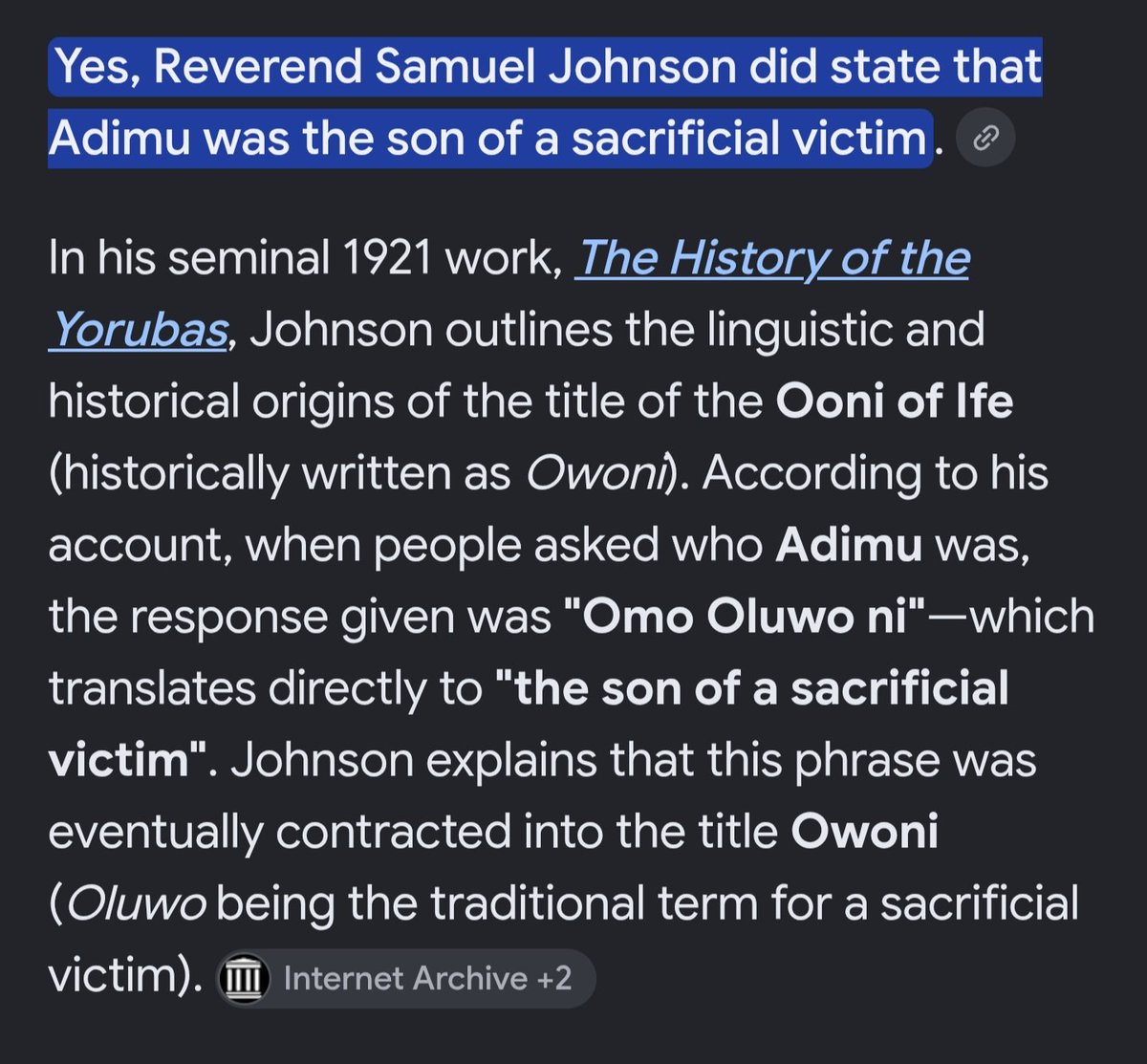
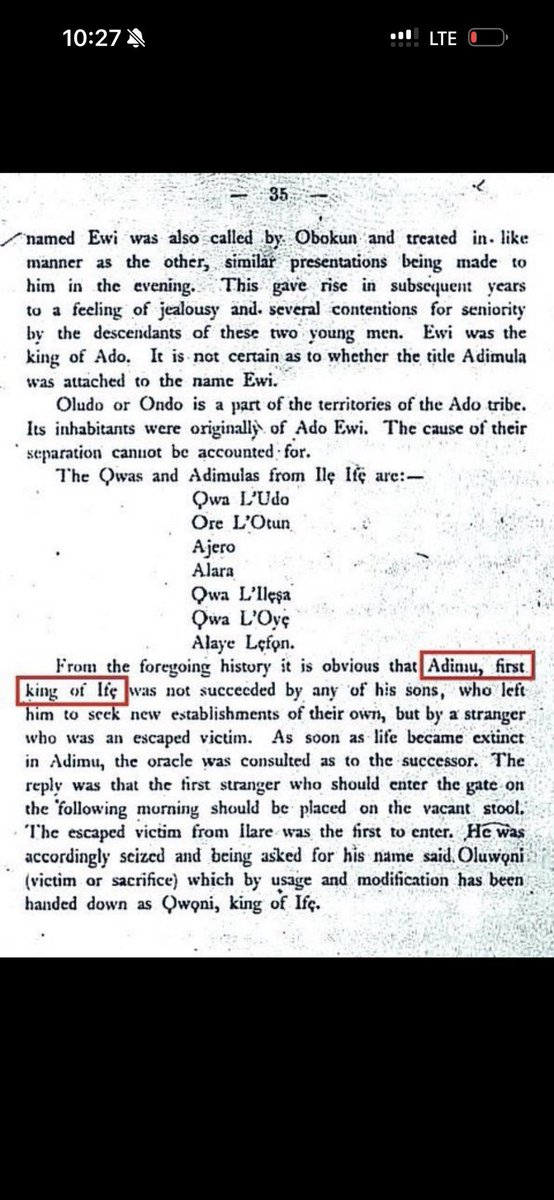
@Edocentric_@Achilles0055199@Sessy1909 As per johnson, the Oba is son of Adimula, hence the son of a slave.And historically, ekhaladeran is known to have died in Ughoton never reaching Ife. This pseudo history of ekhaladeran ↔️ oduduwa was invented in 1970s. Oba Akenzua II and Oba Eweka II are not aware of the lies.
@Achilles0055199@Edocentric_@Sessy1909 In the Ijesha myth version by George, Adimu (Adimula) was said be unrelated to the slave child but the slave child was tagged Ooni. Both myths are false.
If this was true, all Obas & princes from Ife that established kingdoms including oba bini would be descendants of a slave.
@Achilles0055199@Edocentric_@Sessy1909 He is being sneaky. S Johnson (oyocentric) said Adimu was the son of the sacrificial victim - Oba Benin is son of adimula.
Hence, he instead posted page from G O George which relied on an Ijesha myth during the era of Oyo and Ijesha challenging Ife's political authority.
@Achilles0055199@Edocentric_@Sessy1909 He is being sneaky. S Johnson (oyocentric) said Adimu was the son of the sacrificial victim - Oba Benin is son of adimula.
Hence, he instead posted page from G O George which relied on an Ijesha myth during the era of Oyo and Ijesha challenging Ife's political authority.
@NIYOREpe4h You are wrong. Lol
Read up on how he challenged Ooni's authority over the leadership of the Oyo state council of traditional rulers before osun state was created. This created the feud. Also read up about his feud with the Soun - Oba Jimoh Oyewumi. He relaxed at older age.
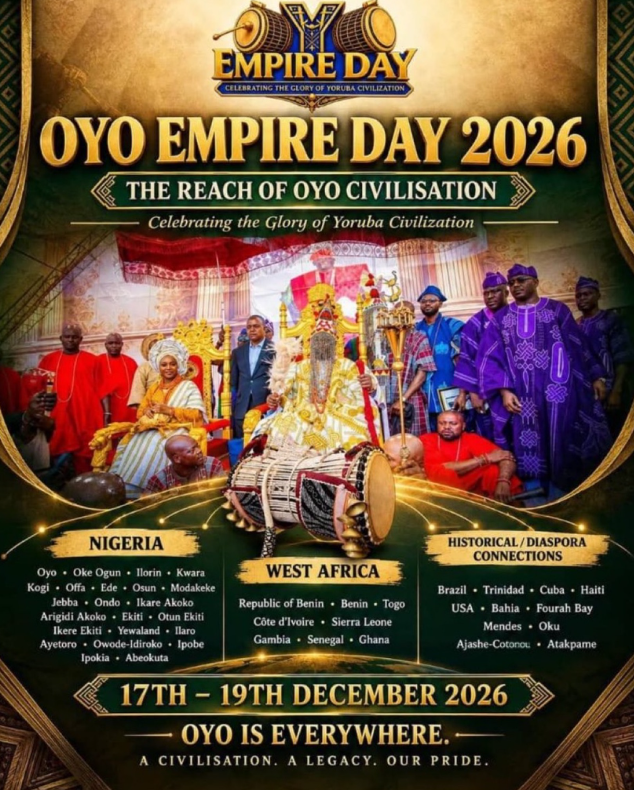
@Montero1016@ajayi132588@tolutee Listing Abeokuta is deeply ironic because the city only exists because its founders fled the oppression of the Oyo Empire.
Claiming Ilorin as part of Oyo's "reach" rewrites the very rebellion that destroyed Oyo. Ife is finally at peace with Modakeke, but its not enough for them.
@Yoruba_Global@ajayi132588@Montero1016@tolutee You can see that these guys are not even after any unity. He is bringing up Modekeke to taunt Ife. They are just pushing their Oyo supremcist agenda & polluting the social media space with the nonsense. In his mind, he thinks the Egba & Ilorin would be happy to see this poster.
@ocas2fa@tolutee Are we rebuilding an empire again in 2026?
Ibadan tried to build an empire back then too, & kiriji happened.
The poster is divisive. You think alot of people from those places that Oyo settled in as refugees will be happy to see their places classified as under Oyo?
Just saw this, and I’m curious: which part of Ekiti was supposedly in the Oyo Empire?
Otun-Ekiti is an ancient polity. It was never an Oyo epo (province). A period of Oyo military pressure did not magically turn it into an Oyo town.
After Old Oyo’s collapse, Oyo migrants settled in Ekiti communities, including Omu, Itapaji, Ikere and Ise. They were hardly the only arrivals: people from Iyagba, Owe, Bunu and Oworo also fled Nupe attacks into the region.
How does receiving war refugees make their host communities part of the state they left behind? That's turning history and logic on its head.
Hopefully this is a joke from some online Oyo supremacist. I doubt it came from the Ìkú Bàbá Yèyé, who, I’m sure, understands where the empire’s boundaries lay.
@ajayi132588@tolutee You were one indeed. One by selling others to slavery right?
In addition, you are mixing Oyo empire up with Kiriji war which shows you have very little knowledge of what you are talking about.
Adimila O Sakeji lacks a native Bini morphological breakdown.
Adimila derives from Yoruba àdìmúlà (hold/prosper; an attribute of God, also a kingly name).
Osa is the shared Bini/Yoruba high god/creator.
Keji is Yoruba ẹkejì (second).
The full title (second to God) is a Yoruba loan phrase, reflecting historical Ife-Benin ties, and does not appear as indigenous Bini forms in Melzian.