Excited to share that I’ve been invited to join Plant & Cell Physiology’s Budding Editors Program (2025–2026)! I am honored to contribute to this fantastic journal and grateful for the opportunity to grow within the plant science community. 🥳
@thsottiaux Why does Codex perform so smoothly for extended conversations in the client, while the ChatGPT client is quite laggy? The web version is particularly sluggish
‘Student Geng’ ignites research-integrity scandal in China after calling out senior academics
Video blogger’s viral accusations of data manipulation in Nature journals have sparked intense debate and speedy institutional investigations.
By Xiaoying You
https://t.co/jTJd2kkb3u
The world needs more whistleblowers like “Geng Tongxue” (Student Geng).
Mark my words. This story is going global.
#NatureRipoffs#ScienceCrisis https://t.co/jfmW1fQtlY
In January, I reviewed a Review for a crappy MDPI journal.
It was 100% AI, missing citations, etc. I sent a massive report, and the authors withdrew it.
Today, I see it published without a single change in another even crappier MDPI journal.
📝From PCP latest issue(67-4): Special Issue-REVIEWS
Open access!
“The role of soil microbiota in the control of parasitic weeds” by Pongpamorn et al.,
https://t.co/aSL7VR15MU
#Plantsci#Parasiticplants
3/3
Today I saw his post about graduating and joining OpenAI. As a long-time follower, I feel genuinely happy for him. It is rare and moving to witness someone grow step by step onto a larger stage.
Sincere congratulations to Tairan, and wishing him meaningful work ahead.
1/3
I’ve followed Tairan on Bilibili for over three years.
The first video I watched was “I Got into MIT, Harvard, and CMU! My CS PhD Application Journey.”
What struck me was not just the offers, but his energy, clarity, and deep self-awareness.
some news: I’ve joined OpenAI.
After wrapping up my PhD in Robotics, I’m excited to keep working toward AGI in the physical world.
exciting journey ahead :)
2/3
Back then, I felt he would become someone truly outstanding. That video later encouraged me many times in my own research journey—especially during moments of doubt, pressure, or low motivation.
It reminded me to move forward with both ambition and self-knowledge.
New Article: "Rice roots recruit Bacillus via the secretion of heptadecanoic acid" https://t.co/17xQr8txpw
With Research Briefing: https://t.co/2ybIs5mA5h
Rice plants facing fungal infection mobilize a soil-borne defence force via a previously unknown mechanism. MAPK inside.
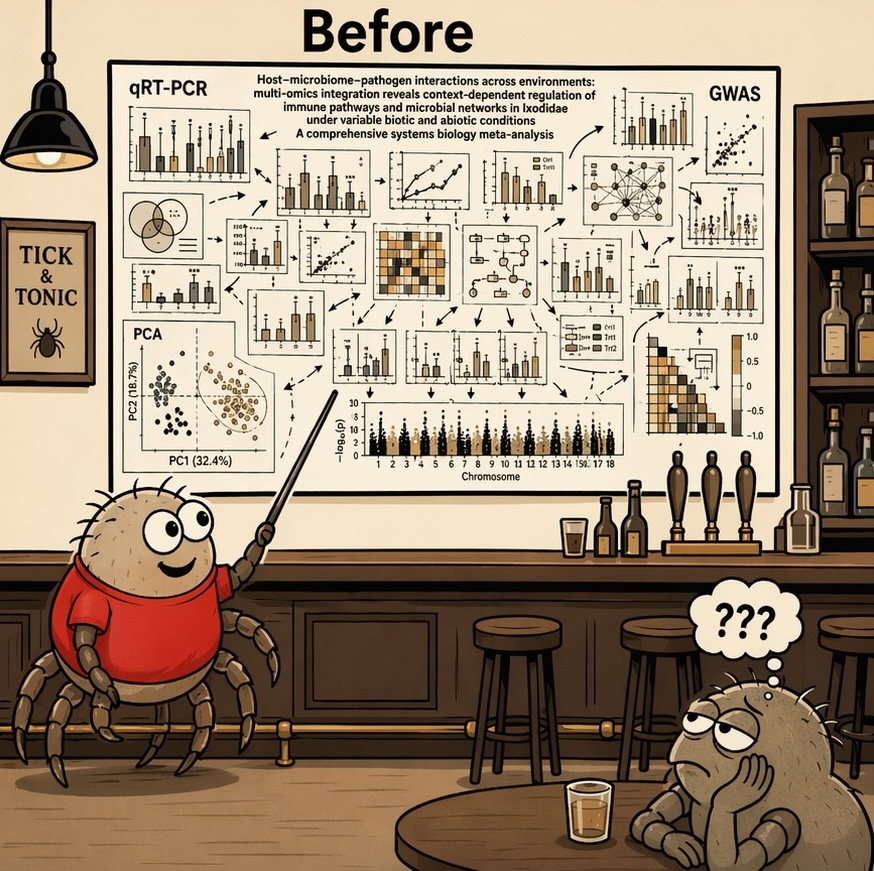
I just published: Leave the red shirt out: Scientists, stop complicating the story
Scientists are brilliant at finding details. We are less brilliant at knowing which details to shut up about.
https://t.co/LX2FbS4EUG
🚨Peer review is supposed to be thoughtful, rigorous, and carried out by experts who genuinely engage with the work. Lately, that’s not always what it feels like. We are being “ChatGPT-reviewed” not “peer-reviewed”.
Today, my group experienced this directly. What is frustrating is not just the review itself, but what it represents. This came from a highly respected journal.
We all know how difficult publishing already is. Adding layers of vague, artificial feedback that dictate how we should write, or even what experiments we should do, without even reading or understanding the work only makes things worse.
This is not about resisting new tools. It’s about responsibility. If we lose rigor and accountability in peer review, we risk weakening the foundation of scientific credibility.
We should not normalize this. It needs to be called out! 🚨
From the JSPP Award Ceremony held at #JSPP2026...
🎉Congratulations to all the PCP Best Poster Award winners!
✨All emerging talents in plant science🌱from the JSPP and TSPB (Taiwan society of plant biologists) communities.
✨All the best as you move forward!
@JSPP_news
I made a Claude Code skill that generates conference posters 🛠️
Instead of a static PDF, it outputs a single HTML file — drag to resize columns, swap sections, adjust fonts, then give your layout back to Claude. 🔁
🔗 Skill 👉 https://t.co/KhYV8anbxL
"Here, there are no tycoons or academic cliques. Every manuscript starts with blind review in the dry latrine, gets promoted to the septic tank after meeting the rating standards, and finally condenses into structured stone. "
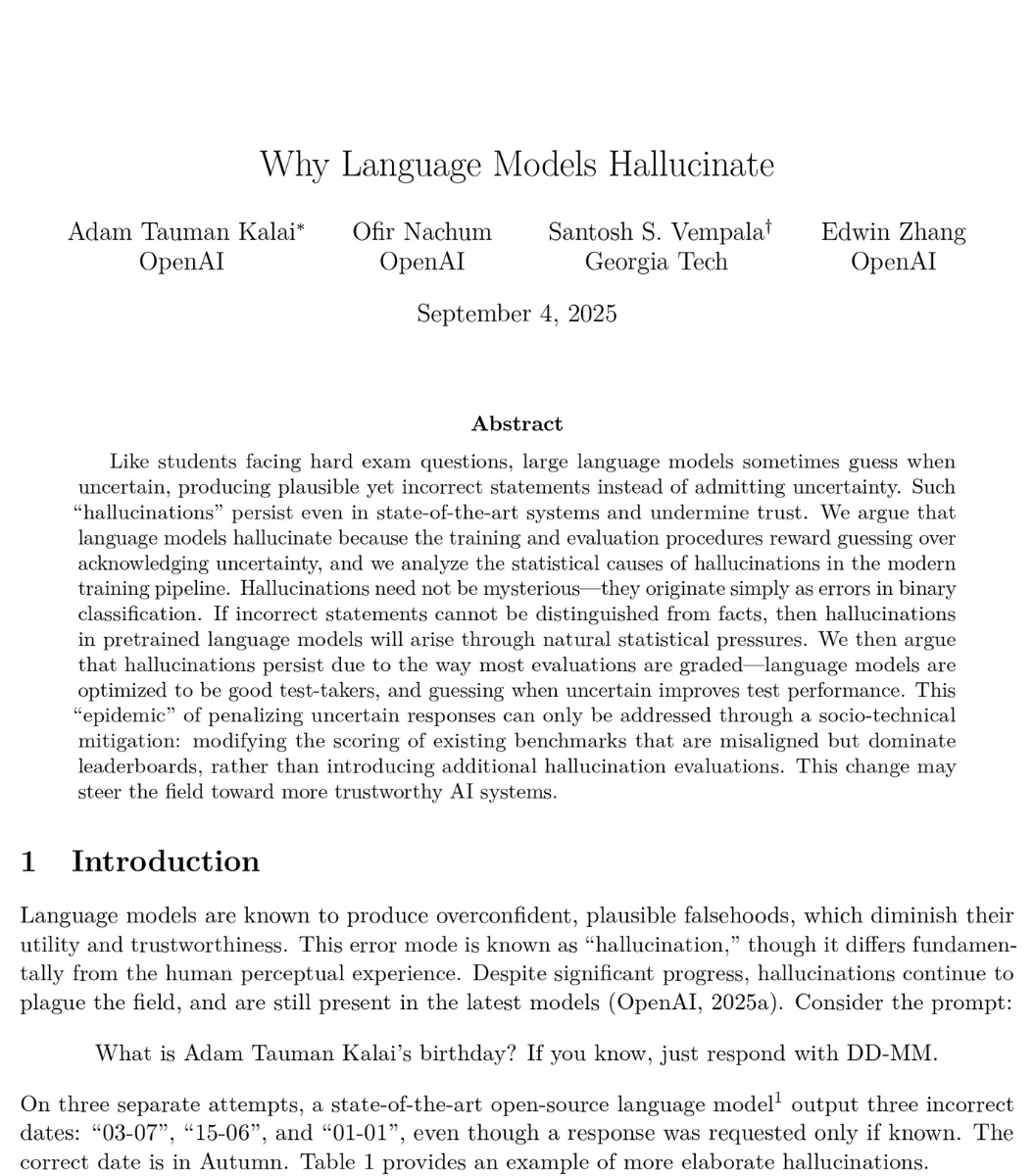
🚨BREAKING: OpenAI published a paper proving that ChatGPT will always make things up.
Not sometimes. Not until the next update. Always. They proved it with math.
Even with perfect training data and unlimited computing power, AI models will still confidently tell you things that are completely false. This isn't a bug they're working on. It's baked into how these systems work at a fundamental level.
And their own numbers are brutal. OpenAI's o1 reasoning model hallucinates 16% of the time. Their newer o3 model? 33%. Their newest o4-mini? 48%. Nearly half of what their most recent model tells you could be fabricated. The "smarter" models are actually getting worse at telling the truth.
Here's why it can't be fixed. Language models work by predicting the next word based on probability. When they hit something uncertain, they don't pause. They don't flag it. They guess. And they guess with complete confidence, because that's exactly what they were trained to do.
The researchers looked at the 10 biggest AI benchmarks used to measure how good these models are. 9 out of 10 give the same score for saying "I don't know" as for giving a completely wrong answer: zero points. The entire testing system literally punishes honesty and rewards guessing.
So the AI learned the optimal strategy: always guess. Never admit uncertainty. Sound confident even when you're making it up.
OpenAI's proposed fix? Have ChatGPT say "I don't know" when it's unsure. Their own math shows this would mean roughly 30% of your questions get no answer. Imagine asking ChatGPT something three times out of ten and getting "I'm not confident enough to respond." Users would leave overnight. So the fix exists, but it would kill the product.
This isn't just OpenAI's problem. DeepMind and Tsinghua University independently reached the same conclusion. Three of the world's top AI labs, working separately, all agree: this is permanent.
Every time ChatGPT gives you an answer, ask yourself: is this real, or is it just a confident guess?