Centre for Fusion, Space and Astrophysics, Warwick
@WarwickCFSA
Our research focuses on plasma physics applied to the grand challenges of magnetic and inertial fusion power, space physics, solar physics, and astrophysics.
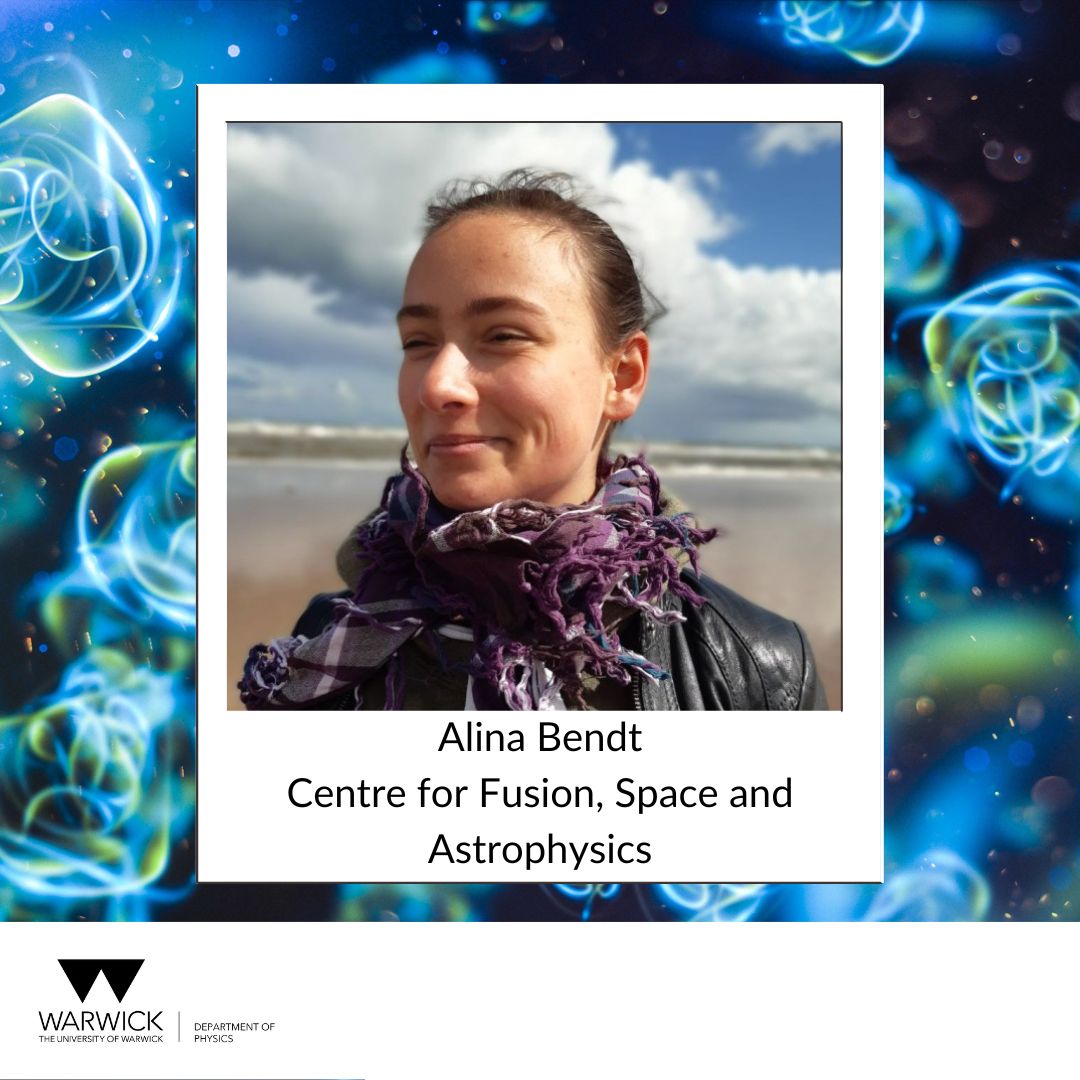
In this paper CFSA PhD student Alina Bendt uses Solar Orbiter observations to characterise turbulent magnetic field fluctuations https://t.co/mGL7uvGbfX via @AAS_Publishing
Congratulations to Alina Bendt for winning the Postgraduates who teach category at the Warwick Awards for Teaching Excellence🥳
Alina's a 3rd year student in @WarwickCFSA studying Solar Wind Turbulence from In-Situ Observations with Solar Orbiter👉https://t.co/kOmEDrrP8v
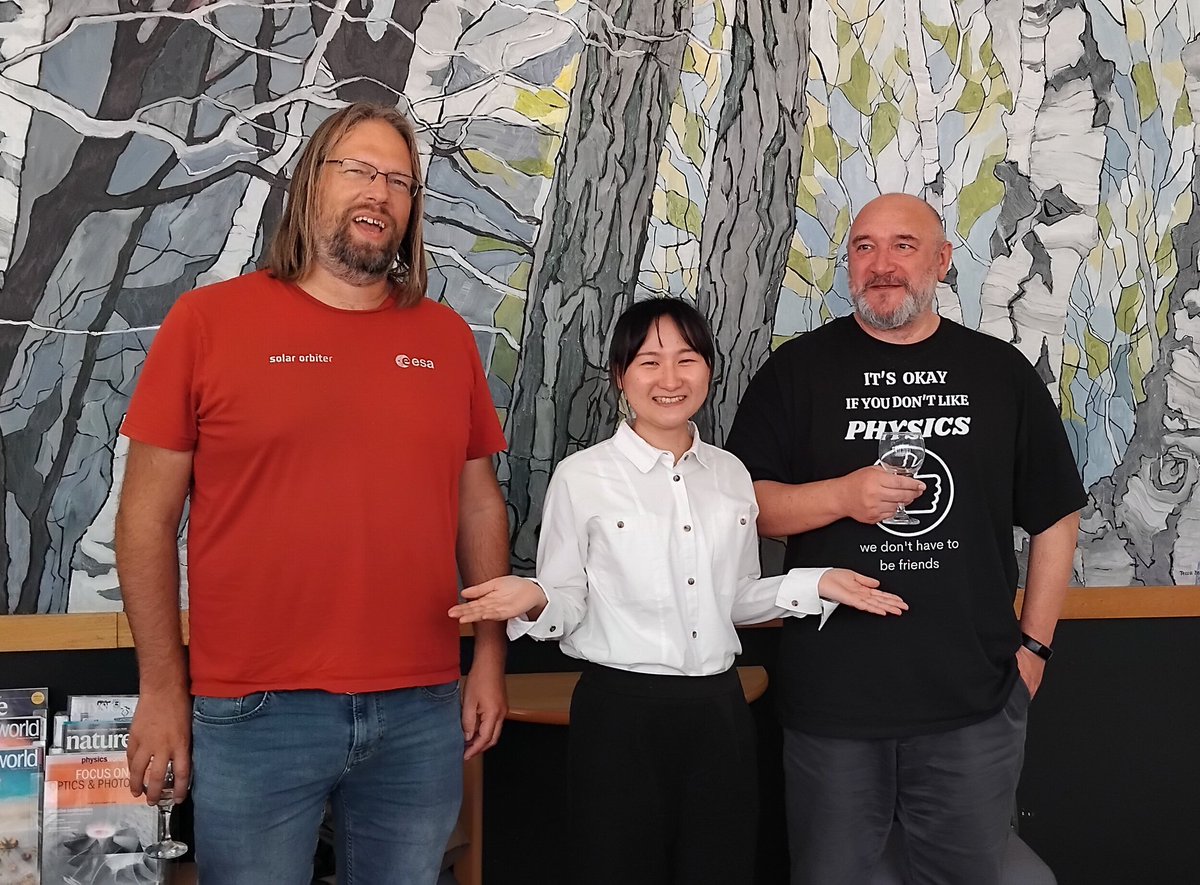
Congrats to Sihui Zhong, who passed her viva yesterday, pictured here with supervisor Valery Nakariakov and external examiner Tom Van Doorsselaere. Sihui's thesis studied waves in coronal loops 🌞
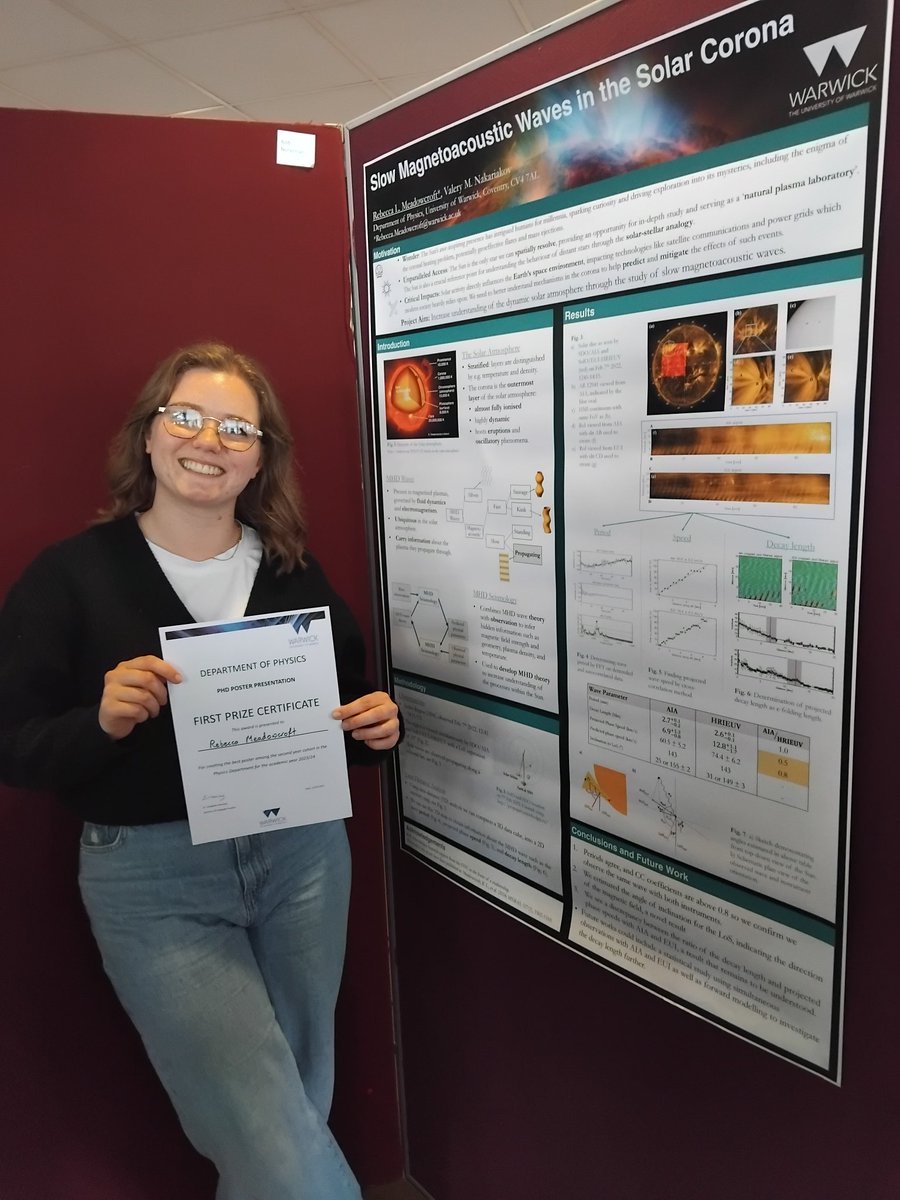
Congrats to CFSA PhD student, Rebecca Meadowcroft, who won yesterday's @WarwickPhysics PhD poster competition, with her work looking at waves in the solar corona.
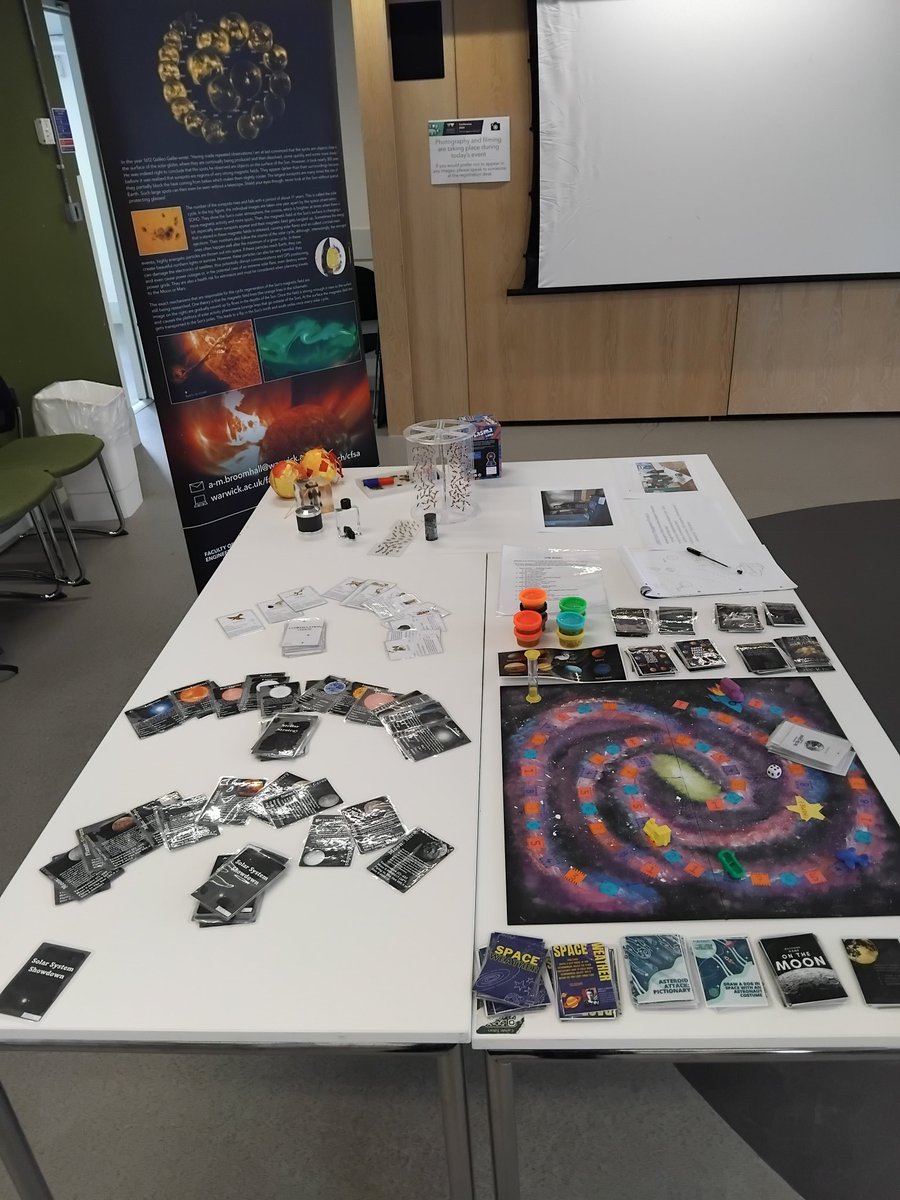
Last summer, 2 UG Physics students (Gillian and Gabbie) designed some amazing games for us. Over the last 8 months, we have taken them to 3 schools, 2 Brownie groups, 1 Scout group and 1 Guide group (over 200 kids). Today, I am showing them off at the @warwickengages conference.
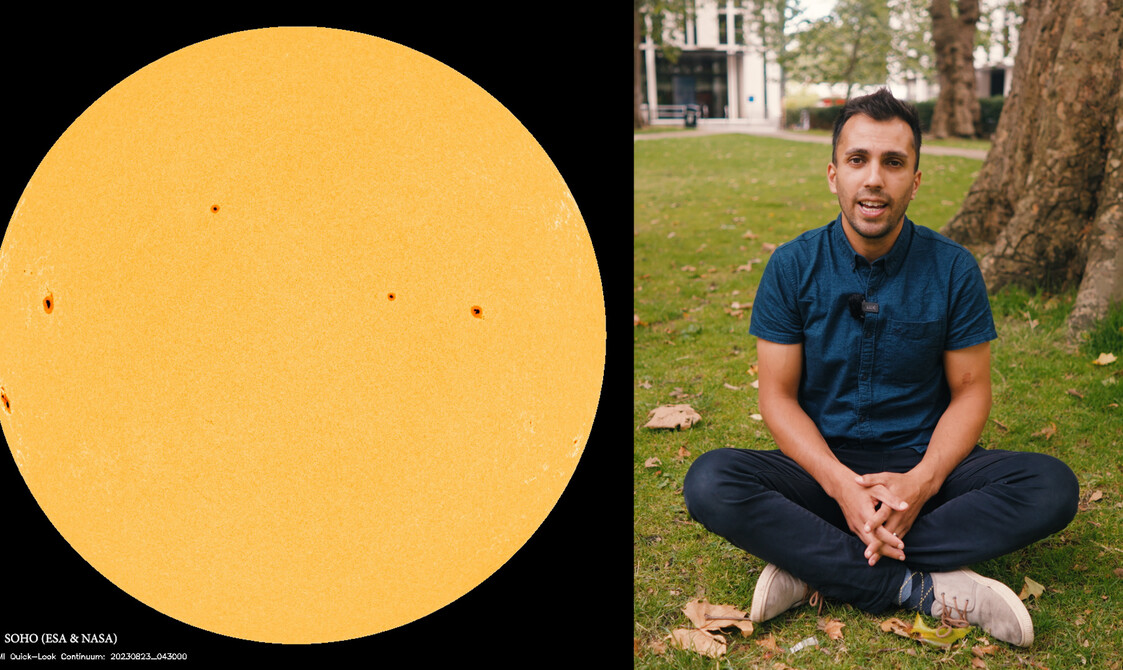
As part of #BritishScienceWeek we are watching Dr Ravindra Desai @WarwickCFSA taking us on a journey to the sun in collaboration with @ThePlaceLondon
Find out more👉https://t.co/cqHdSvOGgz
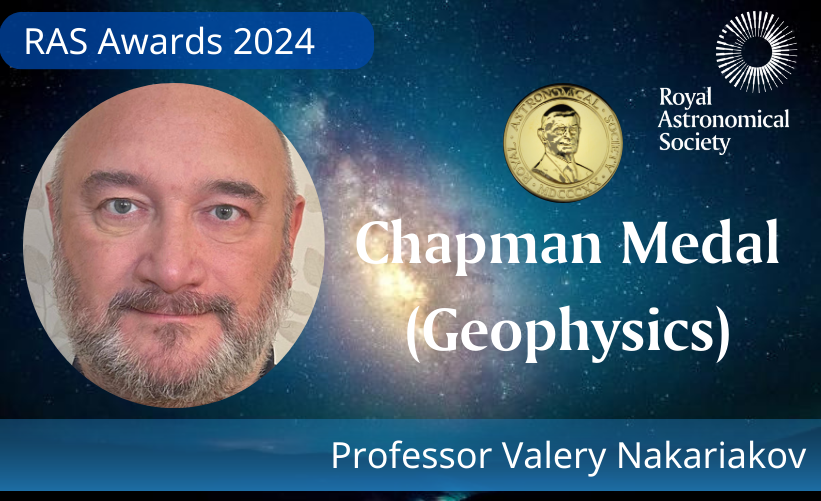
The Chapman Medal for #Geophysics has been awarded to Professor Valery Nakariakov of @uniofwarwick.
It recognises investigations of outstanding merit in the science of the Sun, space and planetary environments or solar-terrestrial physics.
👏👏
#RASawards
In this new paper, Bogdan Hnat used four spacecraft to characterize the magnetic topology inside a reconnection region, providing insights into how reconnection works on electron scales, which is important as such events impact the near-Earth environment https://t.co/ZOlhwaK3wd
Congratulations to Professor Sandra Chapman, Director @WarwickCFSA 👏
Find out more about Sandra's work and how she feels receiving this prestigious award👇
https://t.co/2i6Uaieoiv
Check out this new paper led by CFSA PhD student Xueyi Wang, which uses wavelets to determine the power at different frequencies in Parker Solar Probe data, highlighting how turbulence in the solar wind varies with distance from the Sun. https://t.co/AFBtCyWJDl
More new research involving CFSA's Richard Dendy, which uses AI and ICE to infer the spatial and velocity distributions of fusion-born alpha particles. This provides useful info on the reactivity and energy budget at different locations within a plasma.
https://t.co/XF4TAQVs3D
This new paper by CFSA's Richard Dendy, which could impact the design of future fusion devices, demonstrates that energy can be transferred between particles injected into the system to induce fusion and left-over products of previous fusion reactions. https://t.co/1IVdnNBkvc
CFSA's Ravi Desai is leading a new ESA funded mission concept that aims to understand the impact of space weather on Earth's upper atmosphere. Very exciting! @WarwickCSDA Find out more here: https://t.co/SwEWrPrBuG
Check out this new work, led by Sihui Zhong, a CFSA PhD student, @WarwickPhysics. Their observations of waves in the solar corona may explain why it is so unexpectedly hot.
New observations of the mechanisms that heat the Sun’s corona, known to be more than two orders of magnitude hotter than the surface, are presented in @NatureComms. The findings may improve our understanding of what makes the Sun’s corona so hot. https://t.co/AQK0PMDvP1
We love hosting schools so students can see what it's like to be an undergraduate student & study #Physics at #university. Our #outreach officer Ally hosted a group who spent the day doing real-life experiments & chatting to our academics.
Find out more👉https://t.co/vAn7awoBon
Check out this new paper from CFSA's Dmitrii Kolotkov and Valery Nakariakov, in collaboration with @arreguitxoria. This paper came about after @arreguitxoria's visit in Nov. 2022 and uses Bayesian evidence to consider different models for coronal waves. https://t.co/m3SH3CmcMJ