10 Hard Truths Every Man Must Remember:
1. Nice men are used.
2. Shy men are ignored.
3. Weak men are abused.
4. Soft men are pushed around.
5. Patient men are exploited.
6. Ruthless men are respected.
7. Honest men are deceived.
8. Loyal men are taken for granted.
9. Emotional men are mocked.
10. Quiet men are overlooked.
Remember this—and act accordingly.
🥗 Non-Meat Protein Sources You Should Know
You don’t need meat to get solid protein.
These plant foods pack surprising amounts:
🫘 Lentils — ~18g per cup cooked
🌱 Chickpeas — ~14–15g per cup cooked
🫘 Black Beans — ~15g per cup cooked
🌾 Quinoa — ~8g per cup cooked
🫛 Peas — ~8–9g per cup cooked
🎃 Pumpkin Seeds — ~7g per oz
🌻 Sunflower Seeds — ~6g per oz
🥜 Cashews — ~5g per oz
🌰 Walnuts — ~4g per oz
🖤 Chia Seeds — ~4–5g per 2 tbsp
🍁 Hemp Seeds — ~9–10g per 3 tbsp
🥬 Spinach (cooked) — ~5g per cup
🍄 Mushrooms — ~2–3g per cup
🍠 Sweet Potatoes — ~3–4g per medium
🥑 Avocado — ~2–3g per ½ avocado
🌱 Plant protein is more powerful than many people think.
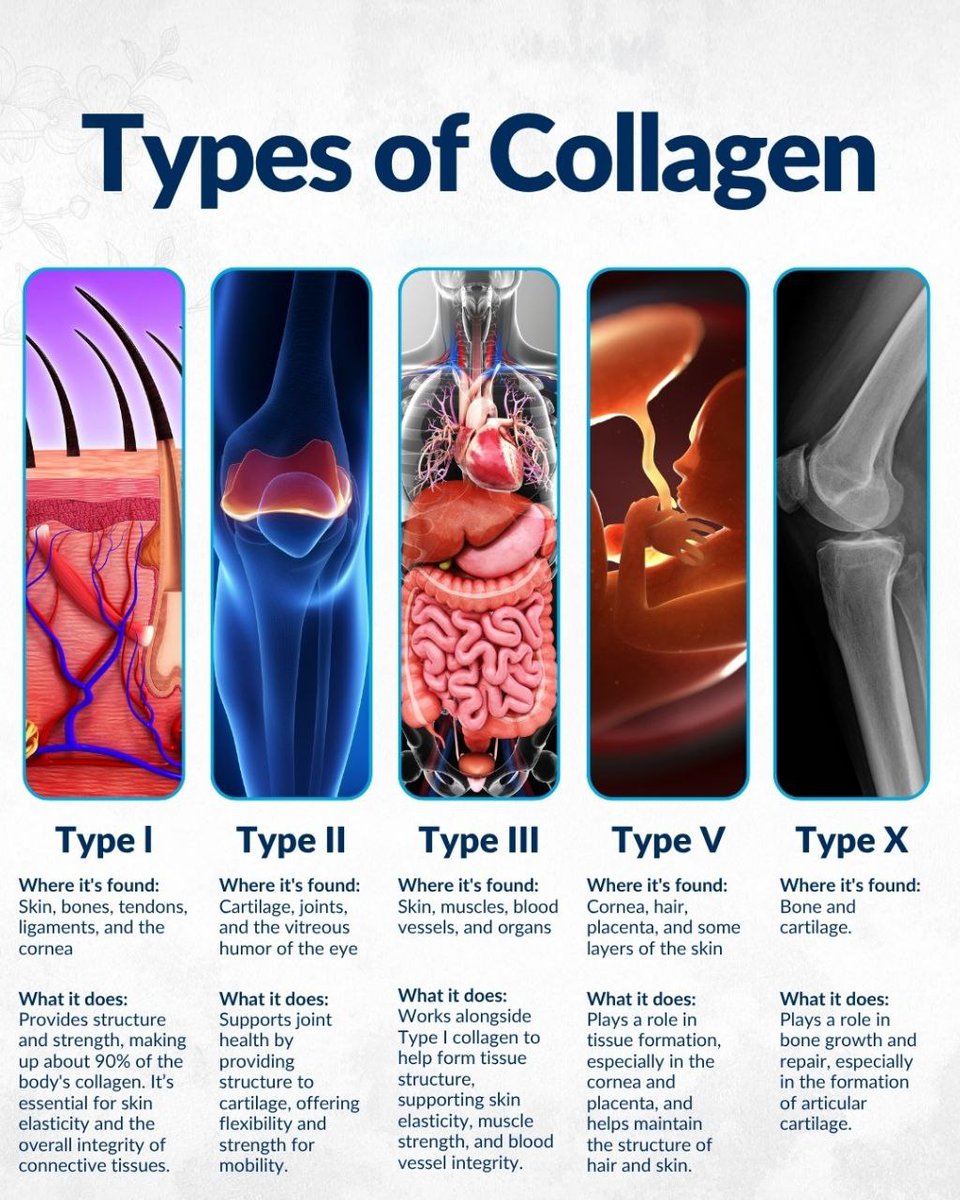
Collagen is the glue that holds your body together. As the most abundant protein in your body, it plays a vital role in maintaining the health and structure of your skin, joints, bones, and connective tissues.
But not all collagen is created equal. Different types have unique functions, each contributing to specific aspects of your body’s structure. Let’s explore the roles of Type I, II, III, IV, and V collagen.
Each type contributes uniquely to your body’s strength, flexibility, and repair processes. Understanding these types can help you optimize your health and target specific needs, from youthful skin to stronger joints and beyond.
⭐ Here’s a quick guide to the five main types and what each one actually does inside your body.
Want to boost your skin, joints, and recovery the natural way?
Sugar in a baby's brain is called ADHD. Sugar in an adults brain is called dementia. Sugar in your eyes is called glaucoma. Sugar in your teeth is called cavities. Sugar in your sleep is called insomnia. Sugar in your blood is called diabetes. Excess sugar in your body is called cancer
A 25-year study of over 100,000 people found that sitting for more than 8 hours a day increases all-cause mortality risk by 60%... even in people who exercise regularly.
Exercise does not cancel out prolonged sitting. They are independent variables.
Every 60 minutes, stand up. Walk for 5 minutes. Do 10 bodyweight squats.
These movement breaks lower blood glucose, reduce cortisol, and improve circulation in ways that a single gym session simply cannot replicate.
Move often. Not just hard.
Millions of people struggle with depression.
In many cases, the root cause is a simple nutrient deficiency.
Here are 5 key deficiencies that can silently trigger depression.
1/ Zinc… 🧵
WHEN TO TAKE YOUR SUPPLEMENTS FOR GUT HEALTH ⏰
🌙 Magnesium glycinate - 1 hr before bed
☀️ Vitamin D3 + K2 - with breakfast fat
💧 Electrolytes - first thing in the morning
🩸 Iron bisglycinate - empty stomach, 2 hrs from coffee
❤️ CoQ10 - with lunch
🛡️ Zinc - before bed, 2 hrs from iron
🍊 Vitamin C - with iron or meals
🦴 Calcium - dinner only, never with iron
🐟 Omega 3 - with your fattiest meal
🦠 Probiotics - first bite of breakfast
🔋 B Complex - breakfast, before noon
🥦 Vitamin K2 - with fat containing meals
✨ Collagen - morning with coffee or bone broth
🌿 Ashwagandha - before bed with food
🍄 Medicinal mushrooms - morning empty stomach
🧂 Trace minerals - morning water
🌾 Psyllium / fiber - 2 hrs away from all supplements
🍋 Bitters - 15 mins before meals
🍯 Digestive enzymes - first bite of meals
💊 L Glutamine - empty stomach, between meals
Consistency beats dosage.
Timing beats consistency.
Absorption beats everything.
Muscle loss with age is common, but much of that decline is driven by inactivity, not aging alone.
On average, we reach peak muscle mass somewhere between 20 and 30, then lose about 8% per decade after that. By the time many adults reach their 70s and 80s, they may have only 60–80% of the muscle mass they had at 30.
A big reason why is anabolic resistance. As we get older, muscle becomes less responsive to amino acids, one of the key signals for building and maintaining muscle.
This is where resistance training becomes non-negotiable. It's one of the main signals that tells muscle to grow. And just as importantly, it helps re-sensitize muscle to amino acids, so the body responds to protein more like it did when you were younger.
IF YOU WANT LOOK YOUNGER DO THIS;
1. Don’t smoke.
2. Eat a 90% whole food diet.
3. 10–20g collagen per day.
4. Vitamin C (200mg per day).
5. Avoid cooking with seed oils.
6. Cook with olive oil, butter, or tallow.
7. Swim in a lake, ocean, or salt water.
8. Lift weights 3–5x/week and sprint.
9. Walk 5–10K+ steps per day.
10. Sleep daily 8–9 hours.
11. No caffeine after 2pm
13. Cut out sugar & alcohol
Best foods for gut health:
-Kefir
-Bone broth
-Sauerkraut
-Colostrum
-Raw carrots
-Kimchi
-Cooked then refrigerated rice & potatoes
-Apple cider vinegar
-Yogurt
-Green bananas
-Ginger
-Papaya
-Aloe vera juice
What else?
Not all omega-3 supplements are created equal.
Most fish oil on the market is in ethyl ester form, which is cheaper to produce after purification. But it's not found in nature and is less bioavailable.
What you want is triglyceride form omega-3s. This is the natural form found in fish, and it’s better absorbed by the body.
With ethyl esters, absorption is highly dependent on food. You need to take them with a fat-containing meal to absorb much at all. On an empty stomach, you may be absorbing very little.
Signs of too much stress:
1. You’re not a morning person
2. Poor sleep
3. High blood sugars
4. More belly fat
5. Heavy legs going up an incline
6. Inflammation
7. Loss of electrolytes
8. Salt cravings
9. Susceptibility to infections
10. Autoimmune diseases
11. Acne
12. Asthma
13. Allergies
14. Sinus problems
15. Sleep apnea
16. Osteoporosis
17. Acid reflux
18. Gastritis
19. Gallstones
What to do if you have too much stress:
1. Be around supportive people
2. Take vitamin B1 (nutritional yeast)
3. Consume high-potassium foods
4. Exercise or do physical work
5. Stop watching the news
6. Get on a low-carb diet