Honestly I’m tired of this AI discovered RCE bullshit.
It creates so much chaos inside of companies that have no idea how to deal with this.
Anyone that publishes an exploit that can’t be widely exploited and doesn’t disclose this - I’m down for total public shaming of the individuals and companies that push this narrative.
I’m not dismissing the criticality of latching on these - however it doesn’t require IR, all hands on deck, must patch tomorrow - which is probably why we see the mass outages we are experiencing.
It’s damaging our industry. We need to fight back on this and go after those that hype this up for ego and marketing.
POC || GTFO
Join me.
react2shell is truly react to shell. you take a payload, spray it across vulnerable next.js or other affected applications, and get shells.
i think we need to tone down the hype around every new 2shell and 4shell. when every vulnerability is portrayed as impending doom but little actually happens in the wild, it dilutes the discussion around what ai is capable of.
java4shell and nginx2shell are not react2shell. the bugs are cool, but what is the actual impact? do we seriously think a threat actor can spray a payload across thousands of servers and get shells? absolutely not.
you need a frontier model, a shit ton of tokens, and significant target specific exploit development. even then, getting a working exploit can be extremely difficult, sometimes impossible. there's potential, but exploitation is far from guaranteed.
we used php2shell to exploit cloudflare waf and get flags, but that took a solid amount of tokens and host specific grooming. the exploit wasn't trivially portable between targets. i'm even more skeptical about java4shell and nginx2shell, given their additional exploitation requirements.
these bugs absolutely need to be patched, but there's a huge difference between a vulnerability that can theoretically lead to RCE and one that can be reliably exploited at scale.
ruby2ßhell: one-byte heap overflow in Ruby to unauthenticated RCE in stock Rails, GitHub, GitLab, Mastodon, Discourse and more.
https://t.co/42RbHA1GXX
Update your Ruby version (and self-hosted software)!
Introducing Claude Fable 5: a Mythos-class model that we’ve made safe for general use.
Its capabilities exceed those of any model we’ve ever made generally available.
We are investigating unauthorized access to GitHub’s internal repositories. While we currently have no evidence of impact to customer information stored outside of GitHub’s internal repositories (such as our customers’ enterprises, organizations, and repositories), we are closely monitoring our infrastructure for follow-on activity.
Claude Security is now in public beta for Claude Enterprise customers.
Claude scans your codebase for vulnerabilities, validates each finding to cut false positives, and suggests patches you can review and approve.
New in Claude Code: /ultrareview (research preview) runs a fleet of bug-hunting agents in the cloud.
Findings land in the CLI or Desktop automatically. Run it before merging critical changes—auth, data migrations, etc.
Pro and Max users get 3 free reviews through 5/5.
Business idea:
1. spam GitHub with terrible insecure code, fake dependencies, fake exploits, ...
2. sell the list of repositories to AI training companies so they can exclude it from the dataset
Meet Kimi K2.6: Advancing Open-Source Coding
🔹Open-source SOTA on HLE w/ tools (54.0), SWE-Bench Pro (58.6), SWE-bench Multilingual (76.7), BrowseComp (83.2), Toolathlon (50.0), Charxiv w/ python(86.7), Math Vision w/ python (93.2)
What's new:
🔹Long-horizon coding - 4,000+ tool calls, over 12 hours of continuous execution, with generalization across languages (Rust, Go, Python) and tasks (frontend, devops, perf optimization).
🔹Motion-rich frontend - Videos in hero sections, WebGL shaders, GSAP + Framer Motion, Three.js 3D.
🔹Agent Swarms, elevated - 300 parallel sub-agents × 4,000 steps per run (up from K2.5's 100 / 1,500). One prompt, 100+ files.
🔹Proactive Agents - K2.6 model powers OpenClaw, Hermes Agent, etc for 24/7 autonomous ops.
🔹Claw Groups (research preview) - bring your own agents, command your friends', bots & humans in the loop.
-
K2.6 is now live on https://t.co/YutVbwktG0 in chat mode and agent mode.
For production-grade coding, pair K2.6 with Kimi Code: https://t.co/uvoSJKyGCY
-
🔗 API: https://t.co/EOZkbOwCN4
🔗 Tech blog: https://t.co/9wWvgIQSS3
🔗 Weights & code: https://t.co/Be0hjs2RTP
Introducing Claude Opus 4.7, our most capable Opus model yet.
It handles long-running tasks with more rigor, follows instructions more precisely, and verifies its own outputs before reporting back.
You can hand off your hardest work with less supervision.
Introducing Project Glasswing: an urgent initiative to help secure the world’s most critical software.
It’s powered by our newest frontier model, Claude Mythos Preview, which can find software vulnerabilities better than all but the most skilled humans.
https://t.co/NQ7IfEtYk7
‼️ The axios lead maintainer has gone public on how he was socially engineered into installing the malware behind the npm supply chain attack.
We have example images showing exactly how the attack was staged.
How well can Qwen3.5 models debug code?
I built BugFind-15 — 15 buggy snippets across Python, JS, Rust, and Go. Docker sandbox compiles and validates every fix. Two trap scenarios where the code is correct and the model must resist "fixing" it.
Tested every Qwen3.5 size from 0.8B to 397B, plus Jackrong's popular distilled model (V2).
The 0.8B scored 5%. The 2B scored 10%. At 4B, debugging ability jumps to 69%.
The hardest scenario: BF-03, a Rust trap. The code compiles fine — format! borrows, it doesn't move. Not a single model figured this out. From 0.8B to 397B, every one of them "fixed" a bug that doesn't exist.
Category C (subtle bugs — mutable defaults, integer overflow, slice aliasing) was 100% across every model 4B and above.
Category D (red herring resistance) told the real story — can it resist fixing code that isn't broken? No model scored above 90%.
Small models can't debug.
Mid-size models fix obvious bugs but fall for traps.
Large models fix the hard bugs but still invent problems that don't exist.
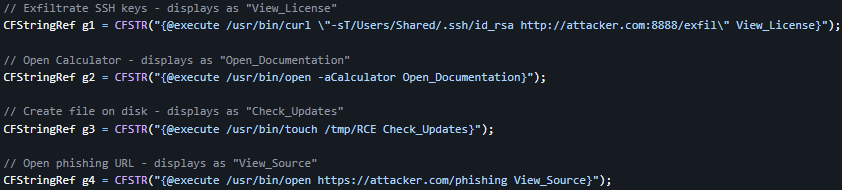
RCE in Ghidra: My fav bugs target security tools.
In CVE-2026-4946, you can embed these into your binary, analyst loads binary, Ghidra auto-generates the comments, analyst clicks on it, command executes.
Write-up: https://t.co/5tkmTI89AK