Donde Los Creadores Futuristas Nacen. El 16/12 te volamos la cabeza con mentorias de referentes en IA, Espacio, Robótica, Quantum, Nano & Biotech, VR y Web3.
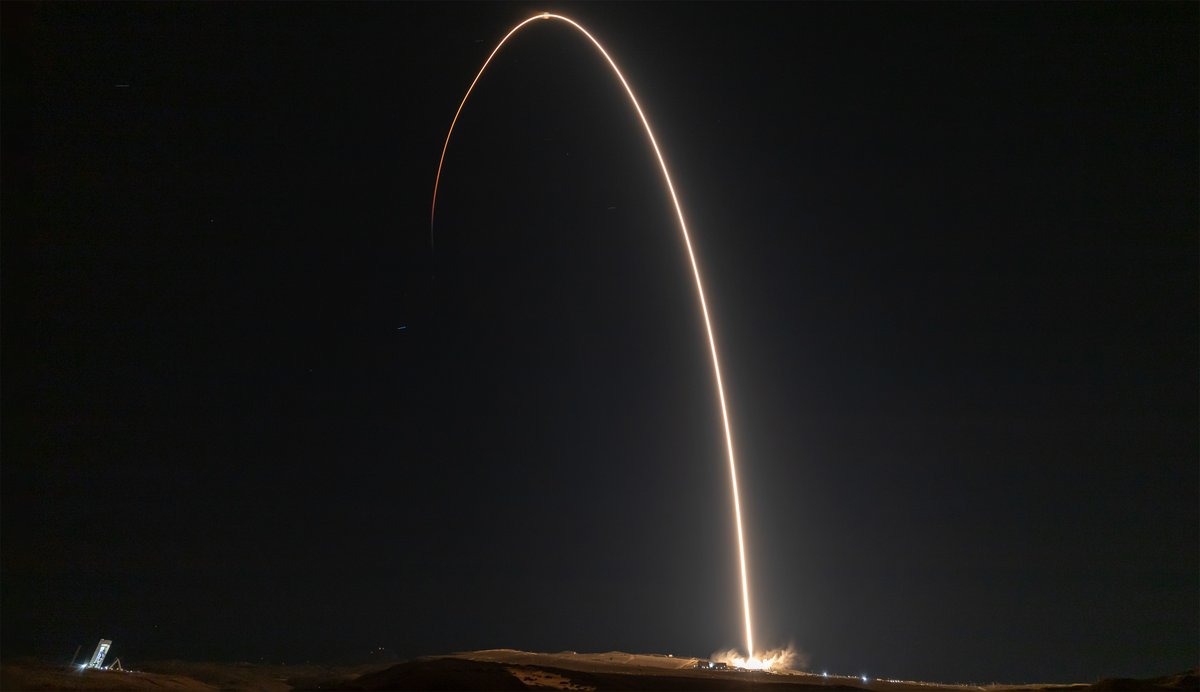
Falcon 9 launches the @NatReconOfc's NROL-126 mission and 20 Starlink satellites to orbit, completing our 100th successful launch from pad 4E in California
🤝 Nos complace anunciar nuestra alianza con @WeBoldSociety, una comunidad exclusiva para jóvenes comprometidos a crear un futuro abundante a través de la implementación de tecnologías emergentes.
Este 9 de diciembre comenzará la primera cohorte de 25 jóvenes con potencial de alto impacto (y muy pero muy manijas) en un programa de 12 semanas 100% virtual 🚀
🎯 El objetivo es acelerar su onboarding a tecnologías emergentes a través de clases y mentorías personalizadas con referentes de diversas industrias.
Para conocer más sobre ellos 👇
https://t.co/B9VzQFSPqe
Chat-GPT is scoring 90% better on medical diagnosis than Doctors who do not use AI. It’s time to end the stigma and embrace AI in healthcare. Patients deserve the best treatments, and doctors deserve the best tools to achieve that.
A ton of great progress made in AI and Robotics this week.
So I summarized everything announced by Microsoft, Figure, H Company, OpenAI, Perplexity, MIT, Arc Research, Mistral, and Google.
Here's everything you need to know and how to make sense out of it:
I had the privilege of touring Figure's Sunnyvale office yesterday, though calling it just an office would be a massive understatement. There's a whole lot more happening under that roof than you'd expect.
The first thing that struck me was how densely packed the space is. Around 140 employees work in an open, collaborative area with minimal partitions. It’s clear why they’re moving to a much larger facility to accommodate their growing team and scale up production. The new facility is going to be eight times larger.
Brett gave me a full tour, and the energy in the place was palpable. In the test area, I saw a mockup station that simulates a real BMW workstation where an F.02 robot was practicing a dexterous pick-and-place task, while another one, behind curtains, was using OpenAI’s model to handle everyday objects.
The production area was equally impressive, with four assembly stations where robots were in different stages of assembly. Brett mentioned they’re currently building around 2-4 robots per week.
What’s really remarkable is how many components are made and assembled on-site, from outer shells and wiring harnesses to control systems, actuator parts, fingers, and even the packs that house batteries and the computer. Dyno-testing, calibration, and system-integration testing all happen under one roof.
This level of integration requires a full team effort. Designers, software/AI engineers, mechanical and electrical engineers, and robot trainers all work together in harmony. As someone who comes from a software-only domain, I left in awe of the operational complexity required to build a working robot.
On the financial front, Brett confidently shared that they’ve got the cash burn under control. At their current rate, they could theoretically operate for 14 years on existing funding, though of course, that will change as manufacturing and operations scale.
I also got a sneak peek at their next-gen robot, F.03's design. It’s incredible to see how far the company has come in just 2.5 years, going from nothing to Figure 01, to F.02, and now developing F.03. If they continue at this pace, the next few years are going to be incredibly exciting.
Watching a humanoid robot walk around and perform tasks was nothing short of mind-blowing. The future felt a lot closer and more tangible from inside their walls. Huge thanks to @adcock_brett for the tour.
This 3D-printed robot can transform from a rover to a drone.
Aerospace engineer Michael Rechtin has created a robot that shifts from a tank-like rover to a quadcopter.
While Michael’s work is a hobby project, universities have been exploring similar designs—like the Morphbot, developed by researchers from CalTech, Northeastern University, and NASA's JPL.
Could this design have commercial potential?
Its adaptability makes it promising for search and rescue missions, where multi-functional vehicles excel in navigating rough, unpredictable terrain.
Desde @weboldsociety Vamos a impulsar a 25 Jóvenes muy pero muy manijas través de Mentores Cracks en Inteligencia Artificial, Robótica, Espacio, Nano & Biotech,VR/AR, Computación Cuántica y Blockchain.
Agenda una entrevista conmigo aquí:
https://t.co/Se8zb9rDMV
These next four years could see one of the most significant accelerations in Space, AI, Energy, biotech and robotics, just to name a few areas. Accelerations that would deliver a true “roaring 20’s” across almost all industries uplifting our economy and standards of living, creating true abundance.
Para convertirnos en una Humanidad Abundante necesitamos Impulsar a Jóvenes Bold para crearla.
Por eso nos comprometemos fuertemente a guiarlos en su primer paso para impactar a 1 Billón de humanos. Despegamos el 9/12 🚀
https://t.co/KFCA2vObJG