I want to introduce something simple today. ☕️
Not a product. Not a pitch.
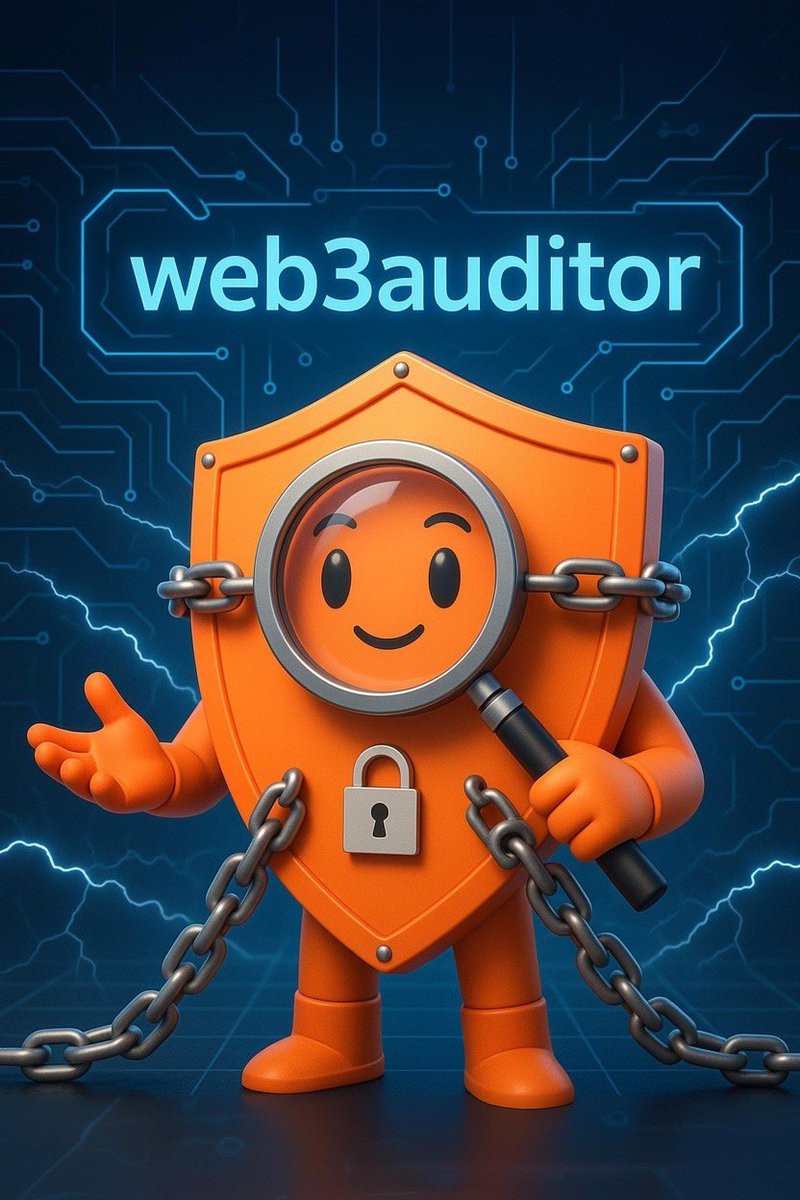
Just a visual that represents how I think about Web3 safety, audits, and learning.
I call it the Shield Sentinel🛡️
Access control is not just “who has admin.”
It is the map of who can change reality for everyone else.
That is why I’m learning to read permissions before I trust protocol behavior.
#Web3#defi
I’m learning to read Web3 security less as “where is the bug?” and more as “where can value move on a false assumption?”
That small shift changes everything: wallets, audits, bridges, governance, and even how beginners should understand risk.
#Web3#Defi
This is a strong signal for Ethereum security funding.
What I like here is that it doesn’t just reward visibility, it gives allocation power to badgeholders already close to the security ecosystem.
Security funding works better when capital flows through people who understand what actually reduces risk.
This is where the audit lens has to widen.
The contract can be reviewed, but the asset still inherits the chain’s assumptions: finality, governance, validator concentration, upgrade control, outage history, and bridge/dependency exposure.
“Why this network?” becomes a risk question, not a branding choice.
April 2026 changed how I read Web3 security.
February 2025 already showed that a system can fail with valid signatures if the signer is shown the wrong reality.
April repeated the same lesson across bridges, governance, and collateral assumptions.
I’m starting to think the most dangerous failures now are not always code bugs.
They’re verification failures.
@OpenZeppelin@trailofbits@CertiK
#Web3 #Web3Security #DeFi
Quick 2026 reality check: OWASP still shows access control and business logic failures dominating because teams keep treating smart-contract state like it can forgive anything. Every unchecked upgrade or oracle feed is a quiet accident waiting for the right trigger.
The Shield Sentinel was built for exactly this, protection without the hype, scrutiny that actually helps.
Builders, publish your key invariants publicly.
Newbies, never sign what you haven’t double-checked.
This is the clarity that sticks. 🛡️
#Web3Security #SmartContract #DeFi
New for financial services: ready-to-run Claude agent templates for building pitches, conducting valuation reviews, closing the books at month-end, and more.
Install them as plugins in Cowork and Claude Code, or use our cookbooks to run them in production as Managed Agents.
Quick 2026 reality check: OWASP still shows access control and business logic failures dominating because teams keep treating smart-contract state like it can forgive anything. Every unchecked upgrade or oracle feed is a quiet accident waiting for the right trigger.
The Shield Sentinel was built for exactly this, protection without the hype, scrutiny that actually helps.
Builders, publish your key invariants publicly.
Newbies, never sign what you haven’t double-checked.
This is the clarity that sticks. 🛡️
#Web3Security #SmartContract #DeFi
You nailed it, those senior tranches protect against normal borrower stuff, but they do nothing when the actual smart contract or oracle breaks. That’s the business-logic failure OWASP ranks #2 for a reason, and we saw it play out again in April. The Sentinel’s open-hand approach is simple: audit the invariants first, then add the protections. Keeps things clear for everyone. 🛡️
April’s numbers are brutal, over $600M lost across 20+ exploits, and attackers are now hitting bridges, admin keys, and RPC nodes instead of just code bugs. That’s exactly why OWASP still has access control as the #1 issue in 2026. The Shield Sentinel’s whole point is spotting those preventable gaps before they bite. Builders, lock down your infrastructure like it’s a single point of failure. Newbies, verify everything before you sign. 🛡️
@SkylerAAmos@Rainmaker1973 If you had come to life as early as the time they were making decisions like this, maybe it would have been a suggestion and very valid one.