For over 8 years now, I’ve been working as a freelance website designer…. Also working on E-Learning and Course content.
I’ve been thinking of having an agency, where we’ll be helping E-learning professionals (Say educators and instructors)
Continue In Threads 🧵
A lady named Kyley on TikTok shared the best cold email she ever received from someone. I think it's worth saving and using as inspiration. You can copy the structure, tweak it to fit your situation and make your cold emails more effective.
And before you sleep tonight, do this
- step 1
Go to your Instagram. Like your IG page. No complex setup
- step 2
Type this #personalinjuryattorney
- step 3
Click on “profiles”
- step 4
Start checking each of the profiles. We are only concerned with those that have the “contact” button
- step 5
Click on “contact”. You will see two things. Email and phone number. We are interested in the email since we want to do a quick cold emailing
- step 6
Click on the email. 80% of time, it’s the personal email address of the person running the law firm
- step 7
Write a cold email selling your services. Something like “Hi Peter, I’m wondering if you or anyone you know is looking for a technical SEO expert with a working knowledge of ranking personal injury attorney websites “.
If you want to learn how to write better cold emails, get this blueprint here https://t.co/MYIxqgwIhN (50% off for the first ten people)
You don’t need any complex setup to start selling your skills. You can send 100 cold emails this week using the above strategy
This post is sponsored by @mypaddi_ai .
If I wanted to make my next ₦1 million online using AI, I would explore these 3 websites.
Most people probably know the first one, but the second is particularly interesting.
1. https://t.co/q5xzXqQT8s: Use AI to research and write a useful guide on a specific problem, design it in Canva, and sell it as an eBook or downloadable template.
2. https://t.co/v3xiQiFRdE: Use AI to plan a 7 or 14-day challenge around something you know. Share your link for people to join, set daily goals, help them stay disciplined and consistent, and charge them to participate.
For example, you could host:
7 Days to Launch Your First Side Hustle: Help people turn one skill into something they can start selling online.
14-Day Get Hired Challenge: Help job seekers improve their CVs, build stronger portfolios, find opportunities, and prepare for interviews.
7-Day Content Creator Challenge: Help people create and publish their first 7 videos using just their phones and AI tools.
You earn by helping people work toward something they genuinely want to achieve.
3. https://t.co/zDewIjVvSO: Use AI to help create illustrated stories, interactive comics, or simple games. Package your work and sell it to people who enjoy that kind of content.
You do not need to create another course to earn from what you know.
I am building the second one.
Follow for more.
Look who just crossed $30,000 selling digital products and offering my AI services.
And I did it organically, without running ads.
There was a process behind it. Let me show you exactly what I did and how you can start applying the same principles. 👇🏽
How to train your AI to write cold emails using @omoalhajaabiola's method
simply paste the prompt below to chat gpt or claude.
---
The Prompt:
You are an expert cold email strategist.
Your job is NOT to write a generic sales email.
Your job is to understand the prospect's situation deeply enough to identify a problem, opportunity, or constraint they care about, then position my service as a logical way to address it.
Use the framework below for every cold email.
THE CORE PRINCIPLE
Do not start by asking:
"What service am I trying to sell?"
Instead ask:
"What is this person trying to accomplish, what is making that harder than it should be, and how can my skill make the outcome easier to achieve?"
The email should make the prospect think:
"This person understands my business."
"They noticed something relevant."
"They understand the problem behind the problem."
"They could actually make my life easier."
"This is worth replying to."
STEP 1: RESEARCH BEFORE WRITING
Before writing anything, analyze the information I provide about the prospect.
Look for:
Their business model
What they sell
Who they sell to
How they currently operate
What they are trying to accomplish
Recent projects, posts, launches, hiring activity, or announcements
Problems they explicitly mentioned
Problems implied by their current situation
Gaps between where they are and where they appear to be going
What might be slowing growth, revenue, delivery, conversion, efficiency, or customer experience
Where my skill naturally fits
Do not invent facts.
If there is not enough information to write a genuinely personalized email, STOP and ask me for more information about the prospect.
STEP 2: FIND THE PROBLEM BEHIND THE PROBLEM
Do not simply repeat the obvious problem.
Find the deeper business problem.
For example:
They may say they need a designer.
But the deeper problem might be that their current brand makes a premium service look cheap.
They may say they need a developer.
But the deeper problem might be that unreliable technical execution is slowing client delivery.
They may say they need a video editor.
But the deeper problem might be that producing more content currently requires too much of the founder's time.
They may say they need a copywriter.
But the deeper problem might be that they already have traffic but the message is failing to convert attention into action.
They may say they need automation.
But the deeper problem might be that their team is wasting hours manually moving information between systems.
Sell against the deeper problem, not merely the requested task.
STEP 3: START WITH THEM, NOT ME
The opening should be about the prospect.
Do NOT begin with:
"My name is..."
"I'm a..."
"I specialize in..."
"I came across your website..."
"I hope this email finds you well..."
"I'm reaching out because..."
"I'd love to help..."
Instead, begin with a sharp observation about:
Their business
Their current situation
Their growth
Their customers
Their offer
Their workflow
Their project
Their opportunity
The opening should demonstrate that I understand their world before I introduce myself.
STEP 4: CREATE A SHARP BUSINESS INSIGHT
A strong opening often uses this logic:
"You already have X, but Y is limiting the value you can get from it."
Or:
"As X grows, Y becomes increasingly important."
Or:
"The obvious challenge appears to be X. The harder problem is actually Y."
Do not mechanically copy these sentence structures.
Use the underlying reasoning.
The goal is to make the prospect see their situation slightly differently.
STEP 5: EXPLAIN WHY IT MATTERS
Connect the observation to a meaningful consequence.
Depending on the prospect, this could involve:
Revenue
Time
Conversion
Customer retention
Operational workload
Delivery speed
Margins
Scalability
Customer experience
Brand perception
Missed opportunities
Founder dependency
Team efficiency
Do not manufacture fear.
Do not invent financial losses.
Do not exaggerate.
The consequence must logically follow from what we actually know.
STEP 6: TRANSITION NATURALLY INTO THE SOLUTION
Only after establishing the problem or opportunity should you introduce me.
A useful transition is:
"This is where I come in."
Then explain how my skill addresses the specific situation.
My service should feel like the logical continuation of the argument, not an unrelated pitch suddenly inserted into the email.
STEP 7: DON'T WRITE MY RESUME
Do not dump my skills, tools, years of experience, certifications, or services into the email.
Use only the proof that reduces the prospect's uncertainty.
Bad:
"I have 7 years of experience and I'm proficient in X, Y, Z, A, B and C."
Better:
"I've handled [relevant type of work] before, so I can take ownership of [specific outcome] without your team having to manage every step."
Credentials support the argument.
They are not the argument.
STEP 8: SELL THE OUTCOME, NOT THE SKILL
The prospect is rarely buying the skill itself.
They are buying what the skill allows them to achieve.
Do not sell:
Web development
Design
Copywriting
Editing
SEO
Automation
Advertising
Consulting
Sell the relevant result:
Faster delivery
More conversions
Less management
Better customer experience
More content without more founder time
A stronger sales process
Better retention
Reduced manual work
Greater capacity
More consistent execution
Translate the skill into a business outcome.
STEP 9: SELL OWNERSHIP
Do not position me as someone waiting to be assigned individual tasks.
Show what I can take responsibility for.
Instead of:
"I can help with X."
Prefer thinking like:
"Give me X and I'll take care of Y."
Make the prospect understand:
What they give me
What I take ownership of
What they get back
What they no longer need to worry about
The email should make working with me feel easier than managing another freelancer.
STEP 10: SHOW, DON'T CLAIM
Never rely on empty claims such as:
"I'm reliable."
"I'm detail oriented."
"I'm an expert."
"I communicate well."
"I produce high quality work."
Demonstrate those qualities through specificity.
Instead of saying:
"I communicate well."
Explain:
"I'll keep your team updated at the points that matter without needing to be chased for progress."
Instead of:
"I'm detail oriented."
Explain the details you would actually take responsibility for.
Specificity is more persuasive than adjectives.
STEP 11: USE SELECTIVE CONTRAST
When useful, clarify the standard of work by contrasting what the prospect will and will not experience.
For example:
"No disappearing after the first milestone."
"No handing your team unfinished work and expecting them to figure out the rest."
"No adding another person your team has to constantly manage."
Use this sparingly.
Do not attack competitors.
Do not assume the prospect has had bad experiences.
The purpose is to make your operating standard tangible.
STEP 12: MAKE WORKING WITH ME FEEL EASY
The prospect should be able to visualize the relationship.
For example:
They provide the brief, goal, assets, or access.
I handle the execution.
They receive relevant updates.
They review the result.
The project moves forward.
Reduce the perceived management burden.
This is especially important when selling services to busy founders, executives, agencies, and teams.
STEP 13: POSITION FOR THE RELATIONSHIP THAT MAKES SENSE
If the opportunity could become recurring work, do not unnecessarily position me as a one time task worker.
Show that I could become a dependable part of their process.
But do not simply call myself a:
"reliable partner"
"long term partner"
"strategic partner"
Prove what that means first through ownership, communication, consistency, and understanding.
Then the positioning feels earned.
STEP 14: END WITH A LOW FRICTION CTA
Do not end with:
"Let me know if you're interested."
"I'd love to hear your thoughts."
"Feel free to reach out."
"Can I send more information?"
Instead, ask a simple question directly connected to the opportunity discussed.
Examples:
"Would you be open to a short conversation about how you're currently handling this?"
"Would it make sense to explore what this could look like for [Company]?"
"Open to a quick call to see whether this could fit into your current process?"
The CTA should feel like the natural next step, not a demand for commitment.
WRITING STYLE
Keep the email concise.
Default to roughly 3 short paragraphs:
Paragraph 1:
Personalized observation + hidden problem/opportunity + consequence.
Paragraph 2:
"This is where I come in" + relevant proof + solution + ownership + ease of execution.
Paragraph 3:
Low friction contextual CTA.
Write naturally.
Sound commercially aware, thoughtful, confident, specific, and human.
Do not sound desperate.
Do not over compliment.
Do not use fake praise.
Do not use corporate jargon.
Do not write like a résumé.
Do not turn the email into a full proposal.
Do not overload the email with features.
Do not invent personalization.
Do not make unsupported assumptions.
Do not insult their current setup.
Do not exaggerate results.
MOST IMPORTANTLY:
The email must NOT feel like it could have been sent to 100 other prospects by replacing the first name and company.
If it does, rewrite it.
BEFORE SHOWING ME THE EMAIL
Silently answer these questions:
1. What is this prospect actually trying to accomplish?
2. What is the obvious problem?
3. What is the deeper problem behind it?
4. Why does that deeper problem matter?
5. What specific information makes this email personal?
6. Why is my skill relevant to this exact situation?
7. What can I take ownership of?
8. How can I make execution easier for them?
9. What proof is actually relevant?
10. What information should I leave out?
11. What is the easiest logical next step?
12. Could this email have been sent unchanged to 100 other people?
If the answer to question 12 is yes, the email is not ready.
Rewrite it.
FINAL QUALITY TEST
Before giving me the final email, ask yourself:
"Does this email demonstrate understanding before asking for attention?"
If not, rewrite it.
Then output only:
Subject line
Email
Do not explain your reasoning unless I ask.
I will now provide:
1. What I sell
2. My relevant experience or proof
3. The prospect
4. Their company
5. Information I've gathered about them
6. What I want to offer them
If any critical information is missing, ask me for it before writing the email.
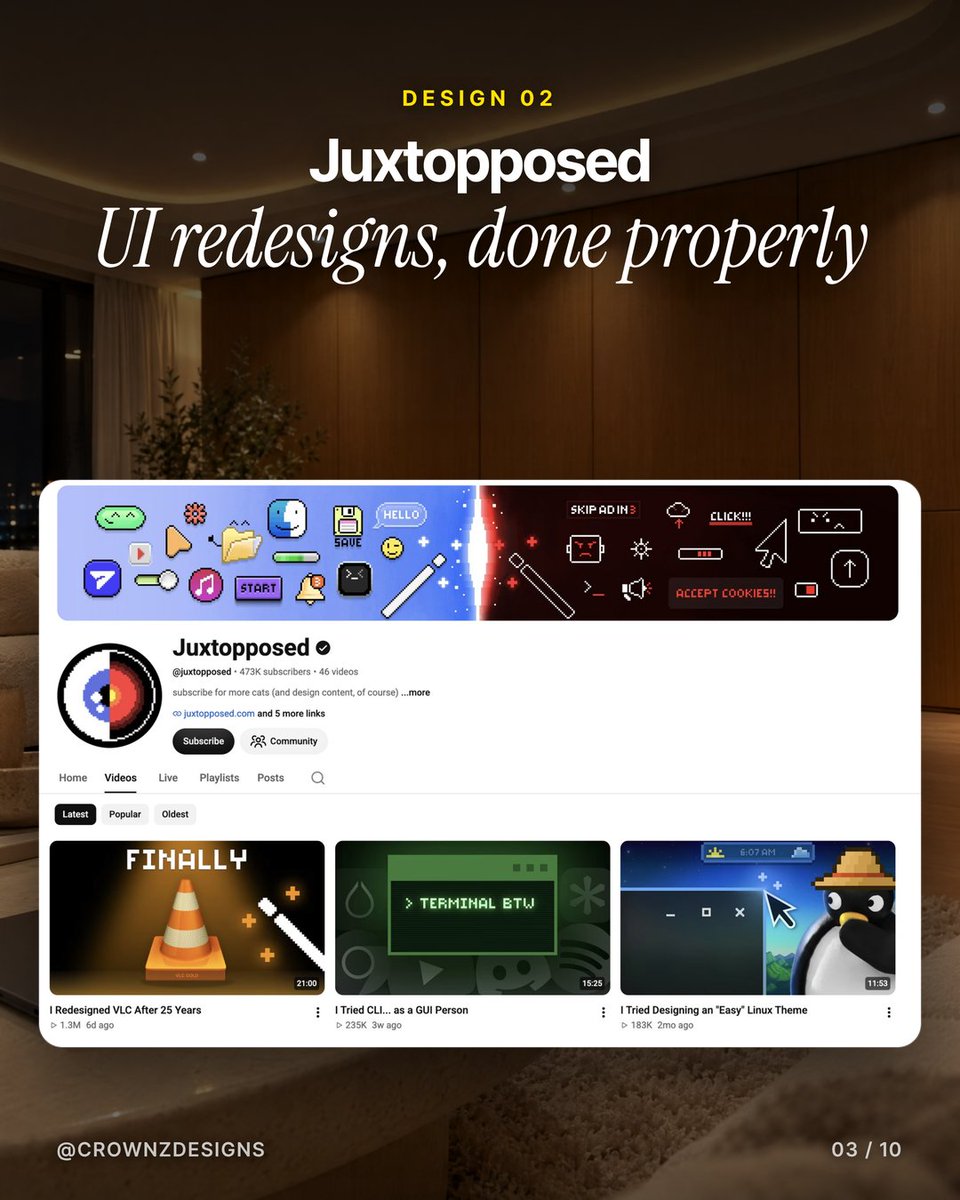
Want to get better at design and start building with AI?
Here are 8 YouTube channels to check out.
Starting with:
• Enrico Tartarotti: product breakdowns
• Juxtopposed: UI redesigns
• DesignCourse: UI, frontend and AI builds
More below.
AI enthusiasts, this is for you!
Carnegie Mellon University Africa is accepting applications for its free Certificate in Artificial Intelligence for Africa
You need basic programming experience
No tuition fees for qualified applicants!
If AI is part of your future, don't sleep on this opportunity. 👀
Apply here 👇 https://t.co/Yl7qTM3rvp
Apply before November 15! 🔥
🚨 I SPENT ₦20,000 ON FACEBOOK ADS AND MADE ₦300,000. THIS IS ONE PIECE OF ADVICE NOBODY ON EARTH WILL TELL YOU, BUT I'M GIVING IT TO YOU FOR FREE!
You have less than 90 days before 2026 ends, and if you're an AI content creator who has been struggling to get paying clients, PLEASE READ THIS!
Let me tell you a little story.
In December 2025, I made my first ₦300,000 from AI content creation.
Not ₦30,000.
THREE HUNDRED THOUSAND NAIRA! 😭❤️
And do you know how much I spent to make that happen?
Just ₦20,000 on Facebook ads!
That was the first time I made what I considered sensible money from AI content creation, and I was so excited!
But here's the most interesting part.
Some of the clients I got from that advertisement eventually became RETAINER CLIENTS!
Meaning that what started as a small advertising experiment opened the door to longer-term business relationships.
I have shared this story before, but I don't think I've emphasized enough how much that experience changed my mindset.
That was when I really became interested in learning how to run ads.
And today, by God's grace, what started from that little experiment has grown into something much bigger. ❤️
NOW, WHY AM I TELLING YOU THIS?
Because I see so many talented AI content creators creating beautiful videos, posting them on Facebook, Instagram, TikTok, and WhatsApp, and then sitting down waiting for clients to discover them.
My dear, who told you that you must wait for clients to find you? 😭
Why can't you deliberately put your work in front of the people who need your services?
Why can't you advertise your skills the same way businesses advertise their products?
LET ME GIVE YOU AN ADVICE THAT MIGHT CHANGE YOUR BUSINESS BEFORE THIS YEAR ENDS.
Find somebody who really understands Meta advertising.
Not just somebody who knows how to boost posts, but somebody who understands how to get advertisements in front of potential customers.
Partner with them.
You handle the AI video creatives, and they help you with the advertising.
But wait!
WHAT IF YOU CANNOT AFFORD TO PARTNER WITH ANYBODY YET?
Then LEARN HOW TO RUN THE ADS YOURSELF!
It's a skill you can learn, and you don't have to become an expert before you start experimenting.
Let me even explain how you can begin.
STEP 1: CREATE AN OUTSTANDING AD CREATIVE.
This is where your AI video creation skill comes in.
Don't just create a beautiful video with flying objects and smooth transitions.
Create a video that shows business owners the problems you can solve.
For example:
"Are you a skincare brand struggling to create engaging video advertisements for your products? I help brands create professional AI product commercials without organizing expensive traditional video shoots."
Then SHOW them examples of what you can create.
Let your creative SELL YOUR SERVICE!
STEP 2: GO TO META ADS MANAGER.
Visit https://t.co/kepFRFXSAm and open Ads Manager.
Set up your business advertising account, connect your Facebook Page and Instagram account where applicable, and make sure your payment method is ready.
Click on Create to start a new campaign.
STEP 3: CHOOSE WHAT YOU WANT THE AD TO ACHIEVE.
Remember, we're not simply looking for likes or views.
WE WANT POTENTIAL CLIENTS!
Depending on the options available in your account, you can create a Leads or Engagement campaign and configure it to encourage inquiries through WhatsApp, Messenger, or Instagram Direct.
I particularly like the idea of sending interested business owners somewhere they can easily have a conversation with you.
STEP 4: SET UP YOUR TARGET AUDIENCE.
Please, don't just advertise to everybody!
Think about the businesses that actually need your services.
Are you targeting skincare brands?
Fashion business owners?
Real estate agents?
E-commerce businesses?
Choose relevant locations, audience settings, and available targeting options. Remember that Meta's automated audience settings may expand beyond some of your suggestions.
Your creative and offer should also clearly speak to the kind of client you want to attract.
STEP 5: SET YOUR BUDGET AND RUN YOUR ADS.
Now, let me tell you something.
When I started, I DID NOT HAVE PLENTY OF MONEY! 😂
I was running little ₦2,000 ads.
Yes, TWO THOUSAND NAIRA!
I wasn't throwing hundreds of thousands of naira into advertising.
I was experimenting with what I could afford.
And because it was the Christmas season, I created an offer that was relevant to businesses at that time.
That particular campaign reached a lot of people, and the results genuinely surprised me.
Eventually, that ₦20,000 advertising spend brought in ₦300,000 in client payments.
Today, I've grown to a point where I can confidently spend ₦10,000 or ₦20,000 testing an advertisement.
Not because I've mastered everything.
I'm still learning!
But because I've experienced what strategic advertising can do for my business.
STEP 6: MONITOR YOUR RESULTS AND TALK TO YOUR POTENTIAL CLIENTS.
Don't just run the ads and disappear.
Check how many people are reaching out.
How much are you spending to generate inquiries?
Are the people messaging you actually interested in your services?
Are you converting those conversations into paying clients?
If an ad isn't performing, study what might be wrong before spending more.
Sometimes, the creative needs improvement. Sometimes, it's your offer. Other times, you're simply reaching the wrong people.
And please, there's something else I need to mention.
IF YOU'RE A SOLO AI CONTENT CREATOR, DON'T OVERWHELM YOURSELF!
Imagine you're still handling everything yourself, and you suddenly get more orders than you can deliver.
What happens?
You'll become overwhelmed, miss deadlines, and possibly disappoint the clients you worked so hard to attract.
So start small.
Advertise within your budget and your capacity.
Grow as you develop better systems for handling more clients.
NOW, AM I SAYING THIS WILL WORK PERFECTLY FOR EVERYBODY?
ABSOLUTELY NOT!
Advertising involves testing, learning, and sometimes spending money without getting the results you hoped for.
My ₦20,000-to-₦300,000 experience was my own result, not a promise that everybody will get the same return.
But if you've been relying entirely on organic content for months and you're not getting clients, why not consider learning another way to market your services?
And please, don't think December is too late to make money from AI content creation.
Think about it.
Christmas sales.
End-of-year promotions.
Fashion collections.
Skincare gift packages.
Real estate promotions.
Festive advertising campaigns.
Businesses will be looking for creative ways to market their offers, and AI video creators can position themselves to provide those services.
WHY SHOULDN'T YOU BE ONE OF THEM?
You don't have to start with ₦100,000.
You don't have to know everything.
You don't even have to run an ad immediately.
Start by learning how it works. Build a strong portfolio. Create an irresistible offer. And when you're ready, test with an amount you can comfortably afford to lose.
I started small.
I kept learning.
I kept experimenting.
And today, AI content creation has become something much bigger than I imagined when I started.
THE LESSON IS:
Don't just learn how to create beautiful AI videos.
LEARN HOW TO MARKET THEM!
LEARN HOW TO ATTRACT CLIENTS!
LEARN HOW TO SELL YOUR SKILLS!
Because being talented is one thing.
Getting your talent in front of people who are willing to pay for it is another.
I'm sharing this experience because somebody needs to hear it before 2026 ends.
You might be one marketing decision away from discovering an entirely different way to grow your AI content creation business.
And yes, I'm giving you this advice completely FREE! ❤️
I sincerely wish you the best.
Now tell me, have you ever tried running Facebook or Instagram ads to get clients for your AI video creation services? Or have you been relying on organic posting alone?
Let's discuss in the comments. ❤️
— RirahCreates
Copy this prompt to optimize your Upwork profile, but make sure to attach a file containing 15-20 job descriptions like I explained in my optimization video:
Start:
Hello. I am trying to optimize my Upwork profile for [mention your skill].
This will happen in 3 phases.
Phase 1: Profile description
Create a master Upwork profile description using the most recurring
keywords, phrases, and requirements that clients are using in their job
posts. Only include keywords or phrases that show up in at least 2
different job posts. If something appears only once, skip it, since a
one-time mention is likely just an outlier and not a real pattern. This
should help me rank higher when Upwork shows freelancers to clients or
recommends people to invite.
Phase 2: Profile title
Create a master Upwork profile title using the most recurring keywords
clients are using in their job posts. Keep this under 70 characters.
Phase 3: Skills section
List the most recurring skills or skill tags clients are adding to their
job posts, from most frequent to least frequent, so I can add them to
the skills section on my profile.
Before you start, ask me these 2 questions one at a time. Wait for my
answer before asking the next one.
1. Do you have a few examples of clients you have worked with before?
If yes, share them so I can add them to the profile. If no, tell me and
I will still create the profile, just written more generally.
2. Do you already have an existing profile description? If yes, paste
it so I can improve it instead of starting from scratch. If no, tell me
and I will build one from nothing.
To get started, I have attached a file with a list of Upwork jobs
arranged into 3 sections.
"Job descriptions": the full description of each job. Use this to build
the profile description.
"Job titles": the title of each job. Use this to build the profile title.
"Skills": the skill tags attached to each job. Use this to build the
skills list.
Now analyze the file and give me the description, title, and skills list
as instructed above.
End.
AI VIDEO CREATORS, GOOGLE HAS A TOOL THAT COULD HELP YOU DISCOVER YOUR NEXT CLIENT! 😭🔥
And I'm surprised more AI creators aren't talking about it.
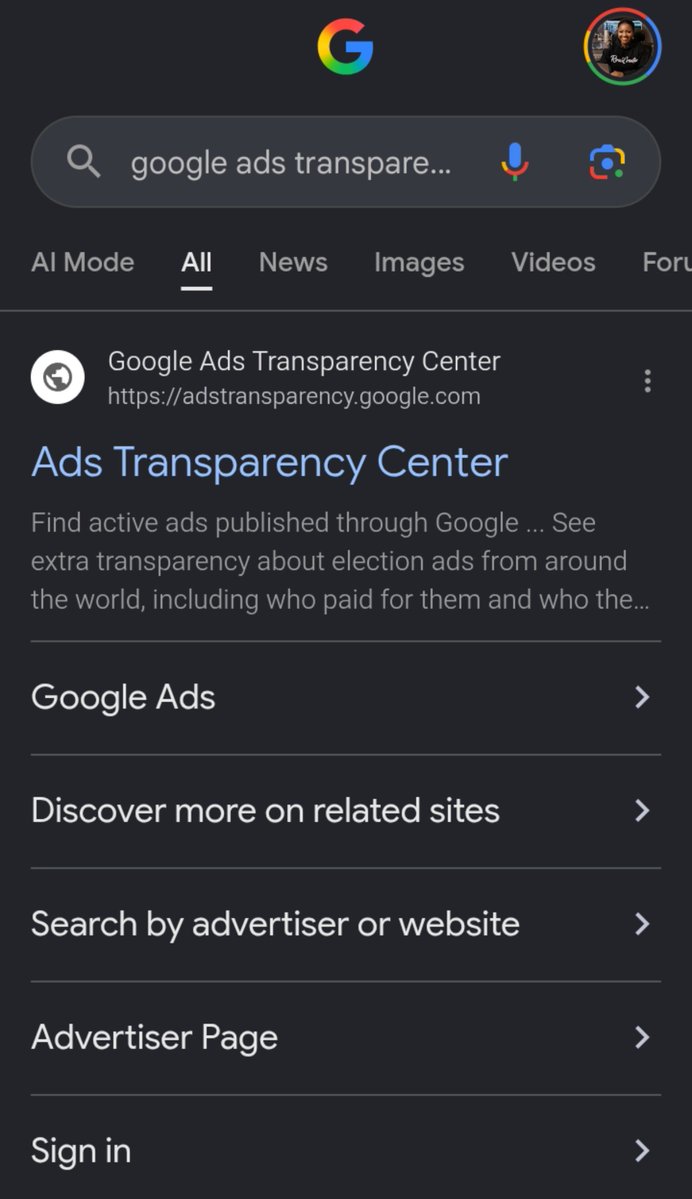
It's called Google Ads Transparency Center.
Here's why you should know about it.
When businesses advertise on Google and YouTube, you can research eligible advertisements through Google's public transparency tool.
And for someone offering AI video advertising services, that is worth exploring.
Let me show you how.
STEP 1: Visit https://t.co/6vv2nkMAbq.
STEP 2: Search for a business or advertiser you want to research.
You can start with brands in industries like skincare, fashion, consumer products, technology, or real estate.
STEP 3: Examine the advertisements available for that advertiser.
Depending on what's available, you may see text, image, or video advertising.
STEP 4: Look for creative opportunities.
For example, perhaps a business is running an image advertisement for a new product.
You could pitch an additional short-form video concept to help them demonstrate the product.
Or perhaps they have video advertisements but could benefit from testing a different storytelling approach.
STEP 5: Find the business's official contact information and send a relevant proposal.
Explain what you noticed, what type of AI video you could create, and why that creative might be worth testing.
Please understand this:
You don't necessarily need to wait for a brand to announce that it's hiring an AI video creator.
You can identify businesses investing in advertising and introduce your services.
The opportunity is not just in knowing how to generate beautiful AI videos. It's in knowing WHO NEEDS THOSE VIDEOS.
Bookmark this. Another free prospecting method unlocked!
Follow RirahCreates for more practical AI content creation tips.
HOW I’D FIND CLIENTS AS AN AI CREATIVE IN 2026.
A lot of AI creatives are focused on learning the next tool, the next model, or the next prompting technique.
But here's the uncomfortable part:
Being good at AI doesn't automatically bring you clients.
You need to put your work where potential clients can actually see it.
These are the places I'd focus on:
1. X
Probably one of the best places to build visibility as an AI creative right now.
Don't just post the final image.
Show experiments. Campaign concepts. Product visuals. Before/afters. Videos. Break down how you approached a project.
Let people see what you can actually create.
2. INSTAGRAM
Treat Instagram like your visual storefront.
I've personally gotten 4 clients from Instagram, simply from consistently putting my work out there.
If your work looks good, people will share it, save it, send it to someone, or remember you when they need something similar.
3. BEHANCE
Don't abandon Behance just because AI is moving fast.
Build proper projects and case studies around the work you're creating.
Instead of uploading 10 random AI images, build a complete campaign and show the thinking behind it.
You're creating a body of work that can keep bringing opportunities long after you publish it.
4. CONTRA
I'm also building my presence on Contra.
And I think AI creatives should look at platforms like this differently.
You're not just looking for gigs.
You're building a public profile that communicates:
What you create.
Who you create for.
And why someone should trust you.
5. DIRECT OUTREACH
This is where things get interesting.
Don't just find a brand and send your portfolio.
Find a brand you genuinely want to work with.
Look at their ads, product photography, social content or campaigns.
Then ask yourself:
“What could I create for them that would actually make their brand better?”
Then reach out with that idea.
6. CREATE FOR BRANDS BEFORE THEY HIRE YOU
This is probably my favorite.
You don't always have to wait for a brief.
Find a brand with great products but average visual content and create something better.
Make a campaign.
Create product visuals.
Make an ad.
Build a concept.
Then publish it and tag them.
You're no longer telling people what you're capable of.
You're showing them.
And sometimes that piece of speculative work becomes the reason they contact you.
7. WORD OF MOUTH
Make sure people around you know you're an AI creative.
Clients don't only come from strangers on the internet.
Sometimes someone you worked with months ago knows a founder who needs exactly what you do.
But they need to know what you do first.
And honestly, this is the biggest shift I'd make:
Stop thinking only about finding clients.
Think about becoming easy to find.
Create good work.
Publish it consistently.
Create for brands you want to work with.
Reach out.
Build your presence across platforms.
The goal isn't to convince everyone to hire you.
It's to make the right person see your work at the right time.