Elongated scales form leg-like structures at the tip of the spider-tailed horned viper's tail, creating a decoy arachnid that the predator can use to attract birds. https://t.co/Sw2gOQCgCW
Unlike the embryos of other vertebrates, early snake embryos coil as they get longer, typically forming clockwise spirals.
A new study offers an explanation for why embryonic snakes go through these contortions—and why they tend to curve in one direction.
Learn more: https://t.co/z5jBCEbblw @NewsfromScience
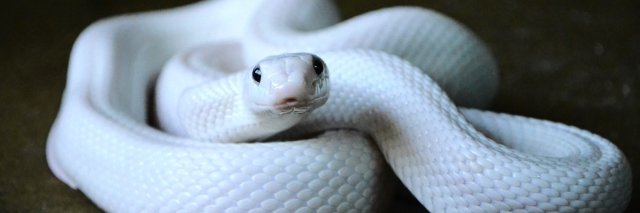
Determination of the candidate gene responsible for BEL (Blue Eye Leucistic) expression in the ball python (Python regius)
Braz. J. Biol. 86 • 2026
https://t.co/MzFR85Icwi