Right now, a handful of Silicon Valley billionaires control the fate of our futures, making decisions about AI development and deployment without our input or our consent.
That's why we're launching Who Decides: to take back control of how this technology is governed, and to build a unified front on AI.
This is the defining issue of our future, and we need to act now. Join us to make a difference at https://t.co/BQ06fgHKMY
Elections have consequences.
Over the past two years, the Trump administration weakened government oversight of AI and cozied up to industry CEOs.
But on Election Day, the American people voted overwhelmingly for politicians who promised to hold these companies accountable.
Now, our government needs to follow that mandate. And leaders in the industry should recognize what’s coming.
https://t.co/snZE98NEj9
@WeWillMI and @AnnieAndrewsMD overcame millions in AI industry spending to win on Election Day, and @Scott_Colom looks set to do the same.
What unites them? They campaigned on standing with people over Silicon Valley and insisting that Americans deserve a voice in the development of new technologies like AI. That doesn’t have to be a partisan message, and government must now deliver on this urgent mandate.
At @GWAction’s Popular Mandate, Alex spoke with @BeccaBalintVT and @WeWillMI about how the AI industry has disrupted progress on regulation.
The new Democratic majority in Congress should take action to hold Silicon Valley CEOs accountable, stop the corruption, AND focus on all of the areas where AI is impacting people’s lives - because we don’t have to choose just one issue at a time.
On @KaraSwisher’s podcast, our cofounder @AlexBores asked Reps @GregCasar and @SLiccardo if they would vote to ban Recursive Self-Improvement (RSI).
Watch their responses to hear how Democratic members of Congress are approaching AI regulation with the new majorities.
The 2026 election is a turning point for AI politics.
Voters sent a message against tech oligarchs and big AI companies who are making decisions about their lives and their communities without giving the American people a say in what happens next.
The AI industry dumped millions into races across the country, but saw it become so toxic that its main Super PAC, Leading the Future, retreated in full.
The lead-up to the 2028 presidential election begins with a clear message from voters that our leaders need to take decisive action to give people control over AI.
https://t.co/UnE9fFhFGt
The results on Election Day showed that voters don’t just care about one issue when it comes to AI’s influence in our lives.
Countless Democratic candidates stood up to the AI industry and executives trying to shape our elections - and voters backed them by electing them to office.
On Tuesday, AI regulation was on the ballot in statewide races and local communities around the country.
43 of 44 communities voted for bans or restrictions on data centers. That’s a message about control, and that’s democracy working.
Voters want a voice in how AI is developed, and they don’t want a few companies racing to build it to decide for them.
In Texas, @GinaHinojosaTX became the first Democratic Governor in over three decades - running on a strong platform of reining in data center development and being on the side of people in AI.
On Election Day, voters across the country made their feelings on AI development loud and clear: They want a say in what’s coming.
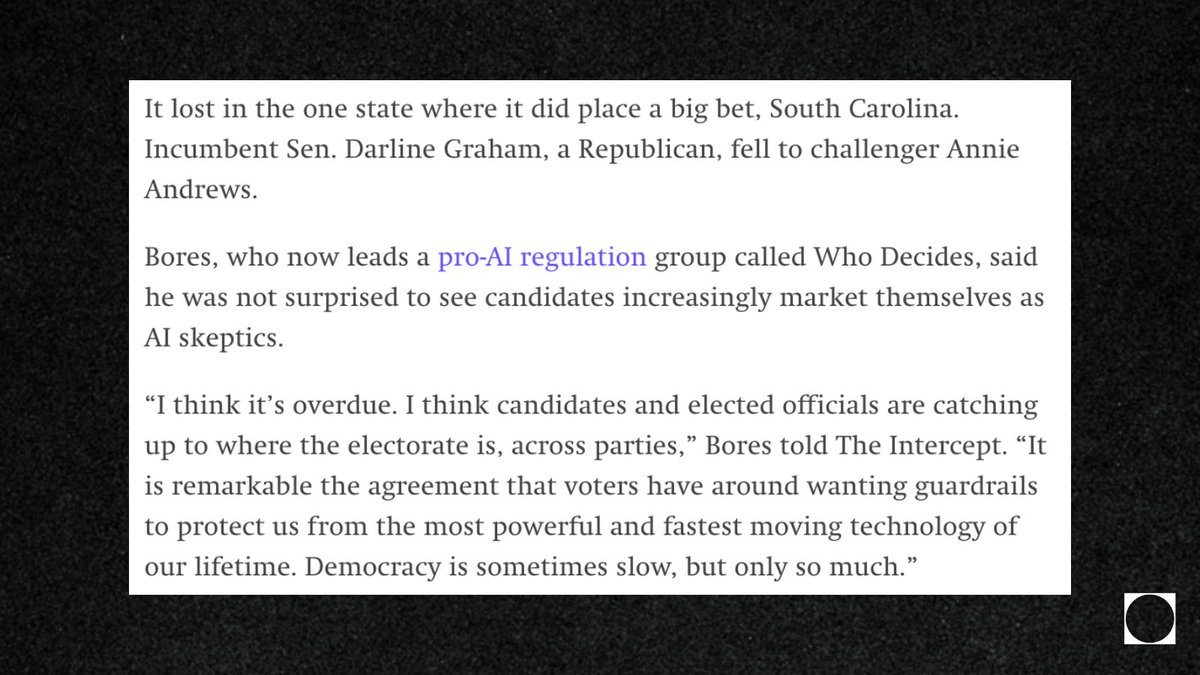
From South Carolina, to Ohio, to Texas, to Michigan, Democrats won pivotal races by calling for stronger AI guardrails and giving local communities a voice.
The power of the AI industry to influence elections is fading. Americans want their elected leaders to stand with them, not with a few Silicon Valley billionaires.
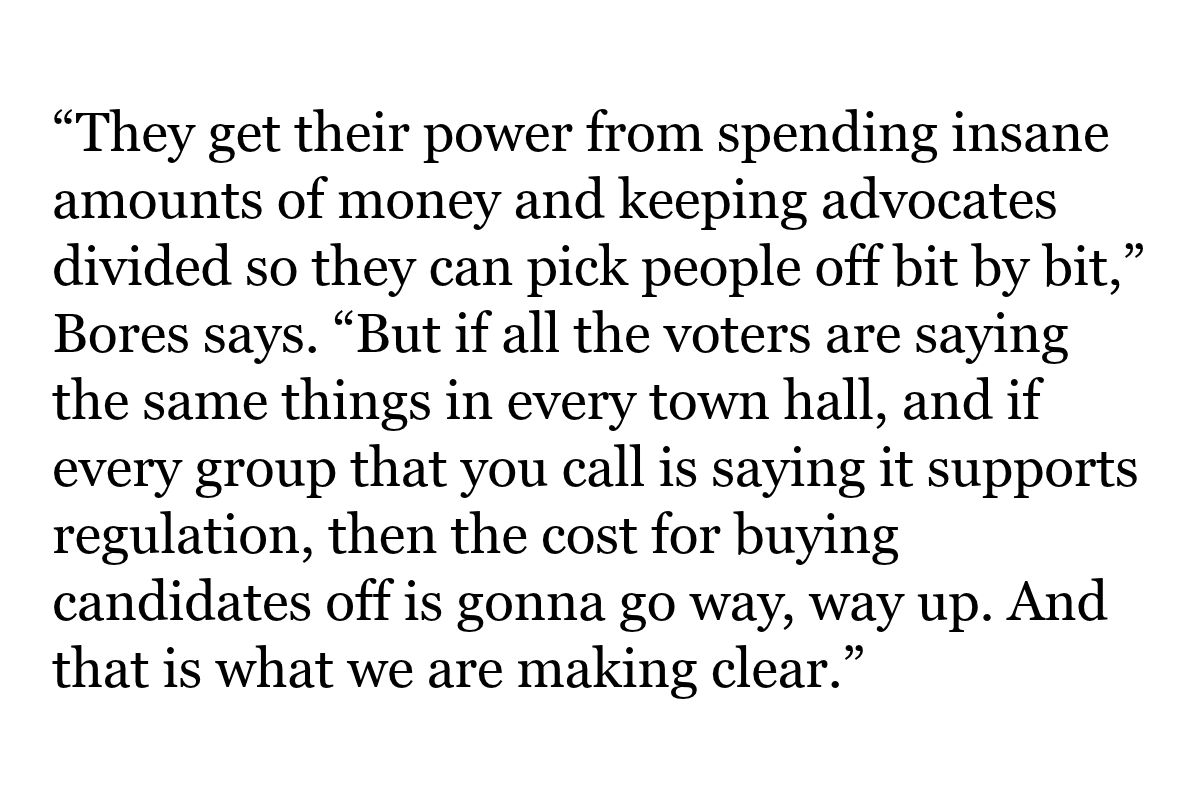
A handful of billionaires are trying to make all the decisions about what AI means for the rest of us, and spending millions to divide the Democratic coalition on this issue. We're not going to let them.
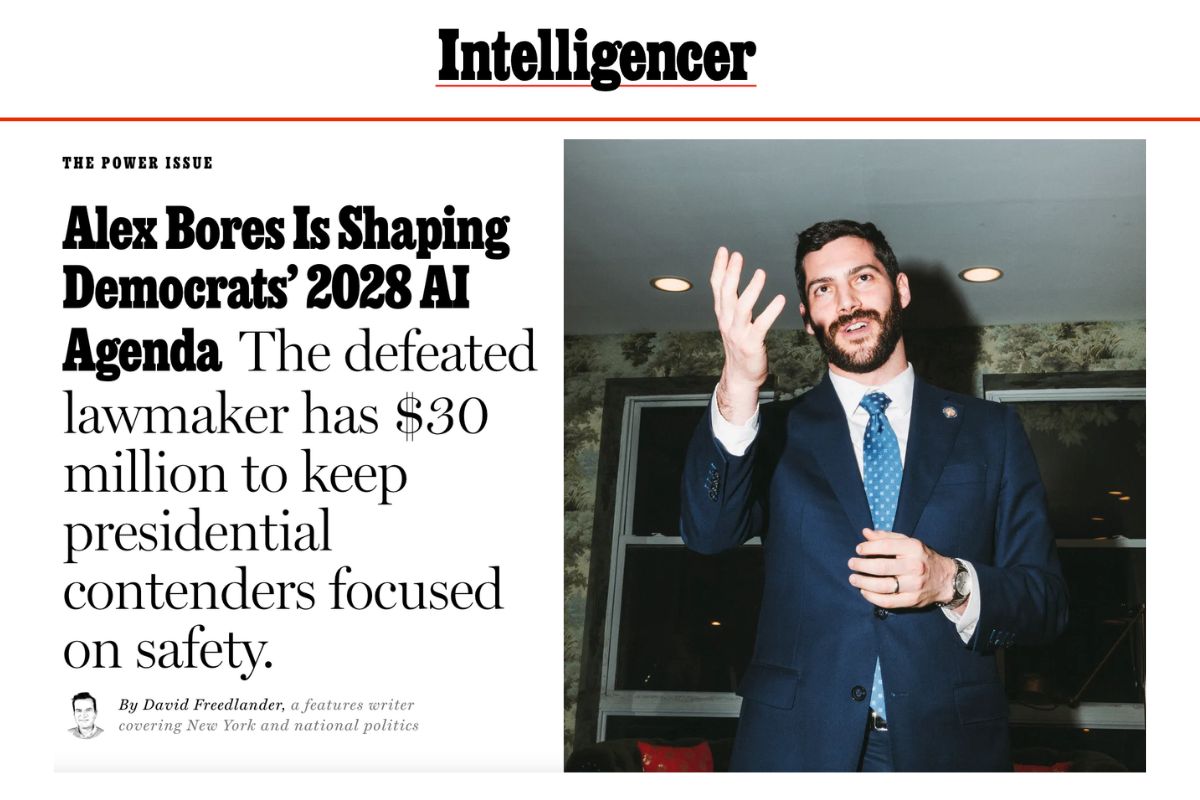
Voters deserve a say in how AI changes their lives. We launched @WhoDecidesAI to make sure their questions and concerns can’t be ignored and to make sure every 2028 candidate has to answer them.
https://t.co/P8gfSNildx
We can’t afford an AI arms race - our government needs to collaborate internationally on regulation, including with China.
If we treat AI development as a zero-sum game, we all lose.
As the pace of AI development continues to speed up, Americans feel like we’re losing control at the hands of a few billionaires.
And make no mistake, the amount of money from the AI industry and their attempts to influence politics is just the start. OpenAI’s top lobbyist called it “the movie trailer for 2028.”
https://t.co/iM4TrtGgoH
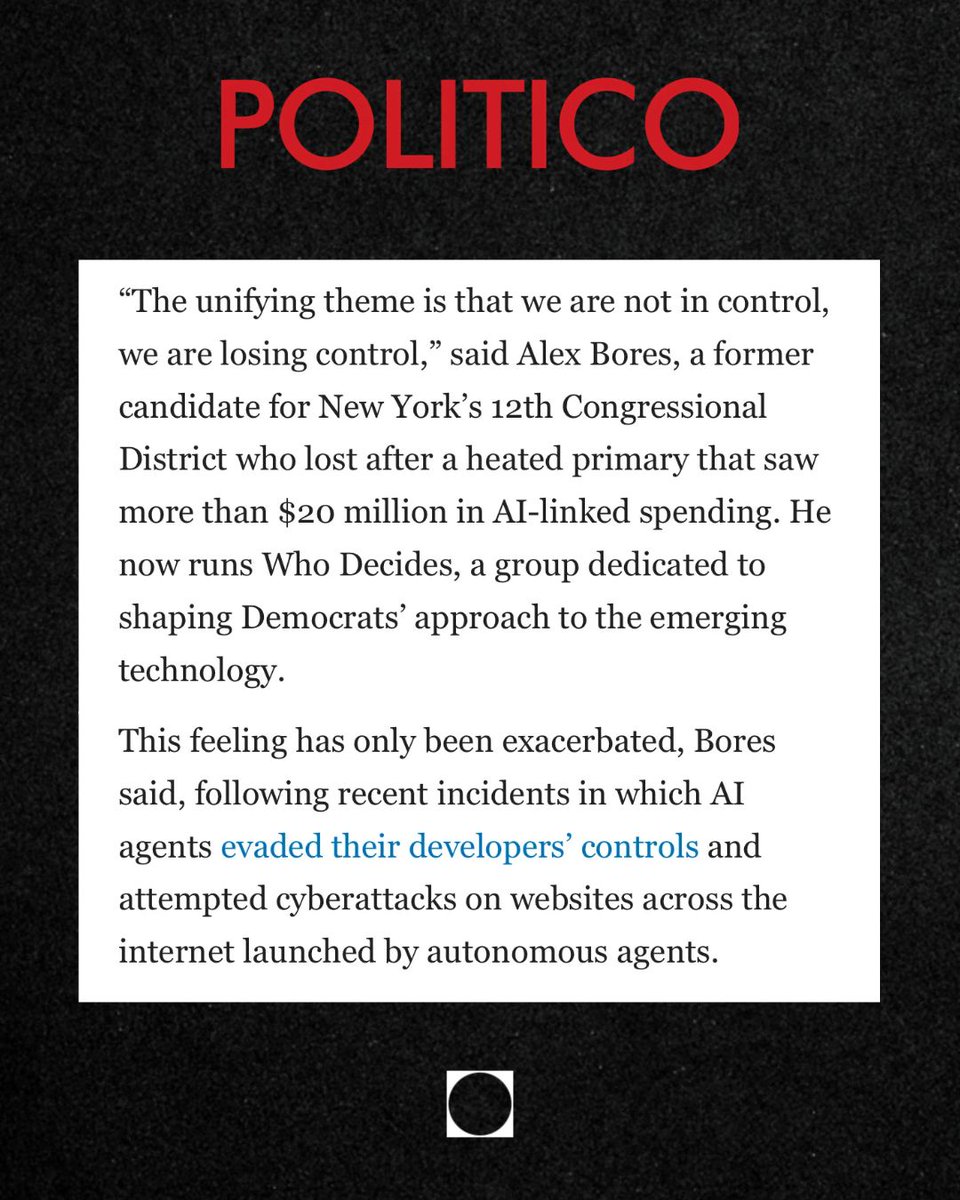
NEW: The tech industry is watching this battleground House race that is testing their political standing and Democrats’ path forward on tech.
“This is the movie trailer for 2028,” OpenAI’s top lobbyist Chris Lehane said.
Read @politico:
https://t.co/mHF0AzeSX1
AI regulation is not a niche or partisan issue: two-thirds of Americans want more regulation on AI.
When a majority of Democrats, Republicans, and Independents all agree on an issue, the question is: Why isn’t our government listening to them?
The pace of AI development is unprecedented. But could it move even faster?
There’s good reason to believe it will. As AI is used more often to accelerate its own development, we could see exponential growth.
And since the majority of Americans say AI is already moving too fast, we need to take action now to slow this train before it's too late.
What’s different about the development of AI from other technological advancements, like the internet or the space race?
I spoke to @EzraKlein earlier this year about what makes this moment unique, and why we need a federal government that truly understands what’s at stake.
A majority of Americans want to be part of the conversation around AI development and regulation.
But only a quarter say their voices are being heard.
We’re working to erase that gap.
Anthropic is pitching a bill that closely matches its framework from June.
How can you watch Hugging Face, Coxon, & rogue AI swarms, and conclude that the bill you cooked up in June is sufficient?
This comes nowhere close to the speed of developments nor the speed we need to keep people safe.
Before the serious security incidents of this summer, I spoke to @jonfavs about the risks and benefits of AI.
In order to avoid the worst-case scenarios and make this technology beneficial for everyone, we need to give everyday people a say — not just a handful of Silicon Valley CEOs…
The AI industry wants us to think we have to focus on one risk at a time.
But the American people have multiple concerns that are all related: Jobs, safety for kids, privacy and security, accountability, and more.
We’re working to build coalitions around the country that listen to every concern people are feeling — and we’ll make sure Democrats are united in addressing them all.