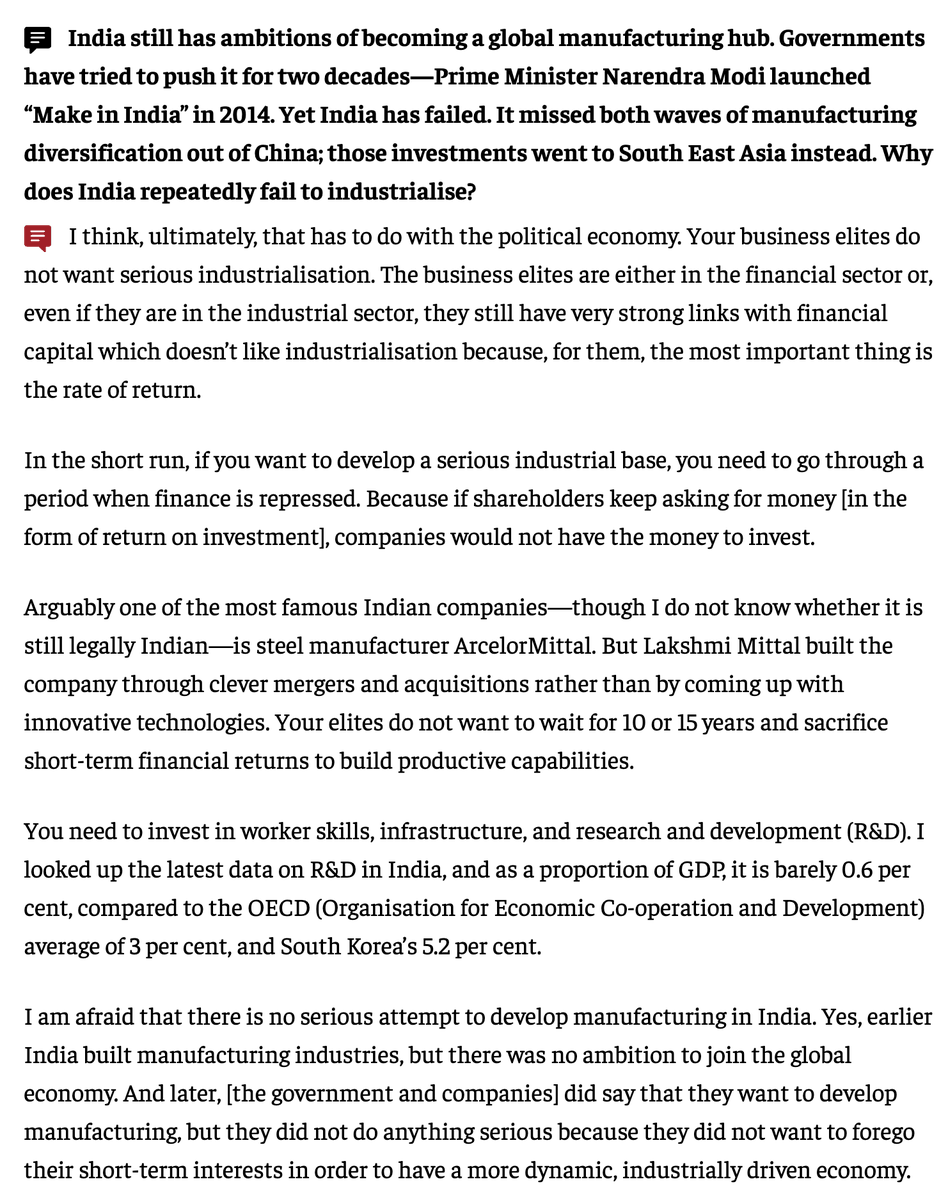
Why has India failed to industrialize?
Ha-Joon Chang argues that it’s because India’s business and financial elites oppose industrialization — and that it won’t happen unless their power is curbed.
@SimonDixonTwitt QE seems has to parts one- is UBI & social credit score ; second is new financing for govt if this understanding is correct speculative asset trading will go down & Govt will hv to confiscate all distressed assets - means a communism angle will come to play
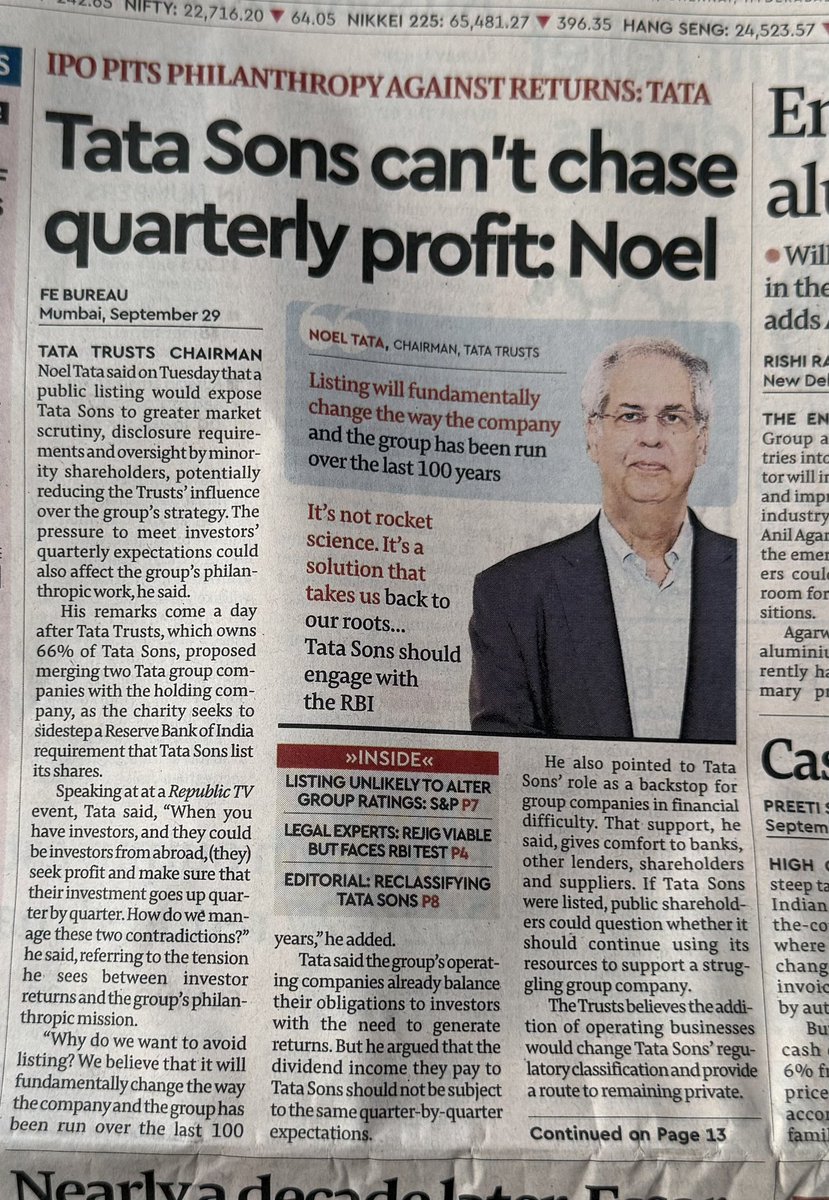
Tata Sons Can’t Chase Quarterly Profits: Noel Tata
Tata Trusts Chairman Noel Tata says listing Tata Sons would force a quarterly profit chase, extra market scrutiny and minority-shareholder pressure. That would weaken Trusts’ control and clash with the group’s 100-year philanthropic model.
Trusts (66% owners) want to merge two group companies into Tata Sons to stay private and avoid the RBI listing rule. Tata Sons also acts as a financial backstop for group firms — something public investors may question.
https://t.co/yyVlVGZPDl
Netanyahu brags that Mossad can hack into anyone's cellphone to plant evidence:
He’s a walking, talking, genocidal MIC & TIC brochure. https://t.co/gSwLxwDVLw
Stablecoins are tiny relative to the scale of US debt rollover and new deficit financing.
Yes, stablecoin growth creates incremental demand for short-dated US Treasuries.
But don’t confuse that with solving the Treasury’s funding problem.
Stablecoin reserves redirect existing private-sector dollars into T-bills. They can participate in demand for newly issued debt, but they don’t magically create the trillions in new savings required to absorb persistent deficits and refinancing.
That is not QE.
Primary dealers are required to participate in Treasury auctions, but they’re not the only buyers. Funds, banks, pensions, insurers and foreign institutions can absorb new issuance too.
The real question isn’t whether stablecoins buy Treasuries.
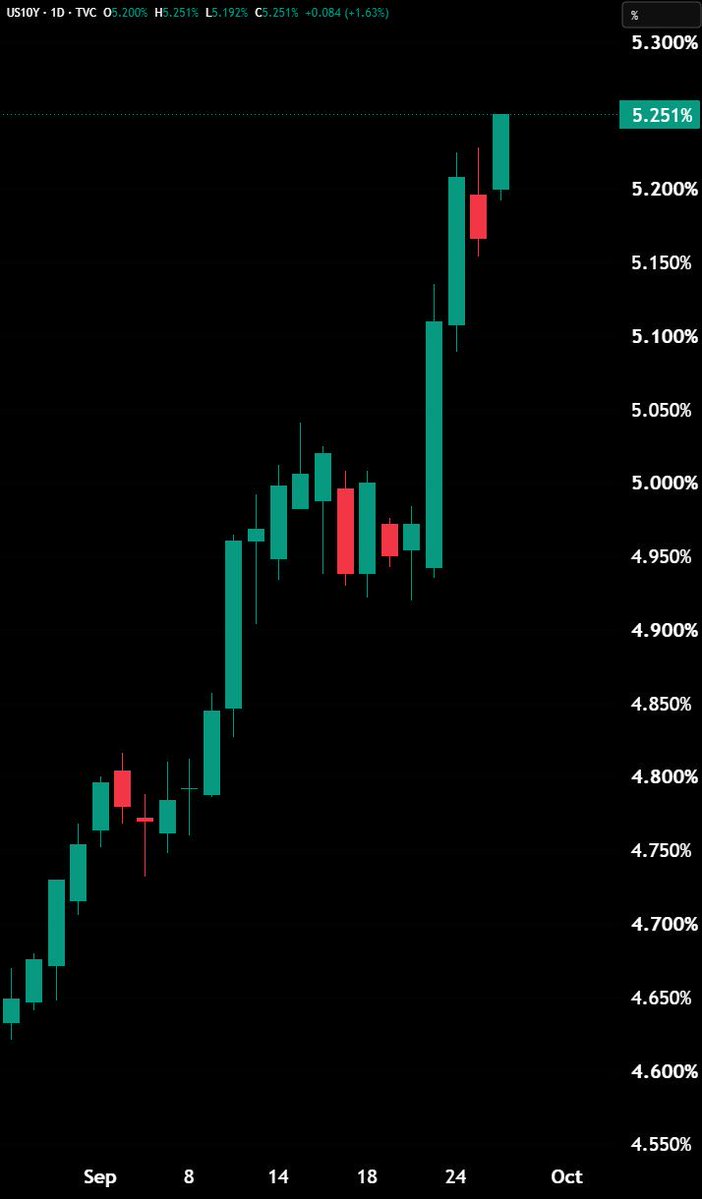
It’s whether there is enough marginal demand to absorb the enormous quantity of debt the US needs to roll over AND issue to finance new deficits without yields continuing to rise.
If private demand isn’t there at acceptable yields, yields have to rise until buyers emerge.
Or eventually, the Fed expands its balance sheet.
So no.
Stablecoins are not QE.
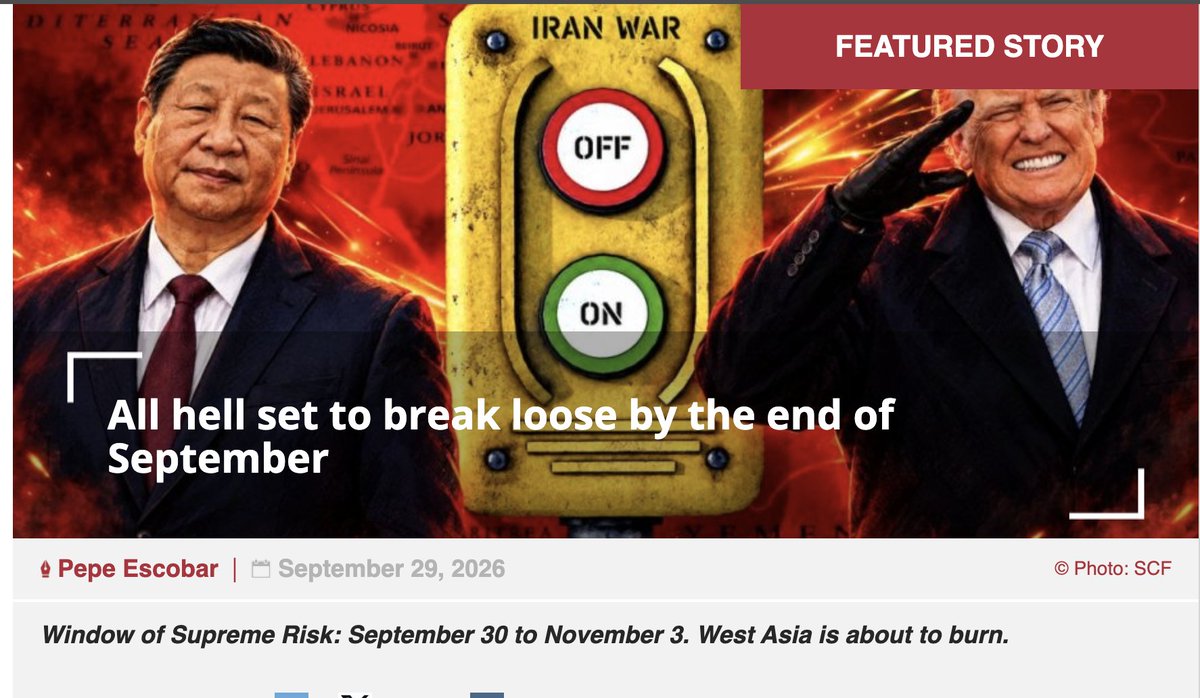
It's all in the title. Can't link - but you will know where to find it.
Excerpt:
"It's now clear that Yemen and Persia come as a package - the two privileged fronts of the West Asia theatre. Pay attention to the consequences of this “secret” meeting between the death cult and the Arab Zionists. West Asia is about to burn all the way into the heavens."
2016 में Essar Steel India Limited पर अलग अलग बैंको का लगभग ₹54,547 करोड़ का बकाया कर्ज था। एस्सार स्टील की दिवालिया प्रक्रिया शुरू हुई कई साल बाद एस्सार दिवालिया हुआ।
अब इसी एस्सार स्टील ने अमेरिका में 1.44 लाख करोड़ रुपयों का निवेश करने का ऐलान किया हैं। अमरीका में स्टील की फैक्ट्री लगाएंगे।
क्या यही हैं विकसित भारत का मॉडल? भारतीय बैंको को लगे चुना, और फिर पैसा जाये विदेश।
🇺🇸🇮🇶 US going regional.
The implications are profound.
We are living through once in a lifetime history.
West Asia and the Global South can begin the healing process.
But they’ll still have to deal with what FIC extracted & left behind using the dollar financial weapon of mass destruction.
🇸🇦🇮🇷 SOMETHING VERY INTERESTING IS HAPPENING IN THE STRAIT OF HORMUZ
Reuters reports Saudi Aramco loaded around 14 MILLION barrels of crude onto seven VLCCs at Gulf terminals on Sunday.
Satellite images reportedly show seven tankers around Ras Tanura.
Why is this interesting?
🇸🇦 Saudi Arabia’s East West pipeline was attacked and shut down.
That pipeline exists specifically to allow Saudi crude to bypass Hormuz and reach the Red Sea.
So what happened next?
Saudi dramatically increased crude exports THROUGH Hormuz.
And Reuters reports Aramco has sold around 60 million barrels from Ras Tanura for September and October with cargoes intended for ship to ship transfers at Sohar.
🇴🇲 Oman.
So the emerging route looks like:
🇸🇦 Ras Tanura
Strait of Hormuz
🇴🇲 Sohar
🇨🇳🇰🇷🇮🇳🇯🇵 Asian buyers
Now it gets interesting.
🇮🇷 Iran has been restricting shipping through Hormuz.
🇮🇷🇴🇲 Iran and Oman have simultaneously been negotiating a temporary navigation corridor, mine clearance, information sharing, traffic management and eventually a longer term framework for the Strait.
And now millions of barrels of Saudi crude are moving through Hormuz towards Oman.
I have NOT found evidence yet that Iran gave Saudi Arabia permission or that these tankers are part of an Iran Saudi agreement.
That distinction matters.
But the question now becomes unavoidable.
If Iran controls the threat environment around Hormuz, Oman is negotiating the navigation architecture and Saudi is dramatically increasing crude movements through the Strait, exactly how are these tankers being deconflicted?
Who is guaranteeing passage?
🇮🇷 Iran?
🇴🇲 Oman?
🇺🇸 The US?
Or some combination negotiated behind the scenes?
This is what I’m watching.
Because if evidence emerges that Iran is knowingly facilitating Saudi crude passage while Oman acts as the intermediary and transshipment node, that would be much more significant than seven tankers.
It would be another piece of the regional architecture I believe is emerging as the Forever War winds down.
Don’t follow the rhetoric.
Follow the oil.
Let’s see.
@mishra_surjya I would suggest anyone on who is interested in this context to follow simom Dixon - how the cashflow determines the geopolitics bojhar jonno