Agent to Agent communication between software will be the biggest unlock of AI. Right now most AI products are limited to what they know, what they index from other systems in a clunky way, or what existing APIs they interact with.
The future will be systems that can talk to each other via their Agents. A Salesforce Agent will pull data from a Box Agent, a ServiceNow Agent will orchestrate a workflow between Agents from different SaaS products. And so on.
We know that any given AI system can only know so much about any given topic. The proprietary data most for most tasks or workflows is often housed in many multiple apps that one AI Agent needs access to.
Today, the de facto model of software integrations in AI is one primary AI Agent interacting with the APIs of another system. This is a great model, and we will see 1,000X growth of API usage like this in the future. But it also means the agentic logic is assumed to all roll into the first system. This runs into challenges when the second system can deliver a far wider range of processing the request than the first Agent can anticipate.
This is where Agent to Agent communication comes in. One Agent will do a handshake with another Agent and ask that Agent to complete whatever tasks it’s looking for. That second Agent goes off and does some busy work in its system and then returns with a response to the first system. That first agent then synthesizes the answers and data as appropriate for the task it was trying to accomplish. Unsurprisingly, this is how work already happens today in an analog format.
Now, as an industry, we have plenty to work out of course. Firstly, we need better understanding of what any given Agent is capable of and what kind of tasks you can send to it. Latency will also be a huge challenge, as one request from the primary AI Agent will fan out to other Agents, and you will wait on those other systems to process their agentic workflows (over time this just gets solved with cheaper and faster AI). And we also have to figure out seamless auth between Agents and other ways of communicating on behalf of the user.
Solving this is going to lead to an incredible amount of growth of AI Agents in the future. We’re working on this right now at Box with many partners, and excited to keep sharing how it all comes evolves.
The biggest opportunities for AI Agents will be in expanding the market for software by automating work that most companies don’t do that well or never even did in the first place.
This will take on a number of forms but there are at least 3 big categories that highlight how much larger these markets will be as AI fully rolls out.
1. Verticals. Every industry has dozens or hundreds of workflows that are highly domain specific and where both the customer and the company have just expect it’s supposed to take forever or be painful. Processing a loan or an insurance claim, reviewing due diligence documents, generating a grant proposal, transcribing a patient visit, and thousands more. These are the processes full of tons of drudgery and have never been automated well in the past. When AI automates them, these will represent net new areas of software spend.
2. Startups and small businesses. Most startups and SMBs are strapped for resources. This means they don’t tend to have a lot of the expertise that larger companies have in legal, finance, HR, sales, or any number of topics. AI provides an instant ability to augment their own team as they scale up. This makes it faster and easier to start a company and will drive significant AI usage.
3. Teams in larger companies. We tend to think about the “enterprise” market monolithically but even within enterprises there’s an entire universe of funding allocation decisions that mean some teams have all the resources and others don’t. AI Agents let teams that that were previously strapped for resource finally solve their problems better. This could be building custom software for some bespoke workflow or automating a contracting management process in a non-core area.
The opportunity is to find industries or market segments that have always had painful tasks that never get done efficiently and automate them. This will produce markets far larger than we realize.
One of the biggest implications of an AI-first enterprise will be that the AI stack an enterprise chooses will be a critical driver of any individual’s productivity in a company, which eventually compounds to determine the firm level productivity and thus competitiveness.
This means that specific technology decisions that a company makes will determine the rate of software they can code, contracts they can review, leads that can be generated, campaigns that can be launched, breakthrough innovations that are discovered, customers that can be supported, and so on.
The AI-first enterprise -and one that makes the right technology decisions- will see compounding returns and acceleration in all of these areas; conversely, the slower moving companies will tend to fall behind over time. As a result, AI will likely accelerate differences between firms based on their tech decisions, and even impact the kind of talent they can attract and retain, further hastening these competitive differences.
We’ve actually seen this with software in the past, albeit at a smaller scale. For instance, for years employees at Facebook and Google benefited from a unique developer stack and tooling that’s long created efficiencies for shipping or scaling software that the rest of the world didn’t have. Fast growing startups notoriously leverage their lack of tech debt, and ability to implement a modern tech stack, as a means of moving faster than incumbents. Companies like Netflix leverage data to make better acquisition decisions. It all comes down to the tech stack.
AI just takes this far further, because it will be a meaningful force multiplier on the execution of any employee. And with AI Agents, it’s almost akin to the quality of colleagues that you’re working with. Even subtle differences in the AI Agents you use for customer support, code writing, question answering, or workflow automation will lead to very different business results over time.
And the need will only accelerate in the future as a new demographic enters the workforce. A younger workforce coming into the enterprise will have completely different technology habits than generations before, ultimately requiring an AI-first stack to be productive.
We’re only in the earliest innings of fully understanding what an AI-first enterprise will look like, but it’s clear that work will likely look very different in a decade from now. And there’s a huge opportunity for those that are adapting early.
@theavettbros@robertearlkeen having both bands on one bill is worth a trip to Wichita on July 1st. No offense to Wichita because I love KS. But before I book the trip from Seattle I’d like to know if the show is still a go? With REK retiring this show seems like a must see
When you give the best of yourself to people, they will become the best version of themselves. Empathy and selflessness is the perfect formula for building a team with an unstoppable force for good. Let’s empower our team to reach their full potential! #MondayMotivation
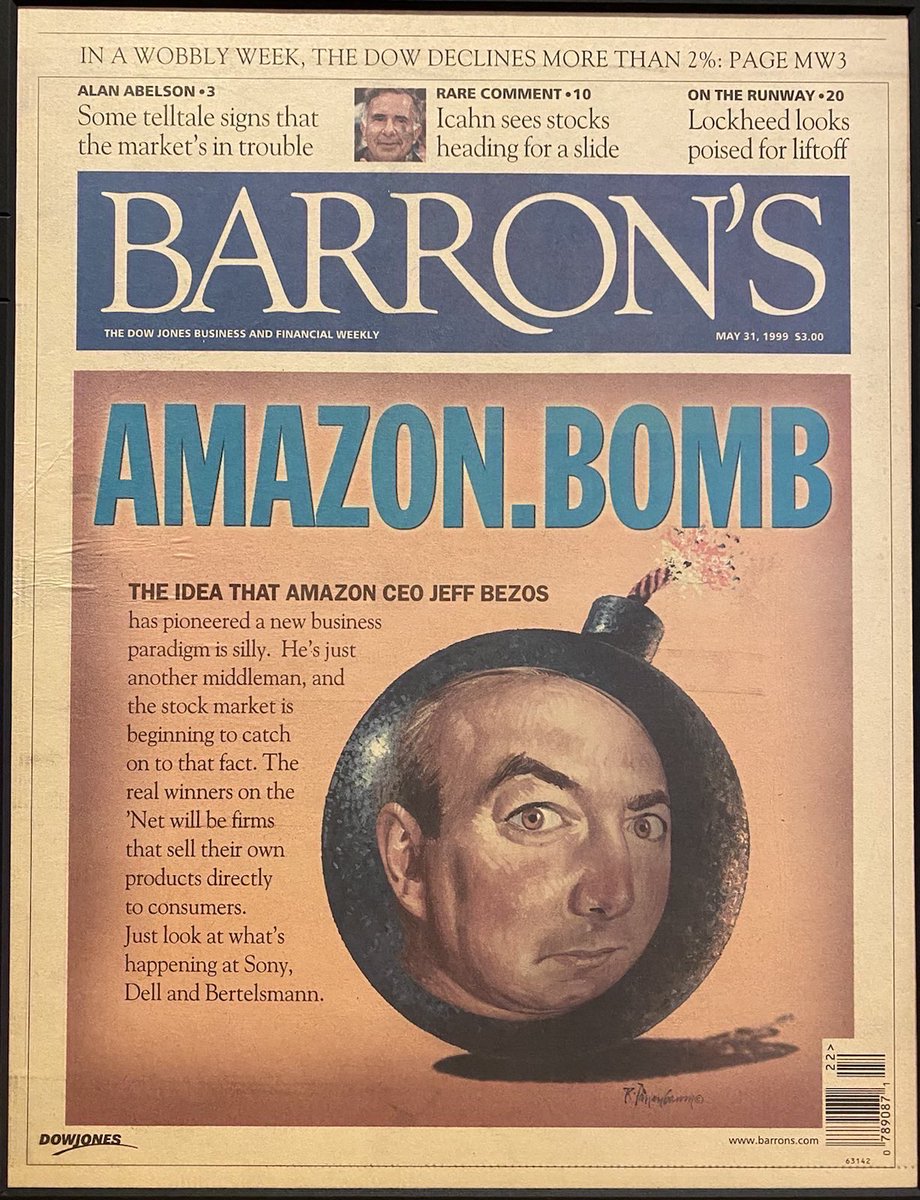
Listen and be open, but don’t let anybody tell you who you are. This was just one of the many stories telling us all the ways we were going to fail. Today, Amazon is one of the world’s most successful companies and has revolutionized two entirely different industries.
BREAKING: Recall effort of Seattle Councilwoman Kshama Sawant can proceed. Court finds 4 of 6 accusations brought forth represent "substantial conduct clearly amounting to misfeasance, malfeasance, or a violation of the oath of office" for which there is "no legal justification."
Customers are at the heart of our company. We’re honored to partner with @WADeptHealth and the broader ServiceNow community to launch our customer care plan to help customers respond to the COVID-19 pandemic.
Salesforce has fully agreed with King County recommendations & we now ask all Salesforce & Tableau employees based in our Seattle, Kirkland & Bellevue offices to work remotely for the month of March. https://t.co/QyrjVR4R12 https://t.co/xKKoOPodwK