For #WorldMusicDay, take a listen to R Aquarii!
Using data from Hubble and @ChandraXRay, this sonification represents information in this cosmic view as sound, giving us a new way to experience the image.
Listen to more sonifications here: https://t.co/rHFkJHCSbw
Created by aging Sun-like stars, planetary nebulas like the Retina Nebula come in all shapes and sizes. This one is actually donut-shaped, but it appears rectangular because we’re seeing it from the side. Different colors represent different gases: https://t.co/UTwprusbuN
Is @NASAWebb the "coolest" telescope in space? Technically speaking, yes! JWST's Mid-Infrared Instrument operates at a temp of -447 F.❄️
Join us for a live talk on June 22 at 7pm PT (10pm ET) to learn how this ultra-cold instrument explores our universe. https://t.co/srPRKRBST8
Listen to the galaxies of Stephan’s Quintet sing! 🎶
This image, which combines infrared data from the Webb & Spitzer telescopes with X-ray data from @chandraxray, has been "translated" to sound to provide another way of experiencing the cosmos. More: https://t.co/zzB3ZDlcbz
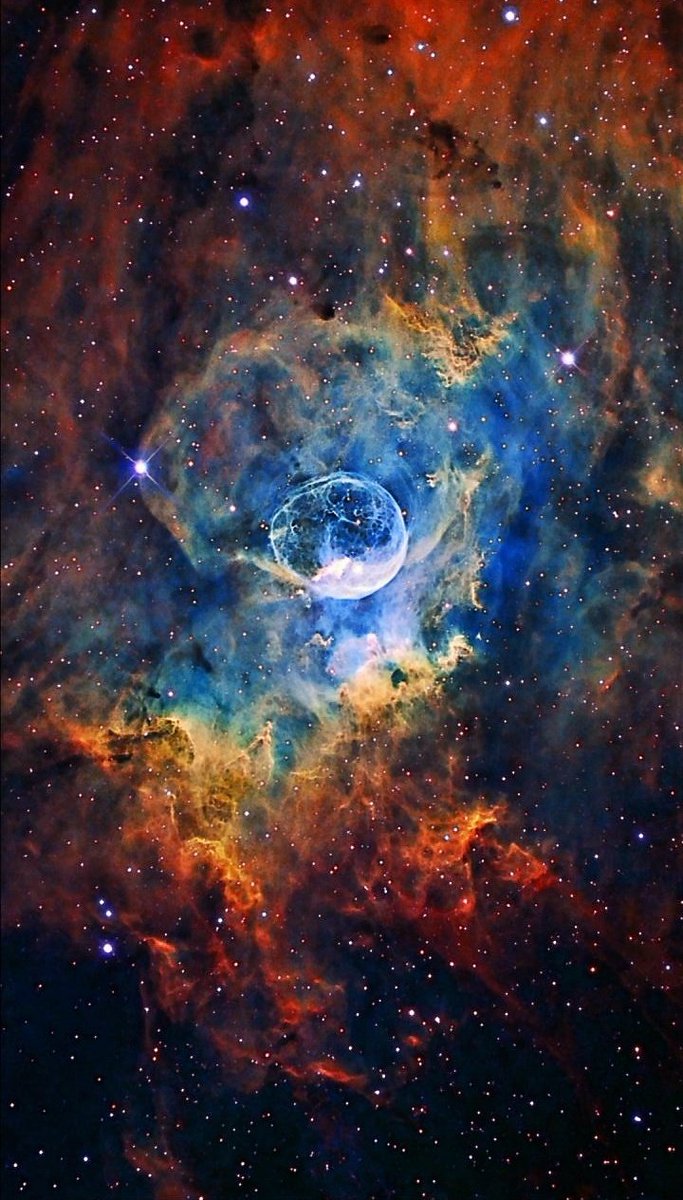
The stellar winds that create the bubble in this image, known as N44F, move at about 4 million miles per hour (7 million kilometers per hour), thousands of times stronger than the strongest storm recorded on Earth.
Read more about what causes this storm: https://t.co/wJ8UgY80yt
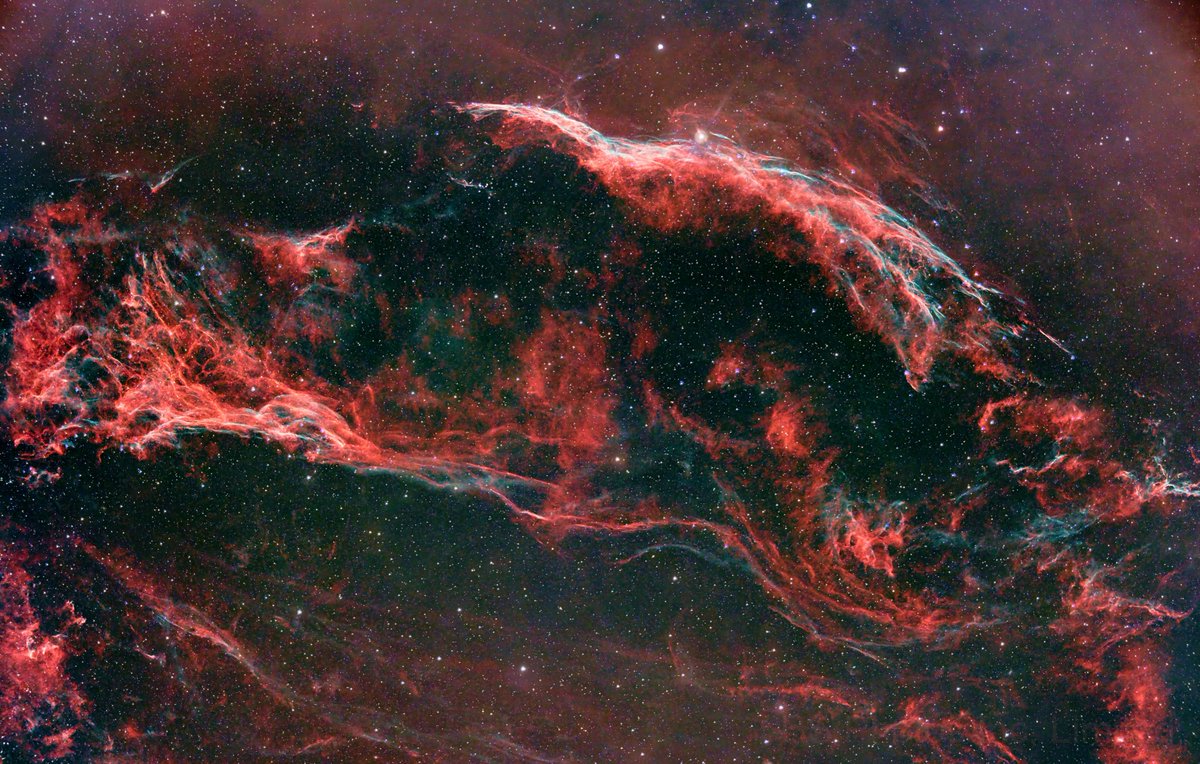
NGC6960
#Telescope:Explore Scientific ED APO 152mm f/8 FCD1 ED
#Camera: ZWO ASI2400MC Pro
Sky-Watcher EQ6-R Pro
#Optolong L-Pro 2": 45×300″(3h 45′)
Integration: 3h 45′
45x300 second exposures
Fairmount, IN Bortle 4
Credit: Brian Scott Carter
#optolongLPro#lprofilter
1/3
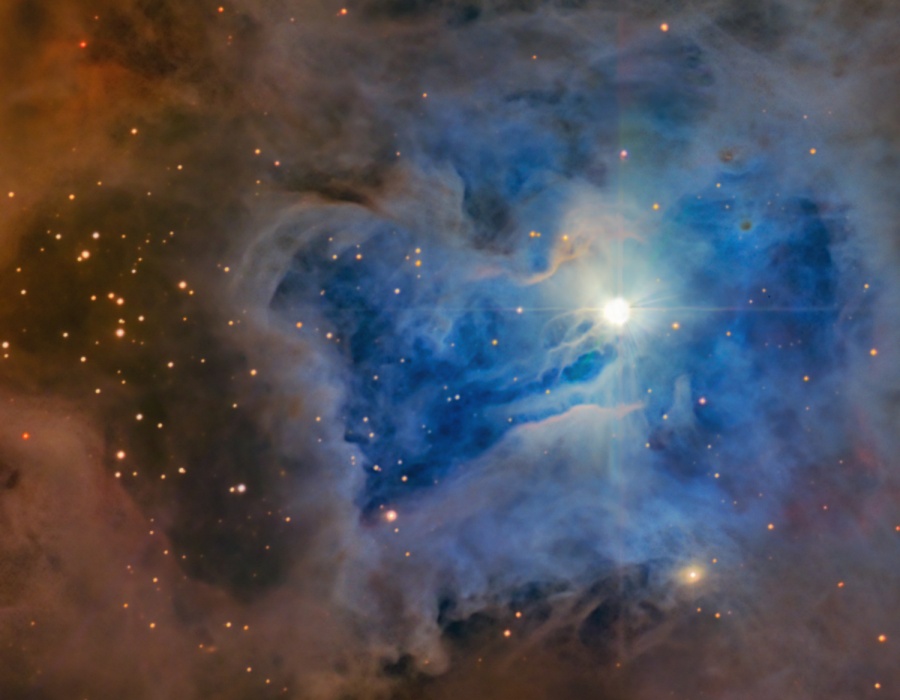
The imagery of flowers isn't rare in the sky.
Here's NGC 7023, the Iris Nebula, a stupendous and bright reflection nebula lying in Cepheus, 1,300 ly away.
The bright blue portion is 6 ly across.
Credit and info➡️https://t.co/Z87lVxs4I8
#scritturebrevi#VentagliDiParole
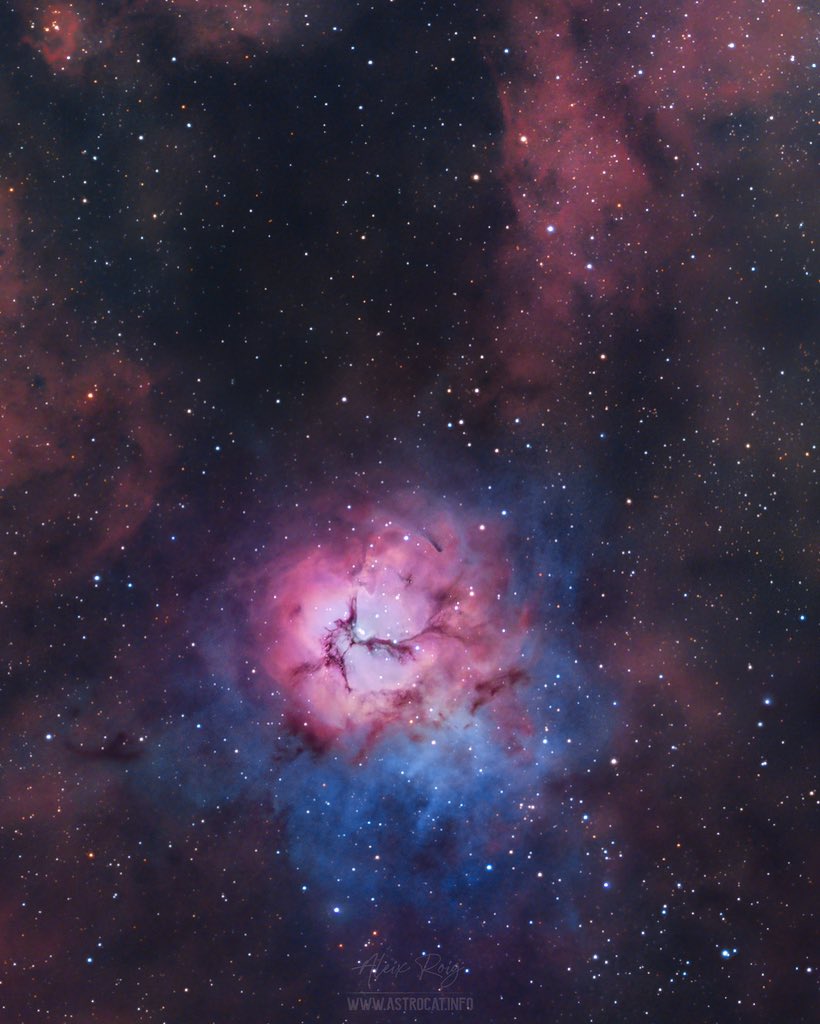
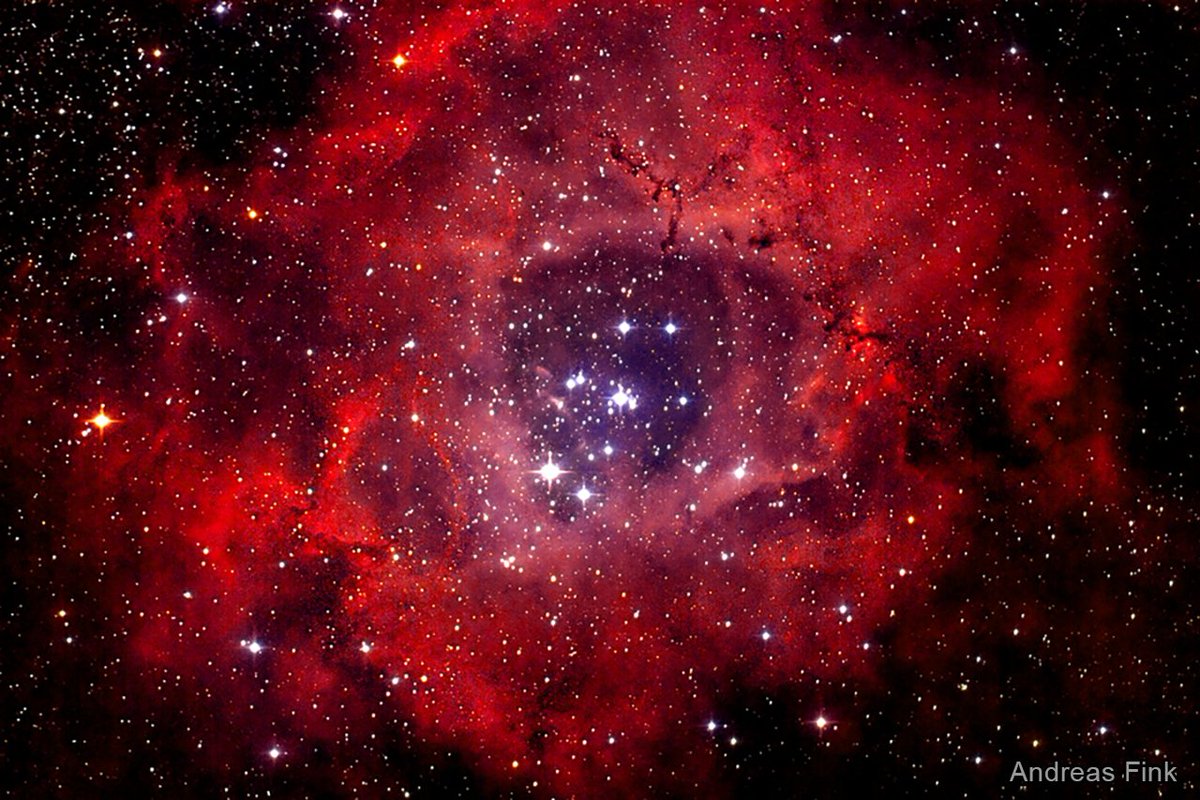
It's no bed of roses in the Rosette Nebula! Extremely hot O-type stars produce intense radiation and fierce winds inside the rowdy stellar nursery at the nebula's core. Located roughly 5,000 light-years from Earth, this cosmic rose is about 100 light-years across. #RedRoseDay 🌹
Crescend Nebula (NGC6888)
It has been partially cloudy in Mumbai, Avinash Patil had to image for 10 nights to acquire targeted 20 plus hours of data.(21Hs, 35Min)
GSO RC6 with GSO 0.7xreducer
ZWO ASI533MM Pro
ZWO AM5 & SkyWatcher Eq6r
#Optolong 3nm Ha, O3 & RGB filters
Bortle 9
Don’t you think that Arp 273 resembles a rose? @NASAHubble saw these two galaxies that were distorted by their mutual gravitational pull into a shape resembling a long-stemmed rose. #RedRoseDay
ESO #Flashback: Enjoy this pair of overlapping spiral galaxies caught in a majestic cosmic dance. They are, in fact, not interacting at all, but only appear to overlap when viewed from Earth.
🔗 https://t.co/n9ke80yqqv
📷 ESO / Iodice et al.