@BernieSanders@djrosent@gilbert This is really interesting in the context of your latest episode on Vanguard.
Could the effective altruist leaders of the AI labs be modern day Jack Bogels? Would they sacrifice their economic upside to create a customer ownership model?
NEW EPISODE:
Walkman: SONY and the First Portable Music Player
How do you create a product that people don’t even know they want?
Before Steve Jobs made Apple famous for the iPod, he was inspired by another visionary: Akio Morita, the co-founder of SONY.
Morita turned a small Japanese startup into a global powerhouse and, along the way, wrote the playbook for designing revolutionary products.
At the heart of the story is the SONY Walkman – a deceptively simple idea that forever changed how the world listens to music.
In this episode of Project Blueprint, we explore how SONY combined creative technology, product design, and marketing to create one of the most influential consumer products ever made.
What You’ll Learn:
- The origins of SONY and Akio Morita’s vision to rebuild Japan through technology
- How breakthrough products are conceived, designed, and launched
- The marketing secrets behind SONY’s global rise and how you can use them to share your own ideas
@FoundersPodcast Pixar is such an incredible story! There’s some really interesting parallels to how AI is changing filmmaking today too.
We covered Pixar’s rise and the making of Toy Story on @ProjBlueprintFM too.
https://t.co/GqfOEWJXvp
@tbpn@andrewrsorkin Great interview! Loved the shout out to John Raskob.
We covered his quest to build the Empire State Building in detail on @ProjBlueprintFM
https://t.co/AWGYs2Hkct
NEW EPISODE:
Toy Story, the first computer animated film
How do you accomplish a project that’s part art, part technology?
When Toy Story first debuted in 1995, it changed filmmaking forever. For the first time, a movie had been made entirely with computer animation.
The film became the highest-grossing release of the year in the U.S., inspired one of the most successful franchises in cinema, and launched Pixar’s unprecedented run of seven consecutive box office hits.
In this episode of Project Blueprint, discover the origins of Pixar and the making of Toy Story. It’s a story of Silicon Valley innovation, Hollywood storytelling, and one man's decades-long journey to change how movies are made.
What does it take to build the biggest airplane the world has ever seen—an aircraft two and a half times larger than any plane at the time?
In 1969, Boeing rolled the 747 out of its hangar and made aviation history in a single flight.
For the full story, check out the @ProjBlueprintFM episode on the Boeing 747.
NEW EPISODE:
Boeing 747: The First Jumbo Jet
What does it take to build the biggest airplane the world has ever seen?
When the Boeing 747 debuted in 1970, it changed air travel forever. With double the capacity of earlier jets, it slashed ticket prices and democratized global travel.
But behind the triumph is a story of near-disaster: a company on the edge of bankruptcy and an engineering team crippled by corporate bureaucracy.
What You’ll Learn:
- How Joe Sutter and “the Incredibles” designed the world’s first jumbo jet under crushing time pressure
- Why Boeing built the largest factory in the world
- How the 747 reshaped global culture, making long-haul travel affordable to millions
@GlueGuys_Pod@AcquiredFM Great episode! I loved the question about shows with a similar format. @ProjBlueprintFM tells stories similar to the Acquried format but for great projects: The Empire State Building, Boeing 707, and more to come
Something fun we discovered: you can use #Genie3 to step into and explore your favorite paintings.
Here's a short visit to Edward Hopper's "Nighthawks".
Listen to the full @projblueprintfm episode on the Empire State Building here:
Spotify: https://t.co/fdI9Yskl06
Apple Podcasts: https://t.co/NPc5P16qTj
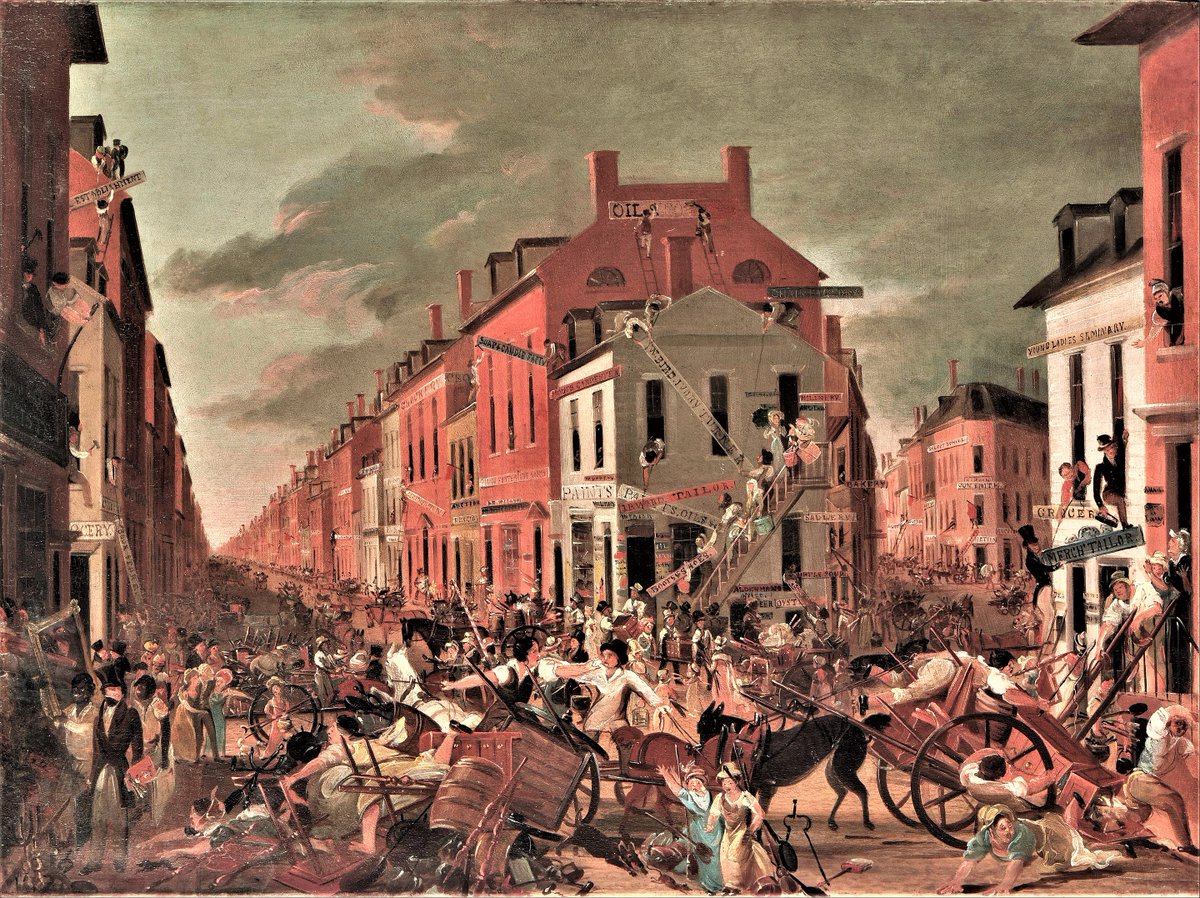
Imagine every worker in New York City moving to a new office on the same day.
Prior to WWII, that's exactly what happened. All office leases in New York ended on either May 1st of Oct 1st.
This was called "Moving Day" and created chaos and pandemonium in the streets.
This tradition also set an impossibly short deadline for the builders of the Empire State Building. The tallest building in the world would have to be built in less than 14 months.
If the builders missed the deadline, they would sacrifice 6 months of rents.
But they rose to the challenge and completed construction in only 410 days, setting a new record for speed and height.