Research-driven GTM Messaging & Positioning for SaaS and Tech | Buyer research → sharper positioning → LinkedIn + X content that supports sales | Ghostwriter
When a founder starts working with me, no X or LinkedIn content gets written in the 7 days.
Cause I spend it reading recordings and support tickets, and it's the part that decides whether the writing works at all.
Here's what the week actually looks like:
1. Day one is a 90 minute call with the founder, and most of it's one question repeated.
What would this buyer use tomorrow if you disappeared today?
2. Day two and three are recordings.
I listen to the opening of the last 8 renewal calls, where customers explain what nearly made them leave
3. Day four is support tickets from each customer's first 30 days, because those show what people expected to buy
4. Day five is one page.
Who it's for, what they use instead, what breaks in that alternative, and the three phrases buyers used more than once
Founders answer day one with competitor names first. It takes about 40 minutes to get to the real answer.
That one page goes to whoever runs sales before it goes anywhere near a post.
If sales disagrees with it, the writing would've been wrong for months.
Writing starts in week two, and by then it's mostly assembly.
The hard part was deciding what to say, and that happened while nobody wrote anything.
Steal the week:
→ Block five days before your next content push and write nothing during them
→ Read the two sources nobody reads, which are renewal calls and first-month tickets
→ Get one page agreed with sales before a single post gets drafted
Product messaging that works answers three questions.
• Who it's for. Not "growing teams," but a job title inside a company you can picture
• What they get. Not what your software does, but what changes in their week
• Why you, and not the four other tabs they've got open
Founders answer the first two without much trouble.
Almost nobody answers the third, because it's the one that forces you to say something a competitor would argue with.
So here's the tell:
Put your homepage line in your closest competitor's mouth.
If it fits without changing a word, you skipped question three.
And when you skip it, your buyer doesn't. Instead they fill the gap themselves, and they fill it with price.
Skipped: "the modern platform for growing revenue teams."
Answered: "the only one that doesn't need you to move your data first."
I read a homepage last month that described the company as AI-native.
Nobody knows what that means, and I suspect that includes the founder.
Because some words don't just fail to help. Instead they actively cost you something:
• Revolutionary.
Every product claims it, so now your reader is deciding whether to believe you instead of reading your next line
• AI-powered.
Same problem, worse timing, because enough companies have oversold it that the phrase now buys suspicion
• Enterprise-grade, seamless, trusted.
All free to your competitors, which is why buyers have trained themselves to skip them
So the test that sorts them is whether a reader could check it.
"Enterprise-grade security" is a feeling.
Whereas "your IT lead can forward our security questionnaire without editing it" is a fact they can verify in one email.
One costs nothing to write, so it earns nothing back. The other took work, and it shows.
→ Highlight every adjective on your homepage
→ Ask what a buyer would have to do to verify each one
→ Replace the first unverifiable one with something checkable
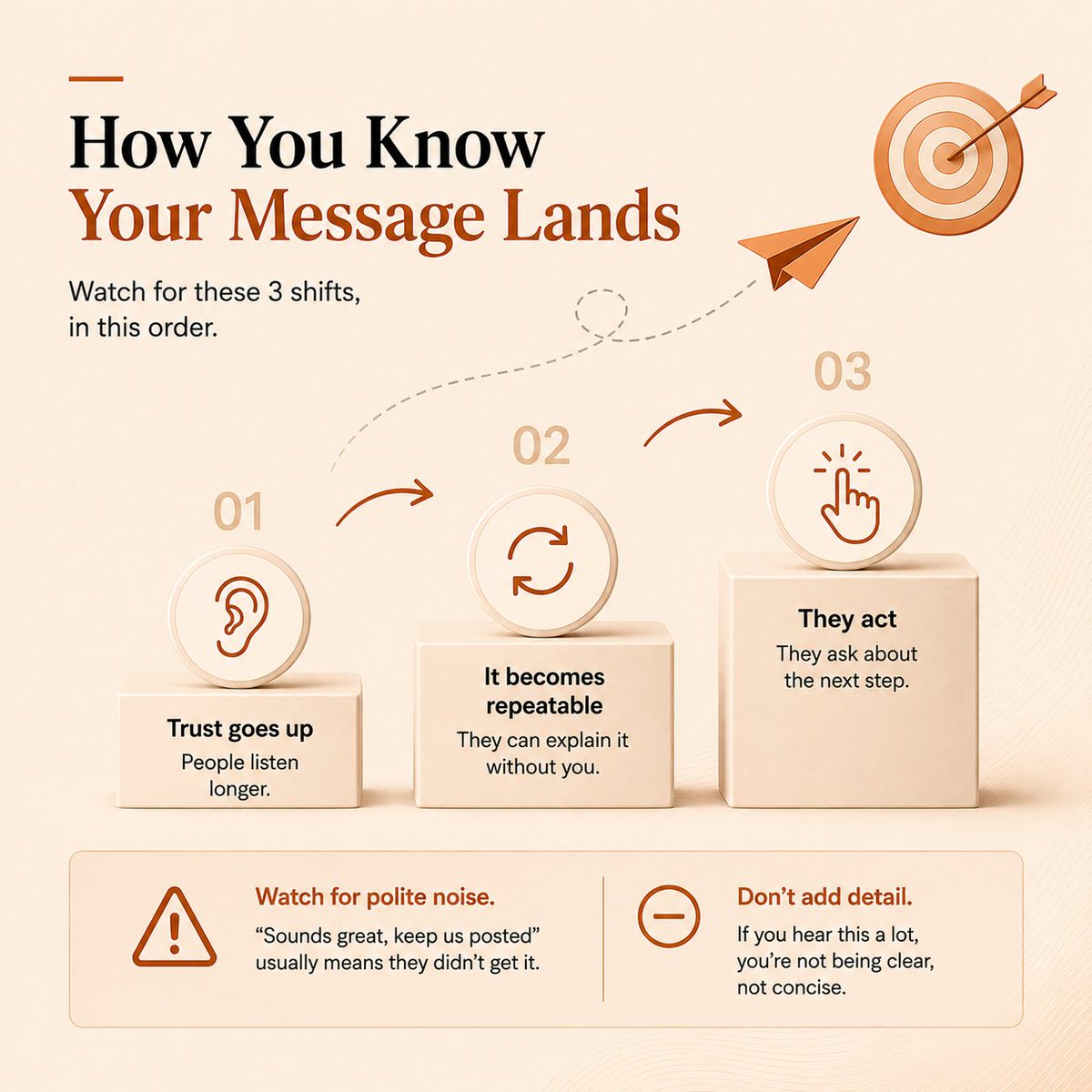
You don't need a survey to know whether your product messaging lands.
Because you can know it on a single call.
They arrive in this order:
• Trust goes up first, so people listen longer.
The moment a sentence costs you trust, their eyes glaze, and everything after that is polite noise
• Then it becomes repeatable.
Because someone you explained it to can explain it to a third person with you nowhere in the room
• Last, they act.
Not "interesting, let us know how we can help," but "tell me more about that part"
Watch for the polite version, though, because founders keep misreading it as progress.
That's because "sounds great, keep us posted" is what people say when they didn't understand you but would rather not admit it.
So if you're hearing that a lot, don't add detail.
After all, the problem is almost never that you said too little.
@matt_kub The structure makes sense
Lots of people have all nine of those things already, just scattered across five different apps and their own heads
@STimothy46294 Lots of people skip straight to writing and then rewrite the same page four times
The research phase tells you more about your customer than any brainstorming session will
And once you know what the person fears and what they want, the writing goes fast !
@tiya_decodes 100%
I actually was about to cancel my Claude subscription and move to ChatGPT until the day Opus 5.5 dropped, and right now I'm even thinking about subscribing to the $200 plan
@notesbylouis Getting the first 10 users is harder, but it depends on who you ask
Ask an engineer and they say the product is hard
Ask a founder who shipped in two weeks and spent six months with zero signups and they give you a different answer
A simple & useful rule for SaaS founders:
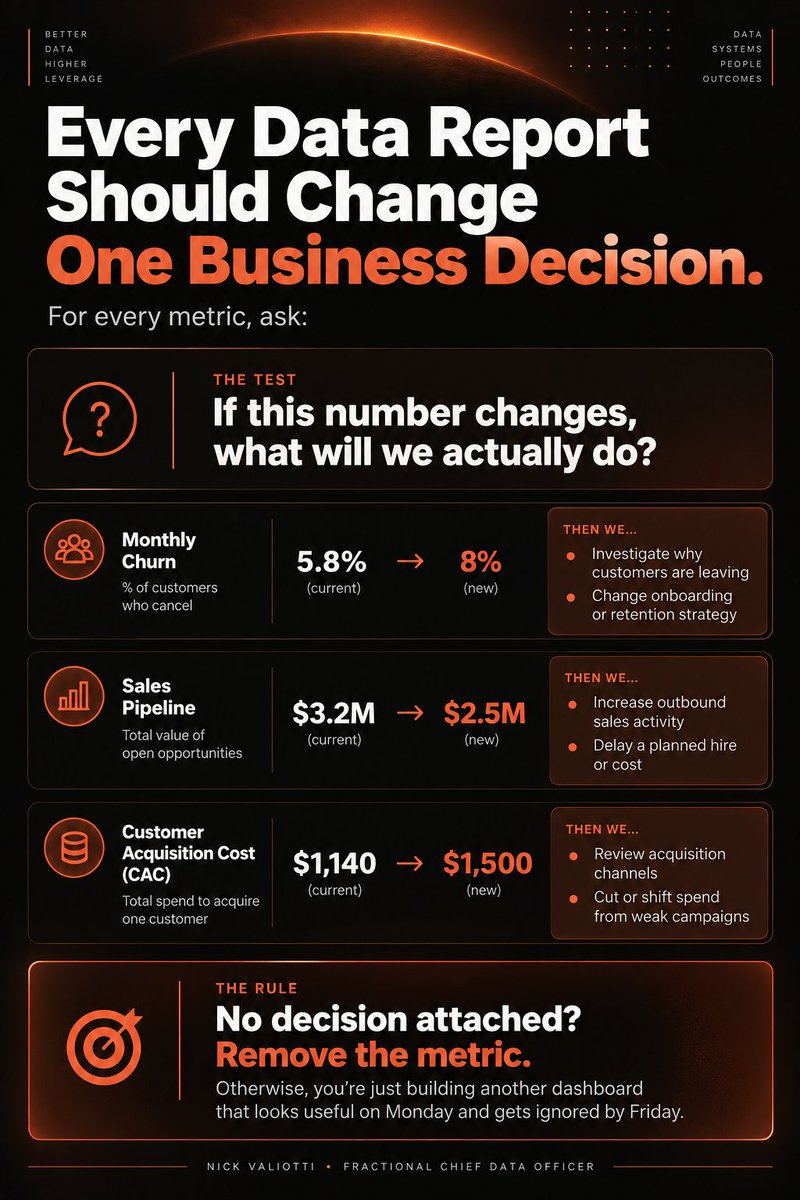
Every data report should change one business decision.
Say your Monday dashboard shows:
- Monthly churn: 5.8%
- New customers: 42
- Sales pipeline: $3.2M
- CAC: $1,140
Don’t just ask, “Is this useful?”
Ask something much more specific: “If this number changes, what will I actually do?”
If churn goes from 5.8% to 8%, maybe you investigate why customers are leaving and change onboarding.
If pipeline falls from $3.2M to $2.5M, maybe you increase outbound sales activity or delay a planned hire.
But if nobody can name the decision a number will change, stop adding it.
Otherwise, you’re just building another dashboard that looks useful on Monday and gets ignored by Friday.