"In 1973, the evolutionary biologist Leigh Van Valen proposed what he called the Red Queen hypothesis: in any ecosystem, when one species evolves an advantage at the expense of another, the disadvantaged species will evolve to offset that improvement."
-
"The Red Queen hypothesis is the closest thing entrepreneurship has to a foundational law."
Love this from @ganeumann.
Despite the proliferation of startup pundits over the last 25 years, no one knows how to make startups more successful.
The New Pundits have sold millions of books, and their entrepreneurship “science” is taught in universities and accelerators all over the world. But none of it has made a difference.
Startups are no more likely to survive today than they were in 1995. By some measures, they are even less likely to work.
In his latest essay, legendary venture investor @ganeumann presents the data, diagnoses the problem, and proposes something that might actually work.
It involves Robert Boyle, Peter Thiel, Paul Feyerabend, and Lewis Carroll’s Through the Looking-Glass.
https://t.co/CElsVCloYY
Love this from Patti Smith for two reasons:
1) It’s a beautiful articulation of what experiencing a masterpiece feels like for the right audience
2) Writers on writers is always great, especially when you realize two people you love to read also read each other
@matthuang I've been interviewing investors for an project, and several have mentioned they've been revisiting some of the great science-fiction works because they're helpful maps for thinking about where the world can go.
The ultimate story behind the story piece by @JeremySternLA.
“He’s been one of the most impactful people in defense tech, working for 20 years, and he’s done it privately, quietly, and very much behind the scenes,” said Katherine Boyle of a16z. “And I think that’s why he’s been so effective.” Ted Mabrey, Palantir’s head of commercial, said that “Without Shyam, none of it works. There are people in high-stakes environments who use our software who are alive right now because of Shyam.” “At every stage of this company he’s had a but-for role,” Karp told me. “But for Shyam it would have gone differently. But for Shyam, honestly, I’d still be sitting alone in New Hampshire as an introvert.”
Shyam Sankar is Palantir's chief technology officer and the man most responsible for making its business and technology work.
He joined in 2006 as employee #13, when Palantir was one of Silicon Valley’s freakshows: a small and somewhat demented chickenhawk of a startup with a buggy demo and no customers. For 20 years, largely from the shadows, he has brute forced it into the spearhead of "defense tech" and a $320 billion company.
He embedded with intelligence analysts in Virginia, special operators in Iraq and Afghanistan, and on the factory floors of some of the world’s biggest companies—building and rebuilding software in the field, sometimes with phones taped to his head so he could give and take feedback while keeping his hands free to code. He invented the “Forward Deployed Engineer,” which has since become the object of both skepticism and imitation.
Alex Karp, Palantir's mercurial co-founder and CEO, says the company would not exist without him. The same can be said of the modern defense tech industry, many of whose founders cut their teeth working for Shyam.
In this deeply reported profile, @JeremySternLA tells the story of the most pivotal but hidden figure behind America’s most controversial company. He also gives the clearest explanation you'll read of what Palantir actually does, whether its valuation is justified or absurd, and what any of this has to do with the company’s mission to save Western civilization.
It begins in the Grand Ballroom of The Pierre hotel and winds through Nigeria and India, Florida and California, Iraq and Afghanistan. It ends with a rabbi, a monkey, and a lesson in what it means to buy time in the face of a coming fire.
Only in Colossus:
The story of 3G Capital involves Roger Federer, Sam Walton, and Warren Buffett. It includes the biggest beer company on earth, the biggest footwear deal in history, and a ketchup bottle with Charlie Munger's face on it.
It also involves accusations of 'chainsaw capitalism,' CEOs driving freight trains, and billion-dollar companies being handed to kids in their twenties.
Buffett called it the best management culture he'd ever seen.
But, until now, the story behind the culture has never been told by the people who carry it forward. In truth, 3G would prefer you had never heard of it.
The firm began in New York in 2004. But the real story starts in the seventies, off the beaches of Rio de Janeiro, when Jorge Paulo Lemann bought a brokerage for $800,000 and built a model for running businesses unlike anything else in Brazil.
The model has since produced the biggest investment bank in Brazil, the world’s largest brewer, the third-largest restaurant company, and turned hundreds of employees into multimillionaires.
In 3G Capital, it has also produced a rare kind of investing partnership, one where each fund holds exactly one company, the partners are the largest investors in every fund, they work the businesses themselves, and they have never lost money on a deal.
Almost everything written about the firm notes that managing partners Alex Behring and Daniel Schwartz did not respond for comment.
For Colossus, they sat for hours of interviews at their Manhattan office.
@domcooke tells the full story of how this secretive firm with fewer than 30 employees has built some of the world's biggest companies.
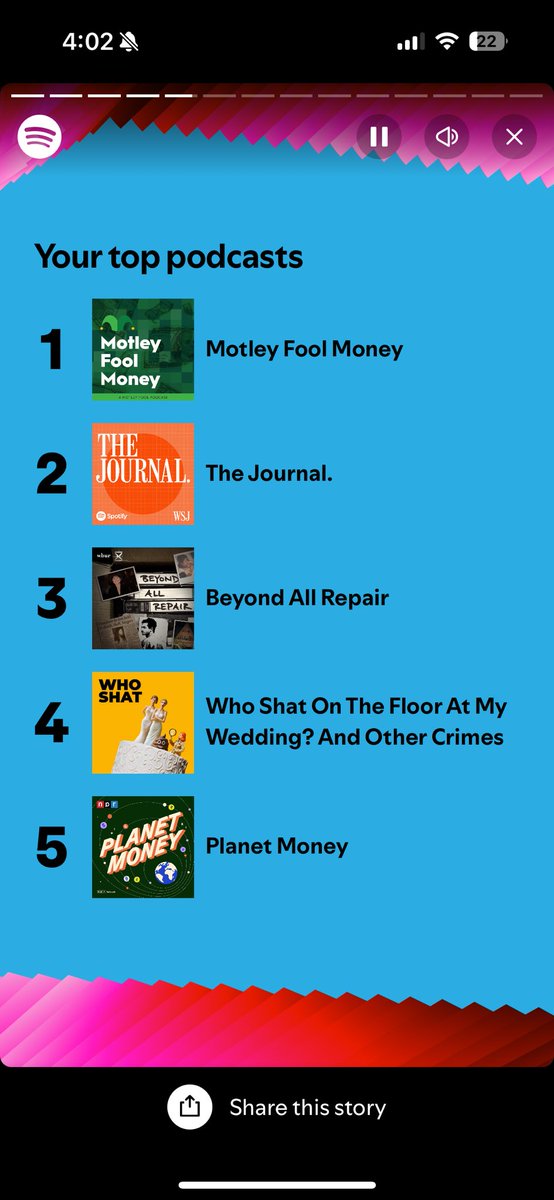
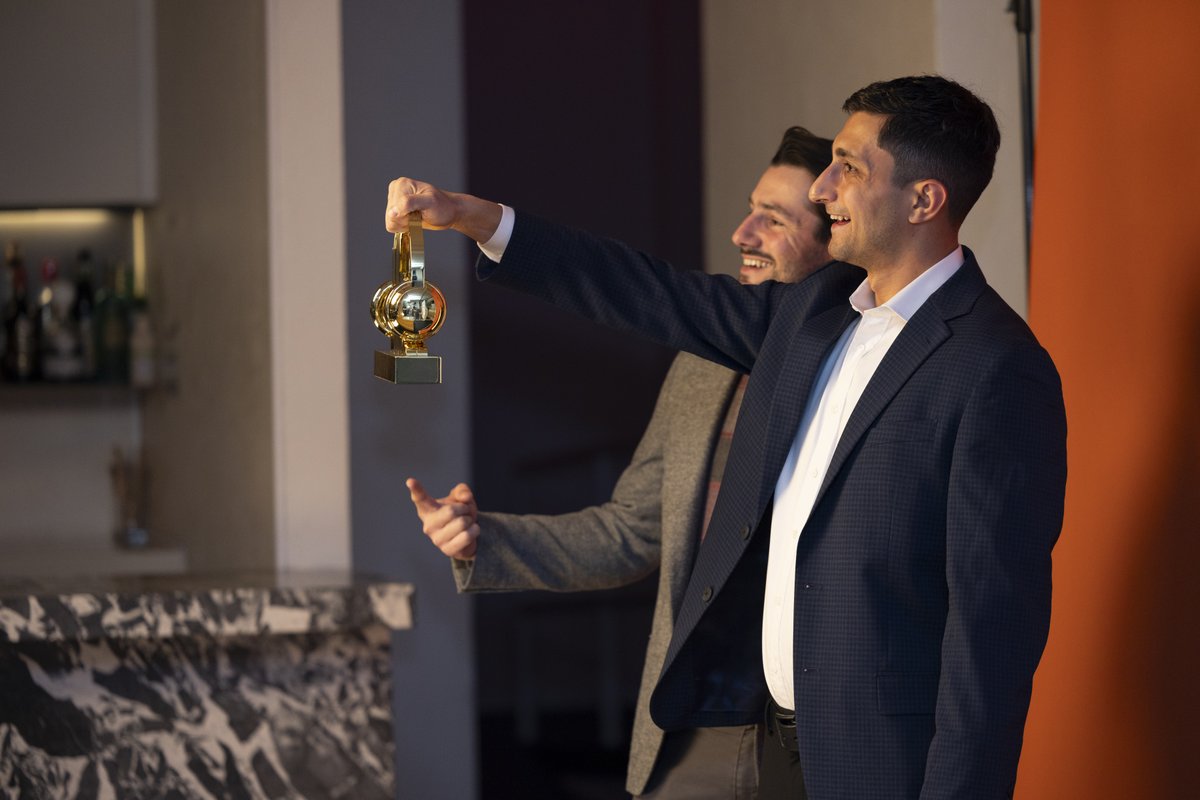
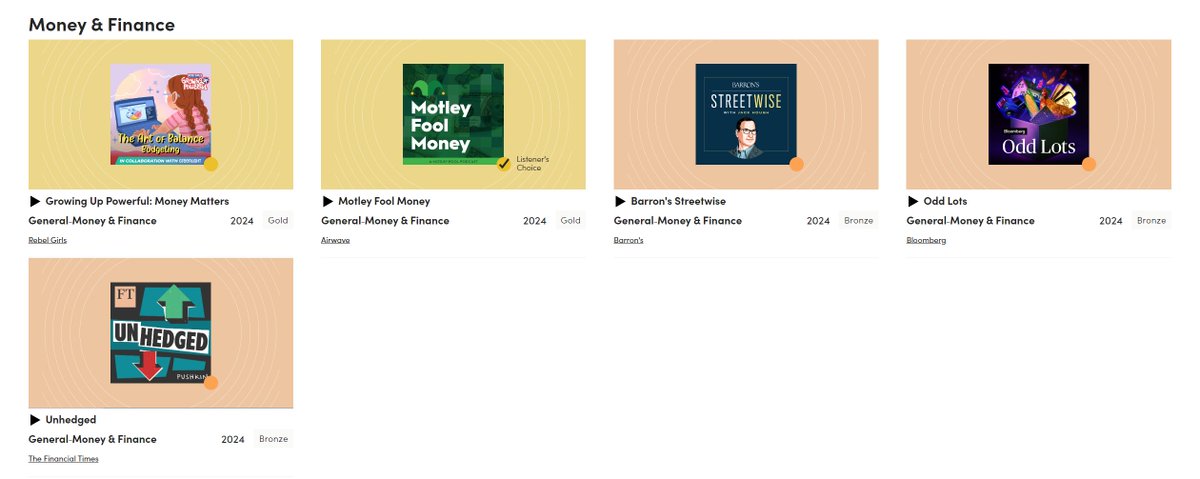
Last week, I hosted my final episode of Motley Fool Money and wrapped up nearly 11 years at The Motley Fool.
It’s tough to sum up a decade in a thread, but here’s a go 🧵:
7/ To all the members and listeners that have tuned in, thank you for sharing your most valuable asset – time.
To Tom and David Gardner and all my fellow Fools, thank you for letting me play a part of TMF’s important role – advocate and community for the average investor.
Back on @MotleyFoolMoney today at the invitation of @WilyLewis to talk $NFLX earnings (Spoiler: An absolutely stunning quarter) and overall market valuation.
https://t.co/4rZa5FftTk
Today is Election Day. I'm glad & proud we have that in our country!
Tomorrow is where I'm focused, though.
It was a delight to join w/ @WilyLewis on @MotleyFoolMoney to discover who wins… no matter WHO wins.
Starts at 19:02....
https://t.co/nbr6lidUDt