#journorequest
Looking to speak with Ecommerce operators based outside Africa who sell into countries like Nigeria, Kenya, South Africa, Egypt, or Morocco.
How are you selling into these countries (marketplaces, DTC, partners)? How are you handling payments and delivery?
Operators only. Open to a quick chat. DM or reply.
"Top #Ecommerce Tools in Africa" | @Wisdom_Dabit reports that African merchants combine store software, local payments, messaging tools, and delivery providers, with the mix varying by country. His article lists the top providers by category. https://t.co/207RQkZQhK @WuiltApp
"How Foreign Brands Sell Into Africa" | Nigeria-based contributor @Wisdom_Dabit reports that leading cross-border brands rely on multiple sales channels: marketplaces, direct selling, & retail partnerships. https://t.co/a5cBb8OGLL #ecommerce#Africa@jumia_group@wasoko_official
Taking the test to update my expired certificate.
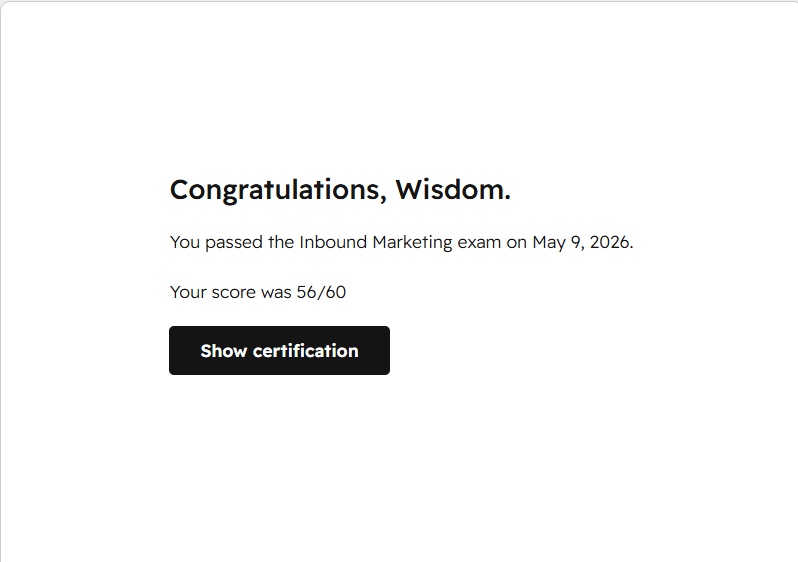
I earned the Inbound Marketing Certified achievement on HubSpot Academy! https://t.co/dyzVHzSZfJ
#lol, #working
Been 2 years or so since the last test, and my certificate expired. Wanted to see if my skills were rusty, lol.
I earned the Content Marketing Certified achievement on HubSpot Academy! https://t.co/Ajn7pNt9JN
#wins
I understand where you’re coming from, Avi.
That said, I’m curious about your verification process. How exactly were users being verified?
If it was primarily based on submitted IDs without deeper validation (e.g. cross-checking authenticity or using layered KYC systems), that might explain how such large-scale abuse slipped through.
There are also data protection and identity verification standards in Nigeria (for example under guidelines) that typically require more robust verification workflows, especially when handling user data at scale.
I feel for legitimate Nigerian users who were using Kled. Hope you find alternatives soon!
For builders and founders in Nigeria, this is an opportunity to create systems designed with local context, behavior patterns + safeguards in mind from day one.
#journorequest
Looking to speak with Ecommerce operators based outside Africa who sell into countries like Nigeria, Kenya, South Africa, Egypt, or Morocco.
How are you selling into these countries (marketplaces, DTC, partners)? How are you handling payments and delivery?
Operators only. Open to a quick chat. DM or reply.
The RightsCon conference in Zambia was forced to cancel just days before it was set to begin following reported pressure from the Chinese government.
Some participants had already arrived when immigration officials informed them the event wouldn’t go ahead. That’s how the organizers themselves found out.
According to the organizers, civil society groups from Taiwan were scheduled to participate and Chinese diplomats pushed for their exclusion. And it didn’t stop there. The Zambian government reportedly asked for certain discussions to be restricted as well.
The organizers, @accessnow, refused. Days before the event, the government moved to shut it down with no proper consultation + no clear notice.
So a global conference on digital rights and free expression was effectively prevented from happening… over who was allowed in the room.
You really can’t make this up.
#RightsCon2026 #RightsCon #HumanRights #Africa #Zambia #FreedomOfExpression
Following our April 29 announcement, we believe it's important to be transparent about the context that led to the decision. We want to explain, where we can, why this was made on such short notice, only days before we were set to host RightsCon.
Read: https://t.co/NrQFiz5Ccb
My first real tweet 🫣🫣!
So I have been writing about Ecommerce in Africa with @PracticalEcomm. In this one, I cover the growth of B2B Ecommerce in Africa, the pros, and why it's working better than expected.
Hint: it's actually cheaper. Think of the delivery economics:
With B2C (e.g., Jumia), 1 order = 1 delivery. Low density, expensive per drop.
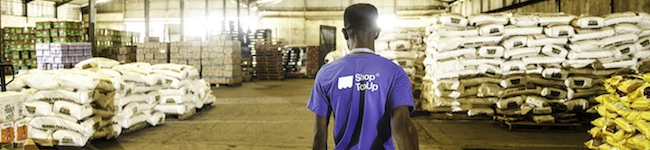
With B2B, you're looking at 20–50 shops on a single truck route. High density + much cheaper per unit delivered.
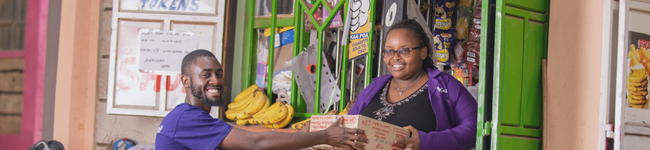
Platforms like MaxAB–Wasoko supply goods in bulk and extend short-term credit to retailers, who then repay after making sales. So it's not just distribution anymore, it's distribution + financing.
And once a retailer depends on you for both inventory and working capital, their loyalty increases and switching to another platform becomes less likely.
And there's also a visibility advantage. These platforms allow brands to see what's selling, where it's selling, and how fast it's moving, enabling better decisions around pricing and inventory.
More in the piece 👇🏽!
"B2B #Ecommerce Powers Africa Retail" | In much of Africa, consumer retail revolves around physical mom-and-pop shops, kiosks, market stalls. Nigeria-based contributor @Wisdom_Dabit addresses the rise of B2B ecom distributors to serve these merchants. https://t.co/GIbodxmSJ9
"B2B #Ecommerce Powers Africa Retail" | In much of Africa, consumer retail revolves around physical mom-and-pop shops, kiosks, market stalls. Nigeria-based contributor @Wisdom_Dabit addresses the rise of B2B ecom distributors to serve these merchants. https://t.co/GIbodxmSJ9