We’ve been busy building an AI system to generate 3D worlds from a single image. Check out some early results on our site, where you can interact with our scenes directly in the browser!
https://t.co/ASD6ZHMwxI
1/n
BREAKING NEWS
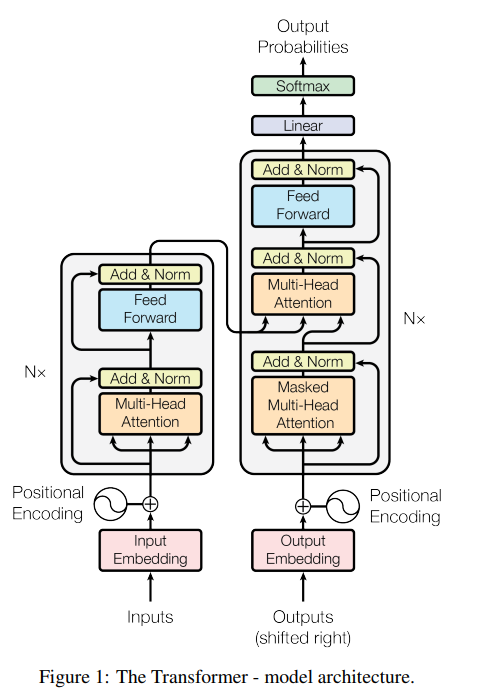
The Royal Swedish Academy of Sciences has decided to award the 2024 #NobelPrize in Literature to the Attention Is All You Need authors.
Their work has made thousands cry, laugh, or rich and made GPUs go brrr
The question of whether LLMs can reason is, in many ways, the wrong question. The more interesting question is whether they are limited to memorization / interpolative retrieval, or whether they can adapt to novelty beyond what they know. (They can't, at least until you start doing active inference, or using them in a search loop, etc.)
There are two distinct things you can call "reasoning", and no benchmark aside from ARC-AGI makes any attempt to distinguish between the two.
First, there is memorizing & retrieving program templates to tackle known tasks, such as "solve ax+b=c" -- you probably memorized the "algorithm" for finding x when you were in school. LLMs *can* do this! In fact, this is *most* of what they do. However, they are notoriously bad at it, because their memorized programs are vector functions fitted to training data, that generalize via interpolation. This is a very suboptimal approach for representing any kind of discrete symbolic program. This is why LLMs on their own still struggle with digit addition, for instance -- they need to be trained on millions of examples of digit addition, but they only achieve ~70% accuracy on new numbers.
This way of doing "reasoning" is not fundamentally different from purely memorizing the answers to a set of questions (e.g. 3x+5=2, 2x+3=6, etc.) -- it's just a higher order version of the same. It's still memorization and retrieval -- applied to templates rather than pointwise answers.
The other way you can define reasoning is as the ability to *synthesize* new programs (from existing parts) in order to solve tasks you've never seen before. Like, solving ax+b=c without having ever learned to do it, while only knowing about addition, subtraction, multiplication and division. That's how you can adapt to novelty. LLMs *cannot* do this, at least not on their own. They can however be incorporated into a program search process capable of this kind of reasoning.
This second definition is by far the more valuable form of reasoning. This is the difference between the smart kids in the back of the class that aren't paying attention but ace tests by improvisation, and the studious kids that spend their time doing homework and get medium-good grades, but are actually complete idiots that can't deviate one bit from what they've memorized. Which one would you hire?
LLMs cannot do this because they are very much limited to retrieval of memorized programs. They're static program stores. However, can display some amount of adaptability, because not only are the stored programs capable of generalization via interpolation, the *program store itself* is interpolative: you can interpolate between programs, or otherwise "move around" in continuous program space. But this only yields local generalization, not any real ability to make sense of new situations.
This is why LLMs need to be trained on enormous amounts of data: the only way to make them somewhat useful is to expose them to a *dense sampling* of absolutely everything there is to know and everything there is to do. Humans don't work like this -- even the really dumb ones are still vastly more intelligent than LLMs, despite having far less knowledge.
Shoutout to the team that built https://t.co/sJnTRDfHGF . Really neat site that benchmarks the speed of different LLM API providers to help developers pick which models to use. This nicely complements the LMSYS Chatbot Arena, Hugging Face open LLM leaderboards and Stanford's HELM that focus more on the quality of the outputs.
I hope benchmarks like this encourage more providers to work on fast token generation, which is critical for agentic workflows!
There's a new bill, SB-1047 "Safe and Secure Innovation for Frontier Artificial Intelligence Models Act".
I think it could do a great deal of harm to startups, American innovation, open source, and safety. So I've written a response to the authors: 🧵
https://t.co/1aUrHnAjrF
As long as AI systems are trained to reproduce human-generated data (e.g. text) and have no search/planning/reasoning capability, performance will saturate below or around human level.
Furthermore, the amount of trials needed to reach that level will be far larger than the amount of trials needed to train humans.
LLMs are trained with 200,000 years worth of reading material and are still pretty dumb.
Their usefulness resides in their vast accumulated knowledge and language fluency. But they are still pretty dumb.
Much has been said about many companies’ desire for more compute (as well as data) to train larger foundation models. I think it’s under-appreciated that we have nowhere near enough compute available for inference on foundation models as well.
Years ago, when I was leading teams at Google, Baidu, and Stanford that focused on scaling up deep learning algorithms, many semiconductor manufacturers, data center operators, and academic researchers asked me whether I felt that AI technology would continue to make good use of more compute if they kept on delivering it. For many normal desktop processing workloads, like running a web browser or a text editor, having a faster CPU doesn’t help that much beyond a certain point. So do we really need faster and faster AI processors to train larger and larger models? Each time, I confidently replied “yes!” and encouraged them to keep scaling up compute. (Sometimes, I added half-jokingly that I had never met a machine learning engineer who felt like they had enough compute. 😀)
Fortunately, this prediction has been right so far. However, beyond training, I believe we are also far from exhausting the benefits of faster and higher volumes of inference.
Today, a lot of LLM output is primarily for human consumption. A human might read around 250 words per minute, which is around 6 tokens per second (250 words/min / (0.75 words/token) / (60 secs/min)). So it might initially seem like there’s little value to generating tokens much faster than this.
But in an agentic workflow, an LLM might be prompted repeatedly to reflect on and improve its output, use tools, plan and execute sequences of steps, or implement multiple agents that collaborate with each other. In such settings, we might easily generate hundreds of thousands of tokens or more before showing any output to a user. This makes fast token generation very desirable and makes slower generation a bottleneck to taking better advantage of existing foundation models.
That’s why I’m excited about the work of companies like @GroqInc, which can generate hundreds of tokens per second. Recently, @SambaNovaAI also published an impressive demo that hit hundreds of tokens per second.
Incidentally, faster, cheaper token generation will also help make running evaluations (evals), a step that can be slow and expensive today since it typically involves iterating over many examples, more palatable. Having better evals will help many developers with the process of tuning models to improve their performance.
Fortunately, it appears that both training and inference are rapidly becoming cheaper. I recently spoke with @CathieDWood and @CCRobertsARK of the investment firm ARK, which is famous for its bullish predictions on tech. They estimate that AI training costs are falling at 75% a year. If they are right, a foundation model that costs $100M to train this year might cost only $25M to train next year. Further, they report that for “enterprise scale use cases, inference costs seem to be falling at an annual rate of ~86%, even faster than training costs.”
I don’t know how accurate these specific predictions will turn out to be, but with improvements in both semiconductors and algorithms, I do see training and inference costs falling rapidly. This will be good for application builders and help AI agentic workflows lift off.
[Original text: https://t.co/BaH6bqZDds ]
Last week, I described four design patterns for AI agentic workflows that I believe will drive significant progress this year: Reflection, Tool use, Planning and Multi-agent collaboration. Instead of having an LLM generate its final output directly, an agentic workflow prompts the LLM multiple times, giving it opportunities to build step by step to higher-quality output. Here, I'd like to discuss Reflection. For a design pattern that’s relatively quick to implement, I've seen it lead to surprising performance gains.
You may have had the experience of prompting ChatGPT/Claude/Gemini, receiving unsatisfactory output, delivering critical feedback to help the LLM improve its response, and then getting a better response. What if you automate the step of delivering critical feedback, so the model automatically criticizes its own output and improves its response? This is the crux of Reflection.
Take the task of asking an LLM to write code. We can prompt it to generate the desired code directly to carry out some task X. After that, we can prompt it to reflect on its own output, perhaps as follows:
Here’s code intended for task X:
[previously generated code]
Check the code carefully for correctness, style, and efficiency, and give constructive criticism for how to improve it.
Sometimes this causes the LLM to spot problems and come up with constructive suggestions. Next, we can prompt the LLM with context including (i) the previously generated code and (ii) the constructive feedback, and ask it to use the feedback to rewrite the code. This can lead to a better response. Repeating the criticism/rewrite process might yield further improvements. This self-reflection process allows the LLM to spot gaps and improve its output on a variety of tasks including producing code, writing text, and answering questions.
And we can go beyond self-reflection by giving the LLM tools that help evaluate its output; for example, running its code through a few unit tests to check whether it generates correct results on test cases or searching the web to double-check text output. Then it can reflect on any errors it found and come up with ideas for improvement.
Further, we can implement Reflection using a multi-agent framework. I've found it convenient to create two different agents, one prompted to generate good outputs and the other prompted to give constructive criticism of the first agent's output. The resulting discussion between the two agents leads to improved responses.
Reflection is a relatively basic type of agentic workflow, but I've been delighted by how much it improved my applications’ results in a few cases. I hope you will try it in your own work. If you’re interested in learning more about reflection, I recommend these papers:
- Self-Refine: Iterative Refinement with Self-Feedback, by Madaan et al. (2023)
- Reflexion: Language Agents with Verbal Reinforcement Learning, by Shinn et al. (2023)
- CRITIC: Large Language Models Can Self-Correct with Tool-Interactive Critiquing, by Gou et al. (2024)
I’ll discuss the other agentic design patterns as well in the future.
[Original text: https://t.co/FtM2zOT2Lx ]
I think AI agentic workflows will drive massive AI progress this year — perhaps even more than the next generation of foundation models. This is an important trend, and I urge everyone who works in AI to pay attention to it.
Today, we mostly use LLMs in zero-shot mode, prompting a model to generate final output token by token without revising its work. This is akin to asking someone to compose an essay from start to finish, typing straight through with no backspacing allowed, and expecting a high-quality result. Despite the difficulty, LLMs do amazingly well at this task!
With an agentic workflow, however, we can ask the LLM to iterate over a document many times. For example, it might take a sequence of steps such as:
- Plan an outline.
- Decide what, if any, web searches are needed to gather more information.
- Write a first draft.
- Read over the first draft to spot unjustified arguments or extraneous information.
- Revise the draft taking into account any weaknesses spotted.
- And so on.
This iterative process is critical for most human writers to write good text. With AI, such an iterative workflow yields much better results than writing in a single pass.
Devin’s splashy demo recently received a lot of social media buzz. My team has been closely following the evolution of AI that writes code. We analyzed results from a number of research teams, focusing on an algorithm’s ability to do well on the widely used HumanEval coding benchmark. You can see our findings in the diagram below.
GPT-3.5 (zero shot) was 48.1% correct. GPT-4 (zero shot) does better at 67.0%. However, the improvement from GPT-3.5 to GPT-4 is dwarfed by incorporating an iterative agent workflow. Indeed, wrapped in an agent loop, GPT-3.5 achieves up to 95.1%.
Open source agent tools and the academic literature on agents are proliferating, making this an exciting time but also a confusing one. To help put this work into perspective, I’d like to share a framework for categorizing design patterns for building agents. My team AI Fund is successfully using these patterns in many applications, and I hope you find them useful.
- Reflection: The LLM examines its own work to come up with ways to improve it.
- Tool use: The LLM is given tools such as web search, code execution, or any other function to help it gather information, take action, or process data.
- Planning: The LLM comes up with, and executes, a multistep plan to achieve a goal (for example, writing an outline for an essay, then doing online research, then writing a draft, and so on).
- Multi-agent collaboration: More than one AI agent work together, splitting up tasks and discussing and debating ideas, to come up with better solutions than a single agent would.
I’ll elaborate on these design patterns and offer suggested readings for each next week.
[Original text: https://t.co/y4McIAjD2m]
Nvidia CEO Jensen Huang has a unique take on what kids should study in school.
While computer science and programming were once the must-have skills, Huang believes that the focus should shift to specific domain knowledge such as biology, chemistry, or finance.







![AndrewYNg's tweet photo. I think AI agentic workflows will drive massive AI progress this year — perhaps even more than the next generation of foundation models. This is an important trend, and I urge everyone who works in AI to pay attention to it.
Today, we mostly use LLMs in zero-shot mode, prompting a model to generate final output token by token without revising its work. This is akin to asking someone to compose an essay from start to finish, typing straight through with no backspacing allowed, and expecting a high-quality result. Despite the difficulty, LLMs do amazingly well at this task!
With an agentic workflow, however, we can ask the LLM to iterate over a document many times. For example, it might take a sequence of steps such as:
- Plan an outline.
- Decide what, if any, web searches are needed to gather more information.
- Write a first draft.
- Read over the first draft to spot unjustified arguments or extraneous information.
- Revise the draft taking into account any weaknesses spotted.
- And so on.
This iterative process is critical for most human writers to write good text. With AI, such an iterative workflow yields much better results than writing in a single pass.
Devin’s splashy demo recently received a lot of social media buzz. My team has been closely following the evolution of AI that writes code. We analyzed results from a number of research teams, focusing on an algorithm’s ability to do well on the widely used HumanEval coding benchmark. You can see our findings in the diagram below.
GPT-3.5 (zero shot) was 48.1% correct. GPT-4 (zero shot) does better at 67.0%. However, the improvement from GPT-3.5 to GPT-4 is dwarfed by incorporating an iterative agent workflow. Indeed, wrapped in an agent loop, GPT-3.5 achieves up to 95.1%.
Open source agent tools and the academic literature on agents are proliferating, making this an exciting time but also a confusing one. To help put this work into perspective, I’d like to share a framework for categorizing design patterns for building agents. My team AI Fund is successfully using these patterns in many applications, and I hope you find them useful.
- Reflection: The LLM examines its own work to come up with ways to improve it.
- Tool use: The LLM is given tools such as web search, code execution, or any other function to help it gather information, take action, or process data.
- Planning: The LLM comes up with, and executes, a multistep plan to achieve a goal (for example, writing an outline for an essay, then doing online research, then writing a draft, and so on).
- Multi-agent collaboration: More than one AI agent work together, splitting up tasks and discussing and debating ideas, to come up with better solutions than a single agent would.
I’ll elaborate on these design patterns and offer suggested readings for each next week.
[Original text: https://t.co/y4McIAjD2m]](https://pbs.twimg.com/media/GJN6yJRaIAExh4D.jpg)


