WOBAR ranks results of baseball performance. Is a numerical representation of competitive strength without any specific player, team, regional, or style bias
⚾ MLB Team BPR Update
Performance tells a different story.Traditional standings tell us who won.
Baseball Performance Rating (BPR) tells us how well teams performed.
This week's rankings reveal some fascinating insights.
🏆 Top 10 Overall Team BPR
🥇 Dodgers (106.439)
🥈 Brewers (105.511)
🥉 Marlins (105.261)
4️⃣ Mariners
5️⃣ Braves
6️⃣ Phillies
7️⃣ Rays
8️⃣ Cardinals
9️⃣ Pirates
🔟 Cubs
One of the biggest stories is the Miami Marlins. While they aren't among the league leaders in the standings, BPR ranks them as the #3 overall performing team in Major League Baseball.
Why?
Because Team BPR evaluates competitive performance, not simply wins and losses.
That performance is built from both sides of the game.
🔥 Top Team Offenses
Cubs
Dodgers
Marlins
🔥 Top Team Pitching Staffs
Mariners
Brewers
Braves
The Dodgers continue to demonstrate exceptional balance, ranking among the league's best in both offense and pitching, earning the highest Overall BPR.
The Brewers pair the #2 pitching staff with a Top 10 offense to remain one of baseball's most complete teams.
The Marlins' elite offense continues to elevate their overall performance, showing that the quality of play isn't always reflected in the standings.
Baseball has always measured results. BPR measures performance. Because...
Outcomes determine champions. Performance drives decisions.
What team do you think is outperforming its current record?
#BPR #WOBAR #MLB #Baseball #BaseballAnalytics #SportsAnalytics #PlayerDevelopment #Sabermetrics #BaseballPerformance #DataDriven #PerformanceMatters
For decades, baseball has invested heavily in collecting more data. Tracking systems became more sophisticated. Video became more detailed. Analytics became more advanced.
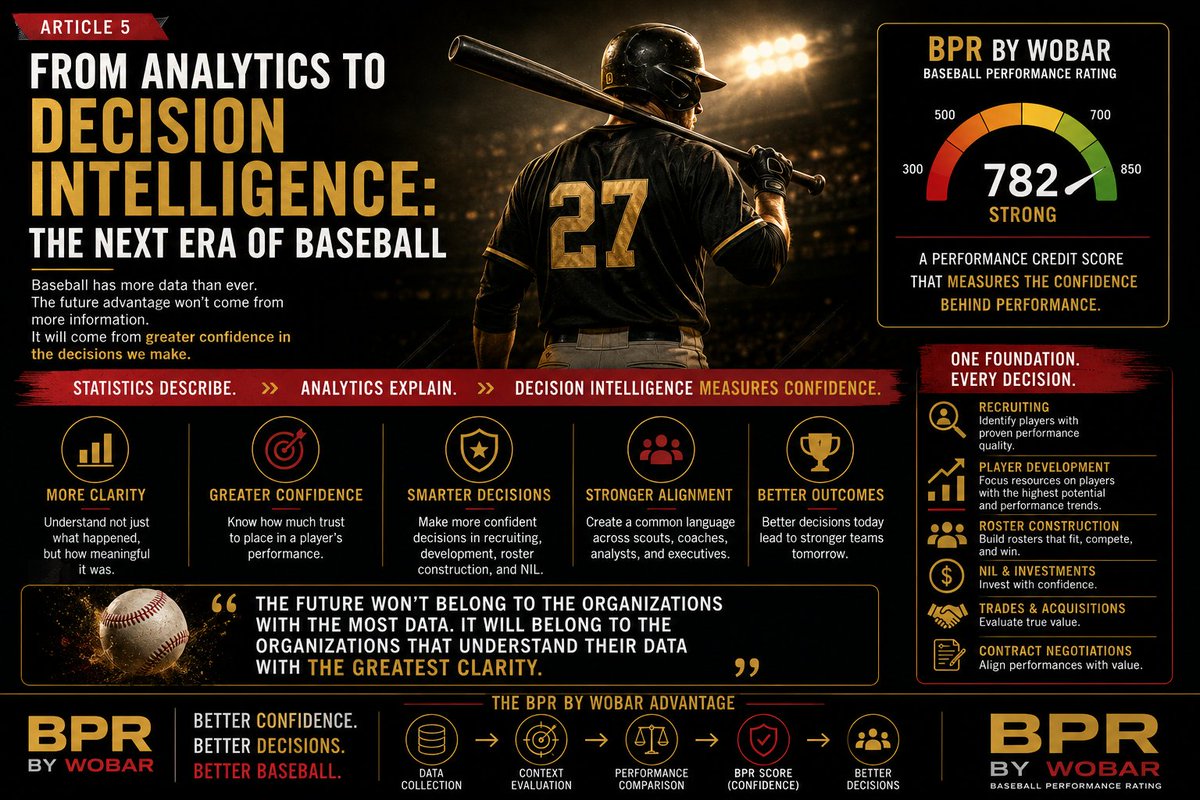
Today, organizations possess more information than ever before. Yet one challenge remains. Making better decisions. Collecting data is no longer the competitive advantage. Interpreting it effectively is. The organizations that consistently outperform others won't necessarily have more information. They'll have greater confidence in the decisions they make. That is the evolution from analytics to Decision Intelligence.
Statistics describe performance.
Analytics explain performance.
Decision Intelligence measures confidence in performance.
Baseball Performance Rating is built around this principle.
Not to predict every future outcome.
Not to replace experienced scouts.
Not to eliminate traditional analytics. But to provide every decision-maker, from coaches and scouting directors to general managers and NIL collectives, with a standardized foundation for evaluating performance.
Every baseball organization ultimately seeks the same outcome: Better decisions. Better decisions require better confidence. And better confidence begins with understanding not only what happened—but what that performance truly means.
The future of baseball evaluation won't belong to the organizations with the most data. It will belong to the organizations that understand their data with the greatest clarity.
#Baseball #MLB #Wobar
NIL has fundamentally changed college athletics.
Today, organizations aren't simply evaluating athletes.
They're investing in them. Every investment raises familiar questions.
Is this player worth the investment?
Is this performance sustainable?
Is the player overvalued or undervalued?
Current NIL valuation models often emphasize visibility, social media reach, marketability, and school exposure.
Those factors matter. But they don't necessarily reflect baseball performance.
A player can generate tremendous attention while remaining difficult to evaluate on the field. Conversely, another player may consistently demonstrate elite performance with limited public recognition. This creates opportunity, and risk.
Baseball Performance Rating introduces a different perspective. Instead of asking how popular a player is, BPR asks how much confidence organizations should have in the player's demonstrated performance.
Popularity influences market value. Performance confidence influences investment confidence. The most successful investment strategies combine both.
As NIL continues to mature, organizations will increasingly seek objective ways to evaluate performance risk. BPR has the potential to become that foundation. Just as credit scores transformed financial lending, performance confidence scores may transform athlete investment.
#Baseball #MLB #Playerevaluation #NIL #Wobar
When executives evaluate a player, they are rarely asking only one question. In reality, every organization evaluates players through multiple lenses.
Baseball Value
How much does this player contribute to winning baseball games?
Development Value
How much better can this player become?
Roster Value
How well does this player fit our current roster construction?
Market Value
How attractive is this player to fans, sponsors, and NIL opportunities?
Financial Value
Does this player's expected contribution justify the investment required?
Each question serves a different purpose. Yet they all depend on the same foundation:
Can we trust the player's performance?
Without a standardized measure of performance confidence, every valuation begins from a different starting point. Baseball organizations build independent models. Scouts rely on experience. Analytics departments develop proprietary metrics. Executives attempt to reconcile them.
BPR doesn't replace those perspectives. It provides the common language that allows them to work together.
Performance creates confidence.
Confidence creates value.
Different organizations may define value differently.
But confidence should not be different for every evaluator.
#MLB #Playerevaluation #Wobar #Recruiting
Statistics answer one question: "What happened?"
Executives often need to answer a different one:
"How meaningful was what happened?"
Imagine two hitters who finish the season with identical offensive numbers. Traditional statistics tell us they produced the same results. But those numbers rarely capture the complete picture.
Did one consistently face elite pitching? Did one produce in critical situations while the other accumulated production in lower-pressure moments?
Did one outperform expectations while the other simply benefited from favorable circumstances?
Performance exists within context. Without context, statistics lose much of their decision-making value.
Baseball Performance Rating (BPR) evaluates performance within that context. Every performance is compared against what should reasonably be expected under the circumstances. When a player consistently exceeds those expectations, confidence increases. When performance falls below expectations, confidence decreases.
Over time, BPR becomes a dynamic representation of demonstrated performance quality, not merely accumulated statistics. This doesn't eliminate traditional metrics. It gives them meaning.
Organizations don't suffer from a shortage of baseball data. They suffer from uncertainty about which data deserves the greatest confidence.
BPR was designed to solve that problem.
#Baseball #MLB #Sportsfinances #Wobar
Every baseball organization makes decisions that shape its future.
Which player should we recruit?
Which prospect deserves more development resources?
Which player should receive an NIL investment?
Which player is worth drafting?
Every one of those decisions depends on confidence.
Not confidence in statistics. Confidence in what those statistics actually mean.
For more than a century, baseball has measured performance through numbers. Batting average, ERA, OPS, WAR, exit velocity, expected statistics, the game has never had more information. Yet organizations still disagree on the same players.
Why?
Because statistics measure production. They don't measure confidence in that production.
A .330 hitter against elite competition is not necessarily equivalent to a .330 hitter against weaker competition.
The numbers are equal. The performances are not.
Finance solved a similar problem decades ago. Banks don't evaluate borrowers using income alone. They use a credit score, a standardized measure of confidence built from behavior over time.
Baseball has statistics. What it doesn't have is a standardized performance confidence score. That is the purpose of Baseball Performance Rating (BPR). Not to replace statistics. Not to replace scouting. But to provide the confidence layer that allows organizations to make better decisions. Because better decisions begin with better confidence, not simply more data.
Over the past several weeks, I've shared one idea from different angles.
College baseball isn't facing a talent shortage.
It's facing an evaluation challenge.
Traditional statistics remain valuable.
Scouting will always matter.
Experience will always matter.
But today's game demands something more.
Players now carry measurable financial value.
Roster decisions involve significant investments.
Comparing athletes across conferences and divisions has never been more important.
The goal isn't to replace scouts.
Or replace statistics.
It's to give coaches better information when making the biggest decisions of their careers.
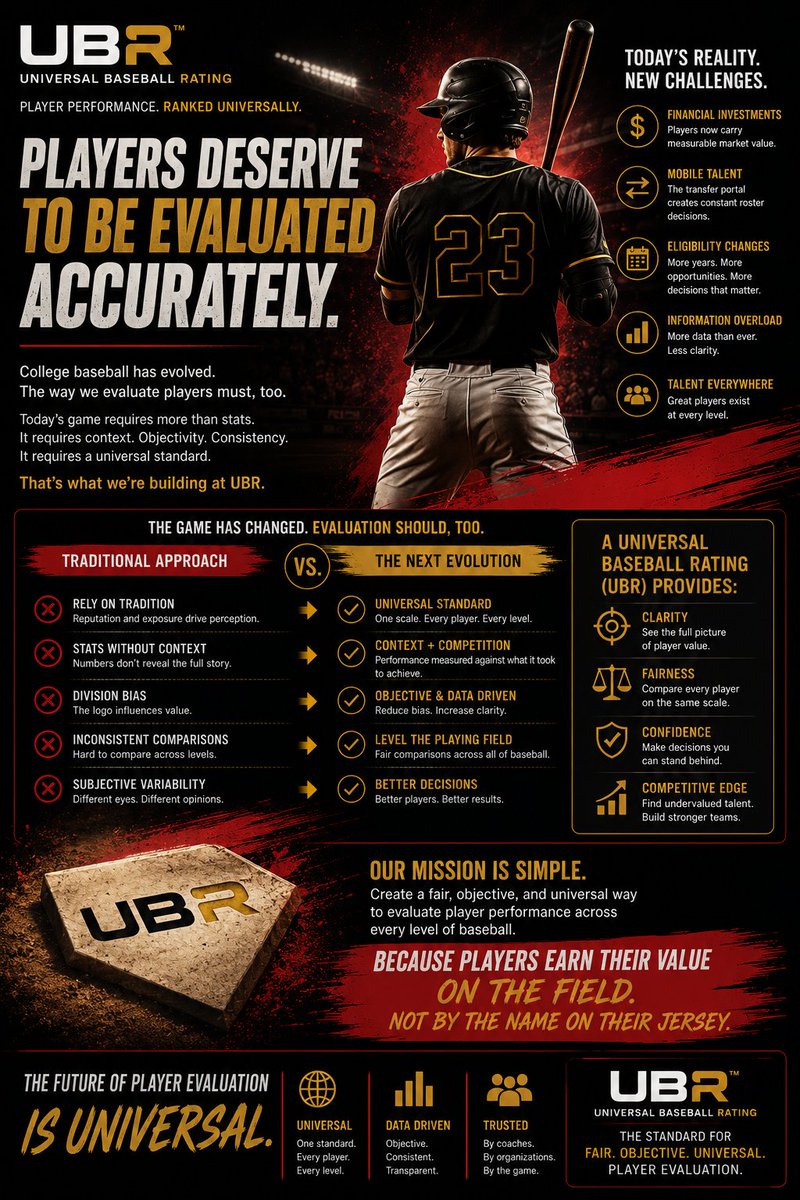
A player's future shouldn't be determined by the logo on his jersey.
It should be determined by his ability to perform.
That's why I believe something very simple.
Players deserve to be evaluated accurately.
At WOBAR, that's the problem we're working to solve.
How do we create a fair, objective way to compare player performance across every level of baseball?
I don't think we're the only ones asking that question.
I do think it's one of the most important conversations in the future of the game.
How do you think player evaluation needs to evolve over the next five years?
#Baseball #NCAA #CollegeBaseball #Wobar
What if college baseball's biggest recruiting advantage isn't finding the obvious stars... It's finding the overlooked ones.
Every season, players emerge from programs that received little national attention.
Some become All-Americans after transferring.
Some become MLB Draft picks.
Some outperform players who arrived with far more recognition.
Their talent didn't suddenly appear.
Someone simply evaluated them differently.
As recruiting becomes more competitive, and more expensive, the ability to identify overlooked talent may become one of the biggest competitive advantages in college baseball.
Not because those players are hidden.
Because we're still looking in the wrong places.
Who is responsible for creating more visibility for talented players outside the traditional power conferences—coaches, recruiting services, technology, or all of the above?
#Baseball #CollegeBaseball #NCAA #Wobar
What if team rankings evolved dynamically based not only on wins and losses, but on the contextual quality of performance itself?
Not just:
Did you win?
But:
Who did you play?
How difficult was the environment?
How meaningful were the moments?
How sustainable was the performance?
The raw material already exists.
The opportunity is turning context into understanding.
#Baseball #MLB #NCAA #CollegeBaseball #Wobar
Play-by-play data can reveal much more than final scores.
It can expose patterns of:
resilience
consistency
situational execution
late-game performance
adaptability under pressure
In many ways, teams already leave behind a performance fingerprint inside the data.
We’re only beginning to explore how to interpret it.
#Baseball #MLB #NCAA #CollegeBaseball #Wobar
A 10-2 win against a struggling opponent does not necessarily reveal more about a team than a tightly contested game against elite competition.
Some games inflate perception.
Others reveal true capability.
Contextual evaluation helps distinguish between record strength and competitive strength.
#Baseball #MLB #NCAA #CollegeBaseball #Wobar
Strength of schedule is important. But context goes much deeper than opponent win percentage.
How did a team perform against elite competition?
How competitive were the games?
Did performance hold under pressure?
Did they outperform expectations relative to opponent quality?
The future of team evaluation may be less about isolated results and more about contextual performance patterns.
#Baseball #MLB #NCAA #CollegeBaseball
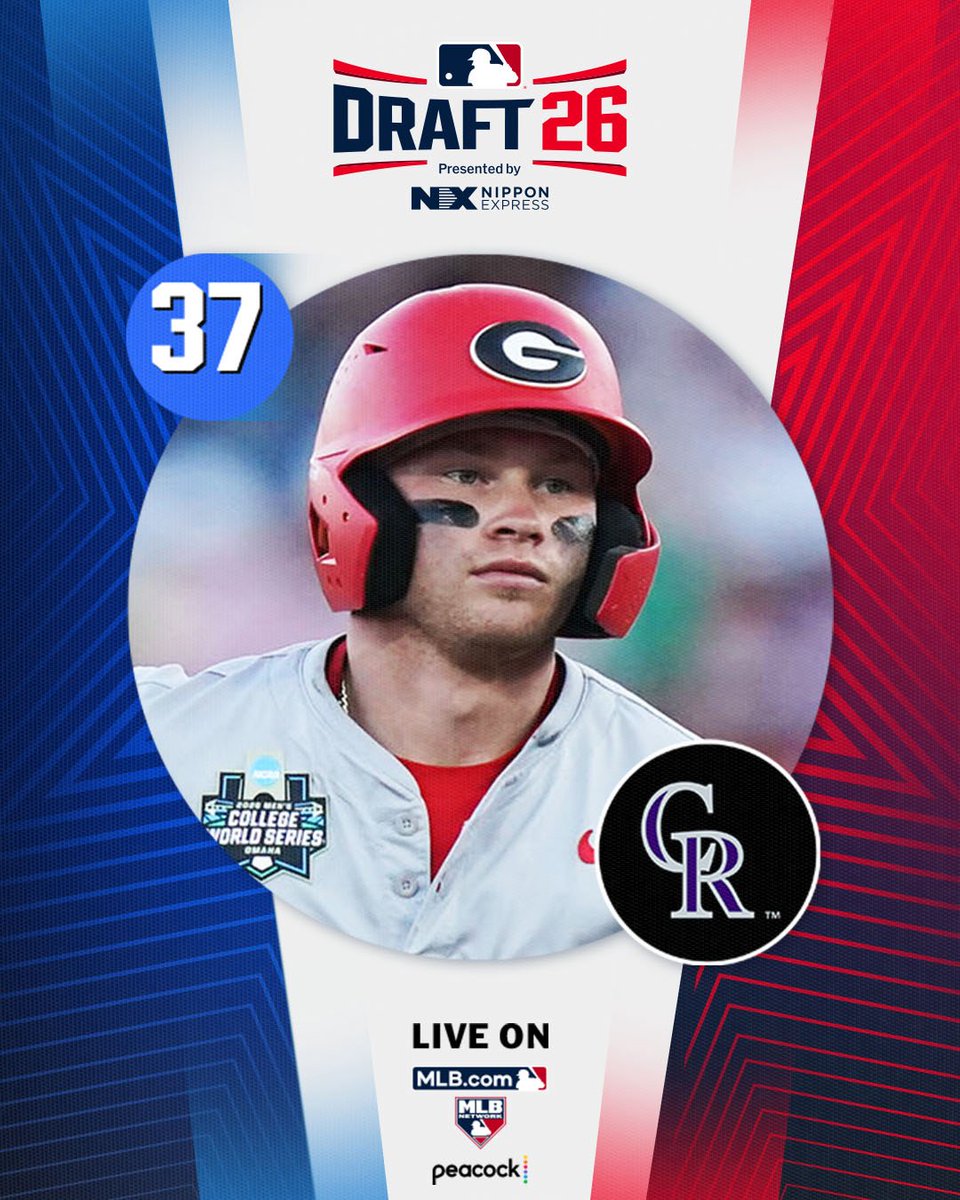
With the 37th pick in the 2026 Draft, the @Rockies select @BaseballUGA catcher Daniel Jackson, No. 28 on the Top 250 Draft prospects list.
Watch live: https://t.co/XWNTXiKgPC
With the 45th pick in the 2026 Draft, the @Angels select @GTBaseball second baseman Jarren Advincula, No. 48 on the Top 250 Draft prospects list.
Watch live: https://t.co/XWNTXiKgPC
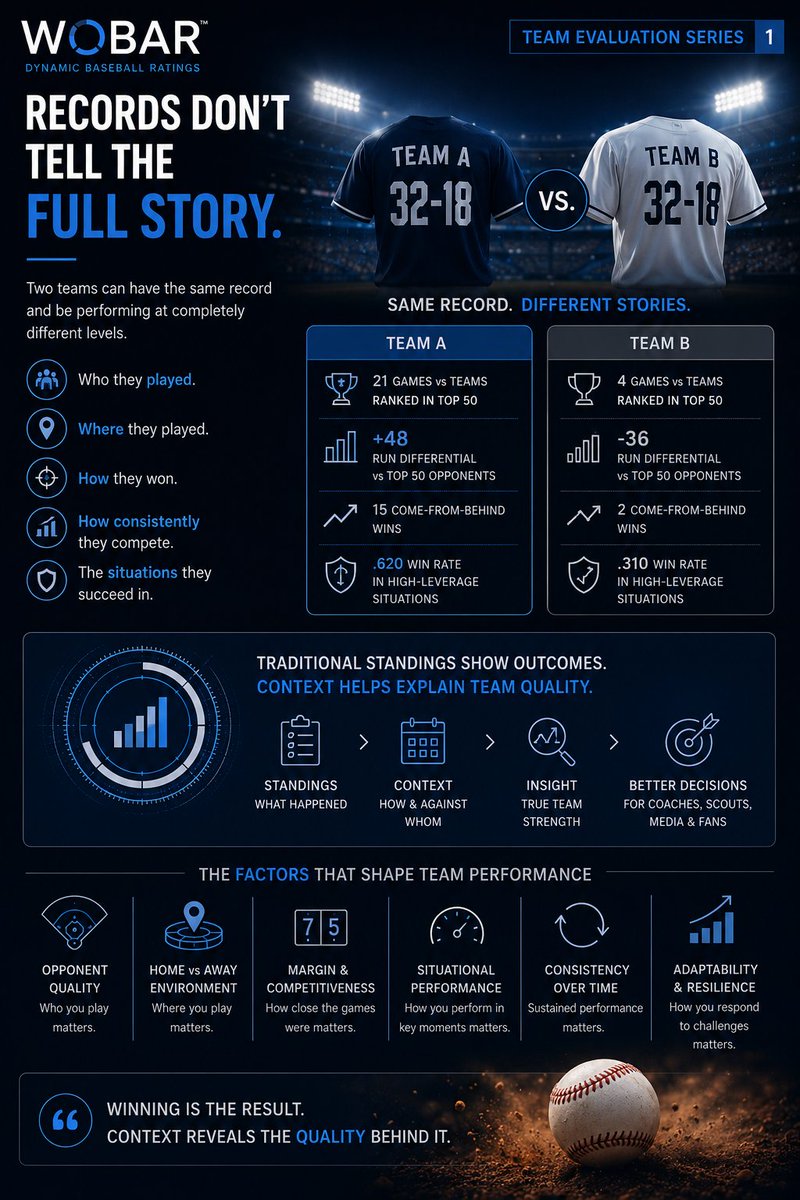
Two teams can have the same record and be performing at completely different levels.
Who they played.
Where they played.
How they won.
How consistently they compete.
The situations they succeed in.
All of that matters. Traditional standings show outcomes. Context helps explain team quality.
#Baseball #MLB #NCAA #CollegeBaseball #Wobar
What if play-by-play data could eventually support a more universal way of evaluating performance across teams, conferences, leagues, or even levels of competition?
Not just tracking outcomes, but measuring the relative impact of moments within context.
The raw material already exists.
The real opportunity may be in how we interpret it.
#Baseball #MLB #NCAA #CollegeBaseball
The interesting part about modern sports data isn’t necessarily collecting more of it.
It’s finding ways to extract more meaning from the data already being captured.
That’s why partnerships and integrations in sports technology are becoming increasingly important.
The next wave of value may not come from replacing systems, but from building intelligent layers that enhance the ecosystems already in place.
#Baseball #MLB #NCAA #CollegeBaseball
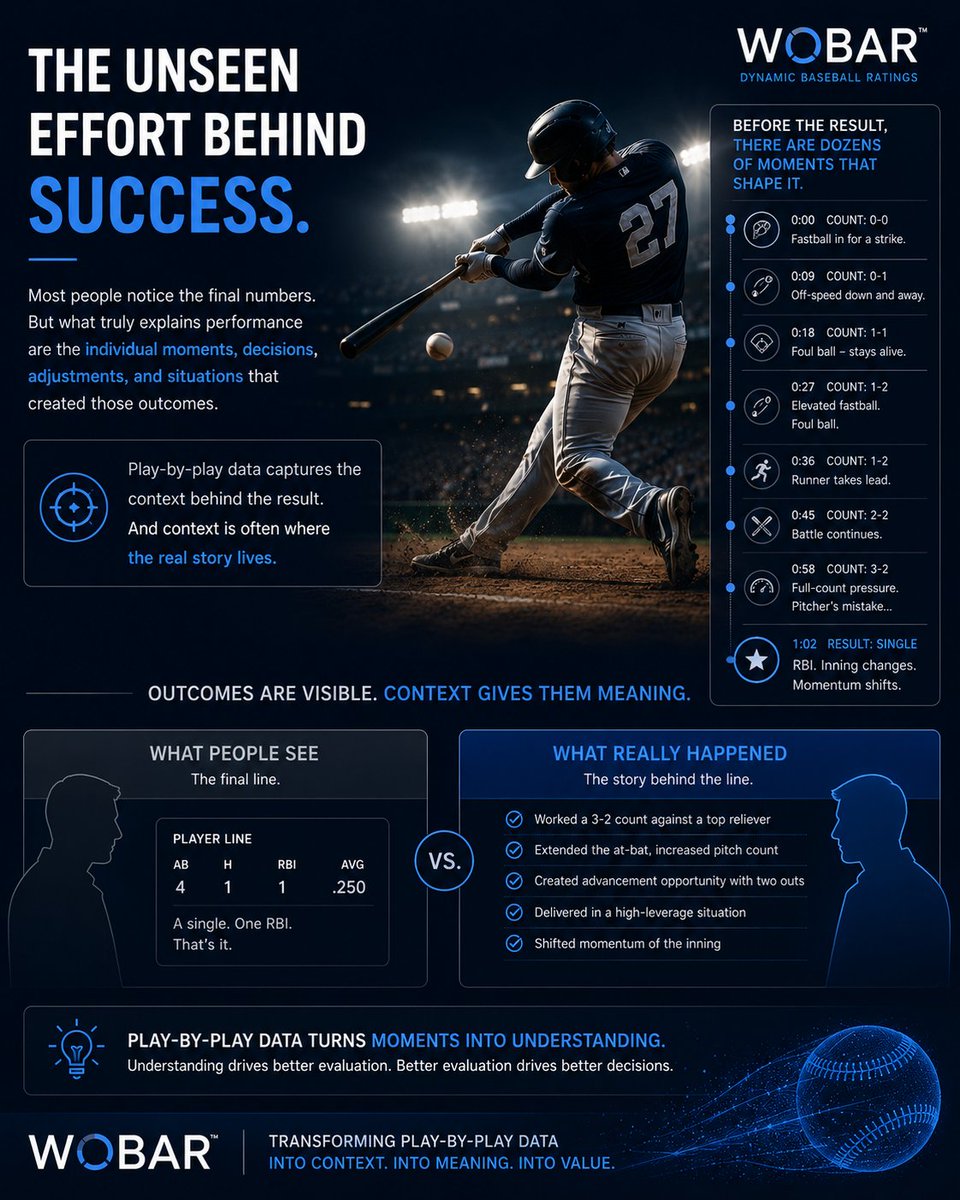
In many ways, play-by-play data is like the unseen effort behind success.
Most people notice the final numbers. But what truly explains performance are the individual moments, decisions, adjustments, and situations that created those outcomes.
That’s what makes play-by-play data so powerful:
it captures the context behind the result. And context is often where the real story lives.
#Baseball #MLB #CollegeBaseball #NCAA
Traditional stats tell us what happened. Play-by-play data helps explain how and under what circumstances it happened.
A single hit with runners in scoring position against a dominant pitcher may carry far more evaluative meaning than multiple low-pressure outcomes in a different context.
The challenge isn’t data collection anymore.
The challenge is translating context into meaningful comparative insight.
#Baseball #MLB #Collegebaseball #NCAA