NYC Cybersecurity professional. @ Picus, automated security control validation. I love family, coffee, travel and sneakers in that order. Views are my own!
As agentic AI systems gain autonomy in #CriticalInfrastructure environments, attack surfaces & privilege risks grow. Check out our new guidance detailing threat modeling, defense-in-depth, & best practices for secure deployment. 👉 https://t.co/HlCwrR9iMC
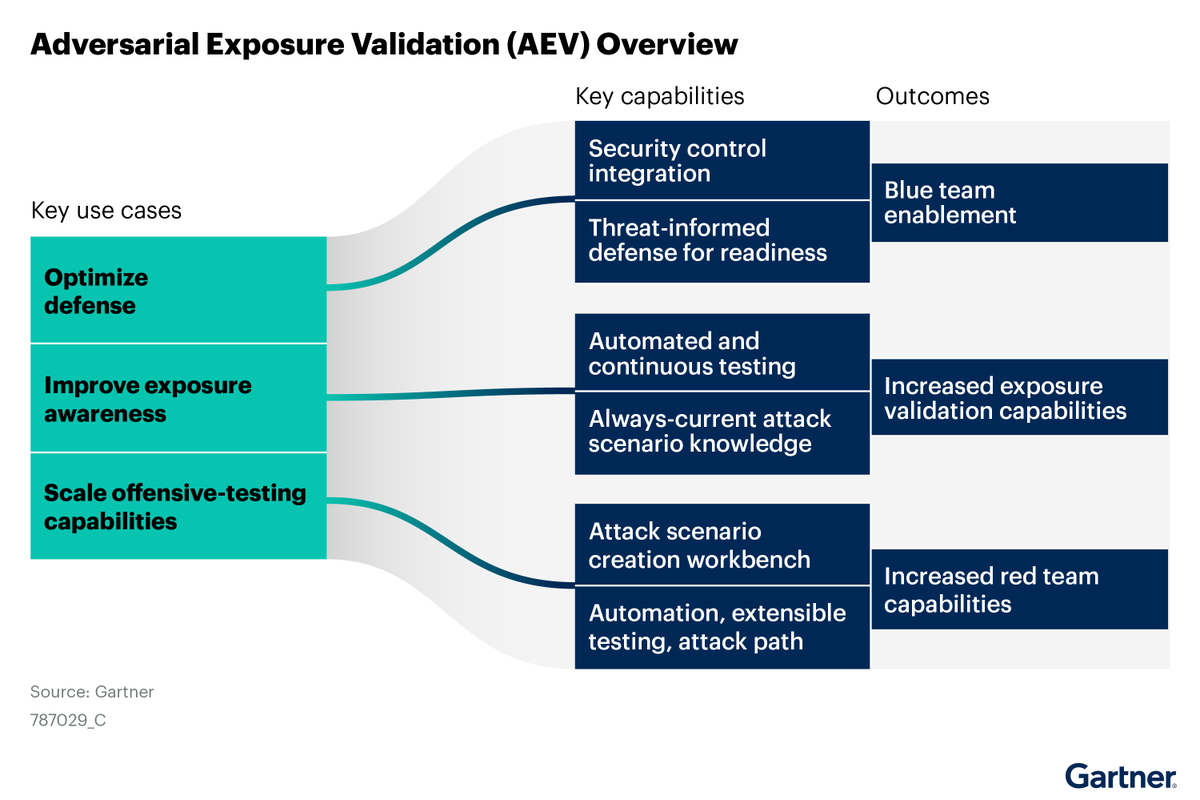
Most teams think exposure validation means running a pentest or a simulation.
Gartner maps three distinct lanes: optimize defense, improve exposure awareness, and scale offensive testing. Each has different capabilities and outcomes.
One chart tells the whole story 👇
Download the full report to see the complete picture: https://t.co/vUqU7t2Dlv
Everyone walked away from @nvidia GTC talking about chips and agents. They missed the real headline: without verification, none of it works.
There will be new victors and losers in the so-called "SaaS-pocalypse." But Jensen Huang said the quiet part out loud at GTC this week.
A retail investor asked him point-blank whether agentic AI would wipe out legacy software companies. Jensen's response: "Tell the retail investors they're just absolutely wrong."
His reasoning is worth paying attention to. We're moving from per-seat SaaS to per-agent pricing. Every agentic engineer still needs the same tools human engineers use - because when the work is done, it has to go back into structured, verifiable ground truth. Not probabilistic output. Not "it probably works."
His exact words: "You can't have 'probably works.' I need it to work exactly." That's the part most people are glossing over.
Everyone's excited about the TAM expansion story - more agents, more licenses, stocks go up. But the real signal is what Jensen kept circling back to: verification. Without it, agents at scale aren't a growth story. They're a liability.
This is the same pattern I've been warning about since the OpenClaw security flaws and botnet. We keep shipping AI faster than we can harden it. The capability curve is outrunning the trust curve, and the gap is where things break.
This is exactly why we're building https://t.co/E68UliBH6T Verification Layer.
Our AI Verification Layer makes agent outputs verifiable, auditable, and grounded - so you can actually build and deploy agents without crossing your fingers. Not "probably works."
NVIDIA clearly sees this as one of the defining problems of the AI era - they're dedicating entire GTC sessions to "A New Paradigm: Verifiable AI," covering continuous integrity from training through inference.
The agentic future is real. But without a verification layer, you're just automating chaos faster. We're building the infrastructure that makes it trustworthy.
If you're shipping agentic systems or rethinking your stack for an agent-first world - reach out!
Adversaries want to inhabit your infrastructure undetected. Move from assuming you are safe to proving you are protected.
Mar 11, 2:00 PM EST: We simulate TinkyWinkey, Raven & XLoader to test your stack.
Register: https://t.co/dc2379yUFm
#RedReport2026
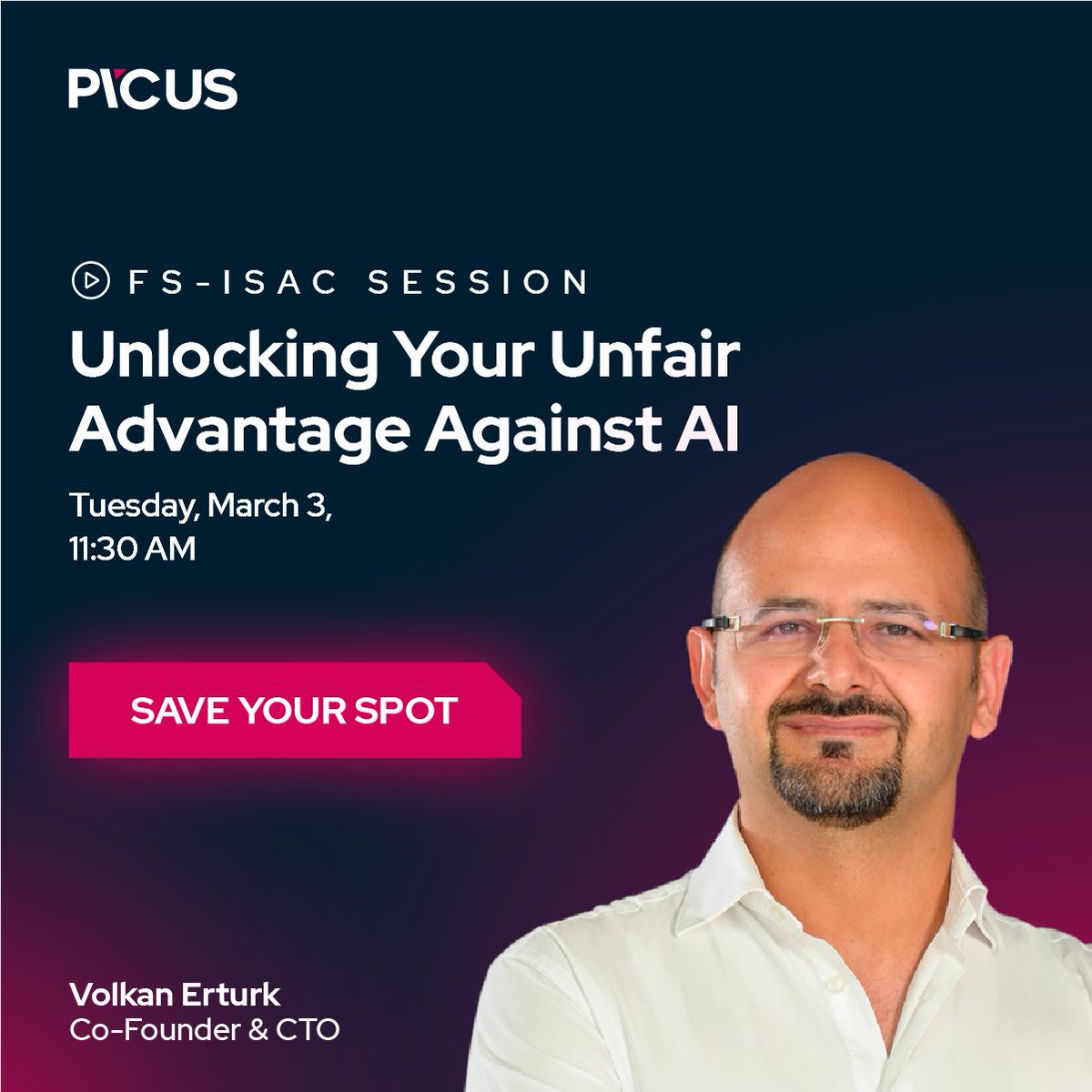
AI adversaries move at machine speed, but your defense doesn't have to lag behind. Join @volkanerturk at #FSISAC to learn how to gain an "Unfair Advantage" against autonomous threats by starting the race earlier.
Don't just defend—evolve your security posture. Get the details here: https://t.co/uM4Sv2YScL
Meet @PicusSecurity at #FSISAC Orlando (Booth #26) to see how we cut patch backlogs by 86%.
Join @volkanerturk's session on Tuesday, March 3, at 11:30 AM in Coral Sea to gain your unfair advantage.
🔗 https://t.co/QsS7XVNdxC