The reason South Africans don’t get into the news is because they’re irrelevant, so they think their nationals are saints across the world.
They’ve sentenced a South African drug dealer to prison in Sierra Leone this week, another 42 deported from Ireland.
We’ll give you that publicity since that’s what you want, so you can know there are bad eggs everywhere. Idiots.
Shopkeeper (Nigerian man): I am not illegal!
South African prostester: We said keep it short — no foreigners running shops. This is for South Africans only!
#atruthatatime#Africans#southafrican
Jensen Huang built the world's most valuable chip company and is telling the next generation of programmers prompt engineering is the future:
"Why program in Python? So weird."
"The first time I talk to the computer, I'm just speaking in plain English."
"English, by the way, human, it's the best programming language of the future."
"How do you make a computer do what you want it to do? How do you fine tune the instructions with that computer? That's called prompt engineering. There's an artistry to that."
PS. If you found value in this post make sure to like and repost this tweet + follow @uncover_ai to stay updated with the latest AI news.
See you in the next one:
He is. It wasn’t money that inspired the ideas that helped Spain win the 2010 World Cup. It wasn’t money that inspired Germany’s win 4 years later. These were Guardiola’s personnel and ideas.
All these teams trying to play a certain way are building on his legacy. All these world-class managers that learnt from him.
We can cry and see road at the same time. He is the most consequential manager in football, ever. We can say this and still add, however.
People are the true wealth. People. Not things. Not resources.
People. Then ideas. Then all the rest.
If you have the right people, and subscribe to the right ideas the rest will fall into place.
We broke ground and now we build. 50k units/yr, 120 engineers, Accra, Ghana. This is what the next phase of Terra looks like
We will be doing some incredible work here.
@terraindustries is launching Pax-2 in June, Africa’s largest drone factory in Ghana
This 34,000sq-ft factory will create 120 direct jobs and produce 50,000 drones annually
Terra will help boost Ghana’s national security and turn Ghana into a regional defense exporter.
Spent time looking into Nigerian football club ownership and i think people are sleeping on this lol
The entire top flight league is valued at 1.2M euros, literally nothing...
100K$ gets you a full club in the third division. players, coaches, operations, one season basically
The play is not the league revenue though, that part is cooked. it is the talent pipeline
Remo Stars (top club) was valued at 1.5M$ and sold players to Inter Milan and Flamengo for far more than that.
Pair a Nigerian academy with a cheap European club in Denmark or Portugal and you have a full pipeline from Lagos to the top 5 leagues
Paystack's founder literally already did this. started a club from zero, promoted in one year, bought a Danish club
Crazy talent arbitrage lowkey...
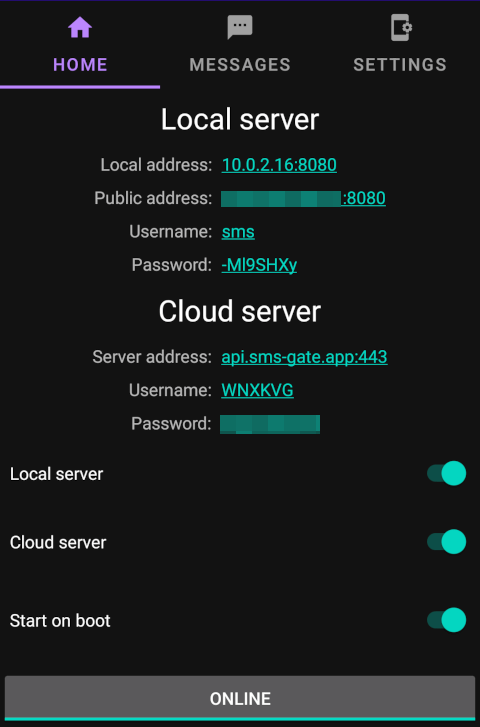
🚨 Twilio charges $0.0079 per SMS. Someone just turned any old Android phone into a free SMS gateway. Unlimited messages. $0.
It's called SMS Gateway for Android.
Install it on any Android phone. It becomes a full SMS sending and receiving server with an API.
No Twilio. No MessageBird. No per-message pricing. No contracts. Just an old phone and a SIM card.
Here's what's inside this thing:
→ Send and receive SMS through a REST API from any app or service
→ Works with any Android phone running 5.0 or newer
→ End-to-end encryption. Messages are encrypted before they leave the device.
→ Multi-SIM support. Use multiple SIM cards on one phone.
→ Multi-device support. Connect multiple phones to the same account.
→ Real-time webhooks for incoming messages
→ Multipart messages with auto-splitting for long texts
→ Track delivery status of every message in real time
→ No registration required. No email. No account in local mode.
Here's the wildest part:
That old Android phone in your drawer that you haven't touched in 2 years? Install this app. Insert a SIM card. You now have your own private SMS infrastructure.
Two-factor authentication. Order confirmations. Appointment reminders. Notification alerts. All the things startups pay Twilio thousands a month for.
Free. Running on a phone you already own.
Startups spend $500 to $5,000/month on SMS APIs. This costs the price of a SIM card.
875 GitHub stars. 359 commits. Apache 2.0 License.
100% Open Source.
Today Abuja @sofreshng_co is consistently in our top 2 locations across all metrics, month on month, but it took us about 4 years to fully rev that engine. So sometimes I ask myself, should we have expanded to Abuja when we did in 2018? Or stay in Lagos and take advantage of the already primed market?
Which brings me to a broader question, how do you expand a business?
- Do you go wide? Open more locations and channels, add new products, or new segments?
- Or go deep? Get more from what you already have? Sell more of same products, find more similar customers?
Many businesses don’t answer this question properly. They just react based on feeing, hearsay or even ego:
Sales not hitting the target — open a new branch.
A competitor launches something new — add another product.
There’s pressure to grow — add more channels, add more locations, just do more.
But expansion is not all about doing more. It’s about choosing carefully where the next growth spike should come from based on your resources, readiness and capacity. And doing so without increasing complexity unnecessarily. I’ve seen businesses open a second location before the first one is stable and consistently profitable. Launch new products when customers are not even deeply bought into the first. Many times, these become more of a distraction than growth.
So, again, do you go deep or wide?
- Deep = more revenue per customer, more loyalty, more adoption of what already works.
- Wide = more locations, more products, more markets, new segments.
Going wide will stretch you, while going deep strengthens you. Both can work. But they require different levels of capacity, structure, and discipline. If your customers are not coming back often enough, not spending enough, or not getting enough value, adding more locations or products won’t fix it. It will just spread your attention thinner. Because before you expand anything, you need to be clear on what actually works and why.
So, before your next move, pause and ask:
Have I gone deep enough here?
Where is the real opportunity in my business right now — depth or width?
After deeply analyzing Nigeria's power sector, I have discovered that it requires a coordinated investment of $65–80 billion over the next 5–7 years to ensure sustainable power supply. I explain below ⤵️⤵️
https://t.co/5OI7cclmcV
Introducing: PlayerZero
The world's first Engineering World Model that puts debugging, fixing, and testing your code on autopilot.
We've raised $20M from Foundation Capital, @matei_zaharia (Databricks), @pbailis (Workday), @rauchg (Vercel), @zoink (Figma), @drewhouston (Dropbox), and more
PlayerZero frees up 30% of your engineering bandwidth by:
1. Finding the root cause for bugs & incidents in minutes that engineering teams take days to identify.
2. Predicting in minutes, edge case issues that a 300-person QA team would take weeks to find.
------
Here's why this matters:
No one in your org has a complete picture of how your production software actually behaves.
Support sees tickets. SRE sees infra. Dev sees code. Each team builds their own fragmented view - and none of these systems talk to each other. When something breaks, everyone scrambles to stitch the picture together by hand.
PlayerZero connects all of it into a single context graph -
→ The Slack thread where your lead said "we went with X because Y fell apart in prod last time"
→ The PR review where an engineer explained the tradeoff
→ The lifetime history of your CI/CD pipeline, observability stack, incidents, and support tickets
So you can trace any problem to its root cause across every silo.
And it compounds. Every incident diagnosed teaches the model something new. The longer it runs, the deeper it understands - which code paths are high-risk, which configurations are fragile, which changes tend to break which customer flows.
So when you sit down to debug a live issue, you have your entire org's collective reasoning and production memory behind you - instantly.
------
Zuora, Georgia-Pacific, and Nylas have reduced resolution time by 90% and caught 95% of breaking changes and freeing an average of $30M in engineering bandwidth.
------
Our guarantee:
If we can't increase your engineering bandwidth by at least 20% within one week, we'll donate $10,000 to an open-source project of your choice.
Book a demo - https://t.co/dH1dulIwSS
A friend has launched an accelerator offering $150K–$250K to African startups building in Green Deep Tech. They are looking for founders with solutions such as iron-air or thermal batteries that can store renewable energy for weeks, not just hours.
Germany didn’t become an industrial powerhouse by sending everyone to university.
They built something smarter.
It’s called Ausbildung, a structured apprenticeship system where young people earn while they learn inside real companies.
A 17-year-old in Germany can train to become:
• a mechatronics engineer
• an industrial technician
• an automotive systems expert
• a precision machinist
• a medical equipment technician
They are paid during training.
They graduate with globally respected skills.
And many of them end up earning more than university graduates.
Over 50% of German youth pass through this system.
Now look at Nigeria.
We push everyone into universities.
Millions graduate every year.
But the country is still importing basic technical expertise.
We have degrees but we don’t have enough skills.
This is why we are studying the German Ausbildung model closely to implement in the South East.
Because the South East must lead Africa’s skills revolution.
Imagine a structured apprenticeship system across Aba, Nnewi, Onitsha, Enugu and beyond where young people can train to become:
• industrial fabricators
• automotive engineers
• robotics technicians
• electronics specialists
• renewable energy installers
• precision manufacturing experts
Training will happen inside real companies.
With structured certification, modern tools and clear career paths.
Not the informal “Igba Boy” system, but a world-class apprenticeship ecosystem.
The South East already has the largest concentration of indigenous manufacturers and traders in Africa.
What we need now is structure, technology, and certification.
If Germany can power Europe’s manufacturing through apprenticeships, there is no reason the South East cannot power Africa’s industrial future.
The next generation of millionaires in Africa will not only be software founders.
Many will be master craftsmen, engineers, and industrial builders.
And when Africa finally fixes its skills crisis, history may remember that the revolution started in the South East.
Africa has 17% of the world's population but attracts <1% of global venture capital.
Global capital keeps misjudging Africa.
Which is precisely why Ajim Capital is raising a $20M fund to invest in African startups.
To recap:
- drops some of our best 3 players of the last 3 months in Nunes, Cherki & RAN.
- insists on singling Rodri in another 4-2-4 type of system after finding a 4-2-2-2 that worked, despite the fact that the one man Rodri show saw us lose so badly to Bodo and United it probably fully derailed our season.
- asks Khusanov to be a RB at the Bernabeu.
- starts a wing pairing that has never worked for as long as they’ve played together.
- nobody knows what Semenyo’s position, role, tactical approach was last night. Not even Semenyo by the looks of it.
- sees Guehi struggle like fuck, does nothing to mitigate it.
- sees gaping hole the size of Manchester in midfield, does nothing to mitigate it. Brings on Reijnders despite the fact that we needed control, not another box crasher.
- sees YouTube sensation score 2 in 17 games, and does nothing to mitigate it.
- drops our best midfielder in Nico G completely despite the fact that he ran Rodri in the ground till his body broke. Here we go again.
- finds CB pairing that actually complements itself in Khusanov and Guehi and insists of Dias who can’t play a high line anymore, and reminds me of Maguire running back.
- moves O’Reilly to LB after winning POTM and multiple MOTM performances as a midfielder.
- still can’t play Marmoush to his strengths.
- finds a double 10 system before Christmas and then fully kills it for no other reason than bringing Rodri back. Foden’s entire season tanks from that point onwards.
- drops Cherki consistently for no reason, then waits till the 70th-80th minute to bring him on.
- had 10 + corners against Madrid and no one hit or touched the ball in the box. Please go and watch this. ( we have a striker that can play in the NBA btw )
Did I miss anything?
How did a company from Shenzhen come to dominate Africa's cell phone industry?
It accepts African markets as they are, not as it wishes they were.
While some companies enter African markets with capital intensive Silicon Valley-style 'blitzscaling' approaches, China's Transsion entered the continent with a 'deep-plowing' strategy
What's 'deep plowing'?
An intensive, long-term approach of cultivating land to grow crops.
For Transsion, 'deep plowing' means starting from the bottom up with the most underserved customers, building extensive distribution networks, localizing products significantly, and investing in consumer trust to cultivate long-term market dominance:
• Customer 'deep plowing' — While competitors focused on premium urban consumers, Transsion targeted lower-income and underserved users, especially those in rural & peri-urban areas.
• Distribution 'deep plowing' — Transsion embeds itself in the informal retail networks that dominate electronic sales on the continent, employing thousands of agents to reach places competitors don't and establishing physical retail depth from factory to final sale.
• Product 'deep plowing' — Transsion went beyond superficial adaptation, spent years studying local needs & behaviors, and modified hardware and software accordingly, including pioneering multi-SIM phones in African markets.
• Service 'deep plowing' — One of Transsion's deepest 'plows' is its investment in after-sales service. While many electronics have no official repair centers locally, Transsion established the Carlcare network, Africa's largest mobile after-sales service network.
• Brand 'deep plowing' — Transsion created a brand ladder to cover the entire income spectrum: ultra-budget itel devices, performance-focused Infinixes, and aspirational Techno phones. This allows the company to capture customers as their incomes grow, instead of losing them to competitors.
Transsion didn't win Africa's cell phone market by building for the Africa of tomorrow.
They won by 'deep plowing' for the Africa that exists today.
h/t @lumiao1026 whose research on Transsion informs this post — check out the links below 👇🏽